'%3E%3Cpath d='M16.3574 35.6519H12.9537L15.0491 18.8873L16.3574 35.6519ZM30.4229 54.0093L22.309 0.994385H7.91795L0 54.0093H10.6634L11.5802 46.3855H17.4014L17.9914 54.0093H30.4229Z' fill='%23971B20'/%3E%3Cpath d='M48.2073 41.8813C48.2073 43.4049 47.4892 44.0011 46.1144 44.0011H43.7595V11.0687H46.1144C47.4892 11.0687 48.2073 11.6636 48.2073 13.1885V41.8813ZM59.5273 43.6695V11.3326C59.5273 3.71323 53.5729 0.994385 47.8157 0.994385H31.7213V54.0093H47.8157C53.5729 54.0093 59.5273 51.29 59.5273 43.6695Z' fill='%23971B20'/%3E%3Cpath d='M90.183 0.994385H78.6039L75.0711 30.6157L71.9955 0.994385H59.4346L69.2474 54.0093H80.373L90.183 0.994385Z' fill='%23971B20'/%3E%3Cpath d='M107.063 42.3448C107.063 43.7359 105.951 44.5974 104.643 44.5974C103.269 44.5974 102.157 43.7359 102.157 42.3448V12.658C102.157 11.2676 103.269 10.4058 104.643 10.4058C105.951 10.4058 107.063 11.2676 107.063 12.658V42.3448ZM119.233 43.2723V11.7312C119.233 6.36384 112.952 -3.8147e-06 104.643 -3.8147e-06C96.2667 -3.8147e-06 89.9867 6.36384 89.9867 11.7312V43.2723C89.9867 48.6393 96.2667 55 104.643 55C112.952 55 119.233 48.6393 119.233 43.2723Z' fill='%23971B20'/%3E%3Cpath d='M150.976 43.9349V33.7309H139.069V42.3448C139.069 43.7359 137.957 44.5974 136.582 44.5974C135.076 44.5974 133.964 43.7359 133.964 42.3448V12.658C133.964 11.2676 135.076 10.4058 136.582 10.4058C137.957 10.4058 139.069 11.2676 139.069 12.658V21.2723H150.976V11.0687C150.976 5.70107 145.283 -3.8147e-06 136.582 -3.8147e-06C127.75 -3.8147e-06 121.796 5.70107 121.796 11.0687V43.9349C121.796 49.3022 127.75 55 136.582 55C145.283 55 150.976 49.3022 150.976 43.9349Z' fill='%23971B20'/%3E%3Cpath d='M167.478 35.6519H164.076L166.17 18.8873L167.478 35.6519ZM181.544 54.0093L173.432 0.994385H159.037L151.123 54.0093H161.785L162.704 46.3855H168.523L169.114 54.0093H181.544Z' fill='%23971B20'/%3E%3Cpath d='M205.412 10.4058V0.994385H177.081V10.4058H185.392V54.0093H197.428V10.4058H205.412Z' fill='%23971B20'/%3E%3Cpath d='M230.002 54.0093V43.9349H218.914V31.8746H226.635V21.8028H218.914V10.4058H230.002V0.994385H206.875V54.0093H230.002Z' fill='%23971B20'/%3E%3C/g%3E%3Cdefs%3E%3CclipPath id='clip0_260_7080'%3E%3Crect width='230' height='55' fill='white'/%3E%3C/clipPath%3E%3C/defs%3E%3C/svg%3E)
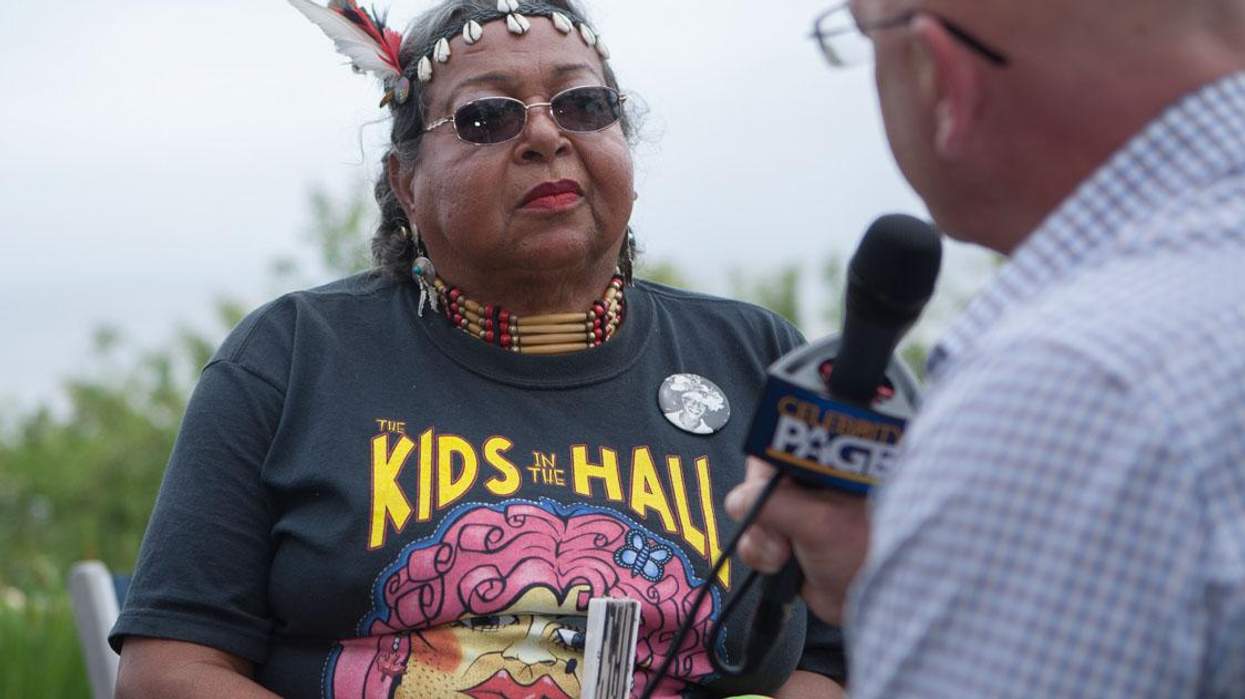

Victoria Cruz, one of the matriarchs of New York City's transgender community, has died. She was 79.
It was 57 years ago that the out trans Latina witnessed history at Stonewall, the birth of what was originally called the gay rights movement, and then changed the personal history of thousands of New Yorkers by working tirelessly to help those targeted because of their orientation, identity and medical status.
Cruz worked on behalf of victims of violence in New York City, after being one herself. Thirty years ago, she was repeatedly harassed and sexually assaulted by co-workers at at a nursing home in Brooklyn.
“I was very angry. Very angry,” Cruz told Vanity Fair in 2017 in a profile to promote the Netflix film, The Death and Life of Marsha P. Johnson. On that day in 1996, four women grabbed at her breasts and crotch and hurled slurs at her. She said the attack shattered her as she navigated the world as a woman.
“The worst part of it is that I couldn’t feel the ground beneath me.” It was so bad that one day she started bringing knife to work, for both protection and to be ready to fight back, but decided against committing violence herself. A friend referred her to the New York City Anti-Violence Project.
Not only did she find support there, the organization helped her file police reports. That led to protests outside the nursing home, as the New York Daily News reported in 1997, and the arrests of two of the four co-workers. They were convicted of harassment in one of the first trials in New York State in which someone was held legally accountable for anti-trans violence.
Christine Quinn, who later became the first female and first openly gay speaker of the New York City Council, took her on as a volunteer and eventually hired her at the NYCAVP's front desk and hotline.
Cruz spent 17 years at the nonprofit, helping others, and focused especially on domestic abuse. But as The New York Times reported, her role there and in the LGBTQ+ community was known far beyond her official title.
“People would come into the office and just ask for Miss Vicky,” said Catherine Shugrue-Dos Santos, a former deputy executive director at the organization. “They wouldn’t give their names; they wouldn’t talk to anybody else. She really had the trust of the community.”
Having lived it and survived it, Cruz understood better than most the intersectional threats that transgender people faced, from housing discrimination to workplace harassment. Her expertise made her the go-to for thousands of trans New Yorkers.
So much so, the NYCAVP created a poster featuring her image.
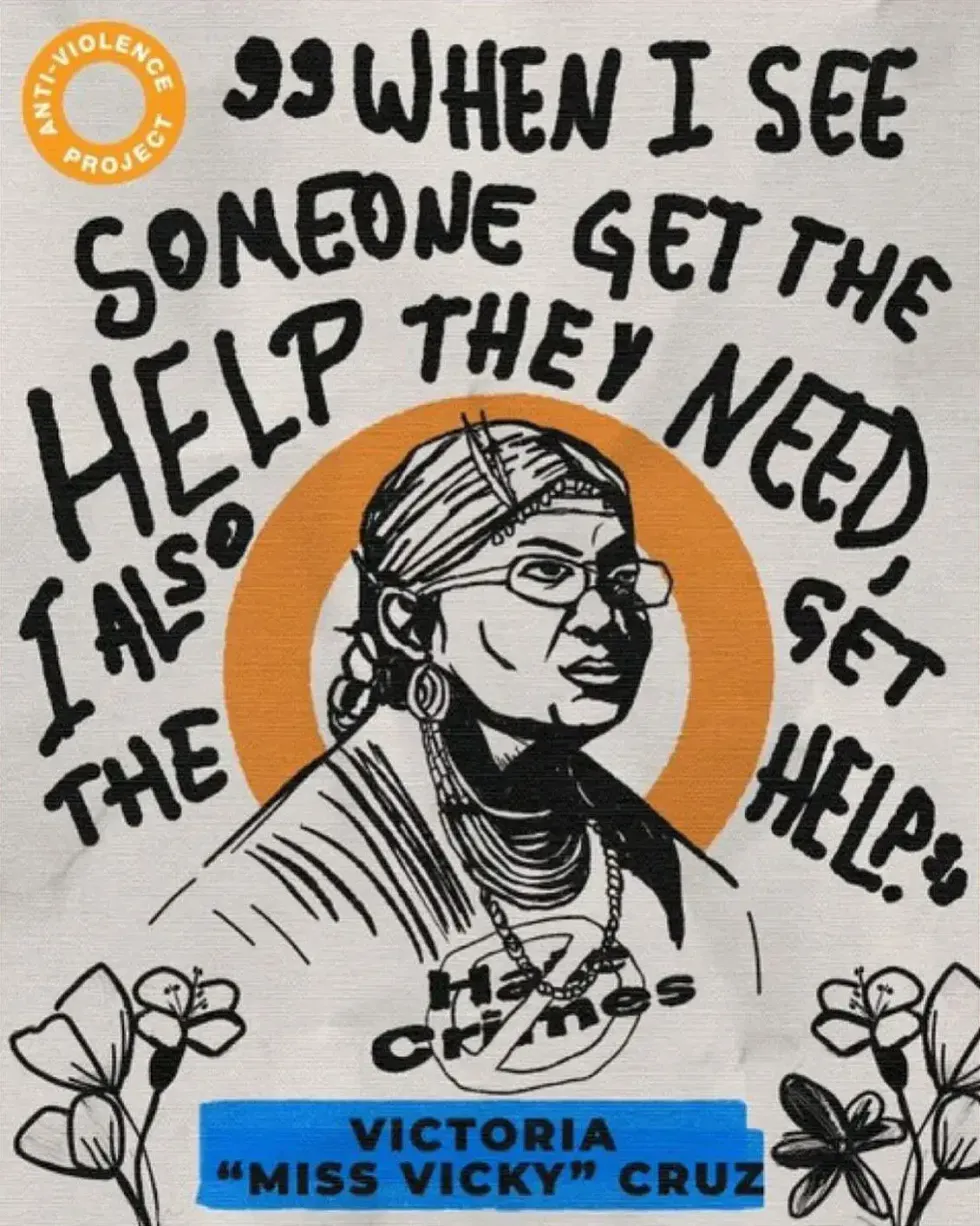 NYC Anti-Violence Project
Cruz was born in Guánica, Puerto Rico, one of 11 children. As Vanity Fair reported, she and her family moved to Red Hook, Brooklyn when she was a child. A bout of measles left her with a thick cataract in one eye that caused her nieces and nephews to make jokes: “Vicki’s got a blue eye and a brown eye!”
She graduated from high school with a cosmetology license and started her transition. A doctor on 28th Street in Manhattan provided young trans women like Cruz hormone shots and pills, monitoring their breast and hair growth. “He was a pioneer,” she told Vanity Fair, “Once I started looking real enough, I started going to bars and hanging out.”
Cruz was petite and credited her size with saving her from arrest on plenty of occasions when taller trans friends were often detained by the police raiding West Village hangouts. “In this area out there by the trucks, all you heard was ‘Run the cops!’ or ‘Run, camarones!’ or ‘Lilly Law!’” she said. That was a time in New York City in which it was against the law to engage in sodomy or to cross-dress, and police were on nightly patrol for gays, lesbians and especially Black and Latina trans women.
"I knew Marsha,” Cruz told Vanity Fair, referring of course to Marsha P. Johnson. Both were at the Stonewall Inn in the early morning hours of Saturday, June 28, 1969. Police had raided the mafia-run gay bar countless times, including on Tuesday of that week. But on that night, trans, gay and lesbian people inside fought back with bottles and bricks.
Cruz had been outside with her boyfriend, Frankie, a Canadian and one of the bar’s bouncers. He told her to go home as the violence escalated. She returned in the morning to find the bar in ruins and a standoff underway. It would span six days, but for Cruz, it was over. She grabbed a beer sign and other memorabilia, and also took home the bar’s dog, Rusty, as The Times reported.
However, her activism was only beginning. Johnson and a friend of Cruz — Sylvia Rivera stood up when the movement gathered steam, to ensure that trans people were represented and remembered.
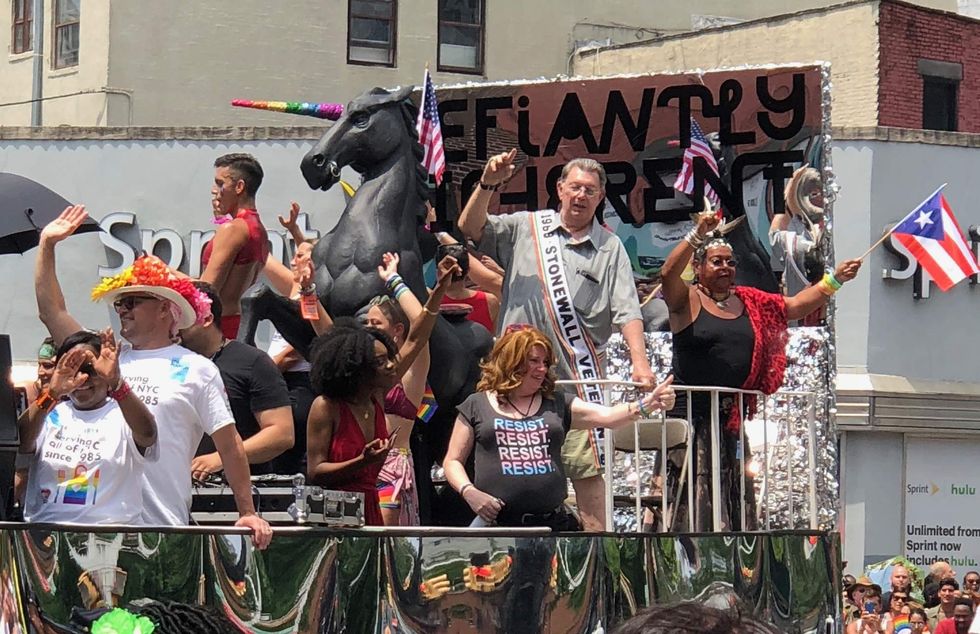 NYC Pride 2018 photo by Kati Ennis www.out.com
In 2018, Cruz joined school shooting survivor Emma González (who now goes by "X"), artist Kaia Naadira, writer and 2025 Out100 honoree Tiq Milan, Two-Spirit artist Ty Defoe, Stonewall bartender Tree Sequoia and this reporter on the lead float of community heroes at the New York City Pride March.
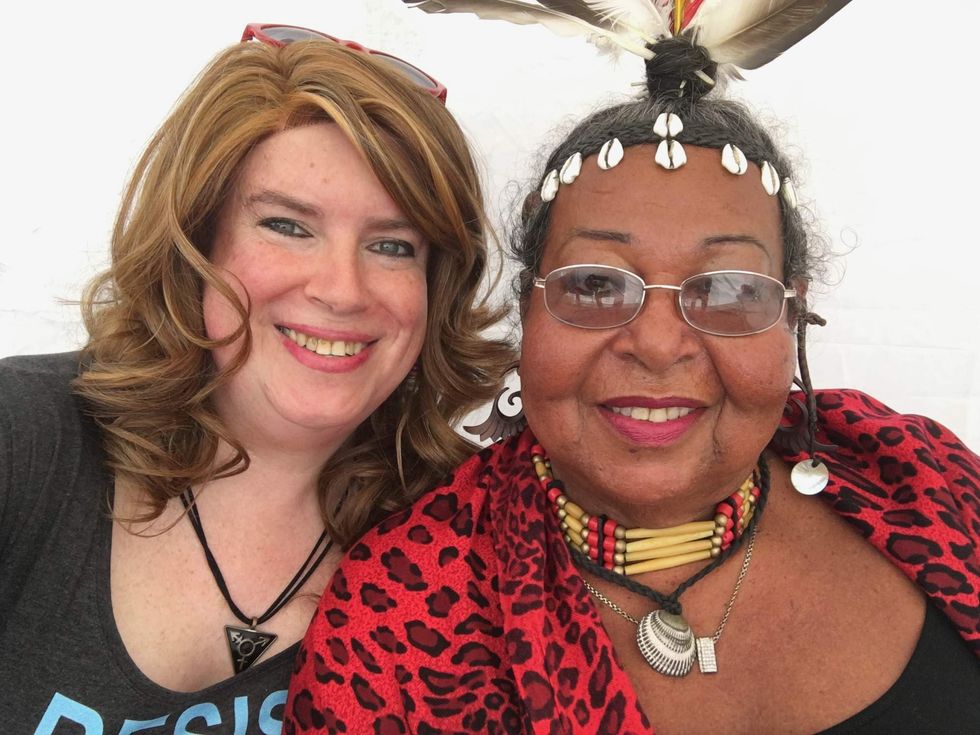 Dawn Ennis, left and Victoria Cruz, at NYC Pride 2018. Photo by Kati Ennis www.out.com