'%3E%3Cpath d='M16.3574 35.6519H12.9537L15.0491 18.8873L16.3574 35.6519ZM30.4229 54.0093L22.309 0.994385H7.91795L0 54.0093H10.6634L11.5802 46.3855H17.4014L17.9914 54.0093H30.4229Z' fill='%23971B20'/%3E%3Cpath d='M48.2073 41.8813C48.2073 43.4049 47.4892 44.0011 46.1144 44.0011H43.7595V11.0687H46.1144C47.4892 11.0687 48.2073 11.6636 48.2073 13.1885V41.8813ZM59.5273 43.6695V11.3326C59.5273 3.71323 53.5729 0.994385 47.8157 0.994385H31.7213V54.0093H47.8157C53.5729 54.0093 59.5273 51.29 59.5273 43.6695Z' fill='%23971B20'/%3E%3Cpath d='M90.183 0.994385H78.6039L75.0711 30.6157L71.9955 0.994385H59.4346L69.2474 54.0093H80.373L90.183 0.994385Z' fill='%23971B20'/%3E%3Cpath d='M107.063 42.3448C107.063 43.7359 105.951 44.5974 104.643 44.5974C103.269 44.5974 102.157 43.7359 102.157 42.3448V12.658C102.157 11.2676 103.269 10.4058 104.643 10.4058C105.951 10.4058 107.063 11.2676 107.063 12.658V42.3448ZM119.233 43.2723V11.7312C119.233 6.36384 112.952 -3.8147e-06 104.643 -3.8147e-06C96.2667 -3.8147e-06 89.9867 6.36384 89.9867 11.7312V43.2723C89.9867 48.6393 96.2667 55 104.643 55C112.952 55 119.233 48.6393 119.233 43.2723Z' fill='%23971B20'/%3E%3Cpath d='M150.976 43.9349V33.7309H139.069V42.3448C139.069 43.7359 137.957 44.5974 136.582 44.5974C135.076 44.5974 133.964 43.7359 133.964 42.3448V12.658C133.964 11.2676 135.076 10.4058 136.582 10.4058C137.957 10.4058 139.069 11.2676 139.069 12.658V21.2723H150.976V11.0687C150.976 5.70107 145.283 -3.8147e-06 136.582 -3.8147e-06C127.75 -3.8147e-06 121.796 5.70107 121.796 11.0687V43.9349C121.796 49.3022 127.75 55 136.582 55C145.283 55 150.976 49.3022 150.976 43.9349Z' fill='%23971B20'/%3E%3Cpath d='M167.478 35.6519H164.076L166.17 18.8873L167.478 35.6519ZM181.544 54.0093L173.432 0.994385H159.037L151.123 54.0093H161.785L162.704 46.3855H168.523L169.114 54.0093H181.544Z' fill='%23971B20'/%3E%3Cpath d='M205.412 10.4058V0.994385H177.081V10.4058H185.392V54.0093H197.428V10.4058H205.412Z' fill='%23971B20'/%3E%3Cpath d='M230.002 54.0093V43.9349H218.914V31.8746H226.635V21.8028H218.914V10.4058H230.002V0.994385H206.875V54.0093H230.002Z' fill='%23971B20'/%3E%3C/g%3E%3Cdefs%3E%3CclipPath id='clip0_260_7080'%3E%3Crect width='230' height='55' fill='white'/%3E%3C/clipPath%3E%3C/defs%3E%3C/svg%3E)
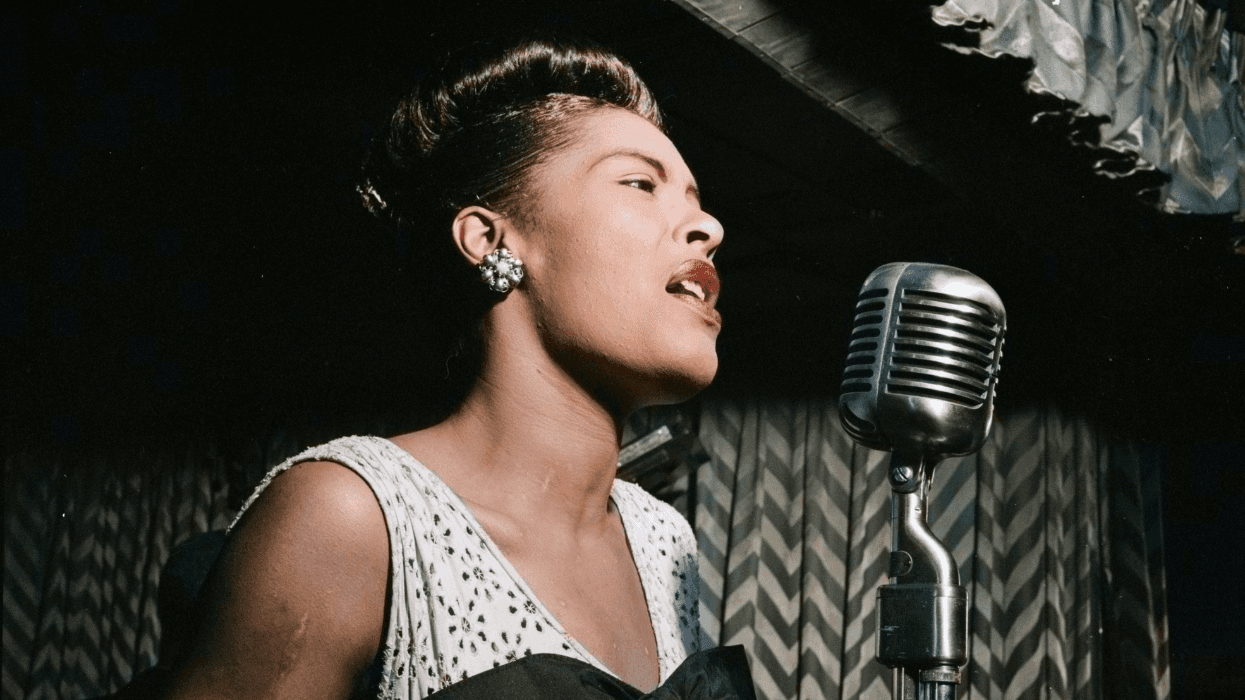

In 1937, Abel Meeropol, a Jewish high school teacher from the Bronx, saw a photograph he could not shake. The image showed Thomas Shipp and Abram Smith hanging from a tree after they had been lynched in Marion, Indiana. Haunted by what he saw, Meeropol wrote "Strange Fruit." Two years later, Billie Holiday transformed it into one of the most devastating protest songs ever recorded.
“Southern trees bear strange fruit. Blood on the leaves and blood at the root.” Holiday wasn't singing about abstract injustice. She was singing about Black people being lynched, their bodies hanging from trees in the United States. Something I never thought I’d see make a comeback during my lifetime. And that is precisely why we should be paying so much more attention to the headlines arriving in 2026.
Earlier this month, 29-year-old Tasia Fortune was found hanging from a tree behind a vacant home in Jackson, Mississippi. Last year, 18-year-old Demartravion "Trey" Reed was found hanging from a tree at Delta State University. In North Carolina, the death of Javion Magee generated national scrutiny. Over the last several years, civil rights organizations, journalists, attorneys, and grieving families have documented and challenged a growing number of cases involving Black people found hanging in public spaces, many of which were quickly classified as suicides.
In February, the civil rights organization JULIAN released A Crimson Record, a report documenting a significant rise in modern-day lynchings across seven Southern states between 2000 and 2025. The report argues that racial terror never disappeared. Instead, it adapted, becoming less visible, less public, and perhaps easier for institutions to dismiss. Whether one agrees to absorb the findings in the report is secondary to the larger question it raises. How did we arrive at a moment in American history when an image so inseparable from racial terror has once again become recognizable in our contemporary news cycle?
A Black person hanging from a tree is not a neutral image in the United States. It cannot be separated from the thousands of documented lynchings that shaped entire generations of Black life in this country. It cannot be divorced from photographs turned into postcards, from receptive white crowds that gathered to watch murders as public spectacles, or from communities forced to inherit a reality in which something as beautiful as a tree ceased to represent life and instead became a marker of violence, terror, and death.
When Black families are confronted with fast and false information after seeing a loved one found hanging from a tree, their total disbelief is not an irrational instinct. They are responding to one of the oldest and most recognizable forms of racial terror in American history, a form of violence that has been carried across generations and understood not as a historical relic contained behind museum glass, but as something that continues to cast a very long and very living shadow over the present. I for one find it impossible to believe there is a trend of Black people in America climbing high into trees to hang themselves.
As a queer American, I find myself thinking less about forensic evidence and more about institutional trust. Our community knows what it feels like to watch violence disappear beneath the veil of apathy, chosen ignorance, indifference, and denial. We know what it feels like when institutions choose words and actions that encourage violence, when public officials become more concerned with inventing moral panic than confronting deadly realities, and when marginalized communities are expected to accept official explanations while setting aside their own instincts and lived experiences.
Entire generations of gay men watched political leaders remain silent while a virus tore through their communities — and family, friends, lovers, and entire neighborhoods disappeared around them. Transgender people continue to witness and experience violence against them filtered through media coverage that too often strips away context, identity, and humanity.
One of the more striking findings in A Crimson Record is that the organization's broader database of fatal hate crimes and suspicious deaths included more than 50 transgender women. That statistic should force an uncomfortable reckoning within LGBTQ+ spaces, because it exposes the limitations of the increasingly fragmented way we talk about civil rights. Black queer and transgender people do not experience racism separately from homophobia or transphobia. Their lives exist at the intersection of those realities, whether the rest of us find those intersections politically convenient or not.
The tendency to compartmentalize injustice into increasingly narrow and isolated categories is weakening our collective ability to confront it. We become far less powerful when racism occupies one lane and anti-LGBTQ+ animus another, while immigration, antisemitism, reproductive rights, Islamophobia, disability rights, and economic inequality are all assigned their own advocacy organizations, activists, and carefully curated moments in the national spotlight. Human beings do not experience discrimination in convenient categories. Black queer people certainly don't, which is precisely why no one should have the luxury of treating racial terror as someone else's issue.
The modern LGBTQ+ movement was built by people who understood what it meant to be criminalized and erased by a society that repeatedly framed discrimination as tradition while reinforcing it through schools, churches, workplaces, neighbors, friends, and families that transformed prejudice into something both ordinary and virtuous. We also know that we did not survive alone. Our movement was built through coalitions, strengthened by solidarity, and sustained by people who understood that an attack on one marginalized community inevitably places others at risk. Other communities showed up for us when our government wouldn't, when our neighbors wouldn't, and when our own families sometimes couldn't.
The modern lynchings of Black people in America demand sustained attention from all of us. A Black person found hanging from a tree in the United States should trigger the most rigorous, transparent, and comprehensive investigation imaginable, because the image itself carries the weight of one of this country's oldest forms of racial terror.
Have we become so accustomed to political, cultural, and moral chaos that we no longer recognize it as chaos? We move from one outrage to the next with almost mechanical efficiency, ricocheting between war, economic instability, attacks on immigrants, attacks on transgender people, book bans, antisemitism, mass shootings, reproductive rights, climate disasters, and whatever fresh catastrophe happens to dominate our phones for the next 48 hours.
The pace itself has become part of the problem, spreading a kind of national numbness that shrinks our attention spans, erodes our capacity for empathy, and transforms human suffering into just another headline competing for space in an overcrowded information economy. The extraordinary has somehow become ordinary, and perhaps that is what should frighten us most. An image once powerful enough to inspire one of the most important protest songs ever written can now pass through our collective consciousness without forcing the kind of national reckoning it once demanded.
Josh Ackley is a political strategist and the frontman of the queerpunk band The Dead Betties. @momdarkness.
Opinion is dedicated to featuring a wide range of inspiring personal stories and impactful opinions from the LGBTQ+ community and its allies. Visit Advocate.com/submit to learn more about submission guidelines. We welcome your thoughts and feedback on any of our stories. Email us at voices@equalpride.com. Views expressed in Voices stories are those of the guest writers, columnists, and editors, and do not directly represent the views of The Advocate or our parent company, equalpride.