'%3E%3Cpath d='M16.3574 35.6519H12.9537L15.0491 18.8873L16.3574 35.6519ZM30.4229 54.0093L22.309 0.994385H7.91795L0 54.0093H10.6634L11.5802 46.3855H17.4014L17.9914 54.0093H30.4229Z' fill='%23971B20'/%3E%3Cpath d='M48.2073 41.8813C48.2073 43.4049 47.4892 44.0011 46.1144 44.0011H43.7595V11.0687H46.1144C47.4892 11.0687 48.2073 11.6636 48.2073 13.1885V41.8813ZM59.5273 43.6695V11.3326C59.5273 3.71323 53.5729 0.994385 47.8157 0.994385H31.7213V54.0093H47.8157C53.5729 54.0093 59.5273 51.29 59.5273 43.6695Z' fill='%23971B20'/%3E%3Cpath d='M90.183 0.994385H78.6039L75.0711 30.6157L71.9955 0.994385H59.4346L69.2474 54.0093H80.373L90.183 0.994385Z' fill='%23971B20'/%3E%3Cpath d='M107.063 42.3448C107.063 43.7359 105.951 44.5974 104.643 44.5974C103.269 44.5974 102.157 43.7359 102.157 42.3448V12.658C102.157 11.2676 103.269 10.4058 104.643 10.4058C105.951 10.4058 107.063 11.2676 107.063 12.658V42.3448ZM119.233 43.2723V11.7312C119.233 6.36384 112.952 -3.8147e-06 104.643 -3.8147e-06C96.2667 -3.8147e-06 89.9867 6.36384 89.9867 11.7312V43.2723C89.9867 48.6393 96.2667 55 104.643 55C112.952 55 119.233 48.6393 119.233 43.2723Z' fill='%23971B20'/%3E%3Cpath d='M150.976 43.9349V33.7309H139.069V42.3448C139.069 43.7359 137.957 44.5974 136.582 44.5974C135.076 44.5974 133.964 43.7359 133.964 42.3448V12.658C133.964 11.2676 135.076 10.4058 136.582 10.4058C137.957 10.4058 139.069 11.2676 139.069 12.658V21.2723H150.976V11.0687C150.976 5.70107 145.283 -3.8147e-06 136.582 -3.8147e-06C127.75 -3.8147e-06 121.796 5.70107 121.796 11.0687V43.9349C121.796 49.3022 127.75 55 136.582 55C145.283 55 150.976 49.3022 150.976 43.9349Z' fill='%23971B20'/%3E%3Cpath d='M167.478 35.6519H164.076L166.17 18.8873L167.478 35.6519ZM181.544 54.0093L173.432 0.994385H159.037L151.123 54.0093H161.785L162.704 46.3855H168.523L169.114 54.0093H181.544Z' fill='%23971B20'/%3E%3Cpath d='M205.412 10.4058V0.994385H177.081V10.4058H185.392V54.0093H197.428V10.4058H205.412Z' fill='%23971B20'/%3E%3Cpath d='M230.002 54.0093V43.9349H218.914V31.8746H226.635V21.8028H218.914V10.4058H230.002V0.994385H206.875V54.0093H230.002Z' fill='%23971B20'/%3E%3C/g%3E%3Cdefs%3E%3CclipPath id='clip0_260_7080'%3E%3Crect width='230' height='55' fill='white'/%3E%3C/clipPath%3E%3C/defs%3E%3C/svg%3E)
A new historic marker is coming to a Minnesota small town where, more than two decades ago, one of the nation’s first rural LGBTQ+ Pride movements took root.
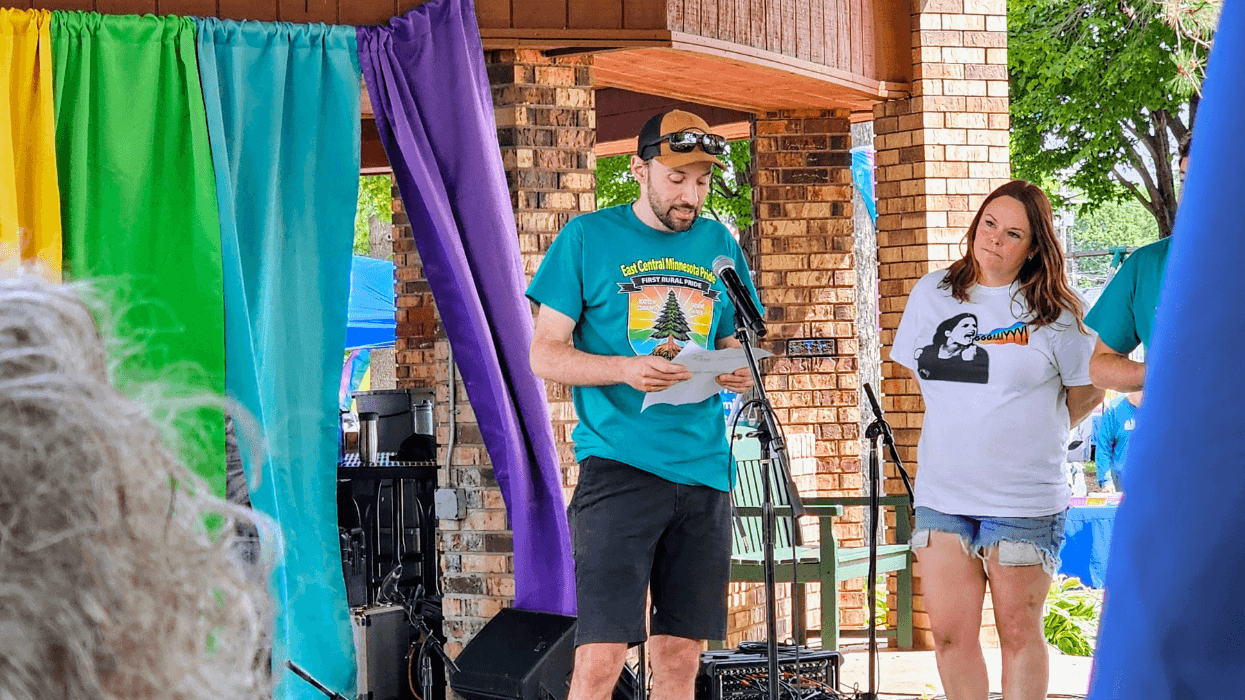
On May 28, local LGBTQ+ advocates in Pine City will dedicate a historic marker commemorating the launch of East Central Minnesota Pride in 2005, which members describe as the country’s first rural Pride organization. The monument will be placed in Voyager Park, where the group held its first official celebration.
“LGBTQ+ history is so often not documented, and I think there’s a big push for that now,” Aaron Bombard, the group’s president, told The Advocate. “This is going to be huge for us. But it’s also going to be a huge part of just documenting the community’s history.”
Last year, the Pine City Council narrowly voted to approve the project, with a tiebreaker vote of support from Mayor Kent Bombard, husband of Aaron Bombard.
Organizers with East Central Minnesota Pride say the marker is the state’s first LGBTQ+ monument on the state’s registry of historical markers. Seeing an LGBTQ+ history site, especially one of importance to the state’s rural residents, feels especially meaningful to Nathan Johnson, the group’s secretary.
“The rural LGBTQ stories are often overlooked,” Johnson said. “This puts greater Minnesota on the map of LGBTQ history.”
Tracking historic markers can be difficult, according to Allison Ortiz, head of communications for the Minnesota Historical Society. There is no universal definition for what constitutes a historic marker, and there is no single database that documents all monuments and markers across the state, she wrote in an email to The Advocate.
The Historical Marker Database does not include any markers erected by the Minnesota Historical Society that pertain specifically to LGBTQ+ history, though it includes a sign placed at Loring Park in Minneapolis in 2010 to celebrate Pride festivities in the Twin Cities.
As of 2025, the project had a projected price tag of $7,000, according to Pine County News. The project is being funded partly through the Minnesota Historical Society and a state fund that seeks to preserve local history, arts, and culture.
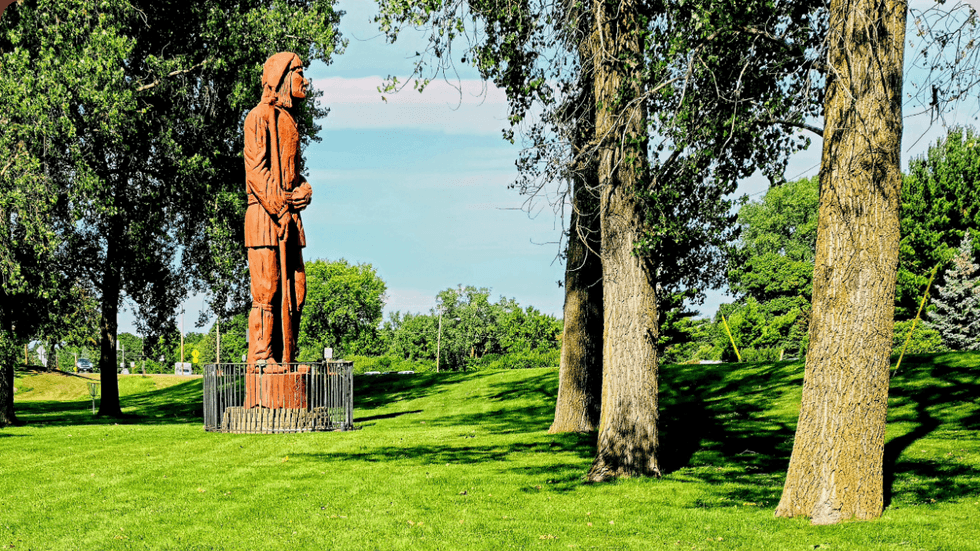 The historic marker will be placed in Pine City's Voyageur Park, pictured here, where East Central Minnesota Pride was launched in 2005.East Central Minnesota Pride
Pine City is a small, rural community located about one hour north of the Minneapolis metropolitan area. The city’s population was roughly 3,100 people in 2020, according to the United States Census.
Despite the town’s small size, Pine City has played a key role in LGBTQ+ organizing in Minnesota. Members of a support group for gay, bisexual, and questioning men from the community launched East Central Minnesota Pride in 2005, bringing an LGBTQ+ Pride movement historically associated with urban areas to the rural Midwest at a time when many LGBTQ+ people in small towns felt they had to leave for larger cities to find acceptance and community.
The group was founded in the same park where the historic marker will soon stand.
“This says to LGBTQ people you don’t have to flee to the big city,” Johnson said.
Over two decades, East Central Minnesota Pride has only grown. In addition to an annual celebration in Voyageur Park, the group hosts a social for LGBTQ+ seniors, collaborates with other LGBTQ+ organizations, and sponsors interfaith services for LGBTQ+ residents during Pride Month.
The group also offers advice to up-and-coming rural LGBTQ+ organizations around the country, Johnson said. “We’re all learning from each other.”
At a time when LGBTQ+ history and visibility are increasingly under political attack nationwide, organizers say preserving that legacy in rural communities feels especially urgent.
When the marker is installed next month, Bombard and Johnson both said they hope it reminds LGBTQ+ residents they are welcome.
“There's a lot of opportunity in country life for the community, and it shows that this is a safe place,” Bombard said.
“People looking at this from New York or Los Angeles would look at this and maybe wonder: Why do they care about this story about rural Pride?” Johnson said. “But this shows that you don't have to leave. You can live, you can build community, you can belong right in Pine City, Minnesota.”
This article was written as part of the Future of Queer Media fellowship program at The Advocate, which is underwritten by a generous gift from Morrison Media Group. The program helps support the next generation of LGBTQ+ journalists.