'%3E%3Cpath d='M16.3574 35.6519H12.9537L15.0491 18.8873L16.3574 35.6519ZM30.4229 54.0093L22.309 0.994385H7.91795L0 54.0093H10.6634L11.5802 46.3855H17.4014L17.9914 54.0093H30.4229Z' fill='%23971B20'/%3E%3Cpath d='M48.2073 41.8813C48.2073 43.4049 47.4892 44.0011 46.1144 44.0011H43.7595V11.0687H46.1144C47.4892 11.0687 48.2073 11.6636 48.2073 13.1885V41.8813ZM59.5273 43.6695V11.3326C59.5273 3.71323 53.5729 0.994385 47.8157 0.994385H31.7213V54.0093H47.8157C53.5729 54.0093 59.5273 51.29 59.5273 43.6695Z' fill='%23971B20'/%3E%3Cpath d='M90.183 0.994385H78.6039L75.0711 30.6157L71.9955 0.994385H59.4346L69.2474 54.0093H80.373L90.183 0.994385Z' fill='%23971B20'/%3E%3Cpath d='M107.063 42.3448C107.063 43.7359 105.951 44.5974 104.643 44.5974C103.269 44.5974 102.157 43.7359 102.157 42.3448V12.658C102.157 11.2676 103.269 10.4058 104.643 10.4058C105.951 10.4058 107.063 11.2676 107.063 12.658V42.3448ZM119.233 43.2723V11.7312C119.233 6.36384 112.952 -3.8147e-06 104.643 -3.8147e-06C96.2667 -3.8147e-06 89.9867 6.36384 89.9867 11.7312V43.2723C89.9867 48.6393 96.2667 55 104.643 55C112.952 55 119.233 48.6393 119.233 43.2723Z' fill='%23971B20'/%3E%3Cpath d='M150.976 43.9349V33.7309H139.069V42.3448C139.069 43.7359 137.957 44.5974 136.582 44.5974C135.076 44.5974 133.964 43.7359 133.964 42.3448V12.658C133.964 11.2676 135.076 10.4058 136.582 10.4058C137.957 10.4058 139.069 11.2676 139.069 12.658V21.2723H150.976V11.0687C150.976 5.70107 145.283 -3.8147e-06 136.582 -3.8147e-06C127.75 -3.8147e-06 121.796 5.70107 121.796 11.0687V43.9349C121.796 49.3022 127.75 55 136.582 55C145.283 55 150.976 49.3022 150.976 43.9349Z' fill='%23971B20'/%3E%3Cpath d='M167.478 35.6519H164.076L166.17 18.8873L167.478 35.6519ZM181.544 54.0093L173.432 0.994385H159.037L151.123 54.0093H161.785L162.704 46.3855H168.523L169.114 54.0093H181.544Z' fill='%23971B20'/%3E%3Cpath d='M205.412 10.4058V0.994385H177.081V10.4058H185.392V54.0093H197.428V10.4058H205.412Z' fill='%23971B20'/%3E%3Cpath d='M230.002 54.0093V43.9349H218.914V31.8746H226.635V21.8028H218.914V10.4058H230.002V0.994385H206.875V54.0093H230.002Z' fill='%23971B20'/%3E%3C/g%3E%3Cdefs%3E%3CclipPath id='clip0_260_7080'%3E%3Crect width='230' height='55' fill='white'/%3E%3C/clipPath%3E%3C/defs%3E%3C/svg%3E)


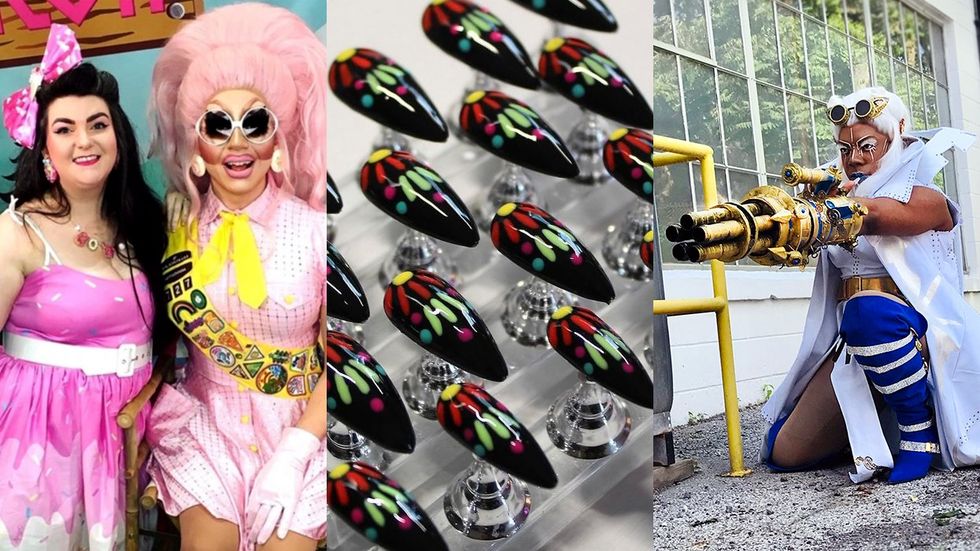
Businesses like Kitty Girl Nails, The Black Bard, and Bow Bow by Kyle are fighting back against anti-drag legislation.
Kyle Bowers/Bow Bow by Kyle; Allison Keyes/Kitty Girl Nails; Terrence Henderson/The Black BardIn states like Alabama and Florida, vague and overly broad anti-drag bills have been put forward or brought into law, despite criticism that they violate First Amendment rights and potentially criminalize the expression of gender identity. As these bills are continuously amended and debated, it's clear that banning drag isn't as simple as it sounds, and that doing so could have potentially dangerous consequences for the LGBTQ community at large.
Supporting the drag and LGBTQ+ communities is more critical now than ever before. Learn about three courageous small businesses, run for and by the LGBTQ community, that are using their platforms to support drag. These business owners are embracing drag artists in parts of the country where anti-drag sentiments persist, and they are celebrating ideals that are deeply held by the drag community: inclusivity, self-acceptance, and creative expression.
Kitty Girl Nails
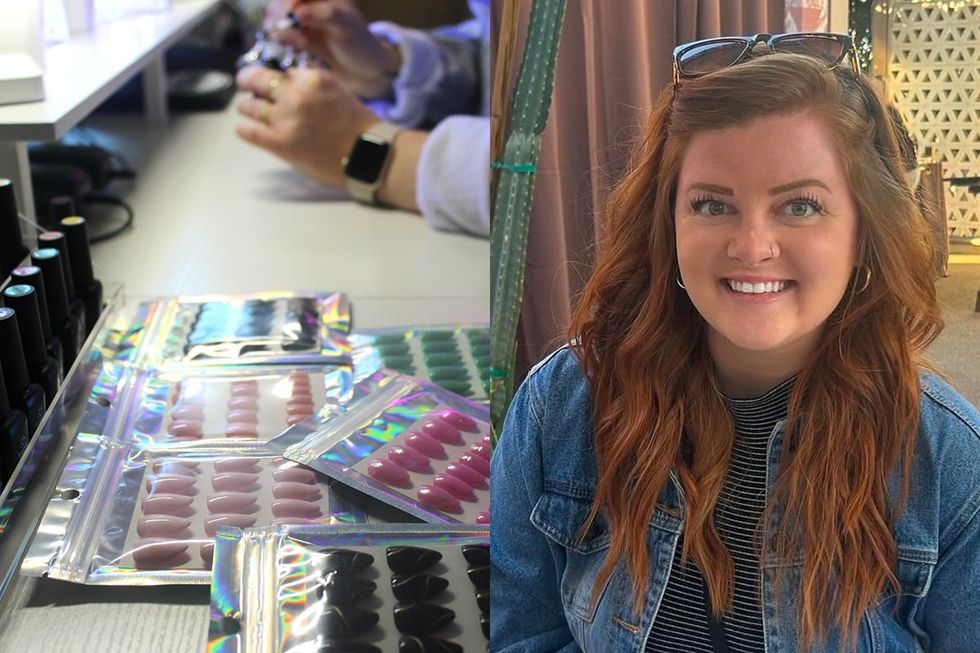
Kitty Girl Nails owner Kait Beierle
Kait Beierle/Kitty GIrl Nails; Courtesy Allison Keyes
Kitty Girl Nails is a custom press-on nail business that creates products tailored to fit everyone's nail size and shape, particularly for drag queens. It's based in Kernersville, North Carolina, a town near Winston-Salem.
Owner Kait Beierle is a North Carolina transplant from Greencastle, Indiana, a town of less than 10,000 people. Despite her home state being named "the most red state" in the Midwest, Kait came out as a lesbian, and her lifelong support of the drag community began there.
The creation of Kitty Girl Nails occurred unexpectedly. It was catalyzed by a devastating yet transformative personal hardship she experienced in 2022. In a time of struggle, drag became more than a form of entertainment; it became a vital support system in her life.
Last year, Kait began making press-on nails for herself as a hobby and decided to give a set to a local drag legend she admired, Anna Yacht. When she passed the nails to Anna, she saw that only the thumb nails fit. Kait worked with Anna to find the correct sizing and learned invaluable insights about nails in the drag community.
Kait learned that most press-on nail kits don't fit drag queens' nail beds, so some queens buy multiple press-on kits to create complete sets by combining the largest nails. Finding artificial nails that fit can be challenging for queens, and getting made-to-fit nails at a salon is not always an option. She learned that, because salon nails can't be taken off as easily as press-ons, they don't suit all workplaces that queens participate in outside of drag. For queens, the inability to remove their nails can put them at risk of bias, discrimination, and even danger. Salon nail sets also pose a significant financial barrier to queens, especially if they need to be frequently removed.
Because of the friendship that blossomed between Kait and Anna, Kait learned that her nails could play a role not just in accessorizing but in supporting the safety of drag queens.
"I'm proud that, as a queer woman, my work is giving back to the community that has given so much to me. I'm thankful that it helps queens access something that makes them feel beautiful, authentic, and keeps them safe." Kait said.
The story of Kitty Girl Nails is a testament to the role small businesses everywhere can play in protecting and supporting drag queens. It also highlights the power of mutual support and connection within the drag and LGBTQ community.
The Black Bard
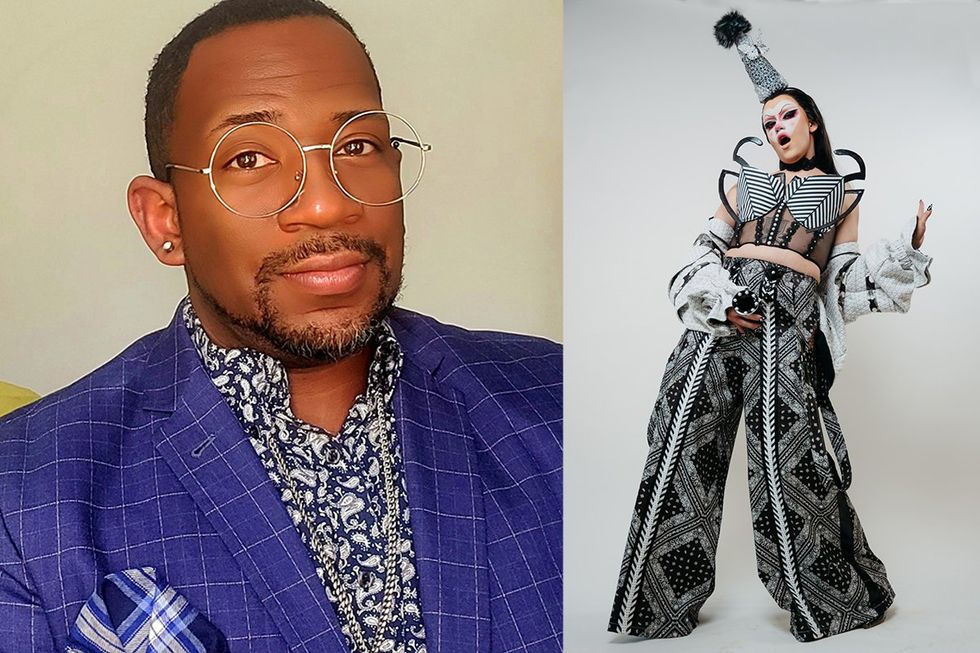
The Black Bard's Terrence Henderson
Courtesy Terrence O'Brian Henderson; Ashlyn Daisy/The Black Bard
Fashion designer Terrence Henderson, known as The Black Bard on social media, makes inventive drag couture that creates pathways for queens to experiment and express their authentic selves. Terrence currently lives in Columbus, Ohio, but has worked across the country in states such as Pennsylvania, Utah, and North Carolina.
Growing up in the South and surrounded by a family of inspiring Black women, Terrence admired the grandeur of "Sunday dressing" and the fashion of church-going Black women. He describes it as an undeniable influence in drag costuming and a key part of his inspiration for becoming a designer.
He began his design career as a cosplayer, eventually becoming interested in "crossplaying", a subgenre of cosplaying that involves dressing as a character of a different gender. Henderson, who identifies as a Black, pansexual man, nurtured his passion for gender bending clothing and started creating drag performance pieces. In 2023, his talents secured him a spot on Sew Fierce, a reality TV show competition for drag designers on Canada's OUTtv. Terrence was eliminated during the inaugural season but was invited to compete in season two after being dubbed a fan favorite. In season two, his style evolved by exploring the niche intersection of cosplay and drag. This shift felt authentic to Terrence and inspired him to build a brand where other types of queens could be their authentic selves.
"It's a privilege to be able to create the elements that help queens show their magic to the world", said Terrence.
While speaking with Terrence, I learned that the drag profession encompasses a diverse range of queens. From goth queens to impersonation and comedy queens, all have a place to shine in the community. The fantastical, silhouette-focused designs of The Black Bard are indicative of that inclusivity and provide an additional avenue for queens to express their individuality.
By introducing a new style to the drag community, Terrence embraced the diverse range of identities that comprise the world of drag. Traveling around the country as a designer, he was surprised to find the same diversity in LGBTQ and drag communities in Salt Lake City, Utah, and Columbus, Ohio. The profound local support and love for drag in these areas were impossible for him to ignore. It was impactful because, just miles away, one could be in a far less welcoming environment, such as his past residence in Western Pennsylvania.
Above all, Terrence emphasizes the importance of nourishing queer communities of all sizes, especially in the face of hatred and bigotry.
Bow Bow by Kyle
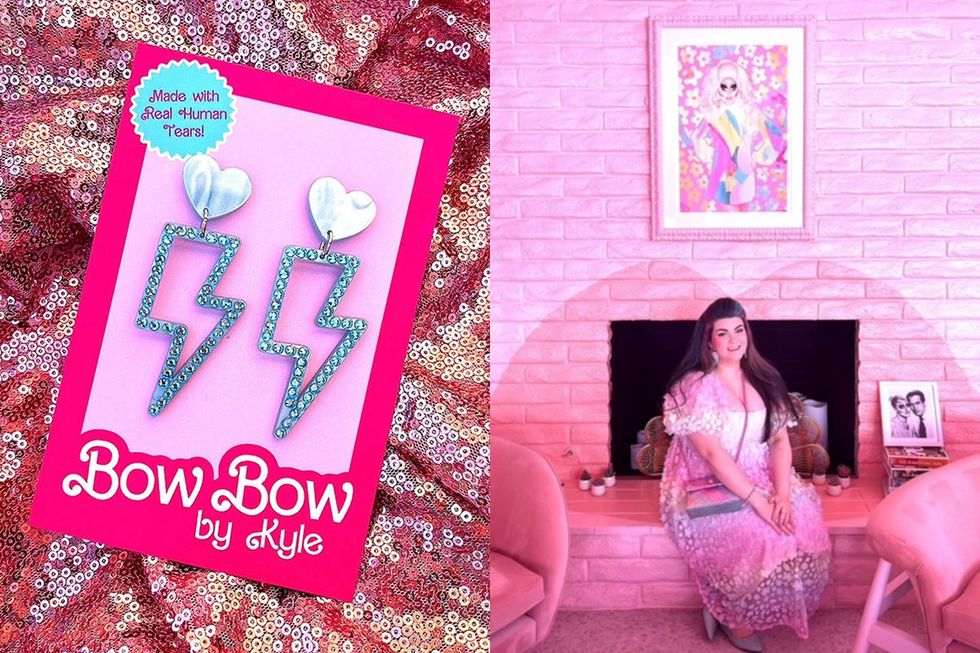
Bow Bow by Kyle
Kyle Bowers/Bow Bow by Kyle
Bow Bow by Kyle is a jewelry business that specializes in making bright, fun, and campy earrings for drag queens, the LGBTQ community, and beyond. Bow Bow is owned by Kyle Bowers and is based in Lexington, a small town in central North Carolina.
Bow Bow, as the name suggests, began as a hair accessory business specializing in creating bows. Kyle was inspired to develop Bow Bow after going to HeroesCon, a comic convention, in 2013. She soon began making "fandom" bows featuring characters from Harry Potter, Star Wars, and other media.
Kyle, who identifies as a pansexual woman, soon began making additional products through Bow Bow that could be enjoyed by those in the drag and LGBTQ community. She grew up watching RuPaul's Drag Race and following drag icons like Trixie Mattel. In 2016, she met Trixie at a Pride festival and gave her an assortment of hair bows. Trixie later wore one while performing!
Just before the pandemic began in March 2020, Kyle met Trixie again, but this time with a new product to share. Kyle started making earrings and created a set with Vanessa Ross, a frequent collaborator and resin artist, that featured glitter from Trixie's cosmetic line, Trixie Cosmetics. Trixie loved the earrings and appreciated their durable, yet surprisingly lightweight, quality.
Bow Bow by Kyle creates innovative and larger-than-life earrings that take the weight off drag queens' shoulders, literally. They have received consistent positive feedback and are praised in the drag community for being both glamorous and comfortable. Her designs can be worn by all queens and hold up even while doing cartwheels, "death drops", and other stunts. They're also made in a range of styles and designs, which increases financial accessibility.
When Kyle decided to align her business with the drag community, she considered it a great responsibility and honor.
"Entering any drag-focused space is a privilege and I'm so grateful that I was welcomed and embraced by the community", said Kyle.
She firmly believes that, as a fan and effective advocate, political awareness and the use of an intersectional lens are the best ways to support everyone in the drag and LGBTQ+ community. Kyle is thankful that she gets to share her craft with the drag world and is committed to protecting the rights of her community.
Why you should support pro-drag businesses

Author Annalysse Mason
Franki Abraham (provided)
Small and growing businesses, like those of Kait, Kyle, and Terrence, are pivotal in helping kings and queens access high-end products that make them feel authentic, empowered, and safe in all parts of the country. The bonds that form between drag performers and small business owners are irreplaceable, and they raise awareness of the specific needs of the drag community. Their entrepreneurship is more than a business transaction; it's a form of advocacy.
It's clear that the drag ecosystem is multifaceted and includes not just queens, but the fans and creators that support their craft. In areas of the country that are anti-drag and anti-LGBTQ, these local hubs play a critical role in fostering acceptance, belonging, and celebrating one's identity– ideas that characterize the messages shared through drag performance all over the world.
Voices is dedicated to featuring a wide range of inspiring personal stories and impactful opinions from the LGBTQ+ community and its allies. Visit Advocate.com/submit to learn more about submission guidelines. Views expressed in Voices stories are those of the guest writers, columnists, and editors, and do not directly represent the views of The Advocate or our parent company, equalpride.