'%3E%3Cpath d='M16.3574 35.6519H12.9537L15.0491 18.8873L16.3574 35.6519ZM30.4229 54.0093L22.309 0.994385H7.91795L0 54.0093H10.6634L11.5802 46.3855H17.4014L17.9914 54.0093H30.4229Z' fill='%23971B20'/%3E%3Cpath d='M48.2073 41.8813C48.2073 43.4049 47.4892 44.0011 46.1144 44.0011H43.7595V11.0687H46.1144C47.4892 11.0687 48.2073 11.6636 48.2073 13.1885V41.8813ZM59.5273 43.6695V11.3326C59.5273 3.71323 53.5729 0.994385 47.8157 0.994385H31.7213V54.0093H47.8157C53.5729 54.0093 59.5273 51.29 59.5273 43.6695Z' fill='%23971B20'/%3E%3Cpath d='M90.183 0.994385H78.6039L75.0711 30.6157L71.9955 0.994385H59.4346L69.2474 54.0093H80.373L90.183 0.994385Z' fill='%23971B20'/%3E%3Cpath d='M107.063 42.3448C107.063 43.7359 105.951 44.5974 104.643 44.5974C103.269 44.5974 102.157 43.7359 102.157 42.3448V12.658C102.157 11.2676 103.269 10.4058 104.643 10.4058C105.951 10.4058 107.063 11.2676 107.063 12.658V42.3448ZM119.233 43.2723V11.7312C119.233 6.36384 112.952 -3.8147e-06 104.643 -3.8147e-06C96.2667 -3.8147e-06 89.9867 6.36384 89.9867 11.7312V43.2723C89.9867 48.6393 96.2667 55 104.643 55C112.952 55 119.233 48.6393 119.233 43.2723Z' fill='%23971B20'/%3E%3Cpath d='M150.976 43.9349V33.7309H139.069V42.3448C139.069 43.7359 137.957 44.5974 136.582 44.5974C135.076 44.5974 133.964 43.7359 133.964 42.3448V12.658C133.964 11.2676 135.076 10.4058 136.582 10.4058C137.957 10.4058 139.069 11.2676 139.069 12.658V21.2723H150.976V11.0687C150.976 5.70107 145.283 -3.8147e-06 136.582 -3.8147e-06C127.75 -3.8147e-06 121.796 5.70107 121.796 11.0687V43.9349C121.796 49.3022 127.75 55 136.582 55C145.283 55 150.976 49.3022 150.976 43.9349Z' fill='%23971B20'/%3E%3Cpath d='M167.478 35.6519H164.076L166.17 18.8873L167.478 35.6519ZM181.544 54.0093L173.432 0.994385H159.037L151.123 54.0093H161.785L162.704 46.3855H168.523L169.114 54.0093H181.544Z' fill='%23971B20'/%3E%3Cpath d='M205.412 10.4058V0.994385H177.081V10.4058H185.392V54.0093H197.428V10.4058H205.412Z' fill='%23971B20'/%3E%3Cpath d='M230.002 54.0093V43.9349H218.914V31.8746H226.635V21.8028H218.914V10.4058H230.002V0.994385H206.875V54.0093H230.002Z' fill='%23971B20'/%3E%3C/g%3E%3Cdefs%3E%3CclipPath id='clip0_260_7080'%3E%3Crect width='230' height='55' fill='white'/%3E%3C/clipPath%3E%3C/defs%3E%3C/svg%3E)

"Ope, sorry. Let me scoot past you there."
It still slips out of me all these years later as I turn sideways to pass other people—my wife in our hallway, a stranger in the grocery store. It doesn't really matter who. It isn't politeness so much as reflex: a small bodily acknowledgment that someone else is here. A respect for shared space.
I learned that reflex in Minnesota. The Twin Cities were the closest big city to the small town where I went to college, and the first place I tested my independence. The skyways in winter held back cold so intense it physically hurt exposed skin. There were countless cups of Caribou Coffee's Mint Condition, weeks rehearsing and performing Mozart's Requiem with Luther College's Nordic Choir and the Minnesota Orchestra, and a life-changing encounter with a special exhibit of Käthe Kollwitz at the Art Institute, where grief was carved into lines so honest it stole my breath.
This is a place that formed how I experience the world. A city where people checked in on a college kid who must have looked lost with her printed-out MapQuest directions, long before GPS allowed us all to pretend we never needed help. Invariably, someone would stop, tilt their head, and ask, Are you okay?, and genuinely want to know the answer.
The echo of those words has felt devastating lately.
This is a place of unassuming care. People show up with food when someone has died or been born, is sick, or has been diagnosed with a disease. The responses aren't that different. People show up and quietly do what is needed.
Not out of performative heroism, but out of resilience.
You don't survive that far north without learning how to take care of one another. When winter is that real, care isn't a vague gesture. You help push a stranger's car out of the snow because you understand something elemental: at some point, it will be your car stuck there in thirty below.
This is why it feels like a profound miscalculation to mistake this gentleness for weakness. This is the wrong place to confuse care with compliance, or kindness with fragility. Community here is not passive but a living ecosystem. And lately, that instinct for neighborly care has begun to be treated as something dangerous.
Renée Nicole Good lived that ethic. She was a poet, a mother, and a wife. On the morning she was killed, she dropped her child off at school and moved through the same choreography of backpacks and goodbyes and yes-you-have-to-wear-a-coat-in-January that I know well. Then she and her wife, Becca, noticed something unfolding on a Minneapolis street that didn't sit right.
They stopped to support their neighbors, bear witness, and warn people to seek shelter. They stood close enough to help if something went wrong. Renée responded the way many women have learned to respond when confronted by force, trying to soften the moment. Video shows her smiling, her voice calm and reassuring.
Renee was also queer. She and Becca were living an ordinary queer family life, from school drop-offs and shared errands to showing up for neighbors. Queer people learn early to read a room and stay calm when authority enters, suspicion already attached. De-escalation is not submission; it is a survival skill.
Renée's gentleness that morning was not naïveté. It was practiced care. Becca stood beside her, steady and unflinching. Where Renee's instinct was to soften, Becca's was to stay rooted and to bear witness without apology. She did not retreat. She refused to disappear. There is a kind of care that looks like reassurance, and another that looks like staying put. And in that moment—when community care became visible—it was treated as a threat.
The encounter crossed a line it could not return from.
Renée Nicole Good was shot three times and would never return home to her son, whose stuffed animals still resided in her glove compartment.
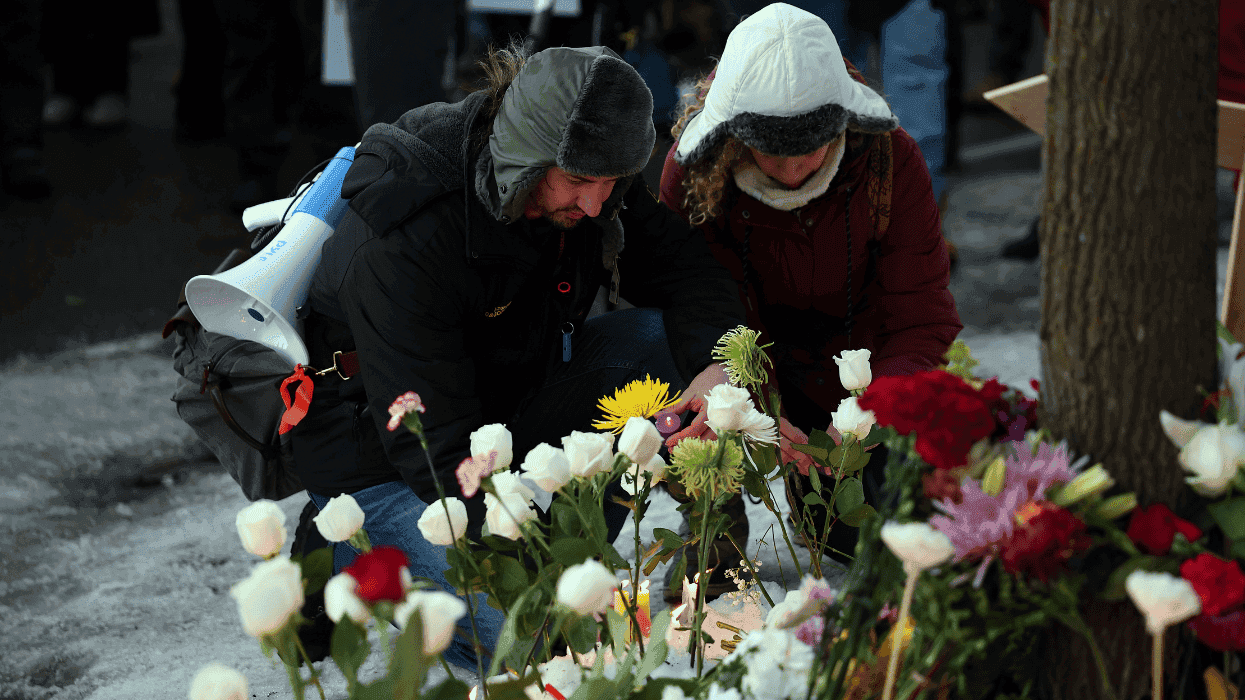
What followed mattered. A neighbor screamed. A physician stepped forward, only to be repeatedly turned away. Medical care was promised and did not arrive for far too long. And still, the people who had come to bear witness stayed. What happened to Renée did not erase the ethic she lived by. It revealed how dangerous care has become to systems that rely on silence and speed to operate.
Because when care is treated as a threat once, it rarely stays contained.
Alex Pretti was an ICU nurse, trained to notice when something is off and move toward distress rather than away from it. I've worked alongside ICU nurses. Their work is often quiet and constant. It requires steadiness when everything else is unstable, and the ability to maintain that calm when a crisis could arise at any moment. Witnesses say Alex's last words were not a command or a warning, but a question: "Are you okay?"
A poet and a mother. An ICU nurse and teacher.
Two people shaped by different lives, responding to danger with the same ethic: stay human, stay present, don't leave someone alone.
After Renée Nicole Good and Alex Pretti, I keep thinking about The Crucible. About John Proctor not being a hero, but as a warning light. There is a moment in that story when a community begins to mistake its own conscience for the enemy. When people who refuse to escalate, who will not perform fear, who will not surrender their humanity, become suspect simply for remaining visible.
Minneapolis feels like that moment now. Not because it is perfect or innocent, but because if people whose instincts are to calm, tend, and stay are being treated as threats, then we are no longer talking about isolated acts of violence. We are talking about a society that has begun to see care itself as subversive.
Still, this community responds the only way it knows how. People stay and bear witness. They refuse to let care disappear just because it has been punished.
For all the grief I carry for this place I love, I believe more than ever in that unassuming, stubborn, ordinary love. This is how people survive that far north: not by hardening, but by staying human.
I am not willing to let it be mistaken for weakness. This place was built by people who understood that survival is shared and refused to look away. Care is how Minnesota endures. And just like it will outlast any blizzard that nature can throw its way, it will continue to outlast those who mistake community care for a threat.
Dr. Kate Wilder is a psychologist and writer whose work examines queerness, survival, and the long afterlife of shame.
Opinion is dedicated to featuring a wide range of inspiring personal stories and impactful opinions from the LGBTQ+ community and its allies. Visit Advocate.com/submit to learn more about submission guidelines. We welcome your thoughts and feedback on any of our stories. Email us at voices@equalpride.com. Views expressed in Voices stories are those of the guest writers, columnists, and editors, and do not directly represent the views of The Advocate or our parent company, equalpride.