'%3E%3Cpath d='M16.3574 35.6519H12.9537L15.0491 18.8873L16.3574 35.6519ZM30.4229 54.0093L22.309 0.994385H7.91795L0 54.0093H10.6634L11.5802 46.3855H17.4014L17.9914 54.0093H30.4229Z' fill='%23971B20'/%3E%3Cpath d='M48.2073 41.8813C48.2073 43.4049 47.4892 44.0011 46.1144 44.0011H43.7595V11.0687H46.1144C47.4892 11.0687 48.2073 11.6636 48.2073 13.1885V41.8813ZM59.5273 43.6695V11.3326C59.5273 3.71323 53.5729 0.994385 47.8157 0.994385H31.7213V54.0093H47.8157C53.5729 54.0093 59.5273 51.29 59.5273 43.6695Z' fill='%23971B20'/%3E%3Cpath d='M90.183 0.994385H78.6039L75.0711 30.6157L71.9955 0.994385H59.4346L69.2474 54.0093H80.373L90.183 0.994385Z' fill='%23971B20'/%3E%3Cpath d='M107.063 42.3448C107.063 43.7359 105.951 44.5974 104.643 44.5974C103.269 44.5974 102.157 43.7359 102.157 42.3448V12.658C102.157 11.2676 103.269 10.4058 104.643 10.4058C105.951 10.4058 107.063 11.2676 107.063 12.658V42.3448ZM119.233 43.2723V11.7312C119.233 6.36384 112.952 -3.8147e-06 104.643 -3.8147e-06C96.2667 -3.8147e-06 89.9867 6.36384 89.9867 11.7312V43.2723C89.9867 48.6393 96.2667 55 104.643 55C112.952 55 119.233 48.6393 119.233 43.2723Z' fill='%23971B20'/%3E%3Cpath d='M150.976 43.9349V33.7309H139.069V42.3448C139.069 43.7359 137.957 44.5974 136.582 44.5974C135.076 44.5974 133.964 43.7359 133.964 42.3448V12.658C133.964 11.2676 135.076 10.4058 136.582 10.4058C137.957 10.4058 139.069 11.2676 139.069 12.658V21.2723H150.976V11.0687C150.976 5.70107 145.283 -3.8147e-06 136.582 -3.8147e-06C127.75 -3.8147e-06 121.796 5.70107 121.796 11.0687V43.9349C121.796 49.3022 127.75 55 136.582 55C145.283 55 150.976 49.3022 150.976 43.9349Z' fill='%23971B20'/%3E%3Cpath d='M167.478 35.6519H164.076L166.17 18.8873L167.478 35.6519ZM181.544 54.0093L173.432 0.994385H159.037L151.123 54.0093H161.785L162.704 46.3855H168.523L169.114 54.0093H181.544Z' fill='%23971B20'/%3E%3Cpath d='M205.412 10.4058V0.994385H177.081V10.4058H185.392V54.0093H197.428V10.4058H205.412Z' fill='%23971B20'/%3E%3Cpath d='M230.002 54.0093V43.9349H218.914V31.8746H226.635V21.8028H218.914V10.4058H230.002V0.994385H206.875V54.0093H230.002Z' fill='%23971B20'/%3E%3C/g%3E%3Cdefs%3E%3CclipPath id='clip0_260_7080'%3E%3Crect width='230' height='55' fill='white'/%3E%3C/clipPath%3E%3C/defs%3E%3C/svg%3E)
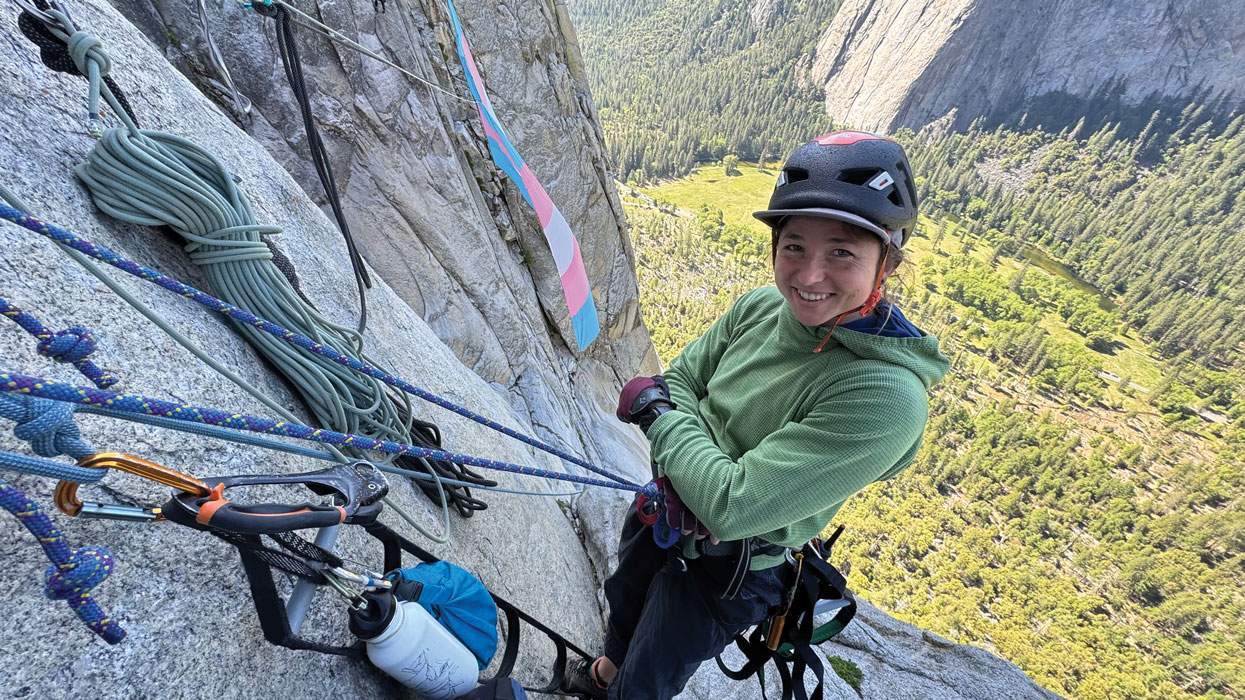

For Shannon “SJ” Joslin, who is nonbinary and gay, nature provides comfort when humans simply can’t — or won’t. The former park ranger isn’t seeking acceptance when they set off on another daring adventure through the California wilderness, but rather the absence of approval and rejection entirely.
“Environmentalism has always been something that is super important to me because I didn’t necessarily always see myself in the people that I was surrounded by,” Joslin says. “I grew up in a really conservative town, where if you wanted to insult someone, you would call them gay. The natural world has never been discriminatory to me like that.”
“If I get caught out in a storm, that’s my bad. But I can absorb all of nature and all of the beauties without it caring about what my sexuality is, what my gender is,” they add. “I always have a place outside.”
Joslin was part of a group that hung a huge transgender Pride flag in Yosemite National Park last May, resulting in them getting fired from their job as a park ranger. The brave action led to international attention, including Joslin being honored in the Out100. While they fight the termination, Joslin continues to search for a position in environmental education and to process this “surreal” experience.
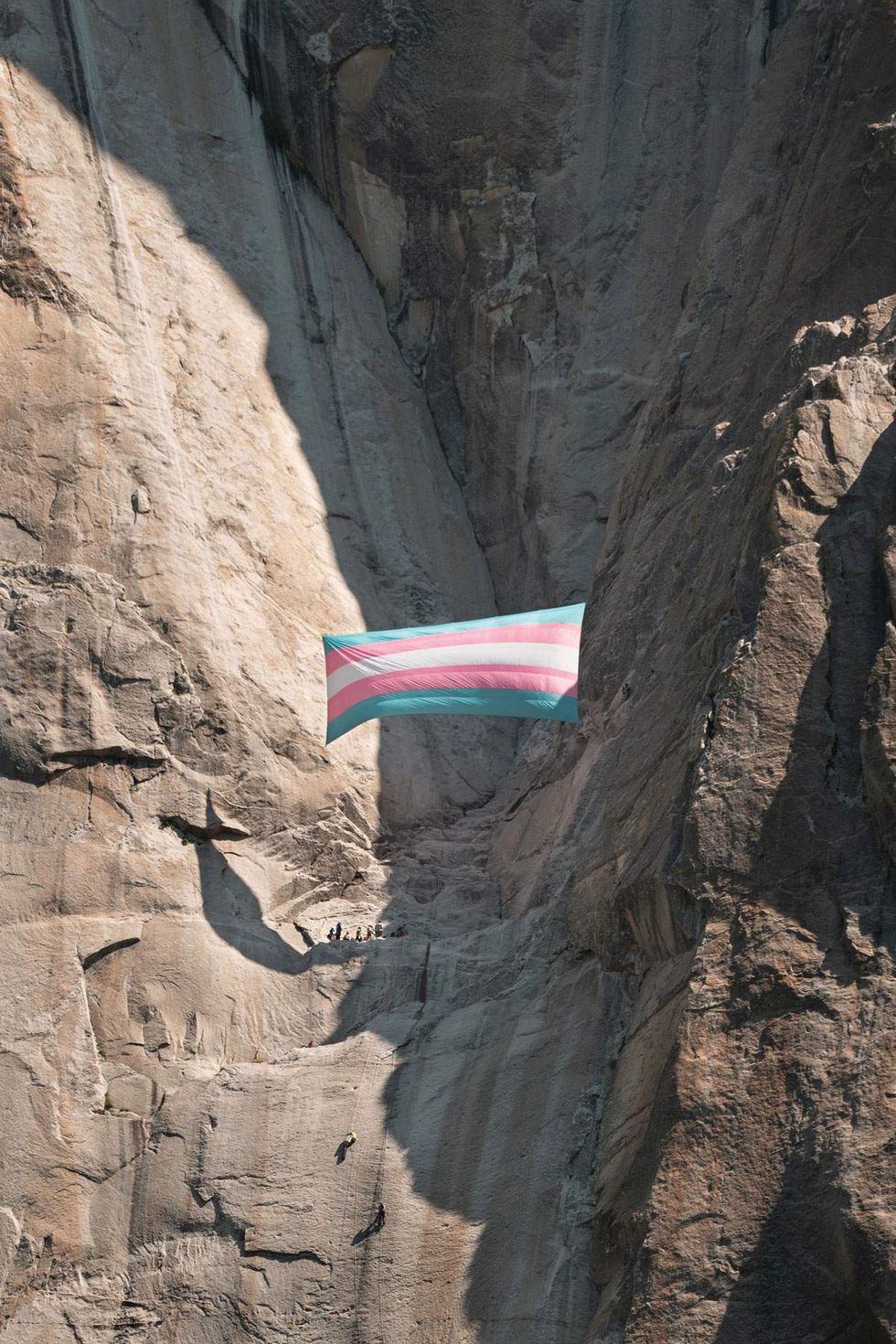 Former park ranger SJ Joslin was fired for helping to hang a giant trans pride flag in Yosemite last year. courtesy SJ Joslin
“In science, you’re kind of chipping away at adding information to a body of knowledge that creates different theories or helps to understand things better,” Joslin says. “It’s usually pretty nameless. Not every scientist is a Darwin, so I’m used to not being in the limelight.”
Joslin’s dream remains to work in nature, using their climbing skills and knowledge to guide others. And they aren’t the only queer scientist who just can’t resist the call of the wild — data shows that LGBTQ+ people have a stronger connection to the environment. They are also more likely than their cisgender and heterosexual peers to be concerned for its well-being.
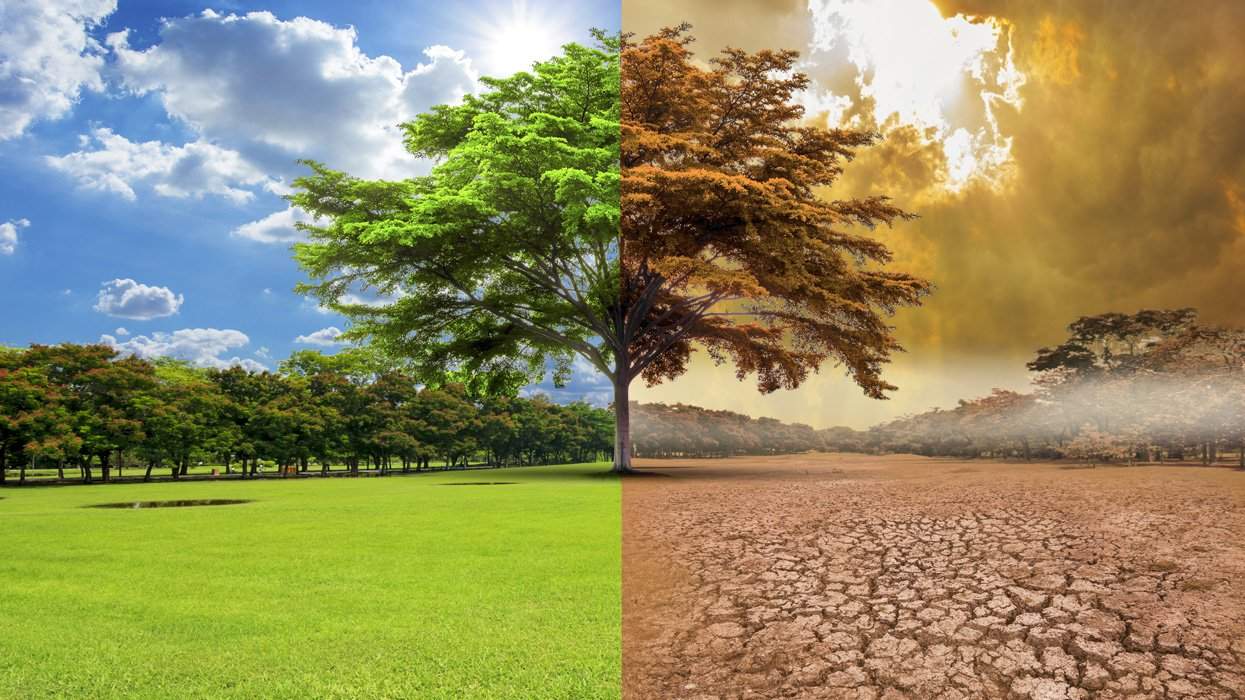
When it comes to climate change, the reason is simple, as outlined in the 2023 report in Sociological Inquiry, “Queering Climate Change: Exploring the Influence of LGBTQ+ Identity on Climate Change Belief and Risk Perceptions” — queer people are more likely to worry about climate change because they are more likely to be impacted by it. Authors Cameron Whitley, an assistant professor of sociology at Western Washington University, and Melanie Bowers, an associate professor of urban politics and policy at WWU, posit that queer people are particularly invested in climate change because it will exacerbate existing inequalities that already devastate the community.
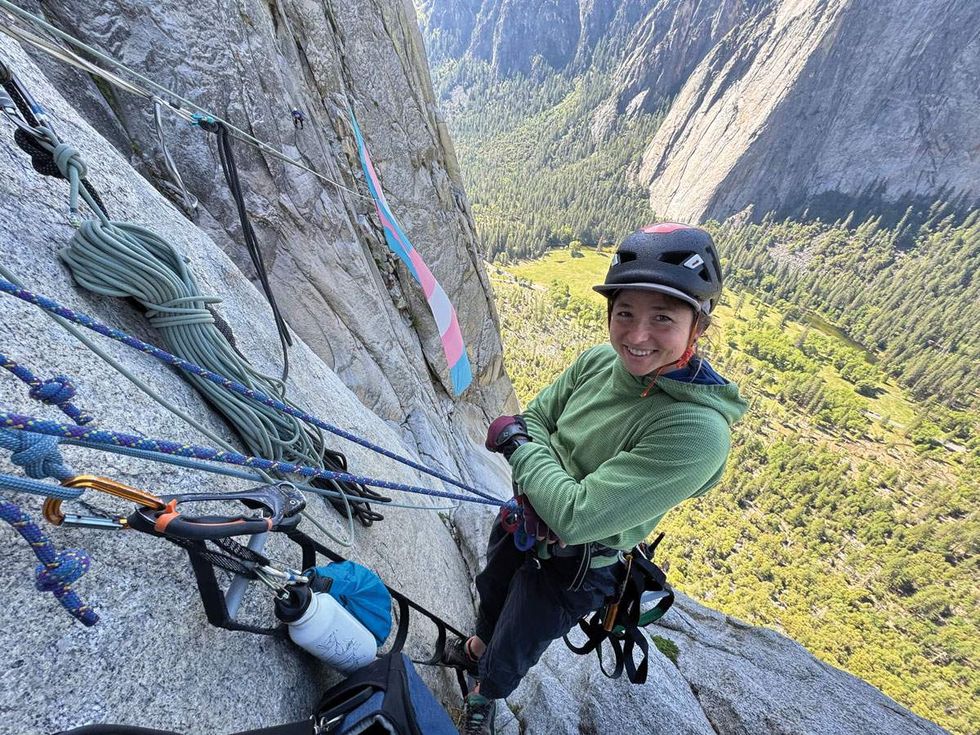 Shannon 'SJ' JoslinMiya Tsudome
“Being queer or trans doesn’t automatically make us care more about the environment or climate change, but growing up in a world that often overlooks or challenges our identities does shape how we see connections between different forms of inequality,” Whitley says in a joint statement with Bowers. “LGBTQ+ people learn early on that issues like housing, health care, immigration, and safety are deeply intertwined, and the environment and climate change fit into that same web.”
Low-income areas are more likely to bear the brunt of climate change, and LGBTQ+ people are more likely to be low-income. Even beyond that reality, disaster response forces can discriminate against or disregard LGBTQ+ victims in moments of crisis. Sexual orientation and gender identity are also often left out of surveys assessing the impact of climate change, meaning that the LGBTQ+ community is “intentionally or unintentionally excluded as a group to be aware of in climate and disaster planning,” Whitley and Bowers say.
“Politics shapes both climate debates and LGBTQ+ rights in similar ways,” the authors say. “The same political forces that deny climate science often target LGBTQ+ rights, and both become symbolic battlegrounds about which bodies and voices matter and are worth protecting.”
Joslin’s demonstration wasn’t protesting just the Trump administration’s persecution of trans people but also its defunding and planned destruction of national parks. For the former ranger, it’s a matter of values, and the LGBTQ+ community is simply one of the few groups that has its priorities in line.
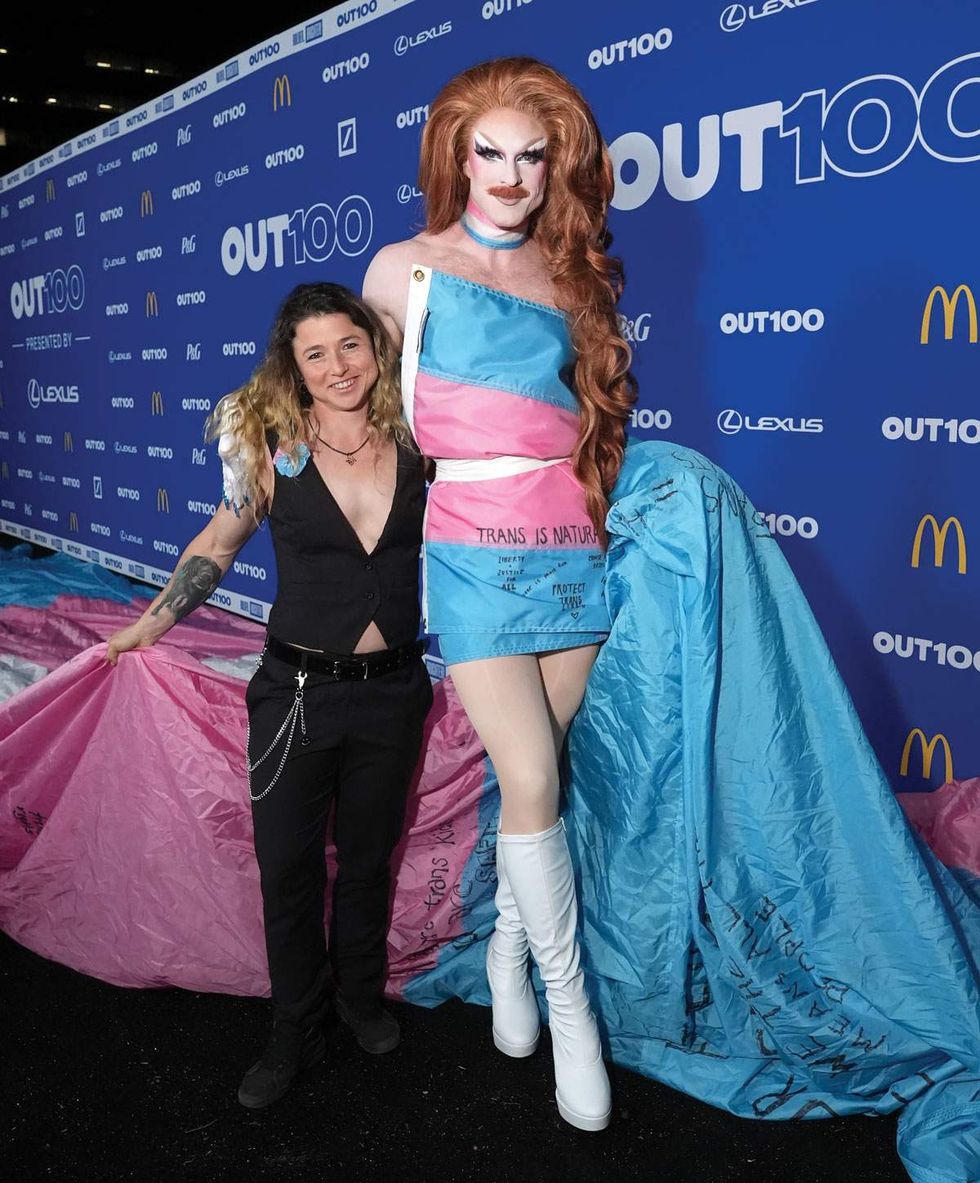 Joslin and drag activist Pattie Gonia at the 2025 Out100 gala in Los Angeles; Pattie’s gown was made from the massive trans flag that was hung in Yosemite last August.Presley Ann/Getty Images for Out.com/equalpride
“America and most Western cultures are capitalistic cultures. So in order to succeed, you’re not necessarily doing what’s the most altruistic or what’s best for those around you,” Joslin says. “In contrast to that, the LGBT community is a community. … Our community is almost like a counterculture to capitalism in certain ways, because there is this sense of putting your community first as opposed to doing whatever you need to succeed.”
As someone who frequently has to explain both, Joslin jokes that trying to explain to someone that transgender identities are real is a lot like trying to explain that climate change is real. Both are robustly backed by scientific evidence, yet conservatives refuse to acknowledge either. When minds can’t be changed, researchers must instead find ways to reach people’s hearts — though luckily, the LGBTQ+ community won’t need much swaying.
“As a society, we kind of think in generalities. The thing that is beautiful about humans is that we’re so diverse, and that diversity exists all throughout the animal kingdom,” Joslin says. “That’s something that we should really celebrate, because if someone thinks differently than you, then they might notice something that ends up being really useful to you … If we all were the same, then there wouldn’t be much progress.”
This article is part of The Advocate’s Jan-Feb 2026 issue, which hits newsstands January 27. Support queer media and subscribe — or download the issue through Apple News, Zinio, Nook, or PressReader.