'%3E%3Cpath d='M16.3574 35.6519H12.9537L15.0491 18.8873L16.3574 35.6519ZM30.4229 54.0093L22.309 0.994385H7.91795L0 54.0093H10.6634L11.5802 46.3855H17.4014L17.9914 54.0093H30.4229Z' fill='%23971B20'/%3E%3Cpath d='M48.2073 41.8813C48.2073 43.4049 47.4892 44.0011 46.1144 44.0011H43.7595V11.0687H46.1144C47.4892 11.0687 48.2073 11.6636 48.2073 13.1885V41.8813ZM59.5273 43.6695V11.3326C59.5273 3.71323 53.5729 0.994385 47.8157 0.994385H31.7213V54.0093H47.8157C53.5729 54.0093 59.5273 51.29 59.5273 43.6695Z' fill='%23971B20'/%3E%3Cpath d='M90.183 0.994385H78.6039L75.0711 30.6157L71.9955 0.994385H59.4346L69.2474 54.0093H80.373L90.183 0.994385Z' fill='%23971B20'/%3E%3Cpath d='M107.063 42.3448C107.063 43.7359 105.951 44.5974 104.643 44.5974C103.269 44.5974 102.157 43.7359 102.157 42.3448V12.658C102.157 11.2676 103.269 10.4058 104.643 10.4058C105.951 10.4058 107.063 11.2676 107.063 12.658V42.3448ZM119.233 43.2723V11.7312C119.233 6.36384 112.952 -3.8147e-06 104.643 -3.8147e-06C96.2667 -3.8147e-06 89.9867 6.36384 89.9867 11.7312V43.2723C89.9867 48.6393 96.2667 55 104.643 55C112.952 55 119.233 48.6393 119.233 43.2723Z' fill='%23971B20'/%3E%3Cpath d='M150.976 43.9349V33.7309H139.069V42.3448C139.069 43.7359 137.957 44.5974 136.582 44.5974C135.076 44.5974 133.964 43.7359 133.964 42.3448V12.658C133.964 11.2676 135.076 10.4058 136.582 10.4058C137.957 10.4058 139.069 11.2676 139.069 12.658V21.2723H150.976V11.0687C150.976 5.70107 145.283 -3.8147e-06 136.582 -3.8147e-06C127.75 -3.8147e-06 121.796 5.70107 121.796 11.0687V43.9349C121.796 49.3022 127.75 55 136.582 55C145.283 55 150.976 49.3022 150.976 43.9349Z' fill='%23971B20'/%3E%3Cpath d='M167.478 35.6519H164.076L166.17 18.8873L167.478 35.6519ZM181.544 54.0093L173.432 0.994385H159.037L151.123 54.0093H161.785L162.704 46.3855H168.523L169.114 54.0093H181.544Z' fill='%23971B20'/%3E%3Cpath d='M205.412 10.4058V0.994385H177.081V10.4058H185.392V54.0093H197.428V10.4058H205.412Z' fill='%23971B20'/%3E%3Cpath d='M230.002 54.0093V43.9349H218.914V31.8746H226.635V21.8028H218.914V10.4058H230.002V0.994385H206.875V54.0093H230.002Z' fill='%23971B20'/%3E%3C/g%3E%3Cdefs%3E%3CclipPath id='clip0_260_7080'%3E%3Crect width='230' height='55' fill='white'/%3E%3C/clipPath%3E%3C/defs%3E%3C/svg%3E)


Can we all just admit that dating in the digital age has slowly but surely become a toxic wasteland, where gaslighting, manipulation, and thoughtlessness have been allowed to flourish?
Well, get ready for things to get a whole lot worse. Instead of chatting with someone on Grindr and HER feeling impersonal or shallow, now you might not even be talking to a human at all.
Turns out there is a reason for that. People are not just offloading research, email composition, or vacation planning onto AI chatbots, but also their dating lives, too.
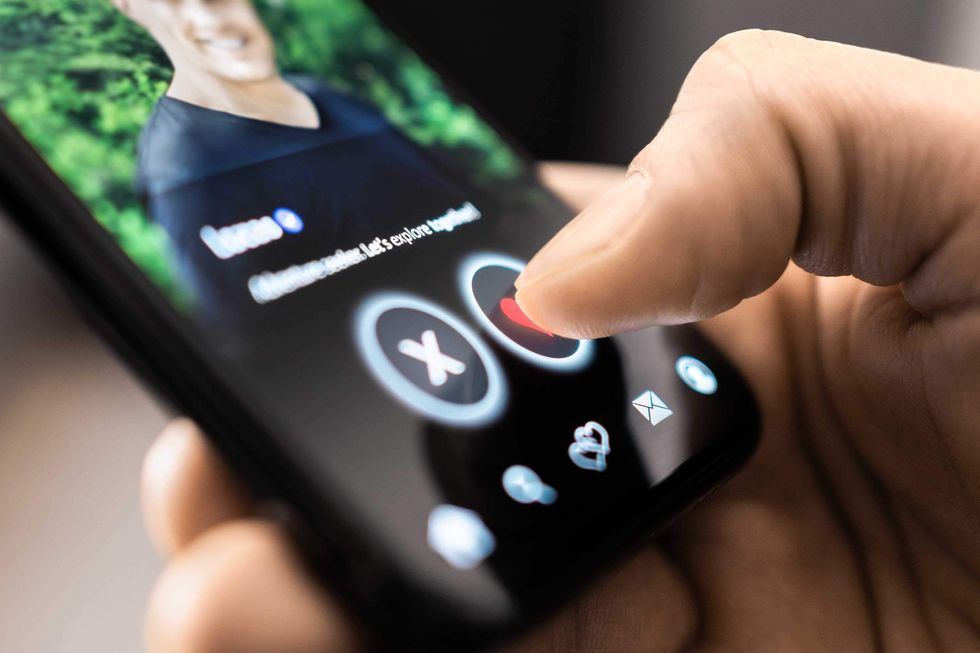
It’s a brave new world out there, and apparently “chatfishing” — where people use Artificial Intelligence like ChatGPT to craft their dating app messages — is just the latest trend making online dating unbearable.
But what exactly is “chatfishing,” why are people doing it, and are LGBTQ+ daters more likely to experience it? To get to the bottom of this new dating app trend, we spoke with Taryn Sinclaire, a trans woman and trauma-focused therapist, and Dylan Thomas Cotter, an author, trans activist, former adult entertainer, Scruff dating app ambassador, and author of Transgender & Triggering The Life of Dylan Thomas Cotter.
What is ‘Chatfishing’?

Gorodenkoff/Shutterstock
While we’re in a whole new world where there are people who are actively having relationships with AI chatbots, just as scary for modern daters is the person on the other end of the DM who is using AI to talk to you instead of having a real conversation.
The term “Chatfishing” combines “chat” with “catfishing,” and has been gaining traction as AI chatbots are becoming more popular. It’s like catfishing on steroids, because instead of just using a fake photo and fudging your bio, “chatfishing” tricks people into believing they’re talking directly to someone they’re interested in dating, when in reality they’re flirting with and getting to know ChatGPT instead of making a genuine connection with another person.
“It’s a subtle form of manipulation as opposed to full blown like catfishing, that said neither are great to experience while you’re on your path to seeking an authentic relationship,” Cotter tells PRIDE. “Think of it as an emotional psyop through conversation as opposed to visuals.”
How common is it?
Chatfishing is becoming commonplace as more and more people start feeling comfortable using AI chatbots in their everyday lives. “It's become more common as society progresses with technology in the dating world. Many people now are first introduced over an in-app chat when you are starting to get to know someone you may have a romantic interest in,” Cotter says.
According to Sinclaire, younger generations — Gen Z, Gen Alpha, and younger Millennials — have higher rates of social anxiety than previous generations and are therefore more likely to go out of their way to avoid social interactions where they might make a mistake. “Chatfishing allows them to outsource their communication to an AI that will tailor all of their responses to fit exactly who they are asking the AI to present them as,” she explains. “Thus shielding themselves from their social anxieties behind the AI. Either the AI serves the exact purpose they intended, or they can say that it was the AI that messed up. Either way, shielding them from the consequences of their social faux pas.”
Why is chatfishing a problem?
Yes, people are still meeting their significant others more on dating apps than anywhere else — and hookup apps provide easy access to a whole lot of spicy fun — but the human connection feels oddly lacking in a lot of these interactions, and now for many people it is totally absent because they’re having AI do their dating for them.
“Let’s face it, first impressions are everything and building someone up based off of false interest is not kind and frankly a distraction off of someone’s path to finding love,” Cotter says.
The person who is being chatfished is left feeling manipulated, like their time was wasted, and they don’t know who to trust. “Chatfishing is a disrespectful deceitful dating game that baits unsuspecting daters into providing an emotional investment under false pretenses and often overlaps with bread crumbing in addition to ghosting and/or emotional manipulation,” he warns.
Plus, if you chatfish someone, eventually you’ll have to meet in person, and the ruse will fall apart. You’ll go on a date, and instead of the person they thought they were getting to know when you were having a chatbot pretend to be you, they’ll get the real, authentic you, and reality won’t match up with perception. It’s setting both people on the date up for failure.
But Sinclaire notes that the problem not many people discuss is that chatfishing feeds into the social anxiety that people are using an AI chatbot to avoid feeling in the first place. “Chatfishing feeds the social anxiety by supporting the idea that we need to have an outside source manage our communication to protect us,” she explains. Instead, Sinclaire recommends you “save yourself the time and pain by being authentic from the start.”
Are there additional concerns or dangers for queer daters?
Chatfishing is bad for everyone, but the effects it has on hetersexual daters are likely magnified for queer people who have already dealt with additional societal pressures. “The majority of queer people already struggle with social anxiety due to growing up in a society that sends very negative messages to queer individuals,” Sinclaire says. “Negative messaging about one’s worth or desirability in society are regularly given to queer individuals from a very early age.”
Cotter also says that for LGBTQ+ people who are still living in the closet, getting fooled in this way could be detrimental not just to their mental health but also to their safety if they shared intimate details of their life with an AI chatbot and not the real person they thought they had a connection with.
“As queer daters who may not yet be publicly out, one main concern is safety and well-being,” he warns. “For example, let’s say you are chatting up someone new and you start to become close and divulge very personal details to this person only to then have them stop communicating, that’s a shock to someone’s nervous system after they have been led to believe there was a formation of trust established only for it then to vanish, leaving them feeling super vulnerable and abandoned. That can be devastating to someone young and impressionable to the queer dating scene and can damage their self-confidence towards their future dating endeavors.”
How can you tell if you are being chatfished? Are there warning signs?
Tero Vesalainen/Shutterstock
“One of the biggest signs of being chatfished is that the person is larger than life,” Sinclaire says. “A large amount of people that are chatfishing aren’t doing it just to correct grammar. They are inventing a persona that embodies characteristics they feel they are lacking. As a result, this persona will have grand stories or personality traits, and usually more than one.”
Someone chatfishing you may also lovebomb you, or use excessive flattery, and will probably keep your interaction text based for as long as possible. “Victims often don’t suspect this because a chatfisher, unlike a catfisher, will include a large amount of true details including things like their real name and photos,” Sinclaire continues. “Since these individuals are often attention seeking based on a persona that isn’t authentic to them, they will often share emotional moments, stories, or confessions that get their victim to engage in caring for them. These stories often feel hollow or there is a repeated cycle of this type of behavior to gain care and sympathy.”
Cotter agrees and says that refusing to hop on a call with you, or frequently making and then rescheduling dates, are both red flags. “And a huge sign is that the conversation only progresses and they only engage when they want to and then they disappear until they want to hold your attention again,” he explains. “A good gauge to go by is your gut, chances are if you feel something is off energetically it probably is, don’t ignore your intuition.”
What should you do if you suspect it’s happening?
If you think this is happening to you, Sinclaire recommends keeping a log of all of the incidents that make you feel like you are talking to an AI chatbot, not to “confront the person, but, for you to reference over time in order to ground yourself in the truth of the situation.”
You also need to learn to trust your gut and move on if you think you’re being chatfished. “Don’t allow your empathy to override the alarm system in your brain that is designed to keep you safe,” she says. “If the alarm is going off in your brain, it is probably for a reason. If you are still questioning it, consult with a professional before ignoring your own intuition."
If you suspect you’re being chatfished, you need to go back over your DMs and think about how much personal information you shared with them and then, “end the chat, block the chatfisher and do not engage further as they may very well try to spin the narrative to keep you hooked,” Cotter recommends. He also says that if you shared your phone number or address, you may need to monitor your phone more closely for a while. And in the future, make sure you aren’t sending any intimate photos where you can be identified — although this is good advice regardless of whether you’re being chatfished or not. “The next time you begin getting to know someone over chat if you are going to send intimate photos do not disclose face photos and/or photos that reflect any distinguishing body marks and/or tattoos as to avoid sextortion aka black mail,” he says.
But most importantly, remember that this is your life, and you’re allowed to take charge and stop interacting with someone if you suspect they are manipulating you in this way. “If you feel like you’re being led on and lied to and that the conversation isn’t really going anywhere towards moving into a real-world experience, don’t waste your time. It’s your dating future and you are in the driver’s seat,” Cotter says. “Take charge and move out of the texting bubble.”
Sources cited:
Taryn Sinclaire, a trans woman and trauma-focused therapist.
Dylan Thomas Cotter, an author, trans activist, former adult entertainer, Scruff dating app ambassador, and author of Transgender & Triggering The Life of Dylan Thomas Cotter.