'%3E%3Cpath d='M16.3574 35.6519H12.9537L15.0491 18.8873L16.3574 35.6519ZM30.4229 54.0093L22.309 0.994385H7.91795L0 54.0093H10.6634L11.5802 46.3855H17.4014L17.9914 54.0093H30.4229Z' fill='%23971B20'/%3E%3Cpath d='M48.2073 41.8813C48.2073 43.4049 47.4892 44.0011 46.1144 44.0011H43.7595V11.0687H46.1144C47.4892 11.0687 48.2073 11.6636 48.2073 13.1885V41.8813ZM59.5273 43.6695V11.3326C59.5273 3.71323 53.5729 0.994385 47.8157 0.994385H31.7213V54.0093H47.8157C53.5729 54.0093 59.5273 51.29 59.5273 43.6695Z' fill='%23971B20'/%3E%3Cpath d='M90.183 0.994385H78.6039L75.0711 30.6157L71.9955 0.994385H59.4346L69.2474 54.0093H80.373L90.183 0.994385Z' fill='%23971B20'/%3E%3Cpath d='M107.063 42.3448C107.063 43.7359 105.951 44.5974 104.643 44.5974C103.269 44.5974 102.157 43.7359 102.157 42.3448V12.658C102.157 11.2676 103.269 10.4058 104.643 10.4058C105.951 10.4058 107.063 11.2676 107.063 12.658V42.3448ZM119.233 43.2723V11.7312C119.233 6.36384 112.952 -3.8147e-06 104.643 -3.8147e-06C96.2667 -3.8147e-06 89.9867 6.36384 89.9867 11.7312V43.2723C89.9867 48.6393 96.2667 55 104.643 55C112.952 55 119.233 48.6393 119.233 43.2723Z' fill='%23971B20'/%3E%3Cpath d='M150.976 43.9349V33.7309H139.069V42.3448C139.069 43.7359 137.957 44.5974 136.582 44.5974C135.076 44.5974 133.964 43.7359 133.964 42.3448V12.658C133.964 11.2676 135.076 10.4058 136.582 10.4058C137.957 10.4058 139.069 11.2676 139.069 12.658V21.2723H150.976V11.0687C150.976 5.70107 145.283 -3.8147e-06 136.582 -3.8147e-06C127.75 -3.8147e-06 121.796 5.70107 121.796 11.0687V43.9349C121.796 49.3022 127.75 55 136.582 55C145.283 55 150.976 49.3022 150.976 43.9349Z' fill='%23971B20'/%3E%3Cpath d='M167.478 35.6519H164.076L166.17 18.8873L167.478 35.6519ZM181.544 54.0093L173.432 0.994385H159.037L151.123 54.0093H161.785L162.704 46.3855H168.523L169.114 54.0093H181.544Z' fill='%23971B20'/%3E%3Cpath d='M205.412 10.4058V0.994385H177.081V10.4058H185.392V54.0093H197.428V10.4058H205.412Z' fill='%23971B20'/%3E%3Cpath d='M230.002 54.0093V43.9349H218.914V31.8746H226.635V21.8028H218.914V10.4058H230.002V0.994385H206.875V54.0093H230.002Z' fill='%23971B20'/%3E%3C/g%3E%3Cdefs%3E%3CclipPath id='clip0_260_7080'%3E%3Crect width='230' height='55' fill='white'/%3E%3C/clipPath%3E%3C/defs%3E%3C/svg%3E)
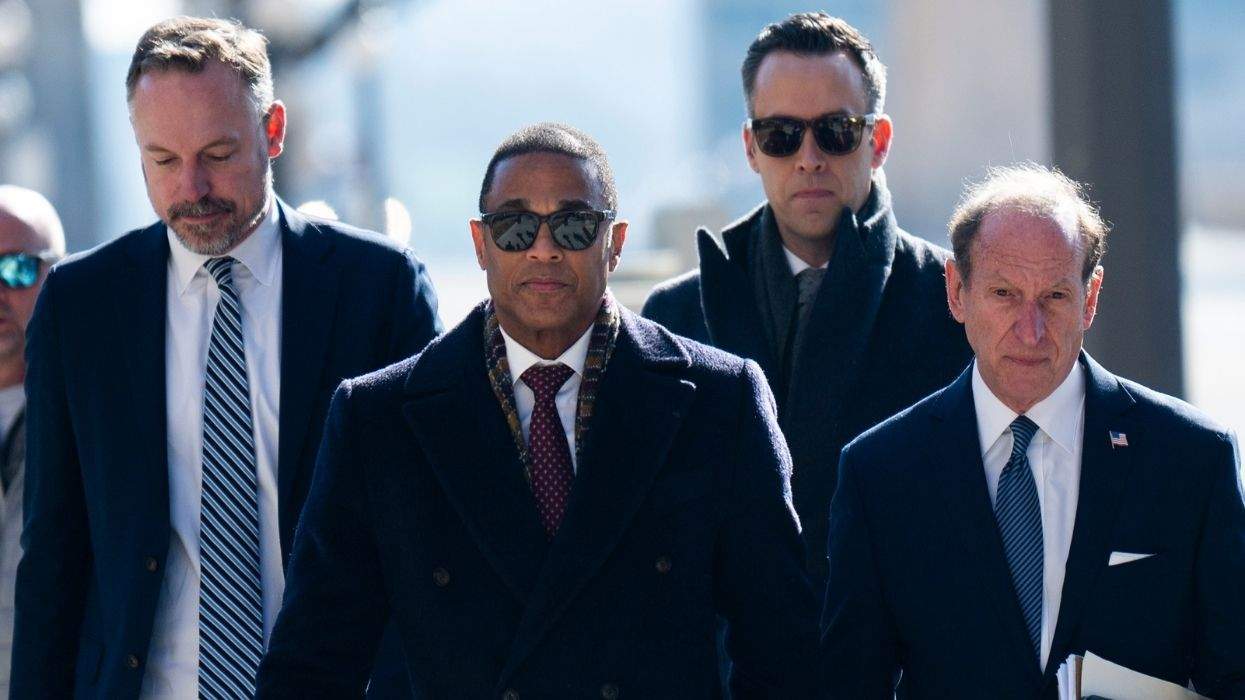
Don Lemon arrived at the Warren E. Burger Federal Building and U.S. Courthouse flanked by his attorneys and husband. His arraignment on Friday unfolded before U.S. Magistrate Judge Douglas L. Micko, the same judge who weeks earlier had rejected the Trump Department of Justice’s attempt to move forward with criminal charges against the journalist. He pleaded "not guilty." The circumstances surrounding the case have turned it into a national test of press freedom.
Keep up with the latest in LGBTQ+ news and politics. Sign up for The Advocate's email newsletter.
Lemon, a former CNN anchor who now works independently, appeared in federal court in St. Paul and entered a not guilty plea to federal civil rights and conspiracy charges tied to his coverage of a protest at a Minnesota church in January. The hearing brought him back before Micko after the judge’s earlier refusal to approve the government’s initial bid to proceed. That decision forced prosecutors to change course and seek a grand jury indictment.
Outside the courthouse, a large media contingent and protesters assembled as Lemon’s second court appearance in this case took place. “Free country, free press!” supporters shouted.
Chants of “Drop the charges, protect the press” began as onlookers anticipated Lemon and his legal team. “Protect free speech!"
Related: Pam Bondi's mad after judge rejects charging Don Lemon over his Minnesota church reporting
Related: Don Lemon at HRC dinner: 'When the First Amendment becomes optional, democracy becomes hollow'
Related: White House celebrates Don Lemon’s arrest with meme as press freedom groups and Dems outraged
Before a grand jury ultimately returned the indictment that led to Friday’s arraignment, the Justice Department had been rebuffed by multiple judges in its initial efforts to charge Lemon and others. After Micko declined to approve a proposed criminal complaint for insufficient probable cause, and after the government sought to compel a lower court to issue arrest warrants, a three-judge panel of the U.S. Court of Appeals for the Eighth Circuit also declined to intervene.
The case was brought by the Trump administration’s Justice Department under the Freedom of Access to Clinic Entrances Act, a 1994 law most often used to protect access to abortion clinics and religious worship, making its application to a journalist’s protest coverage highly unusual. First-time offenders can face up to a year in prison under the statute. Lemon had interviewed protesters, congregants, and a pastor during the demonstration, which erupted after activists learned that one of the church’s pastors was serving as the acting director of an ICE field office.
Lemon was subsequently arrested by federal agents in his Los Angeles hotel on January 31, as the gay journalist was preparing to cover the Grammys. After a federal judge released him without the bail or travel restrictions the DOJ had sought, supporters, including actress Jane Fonda, gathered at the Edward R. Roybal Federal Building in downtown Los Angeles to show solidarity with the award-winning news fixture. Hand in hand with his husband, Tim Malone, Lemon greeted supporters and a throng of cameras and reporters, thanking them for their support.
Lemon and his attorneys have insisted that he was doing what journalists do: documenting a newsworthy event, livestreaming, and interviewing participants. Lemon, fellow journalists, and press freedom groups have described this as a regular function of journalism. In public remarks after his arrest, Lemon has said the case represents an effort to criminalize basic newsgathering and to blur the line between witnessing a protest and being accused of joining it.
Lemon made that argument in a surprise address at the Human Rights Campaign’s Greater New York Dinner on February 7, where he told the audience that press freedom cannot be optional in a democracy. He described the First Amendment as fundamental to holding power to account and urged advocates to see attacks on the press as part of a broader fight for democratic rights, according to coverage of the event.
Related: The racist, homophobic, and frightening arrest of Don Lemon
Related: Don Lemon defiant in first remarks after arrest and release from federal custody
Related: What to know about Don Lemon, the gay journalist arrested by the Trump administration
His defense team is taking the fight seriously. Lemon is represented by high-profile defense attorney Abbe David Lowell and Joseph Thompson, a former federal prosecutor in Minnesota who resigned amid disputes with Justice Department leadership after ICE agent Jonathan Ross shot and killed Renee Good, a queer mother of three who was trying to drive away on January 7.
A person close to Lemon told The Advocate that, even as the case moves forward, he plans to continue his work as an independent journalist, including hosting his regular online show and reporting on national politics and civil rights. The person said Lemon views the prosecution as separate from his obligation to keep working—and, in his view, as further proof of why independent journalism remains necessary.
Lemon was not the only journalist charged. Independent reporter Georgia Fort was also arrested in connection with coverage of the same protest, which advocacy groups say underscores how easily reporters can become targets when they are documenting state power and public dissent.
The case has drawn broad condemnation from press freedom and journalism organizations. The International Women’s Media Foundation, the National Association of Black Journalists, and NLGJA: The Association of LGBTQ+ Journalists have all warned that the prosecution risks chilling coverage of protests and other politically charged events, especially for independent reporters working without the backing of large news organizations.
Related: Journalist Don Lemon arrested by federal agents after his coverage of Minneapolis protests
Related: Don Lemon's arrest prompts Jane Fonda and LGBTQ+ rights group to rally for press freedom
Prosecutors have said the case is about conduct, not credentials, arguing that laws protecting civil rights and access to religious services apply regardless of profession. But Lemon’s defenders say the government is testing a dangerous theory, one that could make the simple act of showing up with a camera and a notebook a legal risk.
The arraignment itself was a procedural step that usually draws little notice. But in this case, its significance lay in the setting. For journalists and press freedom advocates watching closely, the question now is whether judges’ earlier skepticism will shape what comes next and what the case will mean for the future of journalism.