'%3E%3Cpath d='M16.3574 35.6519H12.9537L15.0491 18.8873L16.3574 35.6519ZM30.4229 54.0093L22.309 0.994385H7.91795L0 54.0093H10.6634L11.5802 46.3855H17.4014L17.9914 54.0093H30.4229Z' fill='%23971B20'/%3E%3Cpath d='M48.2073 41.8813C48.2073 43.4049 47.4892 44.0011 46.1144 44.0011H43.7595V11.0687H46.1144C47.4892 11.0687 48.2073 11.6636 48.2073 13.1885V41.8813ZM59.5273 43.6695V11.3326C59.5273 3.71323 53.5729 0.994385 47.8157 0.994385H31.7213V54.0093H47.8157C53.5729 54.0093 59.5273 51.29 59.5273 43.6695Z' fill='%23971B20'/%3E%3Cpath d='M90.183 0.994385H78.6039L75.0711 30.6157L71.9955 0.994385H59.4346L69.2474 54.0093H80.373L90.183 0.994385Z' fill='%23971B20'/%3E%3Cpath d='M107.063 42.3448C107.063 43.7359 105.951 44.5974 104.643 44.5974C103.269 44.5974 102.157 43.7359 102.157 42.3448V12.658C102.157 11.2676 103.269 10.4058 104.643 10.4058C105.951 10.4058 107.063 11.2676 107.063 12.658V42.3448ZM119.233 43.2723V11.7312C119.233 6.36384 112.952 -3.8147e-06 104.643 -3.8147e-06C96.2667 -3.8147e-06 89.9867 6.36384 89.9867 11.7312V43.2723C89.9867 48.6393 96.2667 55 104.643 55C112.952 55 119.233 48.6393 119.233 43.2723Z' fill='%23971B20'/%3E%3Cpath d='M150.976 43.9349V33.7309H139.069V42.3448C139.069 43.7359 137.957 44.5974 136.582 44.5974C135.076 44.5974 133.964 43.7359 133.964 42.3448V12.658C133.964 11.2676 135.076 10.4058 136.582 10.4058C137.957 10.4058 139.069 11.2676 139.069 12.658V21.2723H150.976V11.0687C150.976 5.70107 145.283 -3.8147e-06 136.582 -3.8147e-06C127.75 -3.8147e-06 121.796 5.70107 121.796 11.0687V43.9349C121.796 49.3022 127.75 55 136.582 55C145.283 55 150.976 49.3022 150.976 43.9349Z' fill='%23971B20'/%3E%3Cpath d='M167.478 35.6519H164.076L166.17 18.8873L167.478 35.6519ZM181.544 54.0093L173.432 0.994385H159.037L151.123 54.0093H161.785L162.704 46.3855H168.523L169.114 54.0093H181.544Z' fill='%23971B20'/%3E%3Cpath d='M205.412 10.4058V0.994385H177.081V10.4058H185.392V54.0093H197.428V10.4058H205.412Z' fill='%23971B20'/%3E%3Cpath d='M230.002 54.0093V43.9349H218.914V31.8746H226.635V21.8028H218.914V10.4058H230.002V0.994385H206.875V54.0093H230.002Z' fill='%23971B20'/%3E%3C/g%3E%3Cdefs%3E%3CclipPath id='clip0_260_7080'%3E%3Crect width='230' height='55' fill='white'/%3E%3C/clipPath%3E%3C/defs%3E%3C/svg%3E)

Receiving a new HIV diagnosis can be a life-altering and nerve-wracking experience, so it’s important to give yourself time and space to process the information. Though there have been huge advancements in the field of HIV treatment over the last several decades, it’s OK to take a moment to feel all of your emotions after receiving a new diagnosis. In this episode of The Talk, advocates share their own experiences with getting diagnosed, as well as their advice for moving forward.
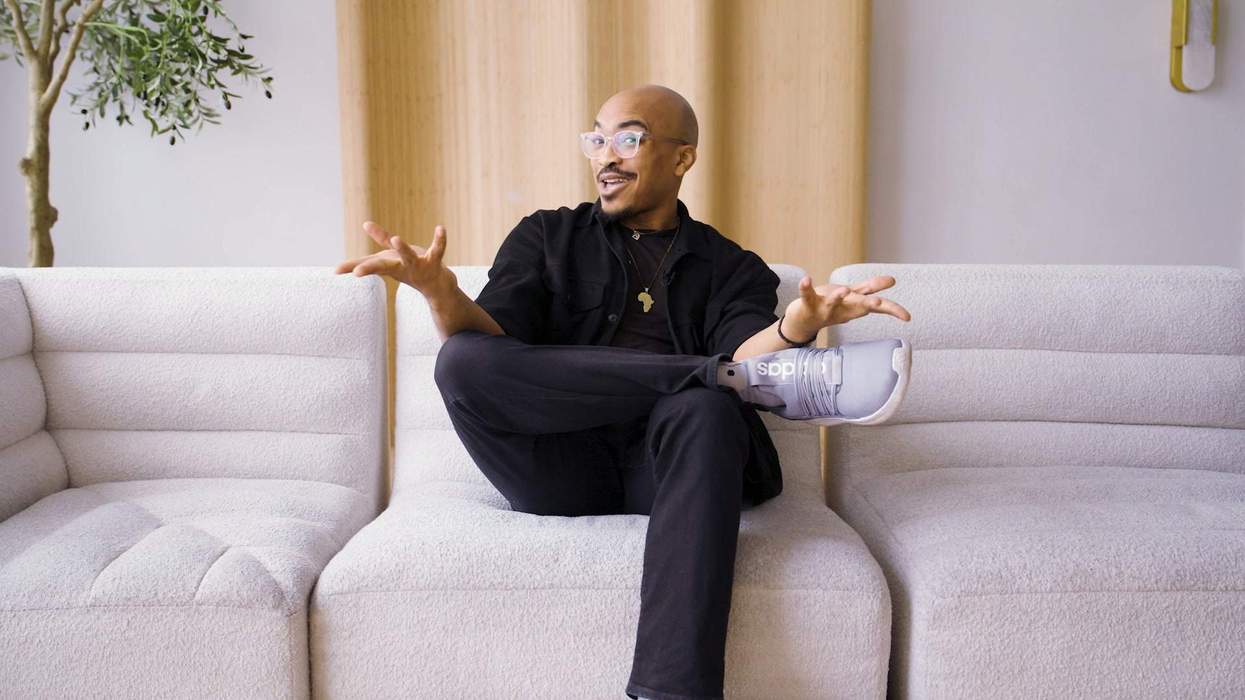
“If you’re getting a new diagnosis, it is very much scary territory, and I would always tell people to make sure you honor your feeling first and foremost,” DéShaun Armbrister, a dancer and HIV advocate, says. “It is definitely a change. There is going to be change in routine and things of that nature.”
Though your routine might have to shift, there are many more options for treatment to manage your HIV diagnosis than there were in the past, as addressed in this past episode of The Talk.
“What we do have now is a lot of options in terms of treatment,” Amrbrister continues. “Me personally, I do still take a pill a day, but there’s also injectables where you can actually go in like every other month.”
Related: How to find an HIV-competent healthcare provider, according to advocates
When Jose Barrientos, a social worker and HIV advocate, was first diagnosed in 2010, he was on a cocktail of medications, but has since shifted to a different treatment option that works best for managing his diagnosis. He encourages people newly diagnosed to remember that, “now we have undetectable, we have U=U.” His advice for navigating a new diagnosis is to approach with curiosity and ask for what you need.
“Ask as many questions as possible,” he says. “Ask for support. Your doctor and your nurse will guide you to reach undetectable.”
“When you’re newly diagnosed, it’s not just about the treatment,” HIV activist Ivy Kwan Arce says. “It’s about the care. My advice is you need to find a clinic that’s very familiar with this topic. You need to have a team that advocates for you.”
Tony Morrison, a media strategist and HIV advocate, says that while there’s a lot of fear ingrained in us surrounding HIV, it’s important to remember that you have options and are not alone.
“Starting my HIV patient medication treatment journey, I had no idea that, just for me, one pill a day would keep me happy and healthy,” Morrison says. “My HIV status is the most managed thing in my life, and to say that is huge. Monumental. I think what’s embedded in us is this fear of not making it. This fear of being alone. Why I’m sitting here today is to dispel not some but all of that, and to show that this is what HIV can and does look like in 2026.”