'%3E%3Cpath d='M16.3574 35.6519H12.9537L15.0491 18.8873L16.3574 35.6519ZM30.4229 54.0093L22.309 0.994385H7.91795L0 54.0093H10.6634L11.5802 46.3855H17.4014L17.9914 54.0093H30.4229Z' fill='%23971B20'/%3E%3Cpath d='M48.2073 41.8813C48.2073 43.4049 47.4892 44.0011 46.1144 44.0011H43.7595V11.0687H46.1144C47.4892 11.0687 48.2073 11.6636 48.2073 13.1885V41.8813ZM59.5273 43.6695V11.3326C59.5273 3.71323 53.5729 0.994385 47.8157 0.994385H31.7213V54.0093H47.8157C53.5729 54.0093 59.5273 51.29 59.5273 43.6695Z' fill='%23971B20'/%3E%3Cpath d='M90.183 0.994385H78.6039L75.0711 30.6157L71.9955 0.994385H59.4346L69.2474 54.0093H80.373L90.183 0.994385Z' fill='%23971B20'/%3E%3Cpath d='M107.063 42.3448C107.063 43.7359 105.951 44.5974 104.643 44.5974C103.269 44.5974 102.157 43.7359 102.157 42.3448V12.658C102.157 11.2676 103.269 10.4058 104.643 10.4058C105.951 10.4058 107.063 11.2676 107.063 12.658V42.3448ZM119.233 43.2723V11.7312C119.233 6.36384 112.952 -3.8147e-06 104.643 -3.8147e-06C96.2667 -3.8147e-06 89.9867 6.36384 89.9867 11.7312V43.2723C89.9867 48.6393 96.2667 55 104.643 55C112.952 55 119.233 48.6393 119.233 43.2723Z' fill='%23971B20'/%3E%3Cpath d='M150.976 43.9349V33.7309H139.069V42.3448C139.069 43.7359 137.957 44.5974 136.582 44.5974C135.076 44.5974 133.964 43.7359 133.964 42.3448V12.658C133.964 11.2676 135.076 10.4058 136.582 10.4058C137.957 10.4058 139.069 11.2676 139.069 12.658V21.2723H150.976V11.0687C150.976 5.70107 145.283 -3.8147e-06 136.582 -3.8147e-06C127.75 -3.8147e-06 121.796 5.70107 121.796 11.0687V43.9349C121.796 49.3022 127.75 55 136.582 55C145.283 55 150.976 49.3022 150.976 43.9349Z' fill='%23971B20'/%3E%3Cpath d='M167.478 35.6519H164.076L166.17 18.8873L167.478 35.6519ZM181.544 54.0093L173.432 0.994385H159.037L151.123 54.0093H161.785L162.704 46.3855H168.523L169.114 54.0093H181.544Z' fill='%23971B20'/%3E%3Cpath d='M205.412 10.4058V0.994385H177.081V10.4058H185.392V54.0093H197.428V10.4058H205.412Z' fill='%23971B20'/%3E%3Cpath d='M230.002 54.0093V43.9349H218.914V31.8746H226.635V21.8028H218.914V10.4058H230.002V0.994385H206.875V54.0093H230.002Z' fill='%23971B20'/%3E%3C/g%3E%3Cdefs%3E%3CclipPath id='clip0_260_7080'%3E%3Crect width='230' height='55' fill='white'/%3E%3C/clipPath%3E%3C/defs%3E%3C/svg%3E)
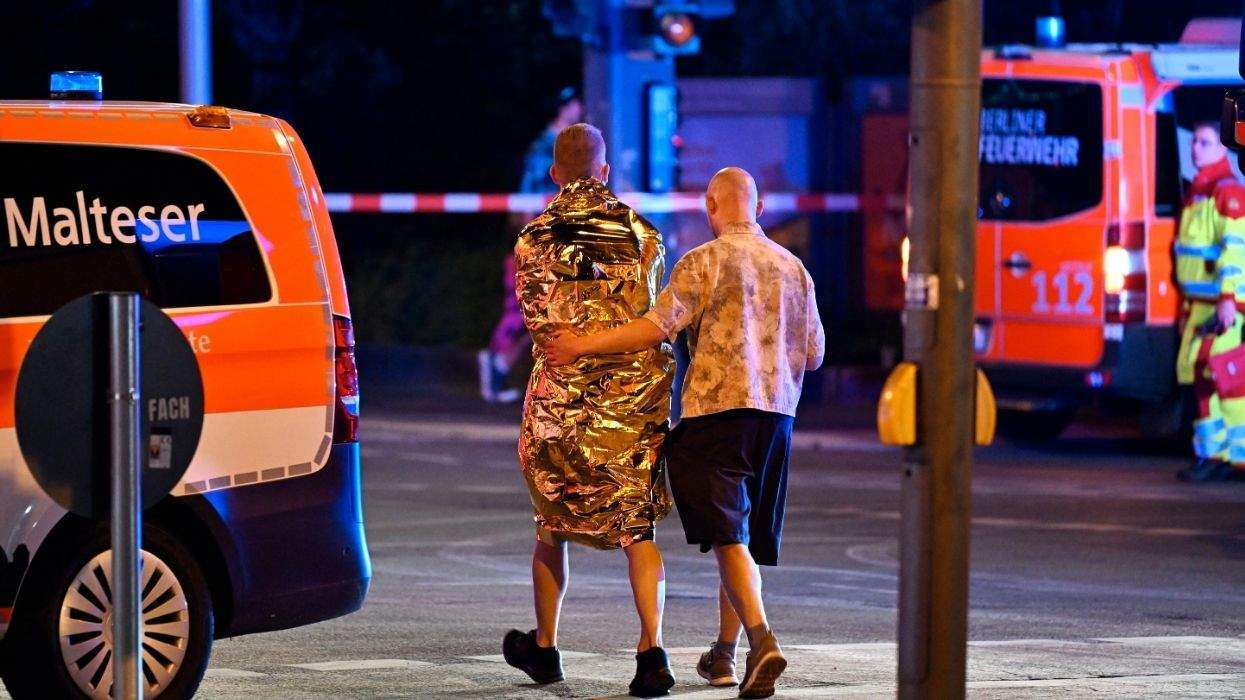

A woman was killed, and 29 people were injured Saturday night when a vehicle drove into a crowd near Berlin’s Pride celebration, in what German officials are investigating as a suspected Islamist terrorist attack.
Authorities were searching Sunday for a 21-year-old suspect publicly identified as Abdul Ballout, according to the German news program Tagesschau. Police warned that he may be armed and dangerous and urged the public not to approach him. Later on Sunday, German police announced he had been shot dead during a confrontation with officers in a community garden.
“Everything we see here indicates that we are dealing with an Islamist terrorist attack,” German Interior Minister Alexander Dobrindt told reporters. Federal prosecutors, who handle terrorism and national security cases, have taken over the investigation. Officials had not established whether the attacker selected the crowd because of its connection to Berlin’s Christopher Street Day, the name commonly used for Pride celebrations in Germany.
Related: LGBTQ+ Pride Month events could be targets of foreign terrorists, security officials warn
Pride celebration becomes a crime scene
The attack occurred shortly before 10 p.m. near the Tiergarten, a sprawling park in central Berlin, as Saturday’s Christopher Street Day events were ending. Hundreds of thousands of people had marched earlier under the slogan “Taking a stand is hot.”
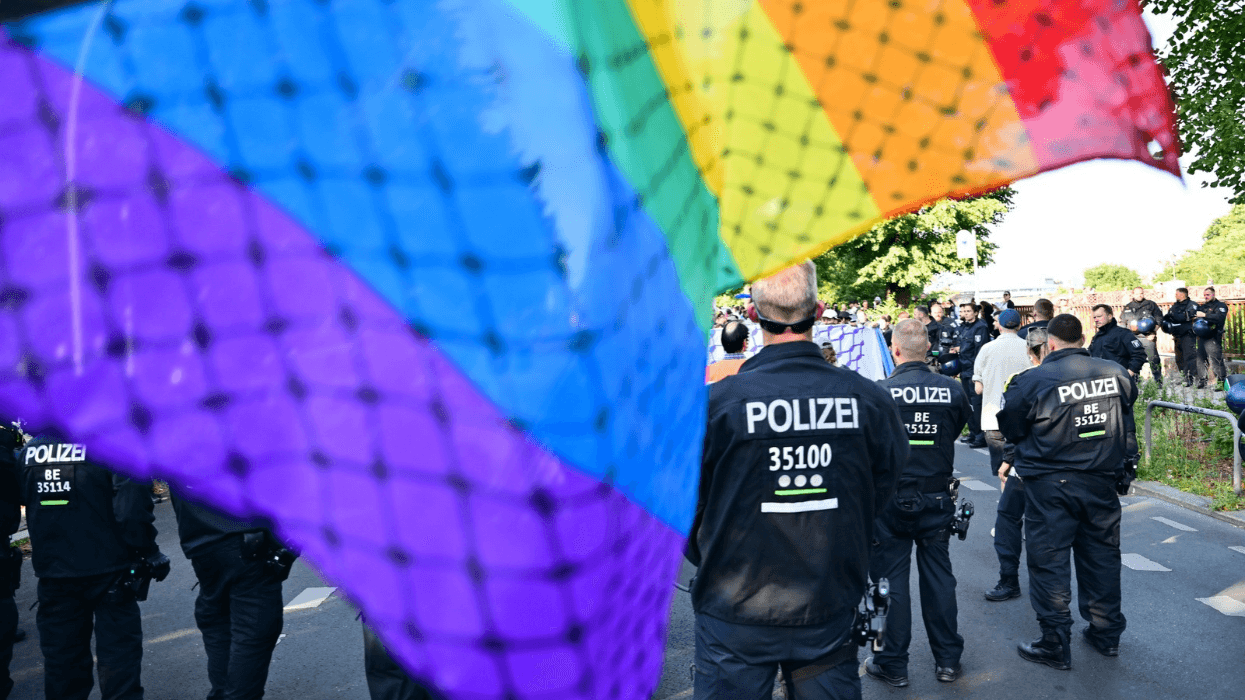
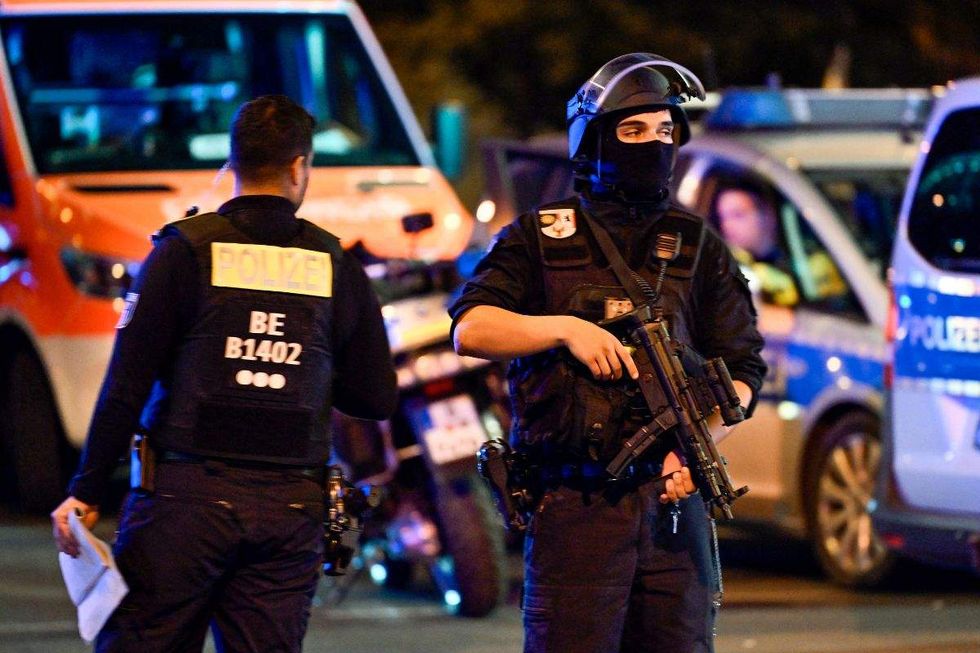 Armed police stand near the scene where one person was killed and around 16 injured after a car struck people on the outskirts of the Christopher Street Day (CSD) parade in Berlin, on July 25, 2026. RALF HIRSCHBERGER / AFP via Getty Images
According to Tagesschau, a white vehicle traveled along a path through the park, striking several people before crashing into a tree. The driver then fled. Investigators were also examining reports that some victims were attacked with a bladed weapon. Several people were initially reported to have life-threatening injuries, though officials said Sunday that none of the surviving victims remained in immediate danger of dying. At least 30 witnesses received psychological care, Tagesschau reported.
The woman who was killed had not been publicly identified.
Related: 2 Homophobic Assaults Reported After Berlin's Pride Celebrations
Police hunt suspect with alleged extremist ties
Police said the suspect was known to law enforcement and associated with Berlin’s Islamist scene. Tagesschau, citing German broadcasters NDR and WDR and the newspaper Süddeutsche Zeitung, reported that security officials had considered him potentially violent.
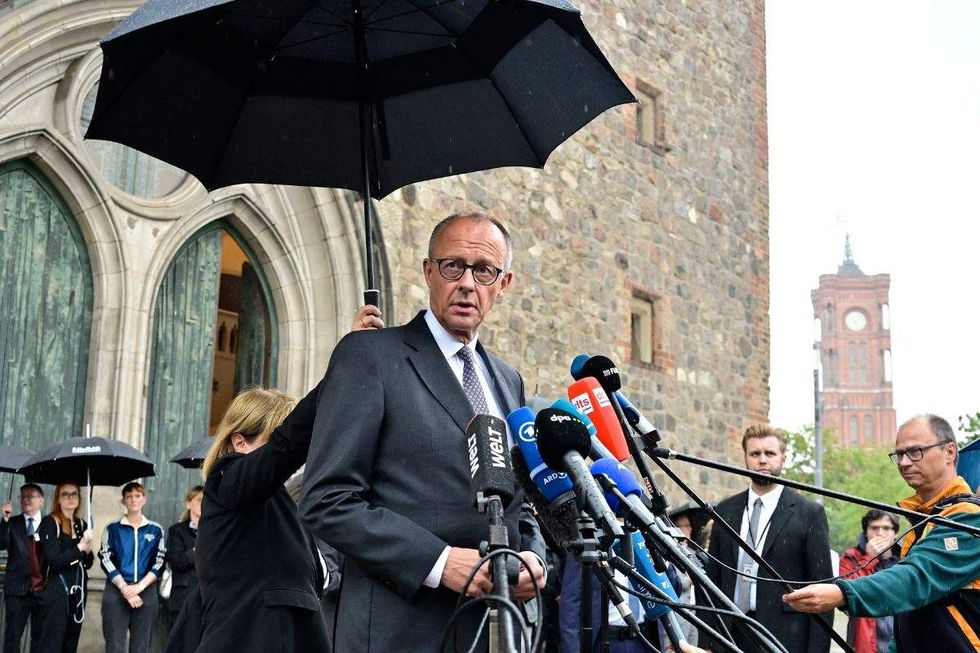 German Chancellor Friedrich Merz gives a press statement on July 26, 2026 in front of the Marienkirche church in Berlin and with Berlin's city Hall (Rotes Rathaus) in the background (R), about the deadly car-ramming attack in the Tiergarten park that left one woman dead and 29 other people injured on the sidelines of the Christopher Street Day (CSD) parade the evening before.John MACDOUGALL / AFP via Getty Images
He had allegedly attempted to travel to Syria to join the Islamic State terrorist organization, according to Tagesschau. Authorities had not captured him as of Sunday. It also remained unclear whether others participated in the attack. Witness accounts differed over how many people left the vehicle, and police searched an apartment without locating the suspect.
German Chancellor Friedrich Merz condemned the violence as an “abhorrent act.” Berlin Mayor Kai Wegner called it an “attack on our free and cosmopolitan society.”
Related: Terrorist Attack on Vienna Pride Parade Thwarted
LGBTQ+ communities face persistent violence
Pride celebrations are both festivals and declarations that LGBTQ+ people have a right to occupy public space openly. That visibility has also made the events and the communities surrounding them targets of intimidation and violence. Berlin’s Christopher Street Day traces its lineage to the 1969 Stonewall uprising in New York, when LGBTQ+ patrons resisted a police raid and helped ignite the modern LGBTQ+ rights movement.
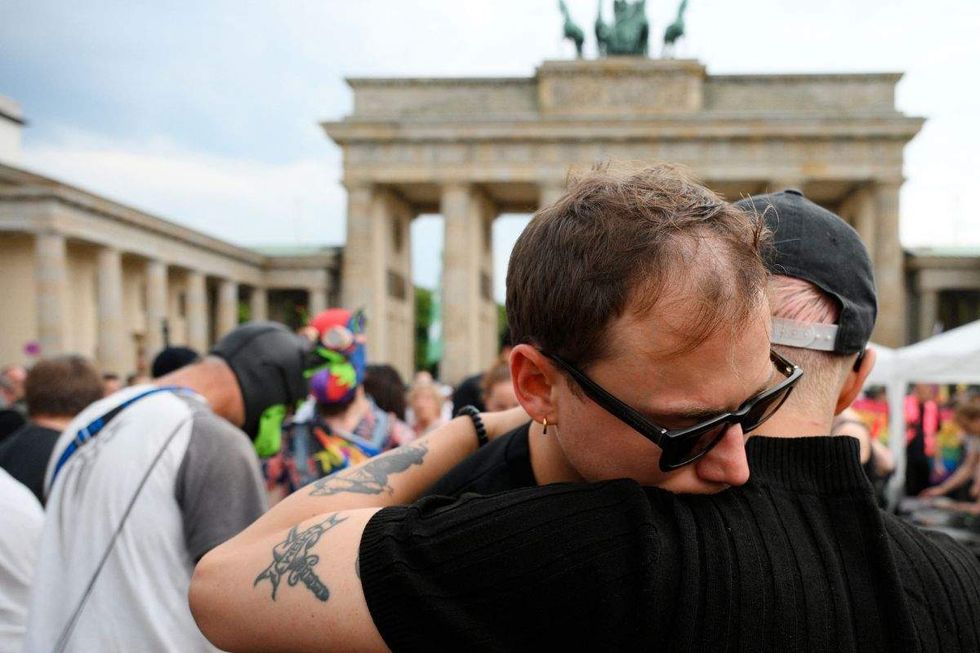 People hug during a demonstration on July 26, 2026 on Pariser Platz in front of landmark Brandenburg Gate during a so-called "community mourning" one day after the car ramming attack on people on the outskirts of Berlin's Christopher Street Day (CSD) parade on late July 25, 2026, killing one person and injuring 16 in the Tiergarten park. RALF HIRSCHBERGER / AFP via Getty Images
German authorities recorded 2,070 politically motivated crimes connected to sexual orientation in 2025, including 284 violent crimes, according to figures cited by the Lesbian and Gay Federation in Germany. Authorities separately recorded 1,294 offenses related to gender diversity, including 112 violent crimes. The categories can overlap.
Right-wing extremism accounted for the largest identifiable ideological share of those offenses, though authorities also recorded attacks connected to religious and foreign ideologies. Across Europe, 14 percent of LGBTQ+ respondents said they had been physically or sexually attacked during the previous five years, according to a survey of more than 100,000 people by the European Union Agency for Fundamental Rights. More than half reported anti-LGBTQ+ harassment during the previous year.
The agency and the Organization for Security and Cooperation in Europe have warned that official figures likely understate the problem because victims may distrust police or fear disclosing their sexual orientation or gender identity.
Europe has seen other deadly attacks on LGBTQ+ spaces. In 2022, a gunman opened fire near the London Pub, a center of Oslo’s queer community, on the morning of the city’s Pride parade. Two people were killed, and more than 20 were injured. That year, an extremist motivated by anti-LGBTQ+ hatred killed two people outside a queer bar in Bratislava, Slovakia.
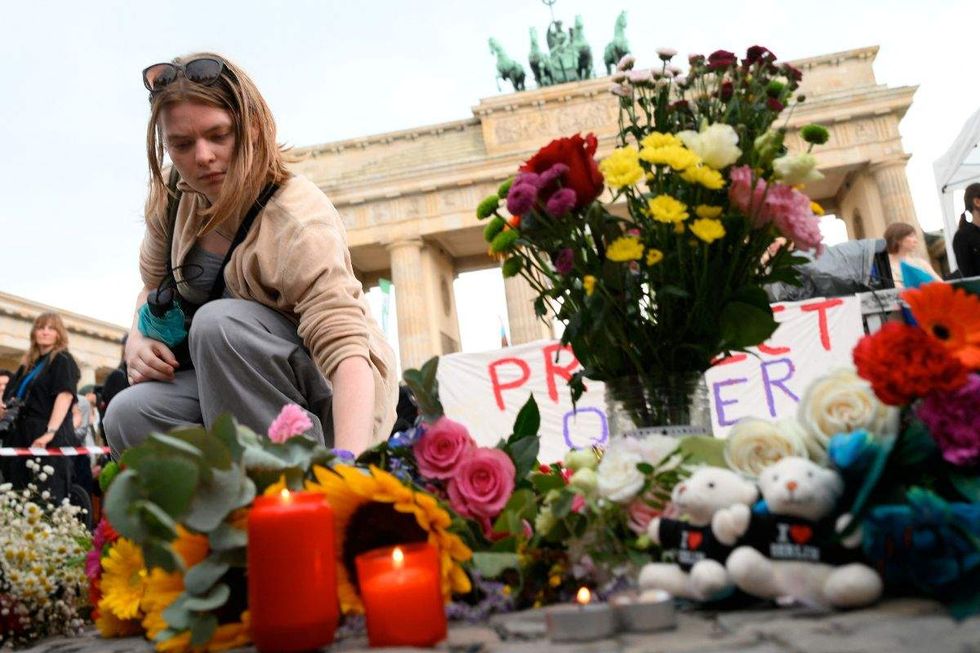 A mourner places flowers on July 26, 2026 in front of landmark Brandenburg Gate during to a so-called "community mourning" one day after the car ramming attack on people on the outskirts of Berlin's Christopher Street Day (CSD) parade on late July 25, 2026, killing one person and injuring 16 in the Tiergarten park. RALF HIRSCHBERGER / AFP via Getty Images
In the United States, a gunman killed 49 people at Pulse, a gay nightclub in Orlando, in 2016. Six years later, another gunman killed five people and injured 19 at Club Q in Colorado Springs, Colorado.
FBI data show that sexual orientation bias accounted for 17.2 percent of victims in reported single-bias hate crimes in 2024. Gender identity bias accounted for another 3.9 percent.
On Sunday, thousands of people came to a public mourning event in Berlin, where they proved that even acts of violence will not deter progress and acceptance.
Editor's note: This story has been updated with additional reporting.