
'%3E%3Cpath d='M16.3574 35.6519H12.9537L15.0491 18.8873L16.3574 35.6519ZM30.4229 54.0093L22.309 0.994385H7.91795L0 54.0093H10.6634L11.5802 46.3855H17.4014L17.9914 54.0093H30.4229Z' fill='%23971B20'/%3E%3Cpath d='M48.2073 41.8813C48.2073 43.4049 47.4892 44.0011 46.1144 44.0011H43.7595V11.0687H46.1144C47.4892 11.0687 48.2073 11.6636 48.2073 13.1885V41.8813ZM59.5273 43.6695V11.3326C59.5273 3.71323 53.5729 0.994385 47.8157 0.994385H31.7213V54.0093H47.8157C53.5729 54.0093 59.5273 51.29 59.5273 43.6695Z' fill='%23971B20'/%3E%3Cpath d='M90.183 0.994385H78.6039L75.0711 30.6157L71.9955 0.994385H59.4346L69.2474 54.0093H80.373L90.183 0.994385Z' fill='%23971B20'/%3E%3Cpath d='M107.063 42.3448C107.063 43.7359 105.951 44.5974 104.643 44.5974C103.269 44.5974 102.157 43.7359 102.157 42.3448V12.658C102.157 11.2676 103.269 10.4058 104.643 10.4058C105.951 10.4058 107.063 11.2676 107.063 12.658V42.3448ZM119.233 43.2723V11.7312C119.233 6.36384 112.952 -3.8147e-06 104.643 -3.8147e-06C96.2667 -3.8147e-06 89.9867 6.36384 89.9867 11.7312V43.2723C89.9867 48.6393 96.2667 55 104.643 55C112.952 55 119.233 48.6393 119.233 43.2723Z' fill='%23971B20'/%3E%3Cpath d='M150.976 43.9349V33.7309H139.069V42.3448C139.069 43.7359 137.957 44.5974 136.582 44.5974C135.076 44.5974 133.964 43.7359 133.964 42.3448V12.658C133.964 11.2676 135.076 10.4058 136.582 10.4058C137.957 10.4058 139.069 11.2676 139.069 12.658V21.2723H150.976V11.0687C150.976 5.70107 145.283 -3.8147e-06 136.582 -3.8147e-06C127.75 -3.8147e-06 121.796 5.70107 121.796 11.0687V43.9349C121.796 49.3022 127.75 55 136.582 55C145.283 55 150.976 49.3022 150.976 43.9349Z' fill='%23971B20'/%3E%3Cpath d='M167.478 35.6519H164.076L166.17 18.8873L167.478 35.6519ZM181.544 54.0093L173.432 0.994385H159.037L151.123 54.0093H161.785L162.704 46.3855H168.523L169.114 54.0093H181.544Z' fill='%23971B20'/%3E%3Cpath d='M205.412 10.4058V0.994385H177.081V10.4058H185.392V54.0093H197.428V10.4058H205.412Z' fill='%23971B20'/%3E%3Cpath d='M230.002 54.0093V43.9349H218.914V31.8746H226.635V21.8028H218.914V10.4058H230.002V0.994385H206.875V54.0093H230.002Z' fill='%23971B20'/%3E%3C/g%3E%3Cdefs%3E%3CclipPath id='clip0_260_7080'%3E%3Crect width='230' height='55' fill='white'/%3E%3C/clipPath%3E%3C/defs%3E%3C/svg%3E)
Pennsylvania Gov. Josh Shapiro, a Democrat, has appointed a former Republican lawmaker with a long record of opposing transgender rights and attempting to curtail civil rights enforcement to the state commission charged with protecting Pennsylvanians from discrimination.
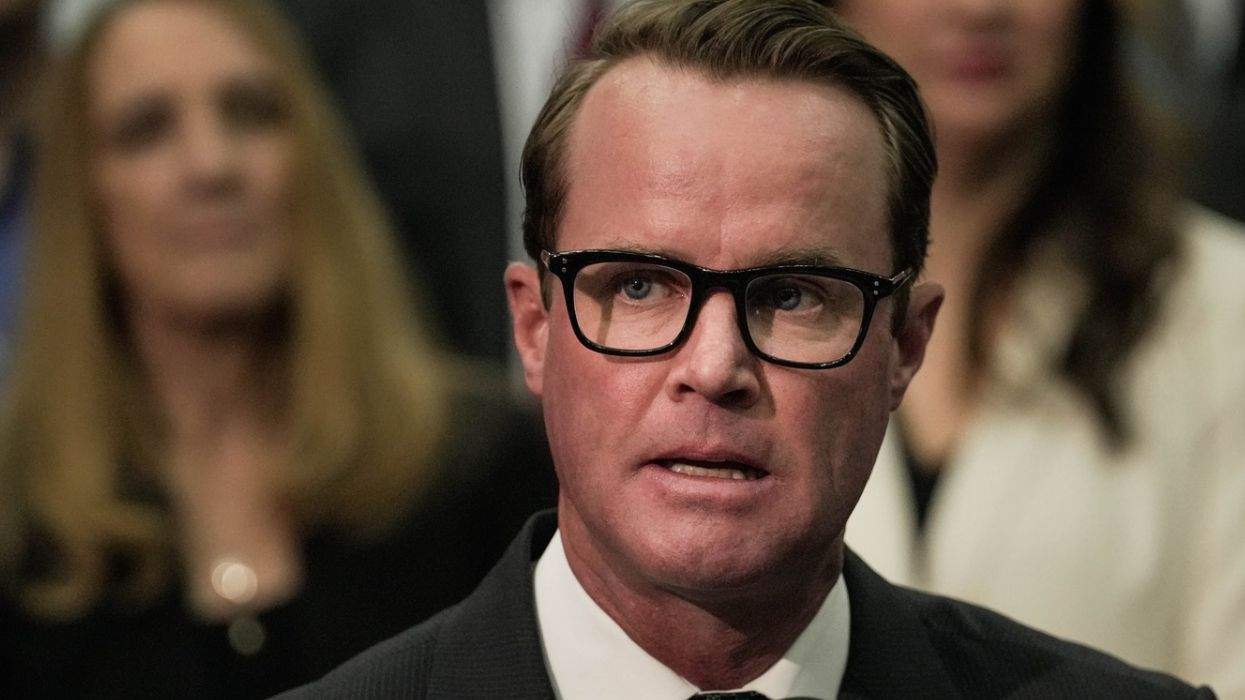
Former State Rep. Seth Grove, who represented part of York County in the Pennsylvania House for 17 years, is among seven new members of the Pennsylvania Human Relations Commission. The agency investigates discrimination in employment, housing, education, and public accommodations and enforces the Pennsylvania Human Relations Act.
Grove is scheduled to be sworn in on Monday.
Gov. Josh Shapiro’s office defends the appointment
His appointment places a former legislator who repeatedly supported restrictions on transgender people inside the institution responsible for considering discrimination complaints from them. Pennsylvania law requires partisan balance on the commission, and Shapiro’s office defended the appointment.
“The PA Human Relations Act legally requires that no more than six commissioners belong to the same political party,” Shapiro spokesperson Rosie Lapowsky said in a statement to The Advocate. “While candidates are nominated by the Governor, they must receive a majority vote in the Senate to be confirmed, and thus any appointments to the PHRC are a collaborative effort between the Governor’s office and the Senate. Governor Shapiro remains committed to protecting the rights and freedoms of every LGBTQ+ Pennsylvanian.”
The statement did not answer why Shapiro, who is considered a possible contender for the 2028 presidential race, selected Grove specifically, whether the governor’s office reviewed Grove’s record on transgender rights and civil rights enforcement, or whether Grove provided any assurances that he would uphold the commission’s existing protections for LGBTQ+ people.
The Shapiro administration cited the governor's participation in lawsuits challenging Trump administration restrictions on gender-affirming care, his support for efforts to limit federal subpoenas seeking transgender patients’ medical records, and his direction that Pennsylvania’s 988 crisis centers receive training to provide tailored support to LGBTQ+ callers.
The administration also noted that Shapiro has urged lawmakers to pass the Fairness Act, advocated for expanding Pennsylvania’s hate crime law and, as attorney general, challenged the first Trump administration’s ban on transgender military service and supported a transgender Virginia student who sued for access to the school bathroom corresponding with his gender. It also pointed to Shapiro’s support for marriage equality while serving as a Montgomery County commissioner.
The Advocate also contacted Grove for comment. An automatic response from his email account indicated that he was traveling and out of the office.
Related: These 12 Democrats are the early top contenders for the party’s presidential nomination in 2028
Grove’s anti-trans record
Grove’s record includes an attempt to restrict health care for transgender Pennsylvanians.
In 2017, he cosponsored House Bill 1933, which would have prohibited Pennsylvania’s Medicaid program and Children’s Health Insurance Program from covering transition-related services, including surgery. The legislation did not become law.
In 2025, Grove cosponsored House Bill 581, the “Parental Rights in Education Act,” which would restrict classroom instruction about sexual orientation and gender identity, require parental notification concerning certain student health services, and allow families to sue school districts over alleged violations.
LGBTQ+ advocates compared the proposal to Florida’s “Don’t Say Gay” law and warned that its notification provisions could expose LGBTQ+ students to their families without their consent.
Grove also chaired the House State Government Committee, which had jurisdiction over the Fairness Act. The legislation would have explicitly added sexual orientation and gender identity to Pennsylvania’s statewide nondiscrimination law. Grove did not bring it up for a vote.
Grove also challenged the commission’s authority to protect LGBTQ+ people. In a May 2022 letter to the Independent Regulatory Review Commission, he urged regulators to reject a PHRC rule defining sex discrimination to include sexual orientation and gender identity. Grove argued that the agency was attempting to “expand the law through regulation” and circumvent the General Assembly. He will now help oversee the commission whose authority he sought to limit.
Pennsylvania’s Human Relations Act does not explicitly name sexual orientation or gender identity. The commission has instead interpreted the law’s prohibition on sex discrimination to include both categories.
That makes the composition of the commission particularly consequential for LGBTQ+ Pennsylvanians, since the agency is not merely an advisory body. It investigates complaints, sets policy, and helps determine whether discrimination occurred.
Jim Sheppard, a former member of Pittsburgh’s local Human Relations Commission, raised concerns about Grove’s appointment in a July 16 commentary for QBurgh, a local LGBTQ+ news outlet.
“Appointments to independent commissions should inspire confidence that commissioners will faithfully carry out the mission of the agencies they oversee,” Sheppard wrote. “In Grove’s case, however, his legislative record raises serious questions about whether he is the right person to help guide Pennsylvania’s premier civil rights agency.”
Sheppard also cited Grove’s opposition to local LGBTQ-inclusive nondiscrimination protections and gender-neutral language for parents on birth certificates.
An effort to weaken civil rights enforcement
Grove repeatedly introduced legislation that would have substantially changed the civil rights enforcement system he will now help oversee.
In 2023, Grove introduced House Bill 1435, which would have altered how discrimination complaints are handled, created a reimbursement process for certain claims, and repealed provisions authorizing local human relations commissions.
He reintroduced a similar proposal in 2025 as House Bill 245, which would have allowed reimbursement for respondents in cases labeled “wrongful claims” and prohibited local human relations commissions.
Grove promoted the 2025 proposal in a legislative memo titled “Improving our Business Climate — DOGE Style.”
Neither measure advanced.
Local human relations commissions can offer another avenue for people seeking protection from discrimination, particularly in municipalities with LGBTQ-inclusive ordinances that are more explicit than state law.
A civil rights commission being rebuilt
The PHRC announced Grove’s appointment July 14 as part of a larger slate of seven new commissioners.
The agency’s announcement identified Grove as the president and CEO of the Pennsylvania Aggregates and Concrete Association. It did not detail his legislative record or explain why Shapiro selected him.
The commission said the new members would bring expertise intended to promote “accountability, fairness, service to Pennsylvanians, and institutional improvement.”
“The PHRC’s work depends on strong, principled leadership committed to fairness and accountability,” interim commission Chair Curtis Jones Jr. said in the announcement. “I look forward to working with these new commissioners to strengthen the PHRC and ensure every Pennsylvanian receives the equitable treatment they deserve.”












Why did Josh Shapiro appoint this anti-trans Republican to Pennsylvania's civil rights commission?
Seth Grove repeatedly opposed LGBTQ+ protections and tried to reshape the civil rights system he will now govern.
Seth Grove is an anti-trans former Republican state lawmaker who was appointed to the Pennsylvania Human Relations Commission.