'%3E%3Cpath d='M16.3574 35.6519H12.9537L15.0491 18.8873L16.3574 35.6519ZM30.4229 54.0093L22.309 0.994385H7.91795L0 54.0093H10.6634L11.5802 46.3855H17.4014L17.9914 54.0093H30.4229Z' fill='%23971B20'/%3E%3Cpath d='M48.2073 41.8813C48.2073 43.4049 47.4892 44.0011 46.1144 44.0011H43.7595V11.0687H46.1144C47.4892 11.0687 48.2073 11.6636 48.2073 13.1885V41.8813ZM59.5273 43.6695V11.3326C59.5273 3.71323 53.5729 0.994385 47.8157 0.994385H31.7213V54.0093H47.8157C53.5729 54.0093 59.5273 51.29 59.5273 43.6695Z' fill='%23971B20'/%3E%3Cpath d='M90.183 0.994385H78.6039L75.0711 30.6157L71.9955 0.994385H59.4346L69.2474 54.0093H80.373L90.183 0.994385Z' fill='%23971B20'/%3E%3Cpath d='M107.063 42.3448C107.063 43.7359 105.951 44.5974 104.643 44.5974C103.269 44.5974 102.157 43.7359 102.157 42.3448V12.658C102.157 11.2676 103.269 10.4058 104.643 10.4058C105.951 10.4058 107.063 11.2676 107.063 12.658V42.3448ZM119.233 43.2723V11.7312C119.233 6.36384 112.952 -3.8147e-06 104.643 -3.8147e-06C96.2667 -3.8147e-06 89.9867 6.36384 89.9867 11.7312V43.2723C89.9867 48.6393 96.2667 55 104.643 55C112.952 55 119.233 48.6393 119.233 43.2723Z' fill='%23971B20'/%3E%3Cpath d='M150.976 43.9349V33.7309H139.069V42.3448C139.069 43.7359 137.957 44.5974 136.582 44.5974C135.076 44.5974 133.964 43.7359 133.964 42.3448V12.658C133.964 11.2676 135.076 10.4058 136.582 10.4058C137.957 10.4058 139.069 11.2676 139.069 12.658V21.2723H150.976V11.0687C150.976 5.70107 145.283 -3.8147e-06 136.582 -3.8147e-06C127.75 -3.8147e-06 121.796 5.70107 121.796 11.0687V43.9349C121.796 49.3022 127.75 55 136.582 55C145.283 55 150.976 49.3022 150.976 43.9349Z' fill='%23971B20'/%3E%3Cpath d='M167.478 35.6519H164.076L166.17 18.8873L167.478 35.6519ZM181.544 54.0093L173.432 0.994385H159.037L151.123 54.0093H161.785L162.704 46.3855H168.523L169.114 54.0093H181.544Z' fill='%23971B20'/%3E%3Cpath d='M205.412 10.4058V0.994385H177.081V10.4058H185.392V54.0093H197.428V10.4058H205.412Z' fill='%23971B20'/%3E%3Cpath d='M230.002 54.0093V43.9349H218.914V31.8746H226.635V21.8028H218.914V10.4058H230.002V0.994385H206.875V54.0093H230.002Z' fill='%23971B20'/%3E%3C/g%3E%3Cdefs%3E%3CclipPath id='clip0_260_7080'%3E%3Crect width='230' height='55' fill='white'/%3E%3C/clipPath%3E%3C/defs%3E%3C/svg%3E)
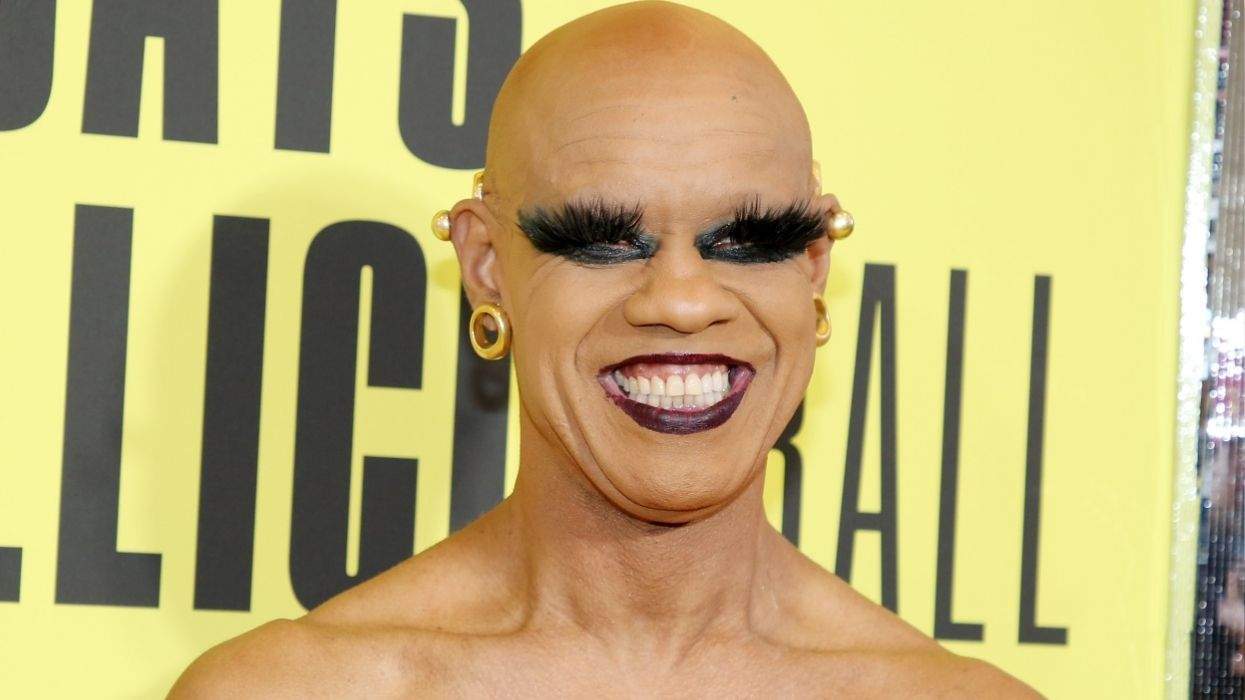
Kevin Aviance was fixing his makeup when he appeared on camera from New York City, apologizing for the noise. There were shows to prepare, music to finish, Pride weekend approaching. Twenty years after a group of men attacked him on a Manhattan street, the towering drag artist and queer dance music icon was busy being Kevin Aviance.
“To be honest with you, I don’t know what else to do, girl,” he told The Advocate the Wednesday before New York Pride, two weeks after the anniversary of the attack. “I can’t sell hot dogs, girl. I would if I could, but I can’t, so I won’t. But this is what I know how to do.”
For decades, Aviance has commanded dance floors with a shaved head, sculptural costumes, towering heels, and a presence that blurs the line between drag queen, recording artist, and nightclub icon. He isn’t just part of the party — he’s the reason people remember being there.
Related: Four charged in Kevin Aviance gay bashing
A queen built for the dance floor
Aviance grew up in Richmond, Virginia, and moved to Washington, D.C., as a young adult. At Tracks, the legendary club that incubated a generation of queer performers and DJs, he competed in runway and voguing battles and met Juan Aviance, founder of the House of Aviance. “Tracks is where I was born,” he later told The Washington Post.
He became one of the house’s earliest members, taking its name as his own, as the group built its own ballroom scene in D.C., after feeling shut out of parts of New York’s. He moved to Miami in 1991 to sharpen his craft, then to New York two years later, appearing in Madonna’s 1994 “Secret” video and becoming a defining figure in the city’s gay club world. His recording career produced dance hits like “Din Da Da,” “Alive,” and “Give It Up.” His 1996 track “Cunty” became an underground anthem whose reach would eventually stretch far beyond the clubs that first embraced it.
He was also a fixture of circuit party culture, the sprawling, high-energy LGBTQ+ dance gatherings that pulled crowds from city to city, often over multiday weekends. That world traced back to the tea dances and marathon club nights of the late 1970s and early '80s; during the AIDS crisis, many of those parties raised money for HIV and AIDS organizations while giving queer people space to grieve, celebrate, and build chosen family.
It was never utopian. The scene drew criticism over drug use, cost, racial exclusion, and a narrow, muscular ideal of gay male beauty, and Black attendees have described finding freedom there while navigating a predominantly white culture. Against that backdrop, Aviance’s presence was impossible to miss: a towering, bald Black drag artist bringing ballroom and queer theatricality into rooms where ideas about desirability could be brutal.
Circuit parties gave Aviance a platform. He gave them a queen.
His fame belonged to a kind of nightlife hard to explain to anyone raised on social media. He didn’t become famous by showing up in people’s homes every week. People left their homes to see him. They traveled, waited in line, packed into a club at midnight, and stayed till morning. Then Aviance appeared above the crowd, and the night became a story they’d tell for years.
By June 2006, he was recording, hosting parties, riding a career built one dance floor at a time. “Life was good, really, really good,” he said. “And then all of a sudden, it’s just like, boom, boom, boom. It was over.”
Related: The history of the circuit party: Transforming LGBTQ+ political pain into power
‘This one was different’
Early on June 10, 2006, Aviance left the Phoenix, a bar in the East Village. A group followed him down First Avenue, throwing garbage and a paint can and shouting slurs. They surrounded him and beat him, breaking his jaw. Four people were arrested.
Aviance recognized instantly that this wasn’t the ordinary hostility he’d learned to absorb as a visibly queer Black performer. “This one was different,” he said. “It was way different, and I could feel the hate from them.”
In March 2007, the four defendants pleaded guilty to assault, with plea deals calling for six-to-15-year sentences — they’d faced up to 25 years under the top hate crime charge. Six days after the beating, Aviance appeared at a rally with his jaw wired shut and delivered the line that would follow him for two decades: “You can’t keep a good queen down.” He went on to work with the Human Rights Campaign against anti-LGBTQ+ violence.
The recovery was not tidy. His body hurt, his career stalled, and his mother died soon after the attack. He turned to drugs and alcohol before entering a 30-day rehab program in February 2007. “I couldn’t heal properly,” he said at the time. “I was just tailspinning to the depths of hell. And I just had to get a grip, go away, and deal with myself.” He left New York for a stretch and later underwent hip replacement surgeries. The attack, he said, sent his career “down the tube.”
Because he was so visible, the beating became bigger than one crime. It frightened LGBTQ+ New Yorkers and made Aviance a public symbol of survival while he was still working out what surviving would actually require.
“I went to some dark places,” he said, but leaving life behind was never really on the table. “I survived. I lived. So since I lived, then there was no doubt that I was going to continue on living.” Music gave him direction. “I never stopped doing music at all,” he said, adding, “I just kept my eye on the prize.”
Related: Four plead guilty in attack last year on singer Kevin Aviance
Beyoncé calls the culture home
The New York that Aviance returned to had changed. Many of the great Manhattan clubs that raised him were gone; nightlife had scattered into smaller Brooklyn scenes; a new generation of drag artists found fame through reality TV instead of legendary nights. Aviance adapted, sometimes reluctantly, by performing, recording, and eventually DJing, trying to find his footing in a culture that had absorbed his vocabulary without always knowing where it came from.
Then Beyoncé put his voice at the center of the world’s biggest dance floor. Her 2022 album Renaissance sampled “Cunty” on “Pure/Honey” alongside other Black queer artists, and “Break My Soul (The Queens Remix)” named the House of Aviance among the ballroom houses it honored. Aviance didn’t know about the sample beforehand, but he’s described being overwhelmed hearing his own voice on the record.
For him, it wasn’t just a celebrity nod. Rather, it was recognition of music that had lived for years in clubs and ballrooms, influential long before it was famous. “I always planted my seeds,” he said. “I realized that I can’t stop something that I didn’t really start. It’s just something that started.”
The sample introduced him to younger listeners and fueled a new run of shows and records. In 2023, he launched the CVNTY Ball tour, timed to stops on Beyoncé’s Renaissance World Tour. Last October, he released the 15-track HIPPOPOTAMUS!, and he’s already at work on another dance album he hopes to submit for Grammy consideration.
But to Aviance, the dance floor is something closer to LGBTQ+ civic infrastructure.
Related: Equalpride Announces Support of Kevin Aviance’s CVNTY Ball Tour
The dance floor as a lifeline
“The dance floor is very important to me,” Aviance said. “I think we’ve gotten away from all that. So I think we need to put that dance floor back in our lives again, because that helped strengthen community.”
Circuit history backs him up: those parties grew in an era when queer people gathered not just to dance but to raise money, trade information, and care for each other while institutions looked away. Celebration and resistance weren’t opposites. Sometimes, celebration was what gave people the strength to resist. The parties were escapist, but also aspirational and a glimpse of a world where queer people were the center instead of the margin.
Discovery worked differently then too. You might hear an unfamiliar record at 4 a.m., spend days trying to identify it, then go find it in a store. A song accumulated meaning through the people you heard it with. “We had our songs. We had our music,” Aviance said. “But everything’s gotten so homogenized and so into pop music that we’ve forgotten our sounds.”
He’s not asking people to live in the past — he wants them discovering new artists and new anthems, and he tells people to keep a running list of 10 current dance tracks they love. But he wants old habits back too: “Go out at least one Saturday night a month. Go see your community. Talk to people and be with lesbians, be with gays, be with trans people, be with all these people.” Drag queens, he said, shouldn’t get dressed only for a booking or a camera. “Drag queens are not only just for performing. They were our girls. Drag queens are for us.”
Related: With an Assist From Beyoncé, Black Queen Kevin Aviance Is Back
‘We have to defend our life now’
That call for gathering carries new urgency amid renewed political backlash against trans people, drag, and queer expression. Republicans, led by the fervor of the Trump administration, have attacked trans people’s existence and attempted to criminalize drag as an art form. At 58, Aviance has seen progress curdle into retrenchment before. “This is just another bad record playing,” he said.
His answer is looking out for each other, especially Black trans women, drag artists, and others whose visibility makes them targets. Tell someone where you’re going. Reach out when something happens. Don’t let fear keep violence secret. “We’re not out here alone,” he said. “If one goes down, we all go down.” He’s just as direct about allies. “I want these allies to stand up too,” he said. “Where are the people standing up for us too, as we stand for them?”
He draws hope from those who built something lasting through earlier crises, like Marsha P. Johnson, Sylvia Rivera, ACT UP, the queer people who made families and dance floors while institutions abandoned them. “They gave their lives so we can have our lives,” he said. “So we have to defend our lives now, and so the future can have theirs.”
Twenty years on, Aviance says trauma doesn’t disappear, but that it can recede. “Where there’s pain, it will subside,” he said. “There’s a time where it’s just your story, but then sooner or later it becomes part of the story.”
Now, as LGBTQ+ people are again being nudged toward smaller and quieter, Aviance is pushing the other way. “We need to start living outwardly,” he said. “Be part of it. Don’t just sit on the side of it.”
There are costumes to finish, records to make, dance floors still waiting.
“You’re only as good as your last dance record, girl,” he said.