
'%3E%3Cpath d='M16.3574 35.6519H12.9537L15.0491 18.8873L16.3574 35.6519ZM30.4229 54.0093L22.309 0.994385H7.91795L0 54.0093H10.6634L11.5802 46.3855H17.4014L17.9914 54.0093H30.4229Z' fill='%23971B20'/%3E%3Cpath d='M48.2073 41.8813C48.2073 43.4049 47.4892 44.0011 46.1144 44.0011H43.7595V11.0687H46.1144C47.4892 11.0687 48.2073 11.6636 48.2073 13.1885V41.8813ZM59.5273 43.6695V11.3326C59.5273 3.71323 53.5729 0.994385 47.8157 0.994385H31.7213V54.0093H47.8157C53.5729 54.0093 59.5273 51.29 59.5273 43.6695Z' fill='%23971B20'/%3E%3Cpath d='M90.183 0.994385H78.6039L75.0711 30.6157L71.9955 0.994385H59.4346L69.2474 54.0093H80.373L90.183 0.994385Z' fill='%23971B20'/%3E%3Cpath d='M107.063 42.3448C107.063 43.7359 105.951 44.5974 104.643 44.5974C103.269 44.5974 102.157 43.7359 102.157 42.3448V12.658C102.157 11.2676 103.269 10.4058 104.643 10.4058C105.951 10.4058 107.063 11.2676 107.063 12.658V42.3448ZM119.233 43.2723V11.7312C119.233 6.36384 112.952 -3.8147e-06 104.643 -3.8147e-06C96.2667 -3.8147e-06 89.9867 6.36384 89.9867 11.7312V43.2723C89.9867 48.6393 96.2667 55 104.643 55C112.952 55 119.233 48.6393 119.233 43.2723Z' fill='%23971B20'/%3E%3Cpath d='M150.976 43.9349V33.7309H139.069V42.3448C139.069 43.7359 137.957 44.5974 136.582 44.5974C135.076 44.5974 133.964 43.7359 133.964 42.3448V12.658C133.964 11.2676 135.076 10.4058 136.582 10.4058C137.957 10.4058 139.069 11.2676 139.069 12.658V21.2723H150.976V11.0687C150.976 5.70107 145.283 -3.8147e-06 136.582 -3.8147e-06C127.75 -3.8147e-06 121.796 5.70107 121.796 11.0687V43.9349C121.796 49.3022 127.75 55 136.582 55C145.283 55 150.976 49.3022 150.976 43.9349Z' fill='%23971B20'/%3E%3Cpath d='M167.478 35.6519H164.076L166.17 18.8873L167.478 35.6519ZM181.544 54.0093L173.432 0.994385H159.037L151.123 54.0093H161.785L162.704 46.3855H168.523L169.114 54.0093H181.544Z' fill='%23971B20'/%3E%3Cpath d='M205.412 10.4058V0.994385H177.081V10.4058H185.392V54.0093H197.428V10.4058H205.412Z' fill='%23971B20'/%3E%3Cpath d='M230.002 54.0093V43.9349H218.914V31.8746H226.635V21.8028H218.914V10.4058H230.002V0.994385H206.875V54.0093H230.002Z' fill='%23971B20'/%3E%3C/g%3E%3Cdefs%3E%3CclipPath id='clip0_260_7080'%3E%3Crect width='230' height='55' fill='white'/%3E%3C/clipPath%3E%3C/defs%3E%3C/svg%3E)

This story originally appeared on Them.
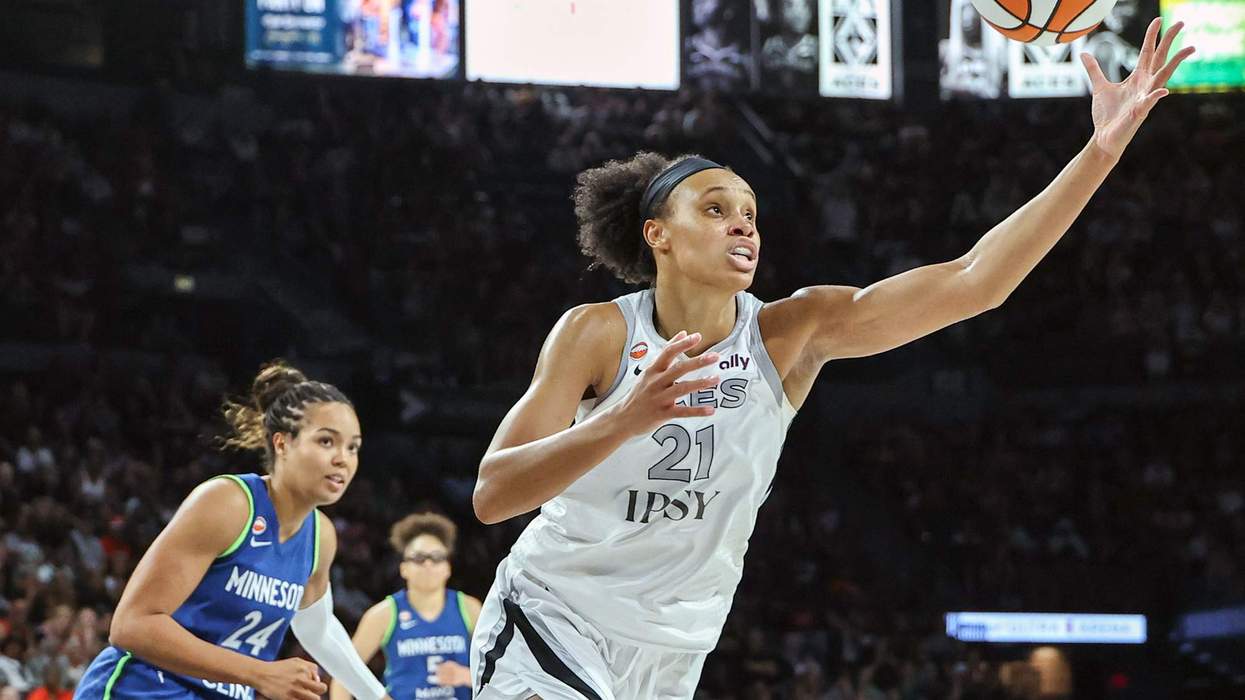
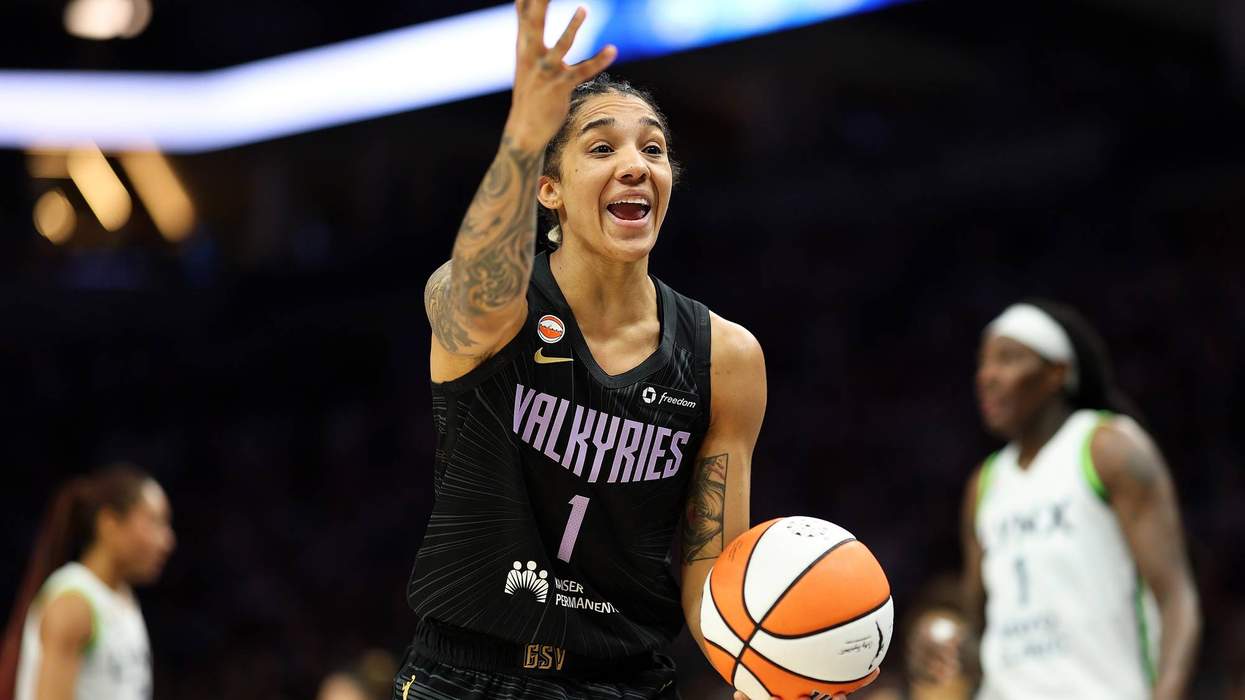
Brianna Turner has been fighting back against the targeting of transgender athletes long before the toxic discourse currently surrounding the WNBA. In 2023, she took to X to say that “people disguise their transphobia as caring for women’s athletics” and has even used her tunnel walk outfits to send a message of support for trans rights.
When I talk to Turner on the phone earlier this week, the first question I ask is why she’s chosen to use her platform as a WNBA player to advocate for trans rights. Her answer is simple: she can see that trans people are a community marginalized by our government, and that her career as a professional female athlete is being exploited as an excuse to justify their mistreatment. “I hate being used as something to dismantle the rights of trans people,” she tells me.
Turner isn’t an anomaly in the WNBA, one of if not the most outspoken professional sports leagues when it comes to advocacy around civil rights. In many ways, the WNBA has acted as proof that it’s possible for a pro sports league to be prestigious while still having teeth around social issues, raising the bar for other leagues to follow suit. Still, even among a league that’s so vocal, Turner stands out as not just forthright on issues she cares about, but one who is unafraid to name names and offer direct responses to politicians or political groups coming after oppressed communities.
Earlier this year, when the International Olympic Committee announced a policy that effectively banned trans and intersex players from competing in Olympic games, Turner called out the IOC directly in an April USA Today op-ed for using athletes like her as a means to target trans players. The policy institutes sex-testing for every woman who wants to compete, creating an invasive and unnecessary barrier to both trans and cis women alike, ironically in the name of protecting women in sports.
“Focusing on who should be allowed to call themselves a woman distracts from the structural inequities that actually limit women’s opportunities,” Turner wrote.
The Heritage Foundation released a policy paper in July calling for Title IX to be functionally dismantled, a move that would undermine the most consequential civil rights law for women in sports in U.S. history. Turner sounded the alarm to her followers, naming the Heritage Foundation explicitly.
And as cisgender men announce their plans to play in the WNBA in a transparent attempt to add fuel to the fire of the trans panic surrounding women athletics, Turner joined her fellow players in denouncing the bad actors as men looking for their own publicity who want to drive attention away from the momentum around women’s sports.
“The people doing this, they don’t care about the WNBA. They just want to make a mockery of it,” she tells me. “They kind of want to embarrass us. They could care less about the WNBA.”
The overwhelming majority of the rhetoric around trans people in sports has been driven by people who don’t play professional sports — though not all of it. I ask Turner what she thinks about people inside the league who have been focused on advocating against trans athletes, like her former Indiana Fever teammate Sophie Cunningham. Cunningham has made headlines ever since she told ESPN in a July interview that she wants to “protect young girls in a locker room” from “biological men” — a clear, transphobic dog whistle.
Turner says she doesn’t understand why Cunningham chooses to use her platform the way she does, but that it’s ultimately her prerogative. “I played with Sophie for six out of eight WNBA seasons,” she tells me. “I haven’t spoken to her [since the ESPN interview]. I honestly don’t plan on speaking to her. Obviously she’s going to have her own opinion, her own thoughts, and if she wants to use her platform that way, that’s her right, I guess.”
It’s clear not just from my conversation with Turner, but also from her social presence and partnerships with nonprofits, that she’s passionate about civil rights for everyone. As part of her involvement in the program Athletes Unlimited, she collaborated with the organization Justice for All Immigrants to support immigrant communities in her home state of Texas. She’s also been vocal about racial justice and voting rights, and has spoken out about sexual harassment in the WNBA. So it’s likely that even without the political spectacle that people like Riley Gaines have foisted onto the WNBA, Turner would still be outspoken in defense of marginalized communities. But it’s especially disheartening that, with this most recent advocacy, she’s being forced to play defense not just on the court, but in the reigning discourse around her profession.
Turner tells me that the recent focus on transgender players — none of whom are even in the WNBA — detracts from all of the positive things happening around the league right now. I ask what she would most like people to know about the league, rather than all the headlines about how transgender athletes are threatening the future of women’s sport. First and foremost, she points to the recent collective bargaining agreement which Turner helped negotiate with the Players Association, winning WNBA players a higher single salary increase than any other CBA across professional sports. She also notes the expansion of teams to new cities, the increase in the number of games per season, and a higher number of international players than the league has ever had before.
I ask Turner how people can actually support women in sports. Her suggestion? Watch more women in sports. “When I say support women’s sports, that means watching the games, buying merch, following your favorite athlete on social media, following the league on social media, going to your local sports bar and asking them to put on women’s sports. I don’t care if it’s volleyball, hockey, soccer, basketball.”
Brianna Turner’s approach to advocacy is no-nonsense: When she sees injustice, she speaks out against it. When her place as a female athlete is being used to prevent kids from playing sports or stopping trans people from competing at the Olympic level, she calls bullshit. And she sees this as part of her patriotic duty.
Turner’s ethos might best be summed up by the James Baldwin quote that is in the header on her X profile: “I love America more than any other country in the world and, exactly for this reason, I insist on the right to criticize her perpetually.”
Before we finish our conversation, I ask her why this quote resonates with her so much. “I think that people think that patriotism is just flying a flag and supporting your country regardless of what it does,” she says. “But I think sometimes a more patriotic thing is to try to hold your country accountable and speak up for unjust things that your country plays a role in.” She tells me that having the quote front-and-center on her page makes it clear that her advocacy is in the name of making our country better, for everyone.
Like many of her fellow players, Turner faces backlash from online commentators for her stance on trans rights. Before we hang up, I ask Turner if that backlash ever makes her consider staying quiet on the issues she cares about, to which she defiantly replies that no, it does not. “I’m gonna keep saying what I wanna say.”
Hanna Stolzer is the social media manager at the American Civil Liberties Union, but is writing in her personal capacity.




11 times J.K. Rowling did something wildly transphobic, ranked
J.K. Rowling attends day four of Royal Ascot at Ascot Racecourse on June 20, 2025 in Ascot, England.