'%3E%3Cpath d='M16.3574 35.6519H12.9537L15.0491 18.8873L16.3574 35.6519ZM30.4229 54.0093L22.309 0.994385H7.91795L0 54.0093H10.6634L11.5802 46.3855H17.4014L17.9914 54.0093H30.4229Z' fill='%23971B20'/%3E%3Cpath d='M48.2073 41.8813C48.2073 43.4049 47.4892 44.0011 46.1144 44.0011H43.7595V11.0687H46.1144C47.4892 11.0687 48.2073 11.6636 48.2073 13.1885V41.8813ZM59.5273 43.6695V11.3326C59.5273 3.71323 53.5729 0.994385 47.8157 0.994385H31.7213V54.0093H47.8157C53.5729 54.0093 59.5273 51.29 59.5273 43.6695Z' fill='%23971B20'/%3E%3Cpath d='M90.183 0.994385H78.6039L75.0711 30.6157L71.9955 0.994385H59.4346L69.2474 54.0093H80.373L90.183 0.994385Z' fill='%23971B20'/%3E%3Cpath d='M107.063 42.3448C107.063 43.7359 105.951 44.5974 104.643 44.5974C103.269 44.5974 102.157 43.7359 102.157 42.3448V12.658C102.157 11.2676 103.269 10.4058 104.643 10.4058C105.951 10.4058 107.063 11.2676 107.063 12.658V42.3448ZM119.233 43.2723V11.7312C119.233 6.36384 112.952 -3.8147e-06 104.643 -3.8147e-06C96.2667 -3.8147e-06 89.9867 6.36384 89.9867 11.7312V43.2723C89.9867 48.6393 96.2667 55 104.643 55C112.952 55 119.233 48.6393 119.233 43.2723Z' fill='%23971B20'/%3E%3Cpath d='M150.976 43.9349V33.7309H139.069V42.3448C139.069 43.7359 137.957 44.5974 136.582 44.5974C135.076 44.5974 133.964 43.7359 133.964 42.3448V12.658C133.964 11.2676 135.076 10.4058 136.582 10.4058C137.957 10.4058 139.069 11.2676 139.069 12.658V21.2723H150.976V11.0687C150.976 5.70107 145.283 -3.8147e-06 136.582 -3.8147e-06C127.75 -3.8147e-06 121.796 5.70107 121.796 11.0687V43.9349C121.796 49.3022 127.75 55 136.582 55C145.283 55 150.976 49.3022 150.976 43.9349Z' fill='%23971B20'/%3E%3Cpath d='M167.478 35.6519H164.076L166.17 18.8873L167.478 35.6519ZM181.544 54.0093L173.432 0.994385H159.037L151.123 54.0093H161.785L162.704 46.3855H168.523L169.114 54.0093H181.544Z' fill='%23971B20'/%3E%3Cpath d='M205.412 10.4058V0.994385H177.081V10.4058H185.392V54.0093H197.428V10.4058H205.412Z' fill='%23971B20'/%3E%3Cpath d='M230.002 54.0093V43.9349H218.914V31.8746H226.635V21.8028H218.914V10.4058H230.002V0.994385H206.875V54.0093H230.002Z' fill='%23971B20'/%3E%3C/g%3E%3Cdefs%3E%3CclipPath id='clip0_260_7080'%3E%3Crect width='230' height='55' fill='white'/%3E%3C/clipPath%3E%3C/defs%3E%3C/svg%3E)
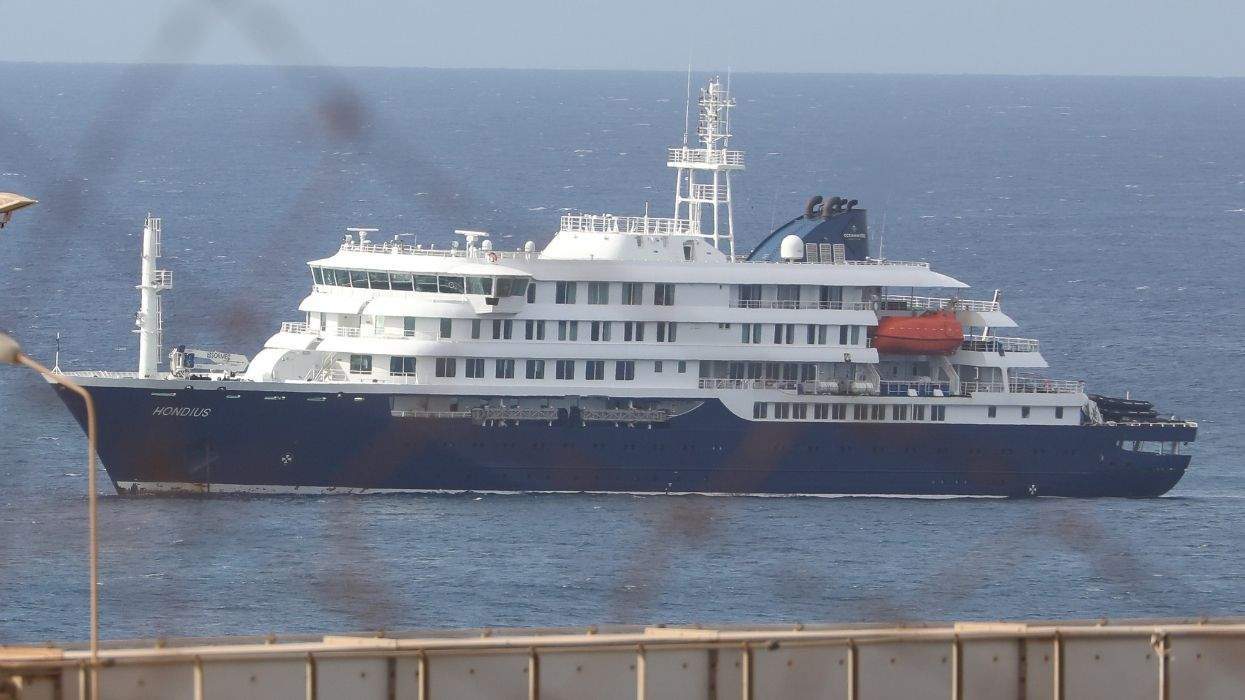

A gay travel blogger documenting a remote expedition across the Atlantic is now among those quarantined aboard a ship linked to a rare hantavirus outbreak that has killed three passengers and sickened several others.
Jake Rosmarin began documenting his journey across the Atlantic Ocean on April 1, starting in Ushuaia, Argentina, with planned stops in South Georgia Island, Tristan da Cunha, and other faraway destinations throughout his 35-day adventure. The Boston-based content creator, known for his feel-good travel blogging and viral proposal to his fiancé, announced to his followers he would be visiting some of the most remote islands in the world.
But on May 2, nearly 30 days into his journey aboard the Dutch-flagged expedition vessel, the M/V Hondius, local officials reported to the National Institute for Communicable Diseases that a cluster of unknown respiratory illness cases had broken out among passengers. As more passengers fell ill over the several-week journey to Cape Town, South Africa, the outbreak proved to be the rare Andes strain of hantavirus, a rare and potentially deadly respiratory illness spread primarily through aerosolized exposure to rodent droppings. Three passengers have died, and three others with respiratory symptoms have been evacuated to medical care, according to the Associated Press. Authorities have reported eight confirmed cases.
Related: Details emerge after a Chicago man dies on the world’s biggest gay cruise
Related: Yet another passenger dies on world’s biggest gay cruise
Related: Nine men busted for drugs while trying to board massive Atlantis gay cruise in Miami
The ship is now en route to the Canary Islands, after spending three days quarantined off the coast of Cape Verde as public health officials devised a strategy for containment and treatment. Rosmarin, who had been documenting the days leading up to the quarantine, posted a written statement to his travel accounts on Instagram and TikTok on Sunday. He later posted a video statement detailing his emotions while still aboard the Dutch-flagged adventure vessel.
“I am currently on board the M/V Hondius, and what’s happening right now is very real for all of us here,” Rosmarin says to the camera as his voice cracks. “We’re not just a story. We’re not just headlines. We’re people. People with families, with lives, with people waiting for us at home.”
Because the situation is still developing, Rosmarin has continued to post updates to dispel misinformation about the vessel. In an updated Wednesday statement, the travel blogger wrote that claims the M/V Hondius was poorly maintained, dirty, or even just a commercial vessel are false, explaining that the 150-person ship is not a traditional cruise ship and follows strict biosecurity protocols due to the extreme Antarctic conditions it regularly travels through.
“Everyone else aboard remains in good spirits,” he wrote in the latest statement. “At the end of the day, we are all just people who want to stay safe and eventually return home to our families.”
The outbreak has prompted questions about hantavirus, how it spreads, and whether it poses a broader public risk.
What is hantavirus?
According to the World Health Organization, hantaviruses are a family of viruses that can cause two syndromes and can be deadly. Usually, people become infected with hantavirus through exposure to mice and rats, especially if they make contact with their droppings, urine, or saliva.
There are several hantavirus strains that cause two distinct syndromes in humans: hantavirus pulmonary syndrome and hemorrhagic fever with renal syndrome. The Guardian reported that lab tests found the strain aboard the M/V Hondius is the Andes strain, which is endemic to Chile and Argentina, is usually carried by long-tailed pygmy rice rats, and causes hantavirus pulmonary syndrome.
Hantavirus has a long incubation period, so HPS symptoms can appear anywhere from one to eight weeks after contact with an infected rodent. Person-to-person transmission of hantavirus is very rare; however, it has been documented with the Andes strain.
Early symptoms of HPS can include fatigue, fever, and muscle aches, especially in large muscle groups such as the shoulders and thighs. Later symptoms, which can develop four to 10 days after the initial phase, may includ abdominal distress, chills, shortness of breath, lungs filling with fluid, and tightness in the chest. According to the WHO, HPS has a fatality rate of up to 50 percent.
During a press conference organized by the Infectious Diseases Society of America on Thursday, Dr. Carlos del Rio, a professor of Global Health and Epidemiology at Emory University in Atlanta, Georgia, said that from an infectious disease perspective, he is not worried about this outbreak becoming a pandemic.
“For the average person in the U.S., this is not a concern,” del Rio said. “I would tell people that I would be more concerned about getting in my car or crossing the street and having an accident than getting hantavirus.”
How does hantavirus spread?
Usually, hantavirus spreads through contact with infected rodents, most often via their droppings, urine, and saliva. Most strains of hantavirus do not spread between humans. While person-to-person infection is possible with the Andes strain of the virus, it usually occurs after prolonged contact with someone infected with hantavirus in the early stages of the disease.
Because Andes strain hantavirus transmits so differently from COVID, leading public health experts say the public should avoid conflating the two, and they say there is no reason to panic.
“When we say close contact (for human-to-human transmission), we mean very close physical contact, whether it's sharing a bunk room or sharing a cabin, providing medical care, for example, (that is) very, very different to COVID and very different to influenza,” Maria Van Kerkhove, World Health Organization (WHO) director of epidemic and pandemic management, told Reuters.
What can I do to protect myself against hantavirus?
Healthcare experts say that while hantavirus is not a concern for the average American, there are important steps people can take to reduce health risks more broadly. According to del Rio, those include staying home when you are sick and contacting healthcare providers if you become sick after a trip.
Additionally, public health experts say maintaining strong public health systems is critical, especially as the Trump administration pushes to cut more global health funding.
“For the average American, my recommendation would be, what you need to do is call your congressperson and say, ‘continue funding CDC, continue funding NIH,’” del Rio said. “By keeping those organizations funded and functional, we’re protecting the health of America.”