'%3E%3Cpath d='M16.3574 35.6519H12.9537L15.0491 18.8873L16.3574 35.6519ZM30.4229 54.0093L22.309 0.994385H7.91795L0 54.0093H10.6634L11.5802 46.3855H17.4014L17.9914 54.0093H30.4229Z' fill='%23971B20'/%3E%3Cpath d='M48.2073 41.8813C48.2073 43.4049 47.4892 44.0011 46.1144 44.0011H43.7595V11.0687H46.1144C47.4892 11.0687 48.2073 11.6636 48.2073 13.1885V41.8813ZM59.5273 43.6695V11.3326C59.5273 3.71323 53.5729 0.994385 47.8157 0.994385H31.7213V54.0093H47.8157C53.5729 54.0093 59.5273 51.29 59.5273 43.6695Z' fill='%23971B20'/%3E%3Cpath d='M90.183 0.994385H78.6039L75.0711 30.6157L71.9955 0.994385H59.4346L69.2474 54.0093H80.373L90.183 0.994385Z' fill='%23971B20'/%3E%3Cpath d='M107.063 42.3448C107.063 43.7359 105.951 44.5974 104.643 44.5974C103.269 44.5974 102.157 43.7359 102.157 42.3448V12.658C102.157 11.2676 103.269 10.4058 104.643 10.4058C105.951 10.4058 107.063 11.2676 107.063 12.658V42.3448ZM119.233 43.2723V11.7312C119.233 6.36384 112.952 -3.8147e-06 104.643 -3.8147e-06C96.2667 -3.8147e-06 89.9867 6.36384 89.9867 11.7312V43.2723C89.9867 48.6393 96.2667 55 104.643 55C112.952 55 119.233 48.6393 119.233 43.2723Z' fill='%23971B20'/%3E%3Cpath d='M150.976 43.9349V33.7309H139.069V42.3448C139.069 43.7359 137.957 44.5974 136.582 44.5974C135.076 44.5974 133.964 43.7359 133.964 42.3448V12.658C133.964 11.2676 135.076 10.4058 136.582 10.4058C137.957 10.4058 139.069 11.2676 139.069 12.658V21.2723H150.976V11.0687C150.976 5.70107 145.283 -3.8147e-06 136.582 -3.8147e-06C127.75 -3.8147e-06 121.796 5.70107 121.796 11.0687V43.9349C121.796 49.3022 127.75 55 136.582 55C145.283 55 150.976 49.3022 150.976 43.9349Z' fill='%23971B20'/%3E%3Cpath d='M167.478 35.6519H164.076L166.17 18.8873L167.478 35.6519ZM181.544 54.0093L173.432 0.994385H159.037L151.123 54.0093H161.785L162.704 46.3855H168.523L169.114 54.0093H181.544Z' fill='%23971B20'/%3E%3Cpath d='M205.412 10.4058V0.994385H177.081V10.4058H185.392V54.0093H197.428V10.4058H205.412Z' fill='%23971B20'/%3E%3Cpath d='M230.002 54.0093V43.9349H218.914V31.8746H226.635V21.8028H218.914V10.4058H230.002V0.994385H206.875V54.0093H230.002Z' fill='%23971B20'/%3E%3C/g%3E%3Cdefs%3E%3CclipPath id='clip0_260_7080'%3E%3Crect width='230' height='55' fill='white'/%3E%3C/clipPath%3E%3C/defs%3E%3C/svg%3E)
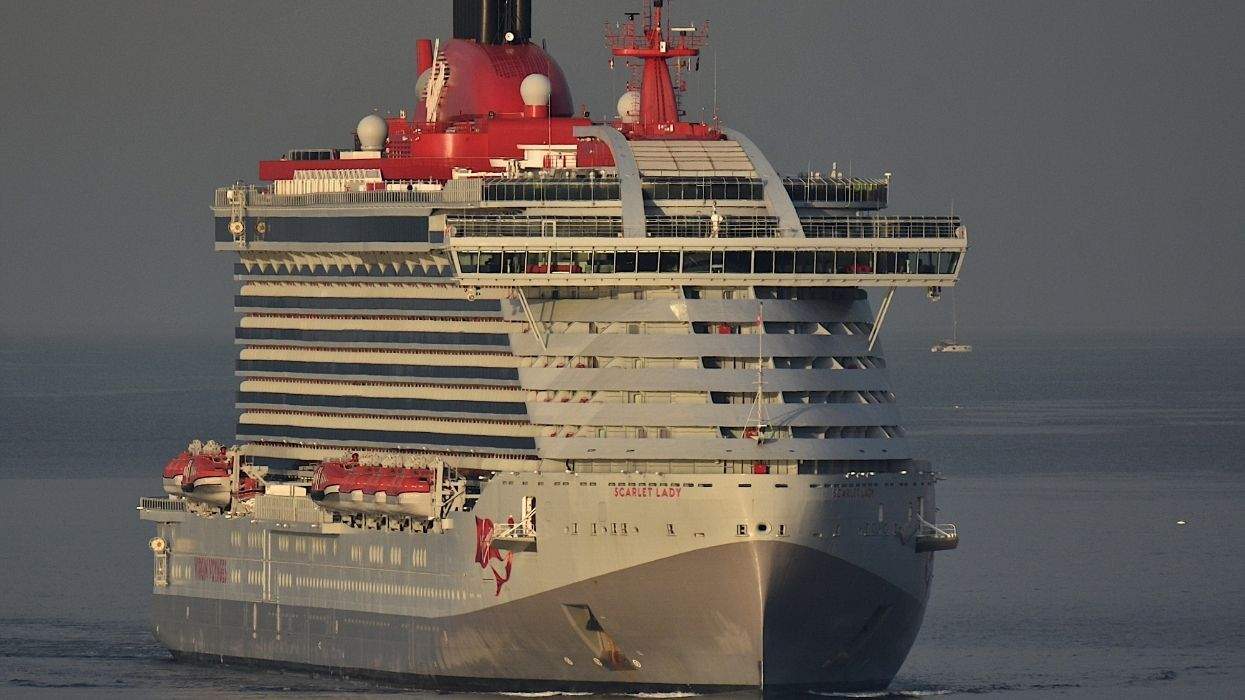
Turkish authorities have blocked an LGBTQ+ cruise carrying mostly American travelers from docking in the country, citing “moral standards” and “family values,” according to CNN.
The 10-day “Athens to Venice” cruise, organized by Atlantis Events, was scheduled to depart Greece on Sunday and stop in Kuşadası, Türkiye, two days later before continuing to Istanbul. Instead, the Virgin Voyages ship Scarlet Lady will now stop in Cairo, Egypt, and Crete, Greece, Atlantis said.
Related: Yet another passenger dies on world’s biggest gay cruise
Local authorities in Türkiye said they had canceled the “event” because the ship had been chartered by groups “known for behaviors incompatible with the fabric of our society and our moral values,” CNN reported.
The decision affects about 1,900 passengers, including roughly 1,100 from the United States, Rich Campbell, president and CEO of Atlantis Events, told the network. Other travelers are expected from the United Kingdom, Canada, Australia and elsewhere.
“It’s pretty stunning, to be honest. I mean, and the reasoning behind it is that it’s a gay group,” Campbell told the network.
“It’s very concerning to me when a country decides they can pick and choose which tourists are allowed in and which are not,” he added.
Campbell said it was the first time in the company’s 36-year history that Atlantis had been “actively told we may not berth here because of who we are.” Atlantis informed passengers Thursday that the Türkiye stops had been removed “due to circumstances beyond our control,” after Turkish authorities canceled the port calls.
“This is not a political organization,” Campbell said. “We are not there for anything except to spend money, have a good time, take tours and be incredibly respectful to every culture we visit.”
Broadway legend Patti LuPone, who is scheduled to perform on the cruise, condemned the decision in an Instagram post Friday.
“I am shocked,” LuPone wrote. “The Atlantis cruise I am performing on next week has been banned from entering Turkey. A ship — a magnificent ship — full of gay men. And me. Denied entry to Turkey simply because of who is on board. I am furious, but I am sailing, as the ship will make other ports of call.”
Related: Nine men busted for drugs while trying to board massive Atlantis gay cruise in Miami
She added, “I am ready to perform for all the wonderful men on this Atlantis cruise, who deserve so much better than this.”
The post quickly drew support online, including from Broadway actor Andrew Rannells, who commented with heart emojis. Another commenter, who identified themself as part of Türkiye’s LGBTQ+ community, wrote that the country’s queer community is “so vast” and “so gigantic,” but remains treated by authorities “as if [it is] not even a house.”
Atlantis Events, based in West Hollywood, has built a lucrative business around large-scale LGBTQ+ cruises, many of which are marketed as vacation spaces for gay men and floating nightlife festivals. But some of its chartered sailings have also come under scrutiny for passenger safety.
The Advocate reported in February that nine passengers were arrested at PortMiami while trying to board an Atlantis-chartered Royal Caribbean cruise after authorities said drugs including MDMA, GHB, and cocaine were found in luggage. In 2024, The Advocate also reported that a passenger unexpectedly died aboard Royal Caribbean’s Oasis of the Seas during an Atlantis-chartered cruise. Royal Caribbean said at the time that the death was “unexpected and not suspicious.” The Advocate has reported on other deaths connected to Atlantis-chartered sailings, including a 2022 death aboard the same ship and a 2020 case in which a Florida man died after jumping from the Oasis of the Seas in Puerto Rico.
The port ban also comes as LGBTQ+ advocates warn that Turkey is considering an even broader legal crackdown. Human Rights Watch reported in June that Turkish media had described proposed amendments circulated by President Recep Tayyip Erdoğan’s government that would further criminalize LGBTQ+ people, including prison sentences of up to three years for vaguely defined “attitudes and behaviors contrary to biological sex and public morality” or for praising or promoting such conduct.