'%3E%3Cpath d='M16.3574 35.6519H12.9537L15.0491 18.8873L16.3574 35.6519ZM30.4229 54.0093L22.309 0.994385H7.91795L0 54.0093H10.6634L11.5802 46.3855H17.4014L17.9914 54.0093H30.4229Z' fill='%23971B20'/%3E%3Cpath d='M48.2073 41.8813C48.2073 43.4049 47.4892 44.0011 46.1144 44.0011H43.7595V11.0687H46.1144C47.4892 11.0687 48.2073 11.6636 48.2073 13.1885V41.8813ZM59.5273 43.6695V11.3326C59.5273 3.71323 53.5729 0.994385 47.8157 0.994385H31.7213V54.0093H47.8157C53.5729 54.0093 59.5273 51.29 59.5273 43.6695Z' fill='%23971B20'/%3E%3Cpath d='M90.183 0.994385H78.6039L75.0711 30.6157L71.9955 0.994385H59.4346L69.2474 54.0093H80.373L90.183 0.994385Z' fill='%23971B20'/%3E%3Cpath d='M107.063 42.3448C107.063 43.7359 105.951 44.5974 104.643 44.5974C103.269 44.5974 102.157 43.7359 102.157 42.3448V12.658C102.157 11.2676 103.269 10.4058 104.643 10.4058C105.951 10.4058 107.063 11.2676 107.063 12.658V42.3448ZM119.233 43.2723V11.7312C119.233 6.36384 112.952 -3.8147e-06 104.643 -3.8147e-06C96.2667 -3.8147e-06 89.9867 6.36384 89.9867 11.7312V43.2723C89.9867 48.6393 96.2667 55 104.643 55C112.952 55 119.233 48.6393 119.233 43.2723Z' fill='%23971B20'/%3E%3Cpath d='M150.976 43.9349V33.7309H139.069V42.3448C139.069 43.7359 137.957 44.5974 136.582 44.5974C135.076 44.5974 133.964 43.7359 133.964 42.3448V12.658C133.964 11.2676 135.076 10.4058 136.582 10.4058C137.957 10.4058 139.069 11.2676 139.069 12.658V21.2723H150.976V11.0687C150.976 5.70107 145.283 -3.8147e-06 136.582 -3.8147e-06C127.75 -3.8147e-06 121.796 5.70107 121.796 11.0687V43.9349C121.796 49.3022 127.75 55 136.582 55C145.283 55 150.976 49.3022 150.976 43.9349Z' fill='%23971B20'/%3E%3Cpath d='M167.478 35.6519H164.076L166.17 18.8873L167.478 35.6519ZM181.544 54.0093L173.432 0.994385H159.037L151.123 54.0093H161.785L162.704 46.3855H168.523L169.114 54.0093H181.544Z' fill='%23971B20'/%3E%3Cpath d='M205.412 10.4058V0.994385H177.081V10.4058H185.392V54.0093H197.428V10.4058H205.412Z' fill='%23971B20'/%3E%3Cpath d='M230.002 54.0093V43.9349H218.914V31.8746H226.635V21.8028H218.914V10.4058H230.002V0.994385H206.875V54.0093H230.002Z' fill='%23971B20'/%3E%3C/g%3E%3Cdefs%3E%3CclipPath id='clip0_260_7080'%3E%3Crect width='230' height='55' fill='white'/%3E%3C/clipPath%3E%3C/defs%3E%3C/svg%3E)
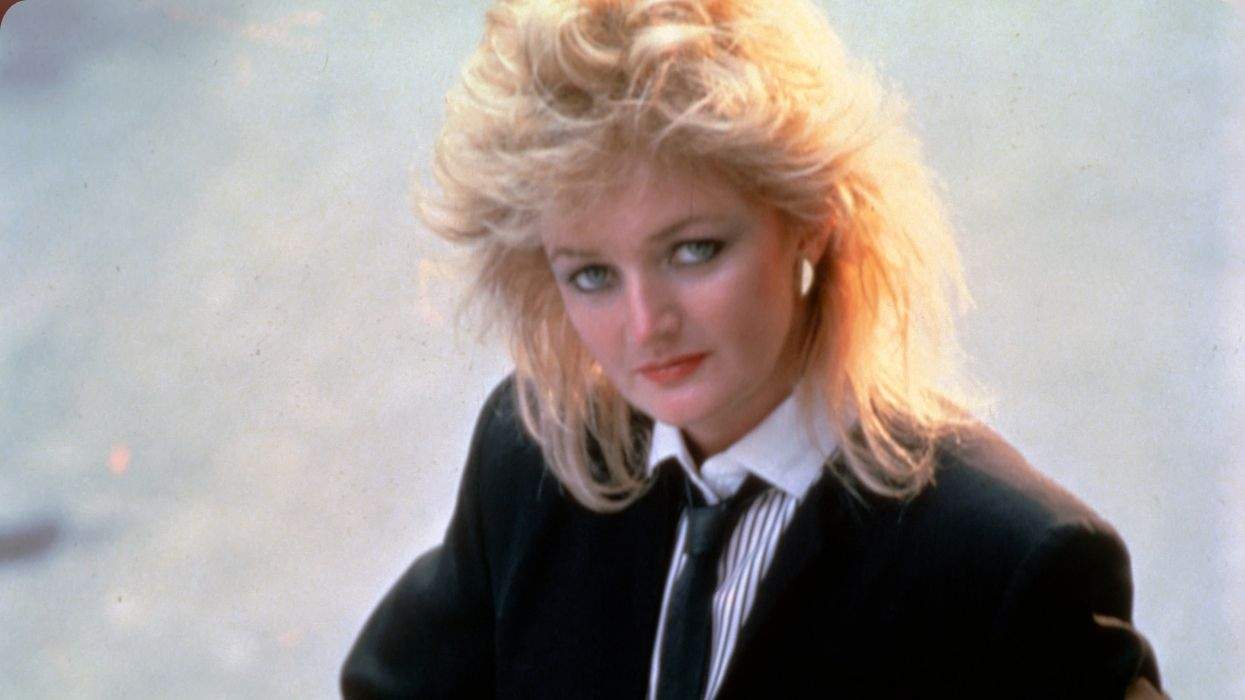

There are some celebrities whose deaths you take personally, as if you knew them or they were connected to something deeply important in your life. That's what happened when I saw the news this morning about Bonnie Tyler's death.
Not the kind of grief you feel for someone you knew, but the kind you feel when a piece of your own history comes to an end.
I have spent more than forty years with two of her songs. "Total Eclipse of the Heart" and "Holding Out for a Hero" are still in my workout rotation. When I'm dragging through a set at the gym or trying to find the last reserves of energy to sprint the final mile of a run, those songs go on loop.
In one of my conversations with Adam Lambert, I told him I kept his version of "Holding Out for a Hero" on repeat because I loved the song so much. We talked about how much Tyler's music meant to us. You didn't have to be a gay young adult coming of age in the 1980s to understand its impact. The younger Lambert understood it as much as I did.
Related: Adam Lambert on Becoming the Voice of London Pride, Nail Polish, and Queen
That impact wasn't just about the propulsive rhythm, soaring melody, or stirring lyrics. Those qualities still make the songs motivational, but as I've gotten older, it's more about where they take me.
They take me back to the early 1980s, to a teenager painfully figuring out he was gay in a world that offered almost no good language for it. I had a Sony Walkman and a cassette of Faster Than the Speed of Night, and I played "Total Eclipse of the Heart" over and over, rewind, stop, rewind, stop, in that laborious pre-digital way until the tape eventually wore down and tangled in the spool. Those of us of a certain age remember the horror of that.
"Holding Out for a Hero" arrived on the Footloose soundtrack not long afterward, when I was in college, and it became its own kind of anthem. There's a reason for that. It's a song about waiting for someone strong enough, fast enough, fresh from the fight, to finally show up.
When you're hiding something as central as who you are, that longing for a hero — for a guy to rescue you, for someone who will make the fear and pain disappear — feels very real. My contemporaries and I were all holding out for that hero.
And I dare say those words, and the desperate way Tyler sang them, still resonate today. We all want our hero.
I remember the first gay bar I snuck into underage in Pittsburgh: Pegasus. When I interviewed Pittsburgh’s first out gay police chief, Larry Scirotto, who is about my age, we shared stories about visiting that same bar as teenagers while coming to terms with being gay.
Related: Pittsburgh’s gay police chief is stopping crime and living proud (exclusive)
Tyler's unmistakable voice surely roared over the speakers there. I remember moving to Washington, D.C., in my twenties to work on Capitol Hill and slipping away from friends who didn't know my whole story so I could dance at a gay club, screaming "Turnaround, bright eyes" with a room full of strangers who somehow understood exactly what that scream was for.
Tyler's voice, that gravelly ache, held the two things a closeted man needed at once: the release of joy and the release of pain. You could dance to it and feel free. You could scream the chorus and let out everything you couldn't say anywhere else.
Then the AIDS crisis came, and grief poured into that same music. The songs became a place where loss could be wailed out loud. God, there was so much pain and so few ways to release it.
It turns out I wasn't imagining a private connection between Bonnie Tyler and gay life. She was, by any honest account, a genuine icon in our community, one whose catalog reads like a chronicle of queer heartbreak, resilience, and camp glamour.
She played New York's legendary gay club The Saint and spoke fondly of its crowds. "Holding Out for a Hero" became a fixture in gay clubs on both sides of the Atlantic. She once said her nephew told her it never stopped playing on the dance floor.
She was warm and unequivocal in her support for LGBTQ+ equality and spoke openly about the LGBTQ+ members of her own family. None of that surprises me. It only confirms what I felt on dance floors decades ago and still feel today.
She was one of ours, whether she fully knew it at first or not. Eventually she did, and she embraced it.
There's a particular grief that comes with losing an artist whose music has remained so present in your life. As long as Tyler was alive, there was a living thread connecting you to the scared young version of yourself who somehow found hope in a worn-out cassette tape.
Now that the metaphorical tape has finally broken, it feels like losing a small piece of your own youth along with her.
Tyler's voice has been the soundtrack to so many moments in my life, and her influence on me has never faded. Her music has always reminded me that the songs that shape us never really leave us. Somewhere just beyond my reach, I like to think there's still a melody reaching back for me, and it will always sound a little like Bonnie Tyler.
Opinion is dedicated to featuring a wide range of inspiring personal stories and impactful opinions from the LGBTQ+ community and its allies. Visit Advocate.com/submit to learn more about submission guidelines. We welcome your thoughts and feedback on any of our stories. Email us at voices@equalpride.com. Views expressed in Voices stories are those of the guest writers, columnists, and editors, and do not directly represent the views of The Advocate or our parent company, equalpride.