'%3E%3Cpath d='M16.3574 35.6519H12.9537L15.0491 18.8873L16.3574 35.6519ZM30.4229 54.0093L22.309 0.994385H7.91795L0 54.0093H10.6634L11.5802 46.3855H17.4014L17.9914 54.0093H30.4229Z' fill='%23971B20'/%3E%3Cpath d='M48.2073 41.8813C48.2073 43.4049 47.4892 44.0011 46.1144 44.0011H43.7595V11.0687H46.1144C47.4892 11.0687 48.2073 11.6636 48.2073 13.1885V41.8813ZM59.5273 43.6695V11.3326C59.5273 3.71323 53.5729 0.994385 47.8157 0.994385H31.7213V54.0093H47.8157C53.5729 54.0093 59.5273 51.29 59.5273 43.6695Z' fill='%23971B20'/%3E%3Cpath d='M90.183 0.994385H78.6039L75.0711 30.6157L71.9955 0.994385H59.4346L69.2474 54.0093H80.373L90.183 0.994385Z' fill='%23971B20'/%3E%3Cpath d='M107.063 42.3448C107.063 43.7359 105.951 44.5974 104.643 44.5974C103.269 44.5974 102.157 43.7359 102.157 42.3448V12.658C102.157 11.2676 103.269 10.4058 104.643 10.4058C105.951 10.4058 107.063 11.2676 107.063 12.658V42.3448ZM119.233 43.2723V11.7312C119.233 6.36384 112.952 -3.8147e-06 104.643 -3.8147e-06C96.2667 -3.8147e-06 89.9867 6.36384 89.9867 11.7312V43.2723C89.9867 48.6393 96.2667 55 104.643 55C112.952 55 119.233 48.6393 119.233 43.2723Z' fill='%23971B20'/%3E%3Cpath d='M150.976 43.9349V33.7309H139.069V42.3448C139.069 43.7359 137.957 44.5974 136.582 44.5974C135.076 44.5974 133.964 43.7359 133.964 42.3448V12.658C133.964 11.2676 135.076 10.4058 136.582 10.4058C137.957 10.4058 139.069 11.2676 139.069 12.658V21.2723H150.976V11.0687C150.976 5.70107 145.283 -3.8147e-06 136.582 -3.8147e-06C127.75 -3.8147e-06 121.796 5.70107 121.796 11.0687V43.9349C121.796 49.3022 127.75 55 136.582 55C145.283 55 150.976 49.3022 150.976 43.9349Z' fill='%23971B20'/%3E%3Cpath d='M167.478 35.6519H164.076L166.17 18.8873L167.478 35.6519ZM181.544 54.0093L173.432 0.994385H159.037L151.123 54.0093H161.785L162.704 46.3855H168.523L169.114 54.0093H181.544Z' fill='%23971B20'/%3E%3Cpath d='M205.412 10.4058V0.994385H177.081V10.4058H185.392V54.0093H197.428V10.4058H205.412Z' fill='%23971B20'/%3E%3Cpath d='M230.002 54.0093V43.9349H218.914V31.8746H226.635V21.8028H218.914V10.4058H230.002V0.994385H206.875V54.0093H230.002Z' fill='%23971B20'/%3E%3C/g%3E%3Cdefs%3E%3CclipPath id='clip0_260_7080'%3E%3Crect width='230' height='55' fill='white'/%3E%3C/clipPath%3E%3C/defs%3E%3C/svg%3E)

This story originally appeared on Out.
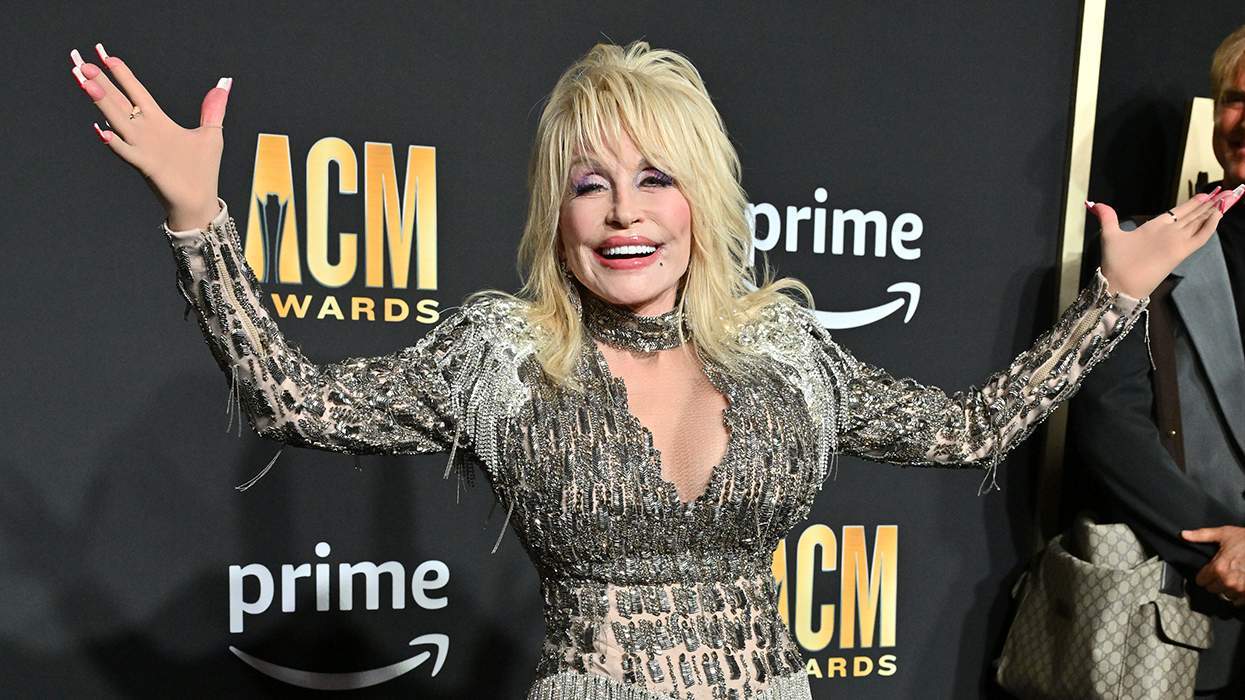
Dolly Parton was too good for what America has become, which is a strange thing to say about a woman who spent her career insisting that she was no better than anybody else.
Dolly was a force-of-nature talent and one of the shrewdest self-inventions in America. She understood celebrity, capitalism, and branding before half the men currently lecturing us about American greatness had their first business card, but somehow never absorbed the idea that success required becoming an asshole. She grew up dirt poor in the Tennessee mountains and turned herself into an international icon while looking like, in her own immortal estimation, the town tramp. And through all of it, she remained almost defiantly joyful, generous, and loving, as though becoming one of the most famous women on Earth had only given her more people to welcome into the joke.
Dolly grew up one of 12 children in a one-room cabin without electricity or running water. Her father could neither read nor write, something that bothered him throughout his life, so in 1995 she started sending free books to children in her home county. That little project became the Imagination Library, which now mails millions of books every month to children around the world. There was no complicated ideology behind it. Her father couldn't read, she knew what poverty looked like, children needed books, and she had enough money and power to do something about it. This is an almost embarrassingly old-fashioned concep of American success in 2026, when billionaires cosplay as persecuted revolutionaries while the Republican Party tries to figure out which books are making fourth graders gay.
Dolly’s love for the LGBTQ+ community was not some late-career adjustment made after corporate America discovered Pride Month; it ran through decades of her public life, including years when standing beside gay and transgender people could actually cost a country star something. As early as 1991, she was singing about a family in which “some are gay” and not one is turned away, and in 2005, long before most celebrities had learned the word ally, she wrote the Oscar-nominated “Travelin’ Thru” for Transamerica, taking backlash for attaching one of country music’s most beloved names to the story of a transgender woman.
Dolly supported marriage equality years before Obergefell, opposed the humiliation of transgender people through bathroom laws, and made clear that the gay, lesbian and transgender people she loved were not abstractions from some culture war but members of her own family, her staff, her circle and the enormous queer audience she was proud to claim. Most importantly, she never contaminated that love with the poisonous little asterisk so much of American Christianity has attached to queer people: “I love you, but.” When other Christians insisted that condemning gay people was somehow their sacred obligation, Dolly reminded them that judgment was a sin too. For generations of queer people, especially those who grew up in the South or in Christian homes where God was routinely weaponized against them, she offered something much more profound than celebrity allyship: living proof that you could love Jesus, Tennessee, country music, your family and the place that raised you without requiring queer people to disappear from any of them.
During COVID, Dolly donated $1 million to Vanderbilt University Medical Center, helping fund research that contributed to the Moderna vaccine. When Black Lives Matter protests swept the country, she didn't need a six-hour podcast to work through whether racism technically still existed. “Of course Black lives matter,” she told Billboard. “Do we think our little white asses are the only ones that matter? No!”
When she learned that the word “Dixie” in the name of her Civil War-themed dinner attraction had become hurtful and alienating, she removed it. She didn't announce that she had been canceled by the woke mob, accuse Black people of erasing history, or launch a podcast with Kid Rock. She later explained her philosophy with considerably more wisdom than has emerged from Congress in years: when you realize something is a problem, fix it. “Don't be a dumbass.” Imagine America operating under the Don't Be a Dumbass Doctrine.
Dolly famously refused to become a partisan figure, sometimes to the frustration of people who wanted her to denounce Donald Trump explicitly. She wouldn't. She had fans across the political spectrum and guarded that relationship carefully, which will inevitably produce another round of people claiming her for whichever America they already believe in.
But you don't need to make Dolly Parton a Democrat to recognize the obscenity of making her MAGA. The entire MAGA mass-insanity machine is incompatible with the life she actually lived. MAGA's nostalgia depends on the proposition that America was better when women had fewer choices and fewer rights, Black people had less power and fewer rights, immigrants knew their place, and queer people were expected to remain invisible or be wiped from existence. MAGA has taken some of the most appealing pieces of American culture — faith, patriotism, small towns, self-reliance, family, nostalgia — and hollowed them out until all that's left is grievance.
Dolly came from precisely the America that movement fetishizes: poor, rural, Southern, Christian and deeply attached to tradition. But she could love where she came from without demanding that the rest of us go backward in time.
And perhaps that is where the politics of Dolly should end, because reducing her life to what it says about our current political climate would be an insult to a woman whose life was so much bigger than politics. Before she became an emblem of anything, Dolly was an almost preposterously gifted artist. The wigs and rhinestones and breasts and one-liners enhanced and sometimes hid from plain view the woman underneath who sat down with a guitar and wrote some of the most beautiful songs in the American canon. She wrote “Jolene” and “I Will Always Love You” on the same day, penned thousands of others, crossed from country into pop without abandoning either, conquered television and movies, built a business empire, and somehow became more beloved as she became more famous. She could make herself the joke before anybody else got there, but the joke was never that Dolly was foolish. It was that anybody had been foolish enough to underestimate her.
Dolly spent 80 years showing the world what American greatness could look like. Let’s honor her by becoming the country she always believed we could be.
Josh Ackley is a political strategist and the frontman of the queerpunk band The Dead Betties. @momdarkness.
Opinion is dedicated to featuring a wide range of inspiring personal stories and impactful opinions from the LGBTQ+ community and its allies. Visit Advocate.com/submit to learn more about submission guidelines. We welcome your thoughts and feedback on any of our stories. Email us at voices@equalpride.com. Views expressed in Voices stories are those of the guest writers, columnists, and editors, and do not directly represent the views of The Advocate or our parent company, equalpride.