'%3E%3Cpath d='M16.3574 35.6519H12.9537L15.0491 18.8873L16.3574 35.6519ZM30.4229 54.0093L22.309 0.994385H7.91795L0 54.0093H10.6634L11.5802 46.3855H17.4014L17.9914 54.0093H30.4229Z' fill='%23971B20'/%3E%3Cpath d='M48.2073 41.8813C48.2073 43.4049 47.4892 44.0011 46.1144 44.0011H43.7595V11.0687H46.1144C47.4892 11.0687 48.2073 11.6636 48.2073 13.1885V41.8813ZM59.5273 43.6695V11.3326C59.5273 3.71323 53.5729 0.994385 47.8157 0.994385H31.7213V54.0093H47.8157C53.5729 54.0093 59.5273 51.29 59.5273 43.6695Z' fill='%23971B20'/%3E%3Cpath d='M90.183 0.994385H78.6039L75.0711 30.6157L71.9955 0.994385H59.4346L69.2474 54.0093H80.373L90.183 0.994385Z' fill='%23971B20'/%3E%3Cpath d='M107.063 42.3448C107.063 43.7359 105.951 44.5974 104.643 44.5974C103.269 44.5974 102.157 43.7359 102.157 42.3448V12.658C102.157 11.2676 103.269 10.4058 104.643 10.4058C105.951 10.4058 107.063 11.2676 107.063 12.658V42.3448ZM119.233 43.2723V11.7312C119.233 6.36384 112.952 -3.8147e-06 104.643 -3.8147e-06C96.2667 -3.8147e-06 89.9867 6.36384 89.9867 11.7312V43.2723C89.9867 48.6393 96.2667 55 104.643 55C112.952 55 119.233 48.6393 119.233 43.2723Z' fill='%23971B20'/%3E%3Cpath d='M150.976 43.9349V33.7309H139.069V42.3448C139.069 43.7359 137.957 44.5974 136.582 44.5974C135.076 44.5974 133.964 43.7359 133.964 42.3448V12.658C133.964 11.2676 135.076 10.4058 136.582 10.4058C137.957 10.4058 139.069 11.2676 139.069 12.658V21.2723H150.976V11.0687C150.976 5.70107 145.283 -3.8147e-06 136.582 -3.8147e-06C127.75 -3.8147e-06 121.796 5.70107 121.796 11.0687V43.9349C121.796 49.3022 127.75 55 136.582 55C145.283 55 150.976 49.3022 150.976 43.9349Z' fill='%23971B20'/%3E%3Cpath d='M167.478 35.6519H164.076L166.17 18.8873L167.478 35.6519ZM181.544 54.0093L173.432 0.994385H159.037L151.123 54.0093H161.785L162.704 46.3855H168.523L169.114 54.0093H181.544Z' fill='%23971B20'/%3E%3Cpath d='M205.412 10.4058V0.994385H177.081V10.4058H185.392V54.0093H197.428V10.4058H205.412Z' fill='%23971B20'/%3E%3Cpath d='M230.002 54.0093V43.9349H218.914V31.8746H226.635V21.8028H218.914V10.4058H230.002V0.994385H206.875V54.0093H230.002Z' fill='%23971B20'/%3E%3C/g%3E%3Cdefs%3E%3CclipPath id='clip0_260_7080'%3E%3Crect width='230' height='55' fill='white'/%3E%3C/clipPath%3E%3C/defs%3E%3C/svg%3E)
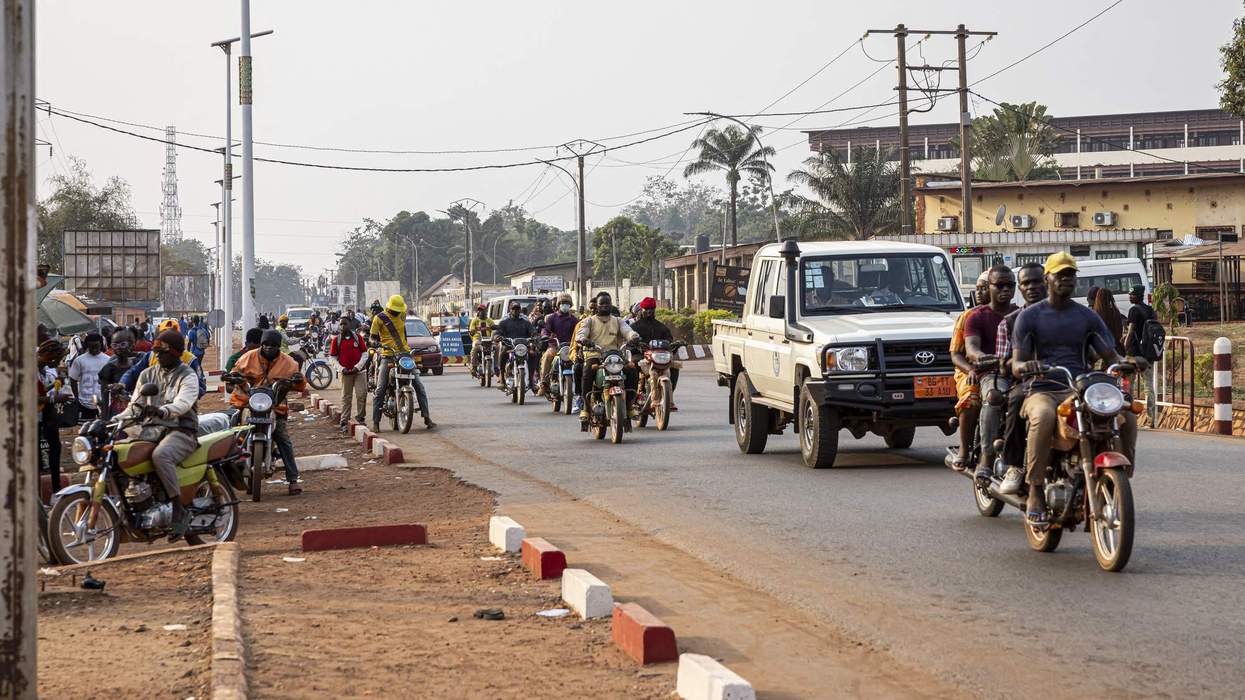
A transgender woman deported to the Central African Republic says she has been housed in a government complex set aside for men, and that she has been living in fear of expressing her gender identity.
The Associated Press reports that the Trump administration deported Daniela Fuentes to the Central African Republic in August. For Fuentes, a Cuban immigrant who had worked in Miami as a hairstylist and drag performer, the country was completely unfamiliar.
“Everything is difficult here because I have to hide who I am,” Fuentes, 32, told the AP. “I don’t know this place, the people, or the language. I have no idea what will happen to me.”
Related: U.S. deports gay asylum seeker to country where homosexuality is illegal
The Central African Republic is one of at least 12 African countries that signed agreements with the Trump administration to take deportees from other countries. The United States Supreme Court upheld that policy last month.
Third-country deportations, which are new under Trump’s second term, present particular risks for LGBTQ+ immigrants, who may be deported to countries that lack protections for LGBTQ+ individuals, or outright criminalize LGBTQ+ identity. The Central African Republic, for example, lacks legal protections for LGBTQ+ people and has even imposed prison sentences for public displays of affection between people of the same gender.
The Trump administration has deported more than 25,000 people across 29 countries to which they have no ties, according to Third Country Deportation Watch, a project by the organizations Refugees International and Human Rights First.
Fuentes moved to the U.S. under the Biden administration through a humanitarian-grounds immigration policy, the AP writes.
She was detained by immigration authorities this year and sent to an immigration facility for men. “When I learned that they were going to put me with men, I almost fainted,” she said.
Related: LGBTQ+ migrants sought safety in the U.S. Trump sent them to dangerous countries they’d never known
The U.S. does not repatriate Cuban citizens, so Fuentes was deported to the Central African Republic, where she was again housed with men. She said that she has stopped wearing women’s clothes and expressing her gender identity, and is unable to work and seldom leaves the housing complex.
“My whole life, my whole identity, was taken away from me,” Fuentes said.
Fuentes has applied to return to Cuba, and said Cuba has agreed to accept her return, according to the AP. Advocates say her case is part of a larger issue that will continue to put LGBTQ+ people who are deported at risk.
“These are not bureaucratic errors or isolated incidents,” Bridget Crawford, who works for the LGBTQ+ immigration nonprofit Immigration Equality, told the AP. “They are the predictable result of policies that purposefully abandon our legal and moral obligation to protect LGBTQ+ immigrants fleeing persecution.”