'%3E%3Cpath d='M16.3574 35.6519H12.9537L15.0491 18.8873L16.3574 35.6519ZM30.4229 54.0093L22.309 0.994385H7.91795L0 54.0093H10.6634L11.5802 46.3855H17.4014L17.9914 54.0093H30.4229Z' fill='%23971B20'/%3E%3Cpath d='M48.2073 41.8813C48.2073 43.4049 47.4892 44.0011 46.1144 44.0011H43.7595V11.0687H46.1144C47.4892 11.0687 48.2073 11.6636 48.2073 13.1885V41.8813ZM59.5273 43.6695V11.3326C59.5273 3.71323 53.5729 0.994385 47.8157 0.994385H31.7213V54.0093H47.8157C53.5729 54.0093 59.5273 51.29 59.5273 43.6695Z' fill='%23971B20'/%3E%3Cpath d='M90.183 0.994385H78.6039L75.0711 30.6157L71.9955 0.994385H59.4346L69.2474 54.0093H80.373L90.183 0.994385Z' fill='%23971B20'/%3E%3Cpath d='M107.063 42.3448C107.063 43.7359 105.951 44.5974 104.643 44.5974C103.269 44.5974 102.157 43.7359 102.157 42.3448V12.658C102.157 11.2676 103.269 10.4058 104.643 10.4058C105.951 10.4058 107.063 11.2676 107.063 12.658V42.3448ZM119.233 43.2723V11.7312C119.233 6.36384 112.952 -3.8147e-06 104.643 -3.8147e-06C96.2667 -3.8147e-06 89.9867 6.36384 89.9867 11.7312V43.2723C89.9867 48.6393 96.2667 55 104.643 55C112.952 55 119.233 48.6393 119.233 43.2723Z' fill='%23971B20'/%3E%3Cpath d='M150.976 43.9349V33.7309H139.069V42.3448C139.069 43.7359 137.957 44.5974 136.582 44.5974C135.076 44.5974 133.964 43.7359 133.964 42.3448V12.658C133.964 11.2676 135.076 10.4058 136.582 10.4058C137.957 10.4058 139.069 11.2676 139.069 12.658V21.2723H150.976V11.0687C150.976 5.70107 145.283 -3.8147e-06 136.582 -3.8147e-06C127.75 -3.8147e-06 121.796 5.70107 121.796 11.0687V43.9349C121.796 49.3022 127.75 55 136.582 55C145.283 55 150.976 49.3022 150.976 43.9349Z' fill='%23971B20'/%3E%3Cpath d='M167.478 35.6519H164.076L166.17 18.8873L167.478 35.6519ZM181.544 54.0093L173.432 0.994385H159.037L151.123 54.0093H161.785L162.704 46.3855H168.523L169.114 54.0093H181.544Z' fill='%23971B20'/%3E%3Cpath d='M205.412 10.4058V0.994385H177.081V10.4058H185.392V54.0093H197.428V10.4058H205.412Z' fill='%23971B20'/%3E%3Cpath d='M230.002 54.0093V43.9349H218.914V31.8746H226.635V21.8028H218.914V10.4058H230.002V0.994385H206.875V54.0093H230.002Z' fill='%23971B20'/%3E%3C/g%3E%3Cdefs%3E%3CclipPath id='clip0_260_7080'%3E%3Crect width='230' height='55' fill='white'/%3E%3C/clipPath%3E%3C/defs%3E%3C/svg%3E)

This article appeared first on Them.
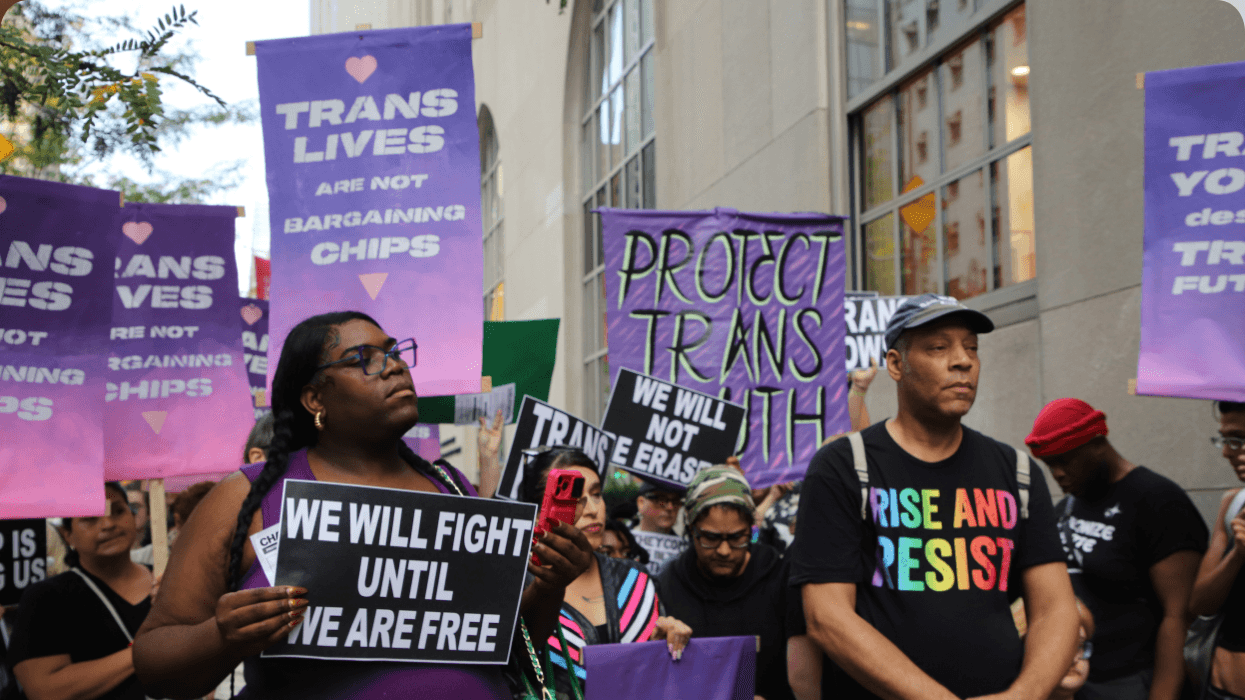
A year after Virginia Commonwealth University Hospital ended its gender-affirming care program for transgender youth, researchers from the same institution have released a study measuring the negative impacts of anti-transgender legislation on the health of trans people in the U.S.
The study, published in the September issue of American Psychologist, the official peer-reviewed academic journal of the American Psychological Association, is a mixed-method examination of the effects of bathroom bans, exclusion from sports, and gender-affirming care restrictions on trans and gender nonconforming people. Researchers established that over 2,000 legislative and policy-based actions have attempted to limit the rights of trans people in recent years.
Researchers looked at qualitative and quantitative data from a sample of 350 trans and gender diverse people about their mental health and stress levels during this wave of anti-transgender policymaking. The findings suggest that anti-trans laws and policy efforts directly cause mental distress for trans people, especially as it regards daily safety, fears about harassment, and stress about relocation in order to access care.
Related: Major Virginia medical center stops gender-affirming care for minors after Trump’s executive order
“This study suggests that ongoing anti-transgender political efforts are linked to elevated psychological distress among transgender and gender-diverse individuals, regardless of state-level laws based on gender identity,” the researchers wrote.
Several participants said that they felt that the mere existence of such legislation enabled people to mistreat them through misgendering and other forms of daily anti-trans discrimination. The study also found that this fear of discrimination and harassment led trans people to avoid social interactions.
The participants of the study were over 18, however, experts such as Eli Coston, Associate Chair of the Department of Gender, Sexuality and Women’s Studies, say that these anti-trans laws have a disproportionate impact on trans minors, who have been the subject of the brunt of the conservative right’s attack on trans rights, per VCU’s student publication The Commonwealth Times.
“Lack of access to gender-affirming care causes distress for a lot of trans people,” Coston said. “That can cause anxiety and depression. Obviously, going through some of those changes of puberty makes it difficult sometimes to live as the gender you identify with rather than how you present physically.”
Related: A Virginia university fought against its first gay student group — and lost. Now it’s honoring them
When VCU Hospital announced it would cease providing gender-affirming care for patients under 19 in February 2025, citing President Trump’s wide-sweeping executive order threatening federal funding for institutions that provided care to minors, advocates warned this would leave widespread consequences for trans youth in the area. While individual providers who do not receive federal funding can legally continue providing care, the American Civil Liberties Union of Virginia says that the loss of VCU’s program is the result of the Trump administration’s fear-based intimidation tactics.
“Gender-affirming care for people under the age of 19 is still legal in Virginia, and no executive order can change that,” Wyatt Rolla, senior transgender rights attorney with the ACLU of Virginia, told The Advocate in a statement in 2025. “By trying to scare providers into halting the critical services they’ve provided for decades, Trump’s executive order is simply another misguided, extreme attempt to will trans people out of existence.”
Related: Virginia researchers debunk the claim that most trans kids ‘grow out of it’
The new findings from VCU researchers add to a growing body of data that connect anti-trans legislation with worse mental health outcomes for trans people. A recent study published in Psychological Science found that the negative impact can extend even further, harming the mental health of parents of trans children as well, as they try to ensure their children have access to care and, in some cases, uproot their entire family in the hopes that another state can offer better anti-discrimination protections. And as more major hospital systems like VCU, NYU Langone Health, and Fenway Health shutter their gender-affirming care programs for patients under 19, more trans young people are losing access to care, potentially applying even more mental distress to trans kids and their families.
Though studies have shown that having support systems such as allies in your family or a robust affirming social network can help improve mental health outcomes for trans people, these VCU researchers say that these findings indicate more needs to be done at the policy level.
“While interventions aimed at improving resilience via social support are needed, it is vital to reduce structural stigma through systemic change,” the researchers write.
Get the best of what’s queer. Sign up for Them’s newsletters.