'%3E%3Cpath d='M16.3574 35.6519H12.9537L15.0491 18.8873L16.3574 35.6519ZM30.4229 54.0093L22.309 0.994385H7.91795L0 54.0093H10.6634L11.5802 46.3855H17.4014L17.9914 54.0093H30.4229Z' fill='%23971B20'/%3E%3Cpath d='M48.2073 41.8813C48.2073 43.4049 47.4892 44.0011 46.1144 44.0011H43.7595V11.0687H46.1144C47.4892 11.0687 48.2073 11.6636 48.2073 13.1885V41.8813ZM59.5273 43.6695V11.3326C59.5273 3.71323 53.5729 0.994385 47.8157 0.994385H31.7213V54.0093H47.8157C53.5729 54.0093 59.5273 51.29 59.5273 43.6695Z' fill='%23971B20'/%3E%3Cpath d='M90.183 0.994385H78.6039L75.0711 30.6157L71.9955 0.994385H59.4346L69.2474 54.0093H80.373L90.183 0.994385Z' fill='%23971B20'/%3E%3Cpath d='M107.063 42.3448C107.063 43.7359 105.951 44.5974 104.643 44.5974C103.269 44.5974 102.157 43.7359 102.157 42.3448V12.658C102.157 11.2676 103.269 10.4058 104.643 10.4058C105.951 10.4058 107.063 11.2676 107.063 12.658V42.3448ZM119.233 43.2723V11.7312C119.233 6.36384 112.952 -3.8147e-06 104.643 -3.8147e-06C96.2667 -3.8147e-06 89.9867 6.36384 89.9867 11.7312V43.2723C89.9867 48.6393 96.2667 55 104.643 55C112.952 55 119.233 48.6393 119.233 43.2723Z' fill='%23971B20'/%3E%3Cpath d='M150.976 43.9349V33.7309H139.069V42.3448C139.069 43.7359 137.957 44.5974 136.582 44.5974C135.076 44.5974 133.964 43.7359 133.964 42.3448V12.658C133.964 11.2676 135.076 10.4058 136.582 10.4058C137.957 10.4058 139.069 11.2676 139.069 12.658V21.2723H150.976V11.0687C150.976 5.70107 145.283 -3.8147e-06 136.582 -3.8147e-06C127.75 -3.8147e-06 121.796 5.70107 121.796 11.0687V43.9349C121.796 49.3022 127.75 55 136.582 55C145.283 55 150.976 49.3022 150.976 43.9349Z' fill='%23971B20'/%3E%3Cpath d='M167.478 35.6519H164.076L166.17 18.8873L167.478 35.6519ZM181.544 54.0093L173.432 0.994385H159.037L151.123 54.0093H161.785L162.704 46.3855H168.523L169.114 54.0093H181.544Z' fill='%23971B20'/%3E%3Cpath d='M205.412 10.4058V0.994385H177.081V10.4058H185.392V54.0093H197.428V10.4058H205.412Z' fill='%23971B20'/%3E%3Cpath d='M230.002 54.0093V43.9349H218.914V31.8746H226.635V21.8028H218.914V10.4058H230.002V0.994385H206.875V54.0093H230.002Z' fill='%23971B20'/%3E%3C/g%3E%3Cdefs%3E%3CclipPath id='clip0_260_7080'%3E%3Crect width='230' height='55' fill='white'/%3E%3C/clipPath%3E%3C/defs%3E%3C/svg%3E)
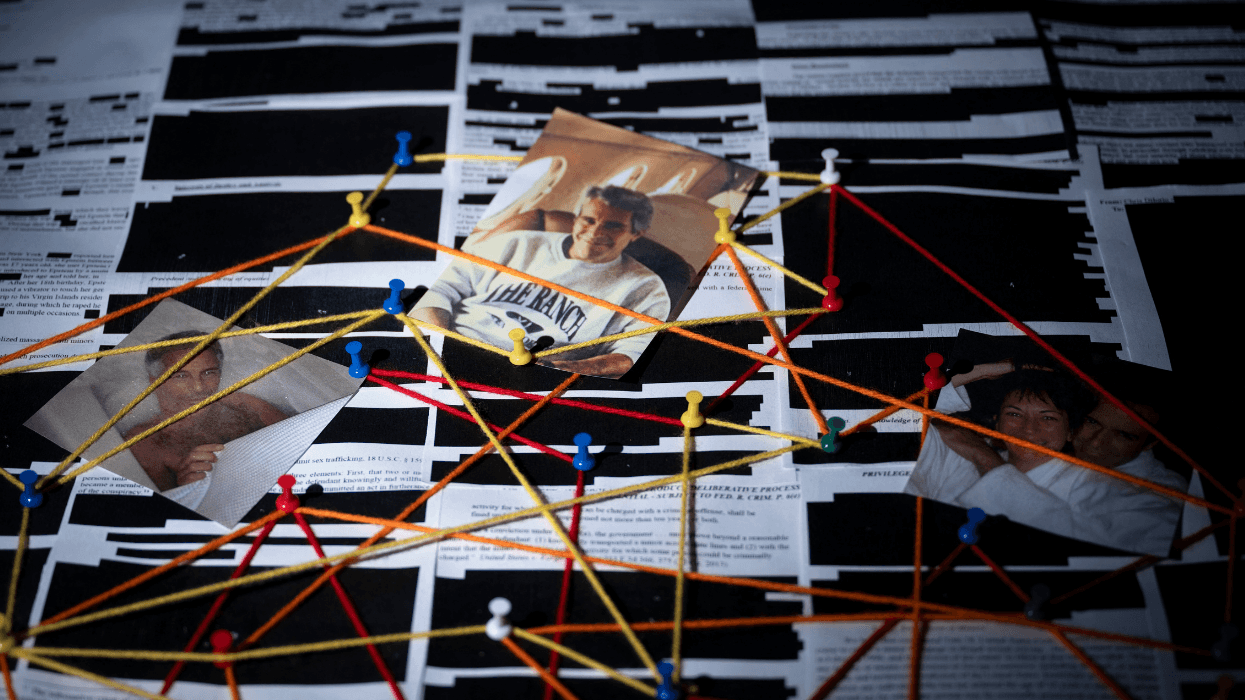

Releasing the Epstein files without holding the exposed individuals and institutions accountable will embolden rapists and pedophiles. Transparency alone is not justice. If we fail to hold these monsters accountable, we allow them to brag to the world that they got away with rape, pedophilia, and human trafficking.
Keep up with the latest in LGBTQ+ news and politics. Sign up for The Advocate's email newsletter.
Transparency without accountability tells victims: “We hear you. We see you. But this is normal and acceptable.” It sends the same message to perpetrators: We hear you. We see you. This is normal and acceptable.
Transparency without accountability teaches abusers that secrecy is not necessary. Impunity is already protecting them. It emboldens them to continue — or even escalate — their abuse. It also emboldens other potential perpetrators, reassuring them that, even if they’re exposed, their abuse will be excused or ignored.
Related: DOJ releases 3 million pages of Epstein files, taking in 180,000 images and 2,000 videos
Over time, this becomes normalization. Without accountability, transparency risks turning powerful networks of sexual exploitation into a fact of life rather than an urgent crisis demanding action.
Calls to expose Epstein and his accomplices have existed for decades. In 2008, Jeffrey Epstein pleaded guilty to soliciting prostitution with a minor and served just 13 months of an 18-month sentence as part of a controversial plea deal. Immediately following this case, the victims requested that the details of the deal be made public.
Since then, victims, the press, and the public have continued to call for transparency. Recently, calls for transparency have escalated to Congress with the Epstein Files Transparency Act. Despite the law’s passage in November 2025, lawmakers and investigative reporters say millions of files have not been released. What has been published has been controversially redacted.
The years-long fight for transparency — though noble and necessary — has convinced the public that transparency itself is the final goal. It has turned the Epstein Files into a spectacle. A constant. Even a meme. Something normalized, diluted, and easier to dismiss.
We have seen these tactics before. The Panama Papers, which exposed financial corruption among wealthy elites, followed the same pattern: a years-long demand for transparency, then a flood of revelations so overwhelming that the spectacle of exposure overshadowed the fact that a majority of the powerful people involved never faced accountability.
The same dynamic happened with the Catholic Church’s sexual abuse crisis. Public shock consumed attention, obscuring the lack of real consequences for many perpetrators and the structural change that never came. In both cases, a handful of low-level individuals were punished to prove that “something was done,” while powerful decision-makers and the systems that enabled abuse were protected.
Scapegoats are not justice. Without real change, the harm continues. Financial corruption persists through offshore systems, and sexual abuse within institutions like the Catholic Church has not disappeared. If we are not careful, the Epstein Files will join the Panama Papers and the Catholic Church as another case study in transparency without impact.
Transparency is a diagnostic tool — a direction to go. It is not a cure. Not a solution. It tells us where to act, not whether we will do so.
Real change requires a collective agreement that what has been exposed is so grave that individuals and institutions must be held accountable, in spite of the disruption it will cause to the status quo, money, and power. So, I ask you, is the abuse, pedophilia, and exploitation exposed in the Epstein files grave enough? If so, we need a clear path to accountability for those named and a clear path to dismantling the systems that enabled this abuse.
First, the focus must be on Epstein survivors. We must listen to their demands by enforcing full compliance with the Epstein Files Transparency Act. We must also demand immediate accountability for the Department of Justice (DOJ)’s failure to redact victims’ identifying information and explicit photos, as legally mandated, exposing survivors to danger, retraumatization, and further harm. To start, the DOJ must immediately redact all sensitive information and should be ordered by the courts and/or Congress to issue a public apology to victims.
Second, we must demand full investigations into every individual and institution that participated in or enabled Epstein’s network of abuse, regardless of their positions of power or fame. For years, law enforcement agencies investigated Epstein and Ghislaine Maxwell, his since-convicted accomplice, compiling evidence that would become the Epstein Files: flight logs, photos, physical evidence, emails, phone records, and victim testimony. These millions of documents expose hundreds of people, from simple enablers to willful abusers.
The DOJ should have investigated and prosecuted those implicated in the files decades ago. Congress must force the DOJ to take action against everyone implicated, beyond Epstein and Maxwell. The DOJ released the files only when Congress required it. Transparency was forced. Now justice must be.
Third, the United States must follow the example of other countries, where prominent officials have been fired, forced to resign, or stripped of their titles after their ties to Epstein were revealed. Abroad, people exposed in the files have faced criminal charges and other consequences. Power has not obstructed accountability elsewhere. It should not do so here.
Finally, we must demand structural change. Congress should launch probes into government agencies, including the FBI and the DOJ, that failed to stop this abuse and force them to implement new procedures to prevent future harm. We cannot repeat the failures of the Panama Papers or the Catholic Church, where a few individuals were removed while the architects of harm remained untouched.
Transparency without accountability is bragging. Transparency without change is dangerous. Our fight is not simply to expose the truth — it is to act on it. Exposure without consequences is not transparency. It is permission.
To learn more about Omny Miranda Martone’s work to prevent sexual violence, visit s-v-p-a.org.
Opinions is dedicated to featuring a wide range of inspiring personal stories and impactful opinions from the LGBTQ+ community and its allies. Visit Advocate.com/submit to learn more about submission guidelines. Views expressed in Opinions are those of the guest writers, columnists, and editors, and do not directly represent the views of The Advocate or our parent company, equalpride.