'%3E%3Cpath d='M16.3574 35.6519H12.9537L15.0491 18.8873L16.3574 35.6519ZM30.4229 54.0093L22.309 0.994385H7.91795L0 54.0093H10.6634L11.5802 46.3855H17.4014L17.9914 54.0093H30.4229Z' fill='%23971B20'/%3E%3Cpath d='M48.2073 41.8813C48.2073 43.4049 47.4892 44.0011 46.1144 44.0011H43.7595V11.0687H46.1144C47.4892 11.0687 48.2073 11.6636 48.2073 13.1885V41.8813ZM59.5273 43.6695V11.3326C59.5273 3.71323 53.5729 0.994385 47.8157 0.994385H31.7213V54.0093H47.8157C53.5729 54.0093 59.5273 51.29 59.5273 43.6695Z' fill='%23971B20'/%3E%3Cpath d='M90.183 0.994385H78.6039L75.0711 30.6157L71.9955 0.994385H59.4346L69.2474 54.0093H80.373L90.183 0.994385Z' fill='%23971B20'/%3E%3Cpath d='M107.063 42.3448C107.063 43.7359 105.951 44.5974 104.643 44.5974C103.269 44.5974 102.157 43.7359 102.157 42.3448V12.658C102.157 11.2676 103.269 10.4058 104.643 10.4058C105.951 10.4058 107.063 11.2676 107.063 12.658V42.3448ZM119.233 43.2723V11.7312C119.233 6.36384 112.952 -3.8147e-06 104.643 -3.8147e-06C96.2667 -3.8147e-06 89.9867 6.36384 89.9867 11.7312V43.2723C89.9867 48.6393 96.2667 55 104.643 55C112.952 55 119.233 48.6393 119.233 43.2723Z' fill='%23971B20'/%3E%3Cpath d='M150.976 43.9349V33.7309H139.069V42.3448C139.069 43.7359 137.957 44.5974 136.582 44.5974C135.076 44.5974 133.964 43.7359 133.964 42.3448V12.658C133.964 11.2676 135.076 10.4058 136.582 10.4058C137.957 10.4058 139.069 11.2676 139.069 12.658V21.2723H150.976V11.0687C150.976 5.70107 145.283 -3.8147e-06 136.582 -3.8147e-06C127.75 -3.8147e-06 121.796 5.70107 121.796 11.0687V43.9349C121.796 49.3022 127.75 55 136.582 55C145.283 55 150.976 49.3022 150.976 43.9349Z' fill='%23971B20'/%3E%3Cpath d='M167.478 35.6519H164.076L166.17 18.8873L167.478 35.6519ZM181.544 54.0093L173.432 0.994385H159.037L151.123 54.0093H161.785L162.704 46.3855H168.523L169.114 54.0093H181.544Z' fill='%23971B20'/%3E%3Cpath d='M205.412 10.4058V0.994385H177.081V10.4058H185.392V54.0093H197.428V10.4058H205.412Z' fill='%23971B20'/%3E%3Cpath d='M230.002 54.0093V43.9349H218.914V31.8746H226.635V21.8028H218.914V10.4058H230.002V0.994385H206.875V54.0093H230.002Z' fill='%23971B20'/%3E%3C/g%3E%3Cdefs%3E%3CclipPath id='clip0_260_7080'%3E%3Crect width='230' height='55' fill='white'/%3E%3C/clipPath%3E%3C/defs%3E%3C/svg%3E)
This essay discusses sexual violence.
It wasn’t rape. But it wasn’t consensual. It wasn’t violent. But I was crying and told him to stop. He wasn’t a rapist. I knew him. I wasn’t a victim.
I was at an overnight college debate tournament when I was raped and physically assaulted by a fellow debater. The next morning, I woke up in the hallway with no ID and no phone. Days later, no matter how hard I scrubbed, his smell lingered; no matter what I ate, my saliva tasted like his.
For three years, I viewed what happened to me in that college dorm as just another ambiguous sexual encounter. We were intoxicated. I was initially attracted to him. And I was unsure what counted as “rape” on a college campus.
The truth of the matter was that I knew what “real” rape was. I was raped at the age of nine, not by a stranger but by my neighbor, someone known to my family. There was no build-up, no seduction, just violence. The effect was a realization that the world, including my own street, was unsafe, and neither family nor friends could protect me. The culmination was an incapacity to tell. As a child, the words rape, sexual violence, and pedophilia were not a part of my vocabulary. I didn’t have the language to name what happened, and not naming it meant it didn’t happen.
To cope, I became an avid reader. From elementary school onwards, I would read while walking, taking refuge in the study of language. This eventually led me to relearn my forgotten mother tongue, Japanese. In Japanese, I learned words to name unnameable phenomena in English, such as the word for snow falling or sunlight leaking through leaves. Studying Japanese was the safest way to expand my world with minimal risk, but it slowly became an act of empowerment. To name ambiguous phenomena, to eventually call it rape, to call it violence, to call it wrong.
Sexual violence is distressingly common, but according to a 2016 meta-analysis by the NIH, over 60 percent of survivors don’t call their experience rape. The myth of the ideal victim puts “legitimate” forms of rape on a pedestal, perpetuating the myth that rape only happens in a dark alley by a violent criminal. In reality, it happens in your home by someone you know. The rapist isn’t the monster under the bed, but the monster in your bed.
As a sex education peer educator, college workshops taught me how to memorize the easy acronym for consent before informing me how much violence and violation stings. I learned that consent should be “freely given,” “reversible,” “informed,” “enthusiastic,” and “specific.” Put all together: FRIES. I was taught that trauma arrives in clear-cut bullet points instead of the messiness of confusion and shame. How is it possible to, at one point, enthusiastically say yes to a person you once desired and then slowly feel your body disappear? Reading the pamphlets and flowcharts about Title IX prepared me more for a legal battle brought before a court than reconciling the humanity in someone who once harmed me. Far too often, as a survivor, I found that my university placed procedure over complexity and placed punishment over accountability.
I graduated just last week, and what my college experience has taught me above all else is that what we need is a new understanding of rape, a reformulation of our understanding of who can be victimized and whose narratives can be believed. We need language that is expansive enough to hold onto contradiction. Accountability without disposability. Preventative programs that teach students more than how to avoid being accused, but also recognize one another’s humanity before violating it.
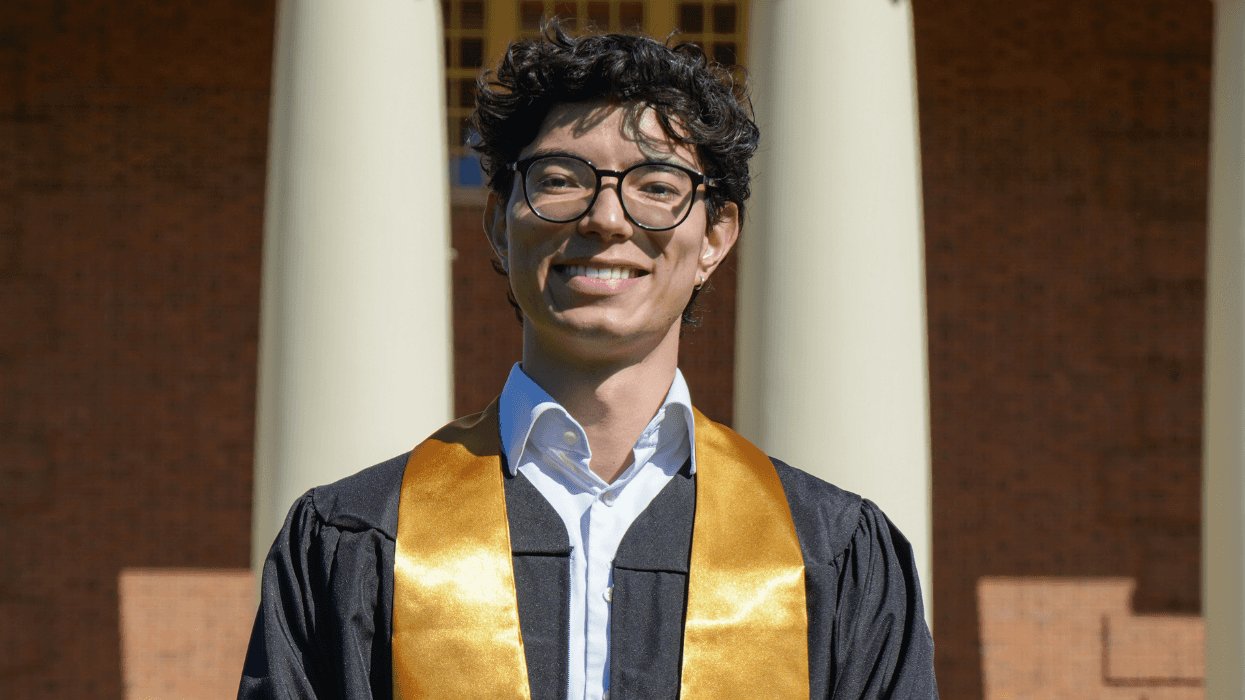
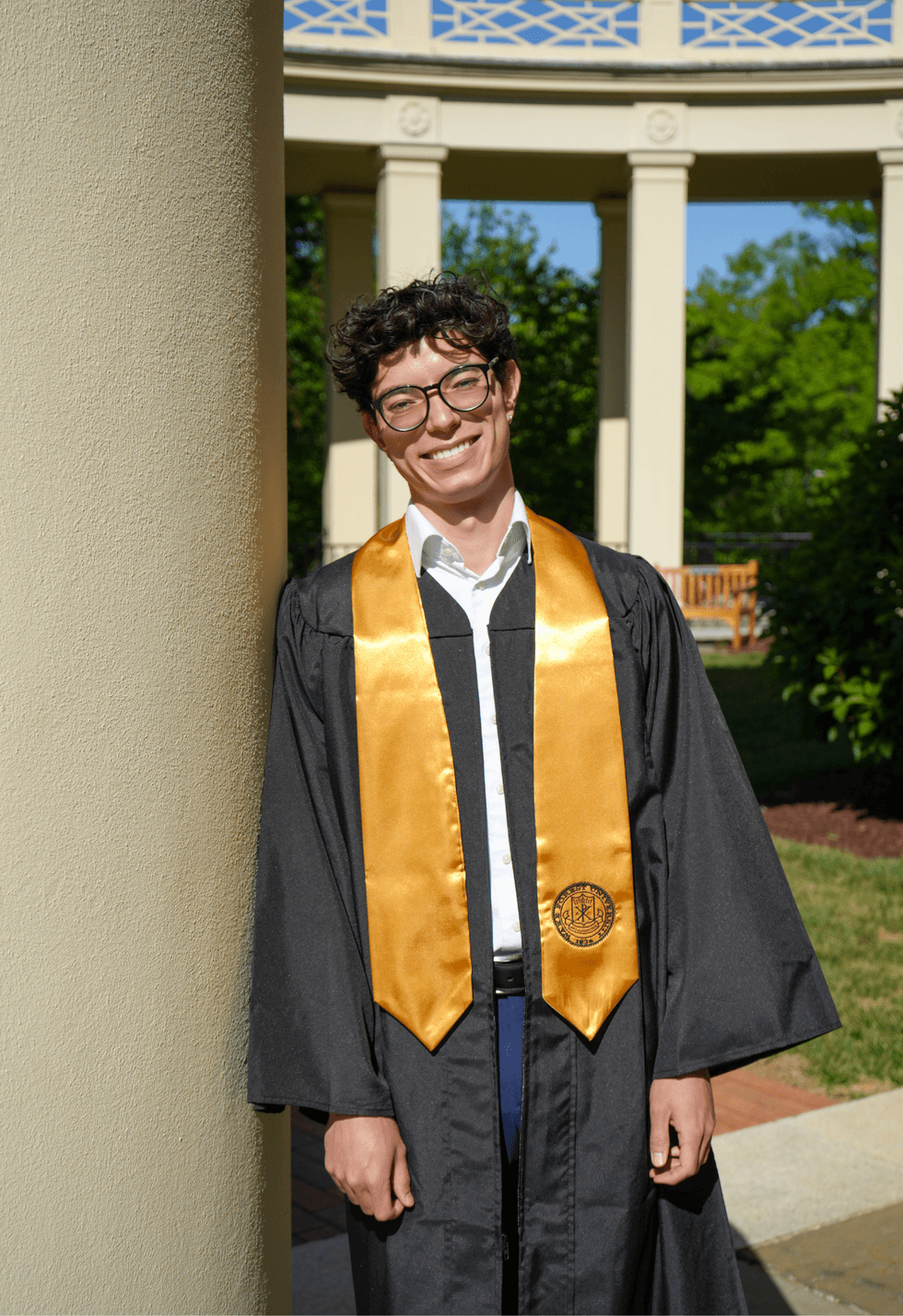 Eli Leadham poses in graduation regalia on the Wake Forest University campusCourtesy of Eli Leadham
Institutions only seem capable of holding on to two positions: the perfect victim and the perfect criminal. But for many survivors like myself, we live at this impossible intersection of still recognizing the humanity in the person who harmed us, of not wanting revenge, of not wanting a student to one day disappear off campus to only be quietly transferred to another campus to harm someone else.
At my university, I was not a victim, for as the ideal victim is raced, gendered, and classed. The myth of the ideal victim results in the legal system oftentimes failing women of color and LGBTQ+ populations. In the child sex abuse cases at the U.S. Attorney’s Office of Sexual Offense, I witnessed defense attorneys discredit a survivor’s testimony under the pretense that the victim “was more adult-like than her peers” and “knew what she was doing dressed like that.” She was a twelve-year-old black girl when she was raped.
A 2017 study from the Georgetown Law Center notes this phenomenon as “adultification,” where children of color are perceived as less innocent and more developed than their white peers. The disturbing reality is that women of color and LGBTQ+ populations are seldom seen as victims, and as such, they are seen as unrapeable.
Against all odds, when marginalized survivors speak up, we are met with preemptive skepticism. As painful as it was to recount my rape, I was overwhelmed by my newfound interest in the power of testimonials. The power of testimonials arises not solely from their intensity, but from the fact that testimonials unearth patterns that reveal the nature of the problem.
In speaking publicly, survivors enact a form of resistance against the stigma of shame and the likelihood of being believed. And in my case, telling my story to you, dear reader, is my way of blowing away the cobwebs that surround the myth that queer people of color are invulnerable.
Even though people now believe my story, I knew that healing would not come through punishment. When I was raped at that college debate tournament, I considered pursuing legal action for months. But there were too many reasons I did not report my rape. For one, because of my rapist’s immigration status. And two, because I have family who have been incarcerated and who have testified to grievous forms of sexual violence within confinement. For many, prisons are not places to put rapists, but are rapists themselves. My experiences as a survivor compel me to listen to all survivors the first time.
The probability of being believed is a politically charged question. Men, and particularly LGBTQ+ Men of Color, underreport sexual violence at extreme rates largely as a result of stigma, masculinity norms, and ultimately fear of disbelief. In the instance of underreporting sexual violence, skepticism works in tandem with oppressive social conditions to discredit marginalized voices.
Trauma has a way of stripping away power. But sending my rapist to prison would not be empowering. Isolating him from society through incarceration would not make the problem of sexual violence disappear.
The happy ending to my story is with my rapist. It ends with him reckoning with the harm he has caused. It ends with him taking accountability and making sure it never happens again.
I am doing my part. I want him to do his.
Opinion is dedicated to featuring a wide range of inspiring personal stories and impactful opinions from the LGBTQ+ community and its allies. Visit Advocate.com/submit to learn more about submission guidelines. We welcome your thoughts and feedback on any of our stories. Email us at voices@equalpride.com. Views expressed in Voices stories are those of the guest writers, columnists, and editors, and do not directly represent the views of The Advocate or our parent company, equalpride.