'%3E%3Cpath d='M16.3574 35.6519H12.9537L15.0491 18.8873L16.3574 35.6519ZM30.4229 54.0093L22.309 0.994385H7.91795L0 54.0093H10.6634L11.5802 46.3855H17.4014L17.9914 54.0093H30.4229Z' fill='%23971B20'/%3E%3Cpath d='M48.2073 41.8813C48.2073 43.4049 47.4892 44.0011 46.1144 44.0011H43.7595V11.0687H46.1144C47.4892 11.0687 48.2073 11.6636 48.2073 13.1885V41.8813ZM59.5273 43.6695V11.3326C59.5273 3.71323 53.5729 0.994385 47.8157 0.994385H31.7213V54.0093H47.8157C53.5729 54.0093 59.5273 51.29 59.5273 43.6695Z' fill='%23971B20'/%3E%3Cpath d='M90.183 0.994385H78.6039L75.0711 30.6157L71.9955 0.994385H59.4346L69.2474 54.0093H80.373L90.183 0.994385Z' fill='%23971B20'/%3E%3Cpath d='M107.063 42.3448C107.063 43.7359 105.951 44.5974 104.643 44.5974C103.269 44.5974 102.157 43.7359 102.157 42.3448V12.658C102.157 11.2676 103.269 10.4058 104.643 10.4058C105.951 10.4058 107.063 11.2676 107.063 12.658V42.3448ZM119.233 43.2723V11.7312C119.233 6.36384 112.952 -3.8147e-06 104.643 -3.8147e-06C96.2667 -3.8147e-06 89.9867 6.36384 89.9867 11.7312V43.2723C89.9867 48.6393 96.2667 55 104.643 55C112.952 55 119.233 48.6393 119.233 43.2723Z' fill='%23971B20'/%3E%3Cpath d='M150.976 43.9349V33.7309H139.069V42.3448C139.069 43.7359 137.957 44.5974 136.582 44.5974C135.076 44.5974 133.964 43.7359 133.964 42.3448V12.658C133.964 11.2676 135.076 10.4058 136.582 10.4058C137.957 10.4058 139.069 11.2676 139.069 12.658V21.2723H150.976V11.0687C150.976 5.70107 145.283 -3.8147e-06 136.582 -3.8147e-06C127.75 -3.8147e-06 121.796 5.70107 121.796 11.0687V43.9349C121.796 49.3022 127.75 55 136.582 55C145.283 55 150.976 49.3022 150.976 43.9349Z' fill='%23971B20'/%3E%3Cpath d='M167.478 35.6519H164.076L166.17 18.8873L167.478 35.6519ZM181.544 54.0093L173.432 0.994385H159.037L151.123 54.0093H161.785L162.704 46.3855H168.523L169.114 54.0093H181.544Z' fill='%23971B20'/%3E%3Cpath d='M205.412 10.4058V0.994385H177.081V10.4058H185.392V54.0093H197.428V10.4058H205.412Z' fill='%23971B20'/%3E%3Cpath d='M230.002 54.0093V43.9349H218.914V31.8746H226.635V21.8028H218.914V10.4058H230.002V0.994385H206.875V54.0093H230.002Z' fill='%23971B20'/%3E%3C/g%3E%3Cdefs%3E%3CclipPath id='clip0_260_7080'%3E%3Crect width='230' height='55' fill='white'/%3E%3C/clipPath%3E%3C/defs%3E%3C/svg%3E)
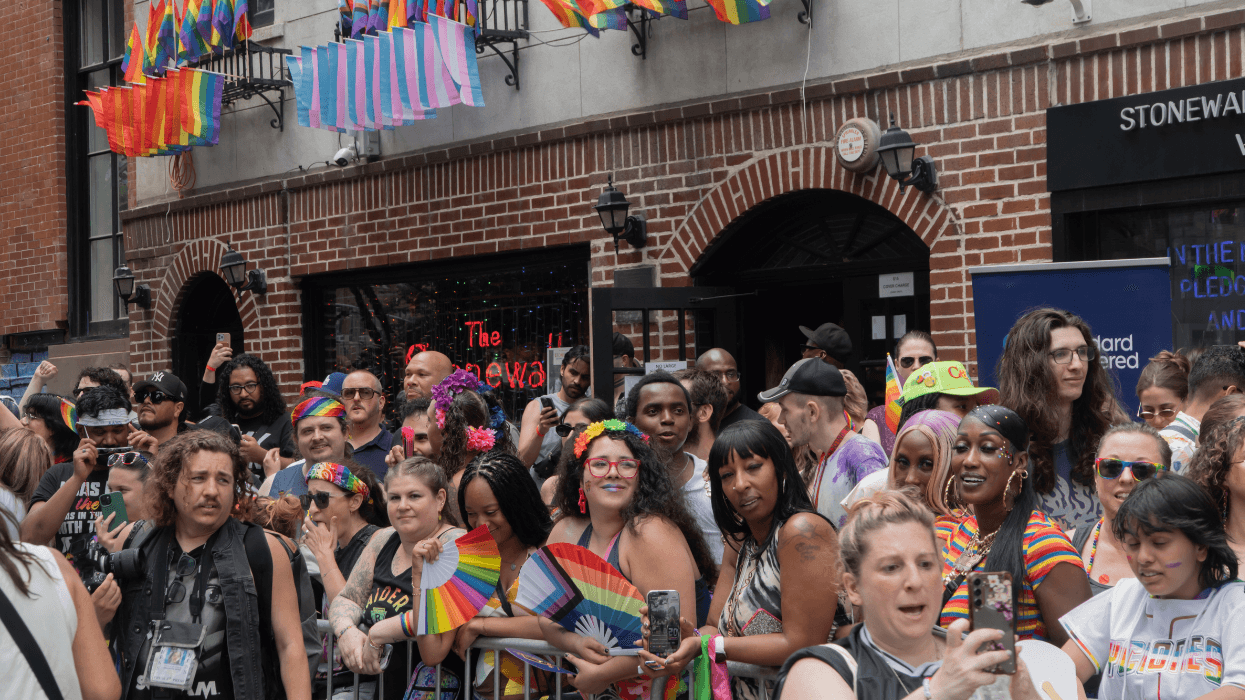
WorldPride has ended, but we keep returning to a question that followed us throughout it: What are we, as a community of people, responsible for preserving?
Not simply buildings. Not simply photographs, artifacts, or plaques. Not even history in the traditional sense. Said plainly, we are responsible for preserving memory: the full, complicated, sometimes uncomfortable truth of how we got here, who brought us here, and what it cost them.
At WorldPride in Amsterdam this year, we had the opportunity to speak alongside leaders working to protect queer museums, memorials, and historic sites around the world. Our circumstances were different, but the underlying challenge was strikingly similar: LGBTQIA+ communities have endured generations of persecution, violence, and deliberate erasure, and yet we have continually found ways to transform that oppression into heritage.
That work feels especially urgent now.
We are living through a moment of extraordinary noise. Political battles move at the speed of a headline. Institutions are being challenged. Language is being rewritten. Books, lessons, and pieces of history are being debated as though the people within them were theoretical.
In that kind of chaos, preservation can sound passive. But it’s anything but that.
To us, preservation is a decision. And it’s a decision to say: This happened. These people were here. Their lives mattered. Their courage changed us. And you do not get to make them disappear.
That is what the Stonewall National Monument Visitor Center was created to do.
The basics of LGBTQIA+ history tell us that the Stonewall Uprising began when people accustomed to harassment and arrest finally decided they had had enough. That protest in June of 1969 lasted six nights and helped catalyze a movement for LGBTQIA+ equality that continues to evolve today.
Yet nearly half a century passed before the site became a national monument. When President Barack Obama designated Stonewall a national monument in 2016 — the first in the country dedicated to LGBTQIA+ rights — the next question was immediate: How do we ensure that people who come here understand what happened?
That question ultimately led to the creation of a visitor center.
When we took possession of 51 Christopher Street, part of the original Stonewall Inn footprint, our objective was very simple: use the authenticity of the place itself to tell the definitive story of Stonewall. We wanted the community to have a permanent home where our history could be protected, shared, and passed forward.
Preservation cannot mean freezing history behind glass.
A museum should not merely tell you what happened once. A memorial should not ask you only to look backward. These spaces should create a conversation between the people who came before us and the people who are walking through the door today.
That thinking shaped the Visitor Center from the beginning. We deliberately connected historical moments with contemporary community experiences. We centered LGBTQIA+ designers. We worked directly with Stonewall Pioneer Mark Segal to ensure the history was accurate and that the voices at the center of it had the platform they deserved.
Because preservation is not simply about saving something.
It is about who gets to tell the story of what was saved.
That question has become even more consequential.
When we normally think about an endangered historic site, we imagine a building threatened by demolition, deterioration, or disaster. But there is another kind of danger: the gradual sanitizing, diminishing, or erasure of the history a place represents.
Stonewall’s inclusion on the National Trust’s 2026 list of America’s Most Endangered Historic Places reflects that larger concern. The danger is not merely to brick and mortar. When the history attached to a place like Stonewall is erased or rewritten, something larger is taken from the people who see themselves in that history.
This is why preserving our stories must belong to all of us.
Most people will never build a museum. Most people will never oversee a national monument. That does not mean they are powerless in the work of preservation.
Preservation happens when a parent tells a child a story once considered too uncomfortable to teach.
It happens when an educator refuses to reduce LGBTQIA+ history to a footnote.
And sometimes preservation is as simple as refusing to let someone confidently rewrite a history you know to be true.
We all have a role to play here.
That may be one of the ideas from WorldPride that has stayed with us most strongly. For all the celebration associated with Pride — and celebration matters — Pride has always also been an act of remembrance.
And we preserve because every generation deserves to know that the world they inherited was changed by real people who made real choices, often under extraordinary pressure.
At the Stonewall National Monument Visitor Center, we see the effect of that connection every day. Since opening in June 2024, the Visitor Center has welcomed more than 135,000 visitors from all 50 states and 95 countries, collected more than 17,000 visitor journal entries and delivered more than 100 educational programs to schools, employee groups, Gender and Sexuality Alliances, and community organizations around the world.
Those numbers matter.
But what matters even more is what they represent: people encountering history and recognizing themselves as participants in its next chapter.
That is what preservation can do. It turns memory into responsibility.
It reminds us that progress is neither inevitable nor self-sustaining. Institutions survive because people sustain them. Stories survive because people keep telling them. Rights survive because people continue to defend the principles beneath them.
A rainbow flag in June is meaningful. But in this moment, symbolism by itself cannot carry the full weight of what is required. Our institutions, histories, and communities need active support throughout the year.
The question after WorldPride, then, is not simply what inspired us. It is what we will carry home.
Maybe your contribution is teaching. Maybe it is documenting, giving, or creating art. Maybe it’s simply telling your own story.
There is no single correct way to participate in this work. But there is work for all of us.
In moments of chaos, it can feel natural to focus only on what is happening next. Preservation asks us to do something equally important: hold tightly to what came before. To keep lifting up the voices of those who were silenced. To protect the places where history happened. To tell the truth completely.
And then, with that history in our hands, to keep moving forward. That is how we honor those who came before us. And that is how we make sure they are never forgotten.
Anne Marie Gothard and Diana Rodriguez are co-founders of the Stonewall National Monument Visitor Center in New York City.
Opinion is dedicated to featuring a wide range of inspiring personal stories and impactful opinions from the LGBTQ+ community and its allies. Visit Advocate.com/submit to learn more about submission guidelines. We welcome your thoughts and feedback on any of our stories. Email us at voices@equalpride.com. Views expressed in Voices stories are those of the guest writers, columnists, and editors, and do not directly represent the views of The Advocate or our parent company, equalpride.