'%3E%3Cpath d='M16.3574 35.6519H12.9537L15.0491 18.8873L16.3574 35.6519ZM30.4229 54.0093L22.309 0.994385H7.91795L0 54.0093H10.6634L11.5802 46.3855H17.4014L17.9914 54.0093H30.4229Z' fill='%23971B20'/%3E%3Cpath d='M48.2073 41.8813C48.2073 43.4049 47.4892 44.0011 46.1144 44.0011H43.7595V11.0687H46.1144C47.4892 11.0687 48.2073 11.6636 48.2073 13.1885V41.8813ZM59.5273 43.6695V11.3326C59.5273 3.71323 53.5729 0.994385 47.8157 0.994385H31.7213V54.0093H47.8157C53.5729 54.0093 59.5273 51.29 59.5273 43.6695Z' fill='%23971B20'/%3E%3Cpath d='M90.183 0.994385H78.6039L75.0711 30.6157L71.9955 0.994385H59.4346L69.2474 54.0093H80.373L90.183 0.994385Z' fill='%23971B20'/%3E%3Cpath d='M107.063 42.3448C107.063 43.7359 105.951 44.5974 104.643 44.5974C103.269 44.5974 102.157 43.7359 102.157 42.3448V12.658C102.157 11.2676 103.269 10.4058 104.643 10.4058C105.951 10.4058 107.063 11.2676 107.063 12.658V42.3448ZM119.233 43.2723V11.7312C119.233 6.36384 112.952 -3.8147e-06 104.643 -3.8147e-06C96.2667 -3.8147e-06 89.9867 6.36384 89.9867 11.7312V43.2723C89.9867 48.6393 96.2667 55 104.643 55C112.952 55 119.233 48.6393 119.233 43.2723Z' fill='%23971B20'/%3E%3Cpath d='M150.976 43.9349V33.7309H139.069V42.3448C139.069 43.7359 137.957 44.5974 136.582 44.5974C135.076 44.5974 133.964 43.7359 133.964 42.3448V12.658C133.964 11.2676 135.076 10.4058 136.582 10.4058C137.957 10.4058 139.069 11.2676 139.069 12.658V21.2723H150.976V11.0687C150.976 5.70107 145.283 -3.8147e-06 136.582 -3.8147e-06C127.75 -3.8147e-06 121.796 5.70107 121.796 11.0687V43.9349C121.796 49.3022 127.75 55 136.582 55C145.283 55 150.976 49.3022 150.976 43.9349Z' fill='%23971B20'/%3E%3Cpath d='M167.478 35.6519H164.076L166.17 18.8873L167.478 35.6519ZM181.544 54.0093L173.432 0.994385H159.037L151.123 54.0093H161.785L162.704 46.3855H168.523L169.114 54.0093H181.544Z' fill='%23971B20'/%3E%3Cpath d='M205.412 10.4058V0.994385H177.081V10.4058H185.392V54.0093H197.428V10.4058H205.412Z' fill='%23971B20'/%3E%3Cpath d='M230.002 54.0093V43.9349H218.914V31.8746H226.635V21.8028H218.914V10.4058H230.002V0.994385H206.875V54.0093H230.002Z' fill='%23971B20'/%3E%3C/g%3E%3Cdefs%3E%3CclipPath id='clip0_260_7080'%3E%3Crect width='230' height='55' fill='white'/%3E%3C/clipPath%3E%3C/defs%3E%3C/svg%3E)

I wrote in 2016 in The Advocate in response to the Pulse Nightclub shooting that hate behaves like an infectious agent — that violence is the epidemic, and hate is the pathogen driving it. Eight years later, I wish I could say that the outbreak has slowed. Instead, the data tells a different story. Hate has not only persisted; it has evolved. It has found new vectors, new reservoirs, and new opportunities to replicate. The recent Berlin Pride attack and the CDC shooting in Atlanta about a year ago that shattered a window in my office make one thing painfully clear: we, as a country, are still refusing to treat hate with the urgency of a public health emergency.
As a public health official and infectious disease doctor, I’ve spent my career tracking pathogens. I know how they spread. I know how they mutate. I know how they exploit weak systems. Hate follows the same rules. It spreads through rhetoric, mutates through ideology, and thrives in environments where stigma is policy and discrimination is normalized. When we fail to intervene, hate does what every unchecked pathogen does: it causes preventable illness, trauma, and death.
Related: Anti-transgender hate crimes spike, leading to calls for a public health emergency
When I first described hate as an infectious agent like a virus, bacterium, or parasite, some people thought it was metaphorical. It wasn’t. Hate has vectors — politicians, influencers, extremist networks. It has reservoirs — discriminatory laws, social stigma, misinformation ecosystems. And it has symptoms: shootings, assaults, harassment, chronic stress, and the erosion of community resilience.
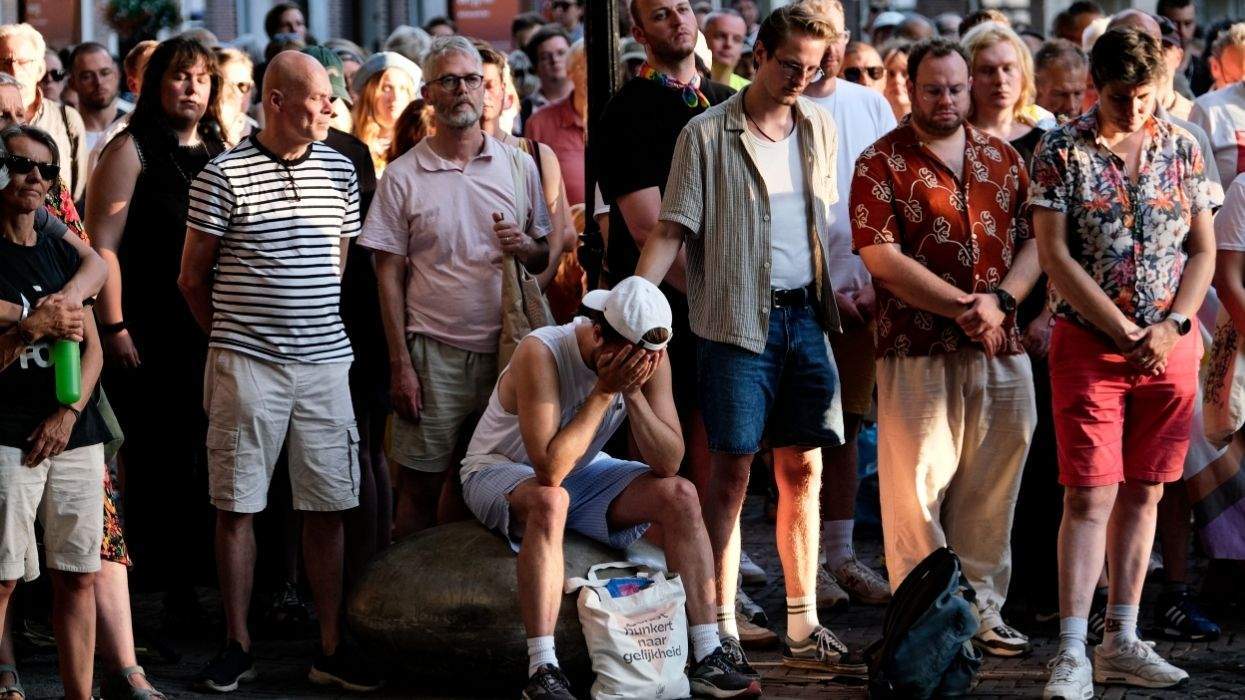
The Berlin Pride attack is a textbook example of an acute outbreak. Pride is supposed to be a celebration of joy, resistance, and community immunity, a place where LGBTQ+ people gather to counteract the chronic exposures of stigma and discrimination. When violence erupts in that space, it is not just an attack on individuals; it is an attack on a public health intervention. Pride is harm reduction. Pride is prevention. Pride is medicine. Hate knows that, and that’s why it targets Pride.
Gun violence became something very personal to me in August 2025. The shooting at the Centers for Disease Control and Prevention was not just an act of violence; it was the predictable consequence of years of escalating rhetoric against vaccines, science, and public health workers. Words nearly always bubble over into actions. Anti‑vaccine misinformation is not just wrong — it is a form of hate. It dehumanizes scientists, doctors, nurses, and public health staff. It frames them as enemies, conspirators, or threats. And once a group is dehumanized, violence becomes thinkable.
Related: Trump officials were so extreme in transgender health case that a Texas judge hit pause
The CDC shooting is part of the same epidemic as Berlin and the Pulse shooting. The shooter held firm and fixed beliefs about vaccines that sprouted from misinformation, and those beliefs led him to a gun that he shot at the CDC. The pathogen is the same. The symptoms look different. But the underlying mechanism, hate amplified through rhetoric, is identical.
Anti-CDC and anti-public health rhetoric didn’t just create confusion. It created hostility. It created fear. It created a permissive structure for violence. And when that rhetoric metastasized into action, the result was 500 shots fired into the very institution tasked with protecting the nation’s health and the death of Officer David Rose, a police officer who bravely defended our lives. This violence was never acknowledged by the President and was minimized by his cabinet, including his Secretary of Health.
This is what happens when hate mutates in a permissive environment. It finds new targets. It finds new justifications. It finds new ways to kill.
Violence is the most visible outcome of hate, but it is not the only one. Hate produces chronic health disparities that shorten lives and diminish well‑being. LGBTQ+ people experience higher rates of depression, anxiety, substance use disorders, and suicide attempts — not because of who we are, but because of how society treats us.
Related: Terrorist attack at huge Berlin Pride parade celebration leaves 1 dead, dozens injured
Communities of color, especially Black and Brown LGBTQ+ people, face compounded risks due to racism layered on top of homophobia and transphobia.
The Berlin attack will leave scars that last decades. Trauma is not a one‑day event. It embeds itself in bodies and communities. It increases cortisol levels, disrupts sleep, worsens cardiovascular health, and contributes to long‑term mental health challenges. The CDC shooting will do the same, not only for the victims, but for every public health worker who now walks into their office wondering if they are safe and every Pride participant who fears, even for a moment, that their city or festival will be next.
Structural discrimination is a form of violence. That remains true. Policies that restrict gender‑affirming care, ban LGBTQ+ content, or criminalize queer and trans existence act as chronic exposures. They weaken community immunity and make acute outbreaks of violence more likely—like the one at Pulse Nightclub and the one in Berlin.
Across Europe and the United States, we are seeing a resurgence of anti‑LGBTQ+ legislation and anti‑science rhetoric. These policies and narratives embolden individuals who already harbor hate. They create environments where violence feels permissible. They are part of the same ecosystem that produced the Pulse Nightclub and Berlin Pride attacks and the CDC shooting.
Related: I survived the Berlin Pride terror attack. Don’t let the right weaponize our grief
Public health is not neutral. It cannot be neutral in the face of hate. We must name hate as the emergency it is. We must treat it with the same seriousness we apply to any pathogen capable of causing widespread harm.
We need surveillance systems that track hate‑motivated violence the same way we track infectious diseases. We need rapid‑response teams that support communities after attacks, providing trauma‑informed care, mental health services, and safety planning. We need cross‑sector collaboration between public health agencies, LGBTQ+ organizations, scientific institutions, and policymakers.
And we need to confront misinformation as a form of violence with measurable public health consequences.
Demetre C. Daskalakis, MD, MPH, is the chief medical officer at Callen-Lorde Community Health Center in New York City. He is also one of the country's most trusted public health officials, who resigned from his senior leadership position at the Centers for Disease Control and Prevention after Donald Trump and Robert F. Kennedy politicized science at the agency.
Opinion is dedicated to featuring a wide range of inspiring personal stories and impactful opinions from the LGBTQ+ community and its allies. Visit Advocate.com/submit to learn more about submission guidelines. We welcome your thoughts and feedback on any of our stories. Email us at voices@equalpride.com. Views expressed in Voices stories are those of the guest writers, columnists, and editors, and do not directly represent the views of The Advocate or our parent company, equalpride.