'%3E%3Cpath d='M16.3574 35.6519H12.9537L15.0491 18.8873L16.3574 35.6519ZM30.4229 54.0093L22.309 0.994385H7.91795L0 54.0093H10.6634L11.5802 46.3855H17.4014L17.9914 54.0093H30.4229Z' fill='%23971B20'/%3E%3Cpath d='M48.2073 41.8813C48.2073 43.4049 47.4892 44.0011 46.1144 44.0011H43.7595V11.0687H46.1144C47.4892 11.0687 48.2073 11.6636 48.2073 13.1885V41.8813ZM59.5273 43.6695V11.3326C59.5273 3.71323 53.5729 0.994385 47.8157 0.994385H31.7213V54.0093H47.8157C53.5729 54.0093 59.5273 51.29 59.5273 43.6695Z' fill='%23971B20'/%3E%3Cpath d='M90.183 0.994385H78.6039L75.0711 30.6157L71.9955 0.994385H59.4346L69.2474 54.0093H80.373L90.183 0.994385Z' fill='%23971B20'/%3E%3Cpath d='M107.063 42.3448C107.063 43.7359 105.951 44.5974 104.643 44.5974C103.269 44.5974 102.157 43.7359 102.157 42.3448V12.658C102.157 11.2676 103.269 10.4058 104.643 10.4058C105.951 10.4058 107.063 11.2676 107.063 12.658V42.3448ZM119.233 43.2723V11.7312C119.233 6.36384 112.952 -3.8147e-06 104.643 -3.8147e-06C96.2667 -3.8147e-06 89.9867 6.36384 89.9867 11.7312V43.2723C89.9867 48.6393 96.2667 55 104.643 55C112.952 55 119.233 48.6393 119.233 43.2723Z' fill='%23971B20'/%3E%3Cpath d='M150.976 43.9349V33.7309H139.069V42.3448C139.069 43.7359 137.957 44.5974 136.582 44.5974C135.076 44.5974 133.964 43.7359 133.964 42.3448V12.658C133.964 11.2676 135.076 10.4058 136.582 10.4058C137.957 10.4058 139.069 11.2676 139.069 12.658V21.2723H150.976V11.0687C150.976 5.70107 145.283 -3.8147e-06 136.582 -3.8147e-06C127.75 -3.8147e-06 121.796 5.70107 121.796 11.0687V43.9349C121.796 49.3022 127.75 55 136.582 55C145.283 55 150.976 49.3022 150.976 43.9349Z' fill='%23971B20'/%3E%3Cpath d='M167.478 35.6519H164.076L166.17 18.8873L167.478 35.6519ZM181.544 54.0093L173.432 0.994385H159.037L151.123 54.0093H161.785L162.704 46.3855H168.523L169.114 54.0093H181.544Z' fill='%23971B20'/%3E%3Cpath d='M205.412 10.4058V0.994385H177.081V10.4058H185.392V54.0093H197.428V10.4058H205.412Z' fill='%23971B20'/%3E%3Cpath d='M230.002 54.0093V43.9349H218.914V31.8746H226.635V21.8028H218.914V10.4058H230.002V0.994385H206.875V54.0093H230.002Z' fill='%23971B20'/%3E%3C/g%3E%3Cdefs%3E%3CclipPath id='clip0_260_7080'%3E%3Crect width='230' height='55' fill='white'/%3E%3C/clipPath%3E%3C/defs%3E%3C/svg%3E)

In my twenties, I attempted suicide twice. Not because I lacked strength or intellect. I was already becoming the scholar I would later be. I was teaching. I was building a life. But I was living inside a world that had no language for me, no structure to hold me, and no place that felt possible to inhabit without fracture.
That is what erasure does. It does not always arrive as violence you can name. It arrives as absence. As distortion. As the steady message that you are not meant to exist in full.
I survived. And I did not survive quietly.
For years, I carried that absence with me: the absence of language, recognition, and any evidence that a future was possible. Survival became political long before I had the words to describe why. Simply remaining here — continuing to learn, teach, and build a life — felt like a refusal of the messages I had absorbed about who was allowed to exist and who was not. That absence shaped the educator I would become. I entered teaching with a simple conviction: no student should have to navigate school believing they are alone. No young person should have to search for evidence of their own humanity and find nothing. Schools can wound, but they can also heal. They can become places where students encounter possibility rather than erasure.
I became a teacher. Then a professor. I was the first openly trans academic in teacher education, beginning in 2005. Since then, I have worked in classrooms across this country. I have witnessed trans students in moments of brilliance and celebration, as well as moments of panic that arrive without warning. I have seen joy that feels expansive and fragile at once. I have seen students calculate risk before speaking their own names. At some point, witnessing was no longer enough. I decided to intervene. Not symbolically. Not rhetorically. Structurally.
Schools are not neutral spaces. Teachers are not neutral actors inside them. What educators choose to do, and what they refuse to do, shapes whether students remain visible at all. If you are reading this, you already understand the stakes. You may be living them. Across the United States, anti-trans legislation has expanded dramatically, regulating names, pronouns, curriculum, athletics, bathrooms, healthcare, and public life. These laws extend beyond policy into the daily conditions of existence. They shape what can be said, who can be recognized, and how trans young people move through schools and communities.
As a researcher, I have spent years studying these policies and their impact on education. Yet what I have found most consistently is not simply evidence of harm. I have found evidence of resistance.
In Utah, under HB 374, the Sensitive Materials in Education Act, and HB 29, which transformed local book challenges into potential statewide removals, a high school English teacher found a narrow opening in state law that allowed Gender Queer to remain in her classroom under administrative supervision. Every lesson had to be documented. Every discussion had to be tied explicitly to state standards. Most teachers removed the text. She did not. Instead, she transformed literary analysis into a defense of reading itself. Students examined memoir, symbolism, rhetoric, and censorship while documenting every objective and every state standard. They asked who gets to decide what is harmful, what counts as neutral, and why certain stories become dangerous. Eventually, the scrutiny intensified. The teacher lost her position. Yet her students refused to let the record end there. They organized a public read-in, archived lesson plans, and documented what had actually occurred in the classroom. One parent later wrote that the book had helped their child survive suicidal thoughts. In the state record, the case ended with a personnel decision. In the students' record, it became evidence that reading itself can be an act of refusal.
Again and again, educators, families, librarians, counselors, and community members find ways to support students despite increasingly restrictive conditions. They adapt. They collaborate. They refuse to abandon young people to political rhetoric. Many of these policies are challenged, delayed, defeated, or never become law. That resistance matters because it reminds us that policy is not destiny. People shape outcomes.
What I have come to understand is that refusal is not about defiance. It is about devotion. It is a practice rooted in sustaining presence in the face of erasure. It lives in the tension between what is legal and what is just, what is mandated and what remains possible. Some refusals are public. Others are nearly invisible. They happen in lesson plans, standards, documentation systems, classroom routines, and the questions teachers choose to ask. More often, they are deliberate acts of care repeated day after day.
Across the country, refusal takes different forms. A fourth-grade teacher in Montana continues to center a student's affirmed name throughout mathematics lessons after HB 400, the Free to Speak Act, protects those who refuse to do so. A social studies teacher in Alabama, where HB 244, the proposed "Don't Say Gay" bill, reshaped classrooms long before it ultimately failed, asks students what makes a democracy stable and invites them to examine civic participation, belonging, and power through historical inquiry rather than political slogans. When a trans girl wants to run track in Georgia, a coach responds to SB 1, the Riley Gaines Act, by organizing runners according to stride rhythm, endurance, and cooperative pacing rather than gender categories. A college professor in Texas, working under SB 12 and HB 229, projects statutory language onto a screen and asks future teachers how social-emotional learning, literacy, and relationship-building might still create affirming classrooms within legal constraints.
But refusal carries a cost. Some teachers are reprimanded. Some are watched. Some are reassigned, dismissed, nonrenewed, or pushed out. Some leave because the cost of staying becomes unbearable. Yet we need educators in these spaces. We cannot surrender entire states, districts, and communities to policies of erasure. We need stronger protections for educators willing to remain and stronger systems of support for the students who depend on them.
That work begins with understanding the law. De jure is what is written. De facto is how it is lived. The distance between the two is where refusal operates. Laws contain ambiguity. They contain openings. They leave space, even as they attempt to close it. If we do not read them, we cannot find those openings. If we cannot find them, we surrender the classroom before we begin.
There are steps forward. Study the law collectively. Read it with others. Interpret it together. No one should do this work alone. Identify where practice remains possible. Every statute leaves space. Find it. Sustain students there. Bring the law back to legislators. Show them what it does in real classrooms. Translate abstraction into lived experience.
No educator can do this work alone. Teachers need librarians, counselors, healthcare providers, families, legal advocates, faith leaders, journalists, unions, community organizations, and administrators willing to stand beside them. Protecting students is not the work of a single profession. It is the work of communities willing to defend one another.
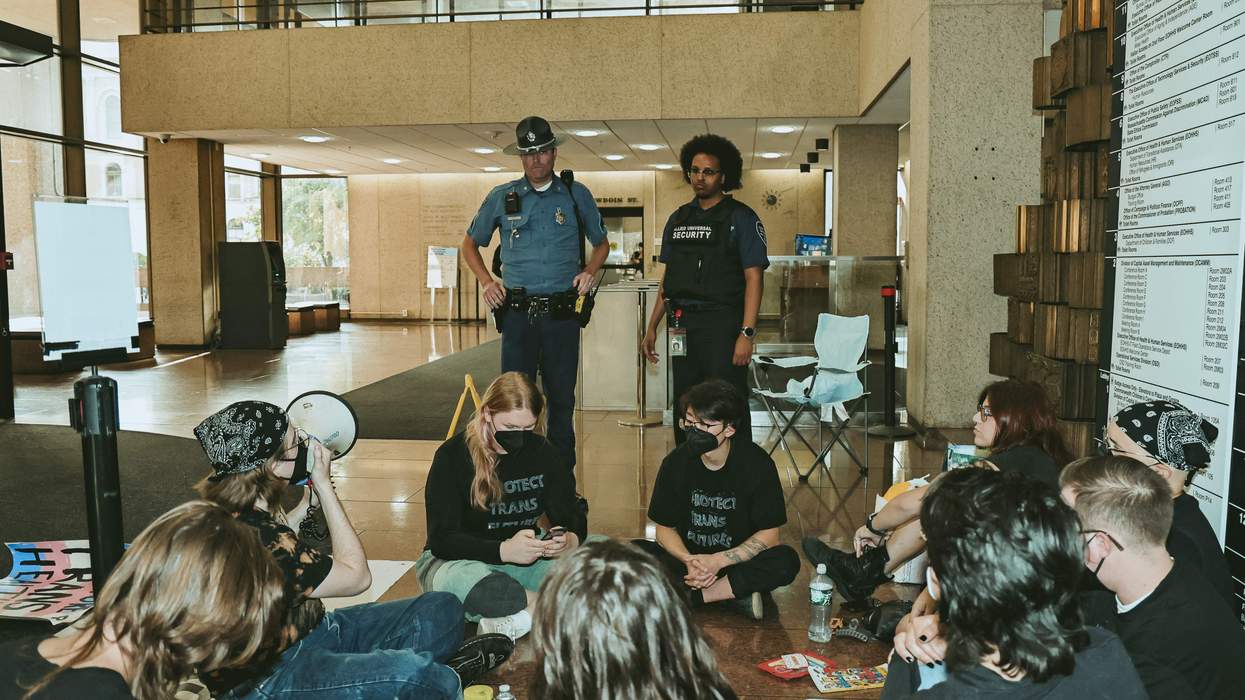
Protest matters. It builds visibility. It signals collective refusal. But protest alone does not change what happens inside a classroom on a Tuesday morning. Educators operate in that space. Refusal is a sustained practice. It is the decision, repeated daily, to ensure that students remain.
I know this because I have lived on both sides of that question.
Today, I teach because I know what happens when young people cannot imagine a future. Refusal begins by helping them believe and know they have one.
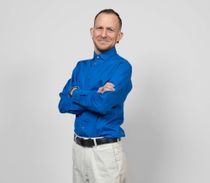
sj Miller is a trans+disciplinary scholar-activist, writer, faculty trainer in the Center for Professional Learning, and professor in the education department at Santa Fe Community College. They are the author of the forthcoming book We Refuse to Disappear: Resistance Amid Anti-Trans Education Policy. Learn more at sjmiller.info.
Opinion is dedicated to featuring a wide range of inspiring personal stories and impactful opinions from the LGBTQ+ community and its allies. Visit Advocate.com/submit to learn more about submission guidelines. We welcome your thoughts and feedback on any of our stories. Email us at voices@equalpride.com. Views expressed in Voices stories are those of the guest writers, columnists, and editors, and do not directly represent the views of The Advocate or our parent company, equalpride.