'%3E%3Cpath d='M16.3574 35.6519H12.9537L15.0491 18.8873L16.3574 35.6519ZM30.4229 54.0093L22.309 0.994385H7.91795L0 54.0093H10.6634L11.5802 46.3855H17.4014L17.9914 54.0093H30.4229Z' fill='%23971B20'/%3E%3Cpath d='M48.2073 41.8813C48.2073 43.4049 47.4892 44.0011 46.1144 44.0011H43.7595V11.0687H46.1144C47.4892 11.0687 48.2073 11.6636 48.2073 13.1885V41.8813ZM59.5273 43.6695V11.3326C59.5273 3.71323 53.5729 0.994385 47.8157 0.994385H31.7213V54.0093H47.8157C53.5729 54.0093 59.5273 51.29 59.5273 43.6695Z' fill='%23971B20'/%3E%3Cpath d='M90.183 0.994385H78.6039L75.0711 30.6157L71.9955 0.994385H59.4346L69.2474 54.0093H80.373L90.183 0.994385Z' fill='%23971B20'/%3E%3Cpath d='M107.063 42.3448C107.063 43.7359 105.951 44.5974 104.643 44.5974C103.269 44.5974 102.157 43.7359 102.157 42.3448V12.658C102.157 11.2676 103.269 10.4058 104.643 10.4058C105.951 10.4058 107.063 11.2676 107.063 12.658V42.3448ZM119.233 43.2723V11.7312C119.233 6.36384 112.952 -3.8147e-06 104.643 -3.8147e-06C96.2667 -3.8147e-06 89.9867 6.36384 89.9867 11.7312V43.2723C89.9867 48.6393 96.2667 55 104.643 55C112.952 55 119.233 48.6393 119.233 43.2723Z' fill='%23971B20'/%3E%3Cpath d='M150.976 43.9349V33.7309H139.069V42.3448C139.069 43.7359 137.957 44.5974 136.582 44.5974C135.076 44.5974 133.964 43.7359 133.964 42.3448V12.658C133.964 11.2676 135.076 10.4058 136.582 10.4058C137.957 10.4058 139.069 11.2676 139.069 12.658V21.2723H150.976V11.0687C150.976 5.70107 145.283 -3.8147e-06 136.582 -3.8147e-06C127.75 -3.8147e-06 121.796 5.70107 121.796 11.0687V43.9349C121.796 49.3022 127.75 55 136.582 55C145.283 55 150.976 49.3022 150.976 43.9349Z' fill='%23971B20'/%3E%3Cpath d='M167.478 35.6519H164.076L166.17 18.8873L167.478 35.6519ZM181.544 54.0093L173.432 0.994385H159.037L151.123 54.0093H161.785L162.704 46.3855H168.523L169.114 54.0093H181.544Z' fill='%23971B20'/%3E%3Cpath d='M205.412 10.4058V0.994385H177.081V10.4058H185.392V54.0093H197.428V10.4058H205.412Z' fill='%23971B20'/%3E%3Cpath d='M230.002 54.0093V43.9349H218.914V31.8746H226.635V21.8028H218.914V10.4058H230.002V0.994385H206.875V54.0093H230.002Z' fill='%23971B20'/%3E%3C/g%3E%3Cdefs%3E%3CclipPath id='clip0_260_7080'%3E%3Crect width='230' height='55' fill='white'/%3E%3C/clipPath%3E%3C/defs%3E%3C/svg%3E)
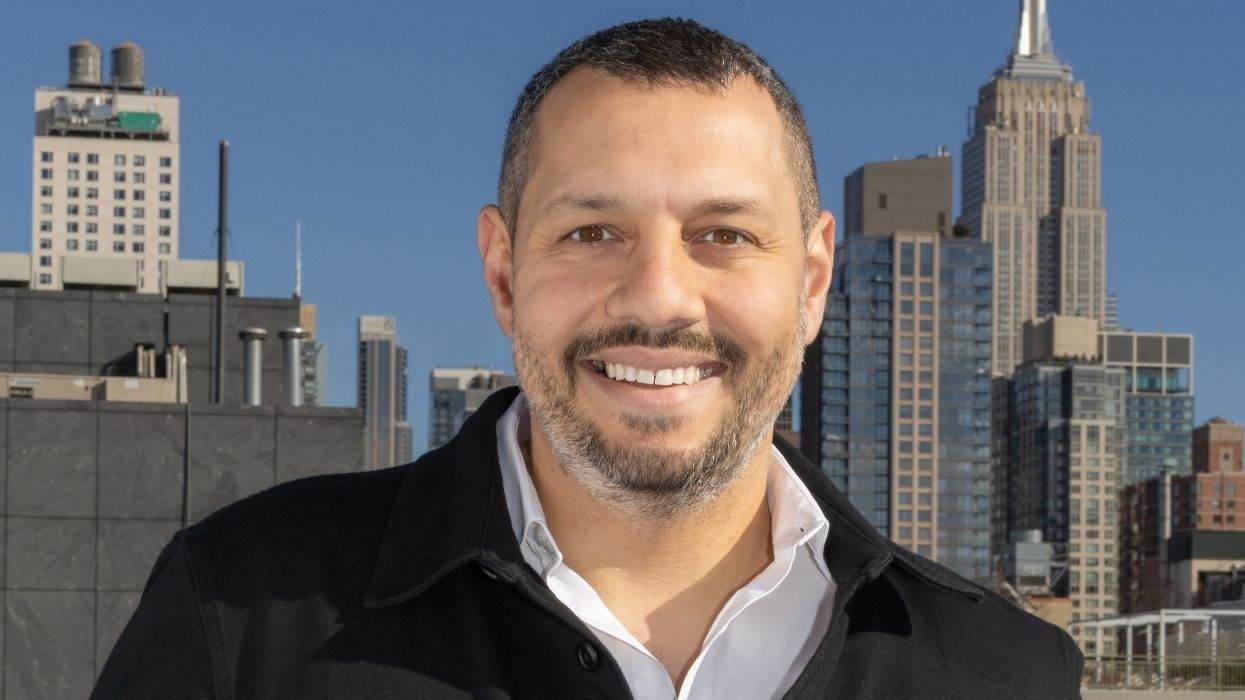

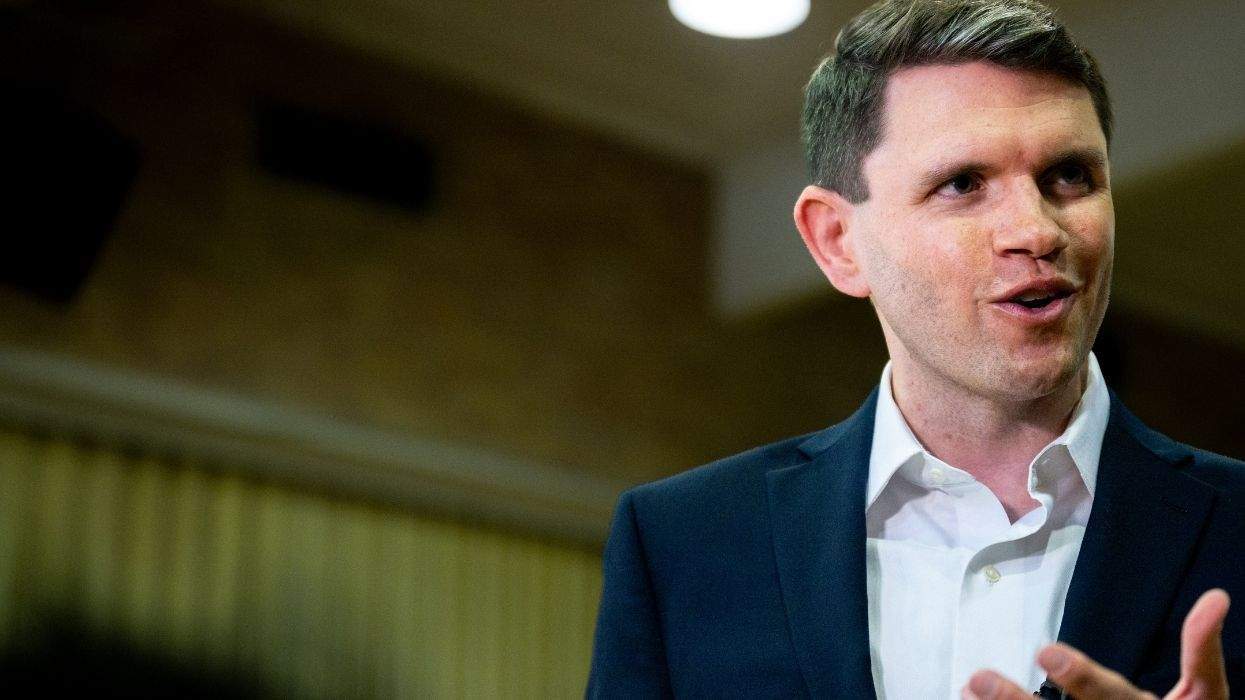
Mathew Shurka says it’s time for a conversion therapy survivor to serve in Congress. Shurka is the cofounder of the anti-conversion therapy project Born Perfect.
Keep up with the latest in LGBTQ+ news and politics. Sign up for The Advocate's email newsletter.
The 37-year-old gay activist is running for the Democratic nomination in New York’s 12th Congressional District, the Manhattan seat long held by LGBTQ+ ally Jerry Nadler.
Nadler, who has held the seat since 1993, is retiring, opening up the race in the largely Democratic district that covers much of Manhattan, including the gayborhoods of Chelsea and Hell’s Kitchen. It’s the most heavily LGBTQ+ congressional district in the nation, Shurka says.
Related: Can't Be Converted: Trauma as Therapy in Virginia
Related: Beyond Boy Erased: The Resilience of Conversion Therapy
“I never saw myself as a politician,” he says. That changed through his work with Born Perfect and when Nadler announced his retirement.
Building a national campaign against conversion therapy
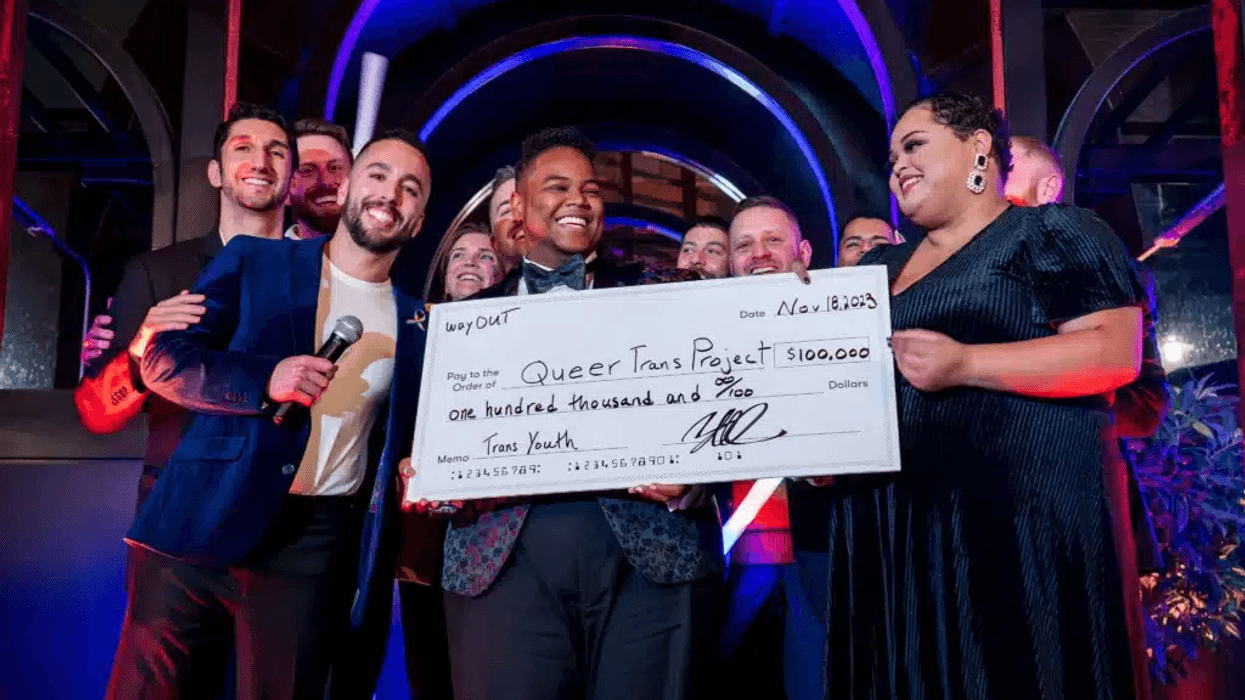
Shurka founded Born Perfect in 2014 with the National Center for Lesbian Rights (now the National Center for LGBTQ Rights). Born Perfect aims to end conversion therapy — a discredited and harmful practice that seeks to change a person’s sexual orientation or gender identity — across the nation through legislation, court action, and raising awareness.

During his time with Born Perfect, which he left last year, he traveled to every state in the nation and helped pass laws, executive orders, or regulations to protect young people from conversion therapy in 27 states and more than 120 municipalities. He saw the differences in various states, which he says would be an asset to him as a member of Congress.
“There’s geography differences,” he says. “There’s cultural differences. I always like to say a Democrat in Hawaii is not the same as a Democrat in New Hampshire.”
Why Shurka decided to run after Nadler’s retirement
When Nadler announced in September that he would not seek another term, “It was like, wow,” Shurka says. He and his fiancé, restaurateur Lisle Richards, gave the matter some thought. They concluded that Shurka running for Congress would be a way to translate his skills and experience into elected office. Shurka was also influenced by the widespread disappointment with the state of politics overall, including disappointment with the Democratic Party. He felt he could make change.
“I’ve worked in Congress because I’ve introduced two bills with members of Congress,” he notes. What’s more, Congress members are there to network and build a cohort, which is what he did with Born Perfect. “It felt like the perfect next step for me,” he says. He officially launched his campaign the week before Thanksgiving.

He made the decision to run before another gay candidate, Erik Bottcher, withdrew from the race. Bottcher filed documents for his candidacy in September, then withdrew in December to run in a special election for the state Senate, which he won. Bottcher is a former New York City Council member.
Shurka is a native New Yorker, sixth-generation on his mother’s side, first-generation on his father’s side. His father’s family, Persian Jews, left Iran for Israel after the Jewish state was founded in 1948, and his father came to the U.S. in his early 20s, rising from driving a taxi to having a career in commercial real estate.
Surviving five years of conversion therapy
Shurka’s experience with conversion therapy lasted five years, from age 16 to 21. He was beaten by a fellow student in high school, not for being gay but because he had stood up to the attacker about another matter; the assailant didn’t know Shurka, then closeted, was gay. He was injured so severely that he had to be hospitalized and almost died. However, the attack led Shurka, who had been in denial about his sexuality, to come out to himself and to his family. “My father was incredible, told me that he loved me no matter what,” Shurka recalls. “But the next day he started to do his research.”
His father met a therapist who said being gay could be cured. So Mathew went to several counselors, mostly for one-on-one treatment, and they were all licensed medical or mental health professionals, not ministers or rabbis, although there was religious influence, he says. They told him his homosexuality was caused by having a distant father and an overbearing mother, a typical — and stereotypical — explanation at the time.
As part of his therapy, he wasn’t allowed to speak to his mother or his two sisters for three years. One of his sisters was living in the family home, and the other was on her own but nearby; Mathew is the youngest.
“I wake up in the morning,” he remembers. “My mom would make me breakfast. I'd head downstairs in our home, eat breakfast, and walk out the door and never say a word to her.”
“[The therapists’] instruction was based on the fact that, one, they didn’t want me to learn a feminine behavior, and, two, if I understood that women were distant and the opposite sex and understood that men were are supposed to be my peers, my sexual orientation would correct itself because they believe that everyone is innately heterosexual,” he says.
“I was told every day that if I didn’t try hard enough or try harder in becoming straight, suicide would have been a better would be a better option for me,” Shurka adds. “That’s how bad life is as an out gay man. That’s the language my therapist would use.”
Leaving conversion therapy and becoming an activist
He started to make more male friends, and women showed interest in him, so on a surface level, it felt like the therapy was effective. One therapist even prescribed Viagra because it would supposedly help him have sex with a woman. But deep down, he knew conversion therapy wasn’t working, and his attraction to men only became stronger. Eventually, he had panic attacks and thought about taking his life, although he never attempted suicide.
He left conversion therapy at 21, started working as a waiter at a restaurant in lower Manhattan, and began developing pride in his identity. Three years later, at age 24 in 2012, he created a video about his experience for the It Gets Better Project, and it went viral, starting his activism against conversion therapy and leading to his work with NCLR. He went on to reconcile with his parents after years of estrangement.
Policy priorities: conversion therapy, the Equality Act, and affordability
To the best of his knowledge, he would be the first conversion therapy survivor in Congress, he says. If he is elected, LGBTQ+ issues will definitely be one of his priorities. “I, of course, want to push a conversion therapy ban,” he says. “I did introduce legislation with [U.S. Rep.] Ted Lieu on that, and it never passed. It gets reintroduced every year. And the Equality Act is very important to me as well.”
So is addressing the affordability crisis, which is affecting the 12th District intensely, he notes, and standing up to Donald Trump. “So many people are worried that the Democrats are scared,” he says. “They’re not willing to really put their neck out in a way that would really, really stop Trump.” For instance, he says, he was the only candidate in the 12th District race to urge Senate Minority Leader Chuck Schumer to hold back funding for the Department of Homeland Security after the killings of Renee Nicole Good and Alex Pretti in Minneapolis.
A crowded Democratic primary in Manhattan
Others seeking the Democratic nomination include Jack Schlossberg, the son of Caroline Kennedy Schlossberg; George Conway, a former Republican turned Trump critic; New York State Assembly members Alex Bores and Micah Lasher; and many more. But Shurka says he feels good about his chances and what he can bring to Congress.
“There is a real sense of people wanting an outsider,” he says. “I’m not the only outsider, but I’m the outsider that has had the most legislative experience. To be able to be an outsider who’s passed over 150 pieces of legislation all across the country and did it without ever being a politician really speaks to people, and people are moved by that.” He has a history of working with people who may disagree with him on many matters, he says, such as the conservative Utah legislators who passed that state’s conversion therapy ban.
Beyond legislative issues, Shurka says he is also concerned about the direction of the federal judiciary.
Concerns about the Supreme Court and judicial reform
If the Supreme Court strikes down Colorado’s ban on conversion therapy, “it’s going to be a horrible moment,” he says, as it could affect bans in other states as well. He was at the court when it heard oral arguments in October. The high court has become extremely politicized, he says, and he supports reforming it by imposing an age cap on justices and possibly expanding the number of justices. He also would support term limits for members of Congress.
The primary election will be on June 23. As of now, there are 12 other candidates in the Democratic primary and six in the Republican primary, plus three have filed to run as independents in the November 3 general election. Given the district’s makeup, whoever wins the Democratic primary will be pretty much assured of election in November. New York does not have a runoff provision, so whoever gets a plurality of the vote will be the nominee.
Looking ahead, Shurka says, “I feel great.”