'%3E%3Cpath d='M16.3574 35.6519H12.9537L15.0491 18.8873L16.3574 35.6519ZM30.4229 54.0093L22.309 0.994385H7.91795L0 54.0093H10.6634L11.5802 46.3855H17.4014L17.9914 54.0093H30.4229Z' fill='%23971B20'/%3E%3Cpath d='M48.2073 41.8813C48.2073 43.4049 47.4892 44.0011 46.1144 44.0011H43.7595V11.0687H46.1144C47.4892 11.0687 48.2073 11.6636 48.2073 13.1885V41.8813ZM59.5273 43.6695V11.3326C59.5273 3.71323 53.5729 0.994385 47.8157 0.994385H31.7213V54.0093H47.8157C53.5729 54.0093 59.5273 51.29 59.5273 43.6695Z' fill='%23971B20'/%3E%3Cpath d='M90.183 0.994385H78.6039L75.0711 30.6157L71.9955 0.994385H59.4346L69.2474 54.0093H80.373L90.183 0.994385Z' fill='%23971B20'/%3E%3Cpath d='M107.063 42.3448C107.063 43.7359 105.951 44.5974 104.643 44.5974C103.269 44.5974 102.157 43.7359 102.157 42.3448V12.658C102.157 11.2676 103.269 10.4058 104.643 10.4058C105.951 10.4058 107.063 11.2676 107.063 12.658V42.3448ZM119.233 43.2723V11.7312C119.233 6.36384 112.952 -3.8147e-06 104.643 -3.8147e-06C96.2667 -3.8147e-06 89.9867 6.36384 89.9867 11.7312V43.2723C89.9867 48.6393 96.2667 55 104.643 55C112.952 55 119.233 48.6393 119.233 43.2723Z' fill='%23971B20'/%3E%3Cpath d='M150.976 43.9349V33.7309H139.069V42.3448C139.069 43.7359 137.957 44.5974 136.582 44.5974C135.076 44.5974 133.964 43.7359 133.964 42.3448V12.658C133.964 11.2676 135.076 10.4058 136.582 10.4058C137.957 10.4058 139.069 11.2676 139.069 12.658V21.2723H150.976V11.0687C150.976 5.70107 145.283 -3.8147e-06 136.582 -3.8147e-06C127.75 -3.8147e-06 121.796 5.70107 121.796 11.0687V43.9349C121.796 49.3022 127.75 55 136.582 55C145.283 55 150.976 49.3022 150.976 43.9349Z' fill='%23971B20'/%3E%3Cpath d='M167.478 35.6519H164.076L166.17 18.8873L167.478 35.6519ZM181.544 54.0093L173.432 0.994385H159.037L151.123 54.0093H161.785L162.704 46.3855H168.523L169.114 54.0093H181.544Z' fill='%23971B20'/%3E%3Cpath d='M205.412 10.4058V0.994385H177.081V10.4058H185.392V54.0093H197.428V10.4058H205.412Z' fill='%23971B20'/%3E%3Cpath d='M230.002 54.0093V43.9349H218.914V31.8746H226.635V21.8028H218.914V10.4058H230.002V0.994385H206.875V54.0093H230.002Z' fill='%23971B20'/%3E%3C/g%3E%3Cdefs%3E%3CclipPath id='clip0_260_7080'%3E%3Crect width='230' height='55' fill='white'/%3E%3C/clipPath%3E%3C/defs%3E%3C/svg%3E)
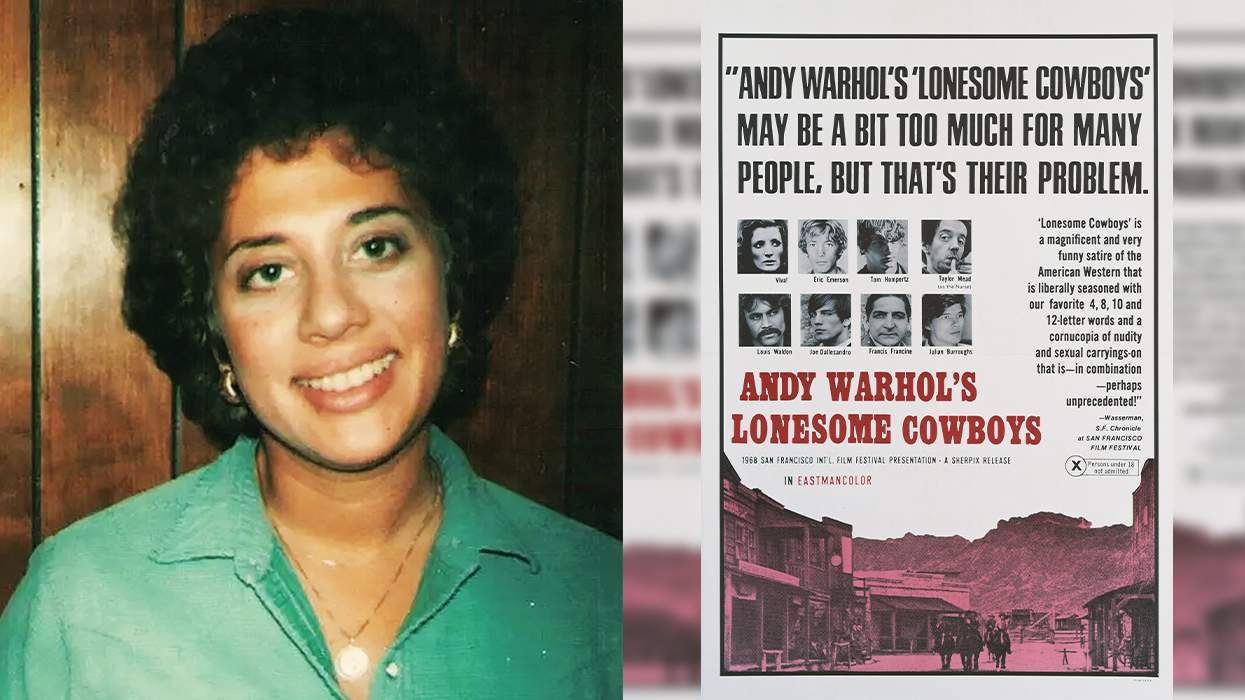

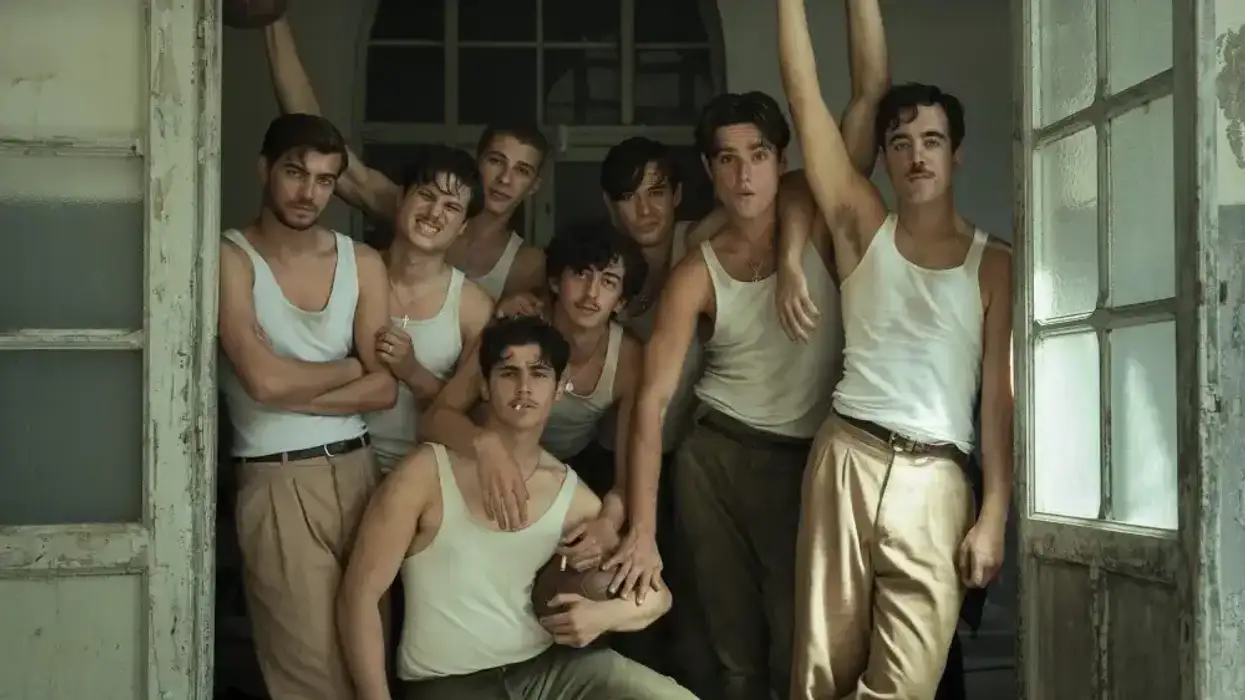
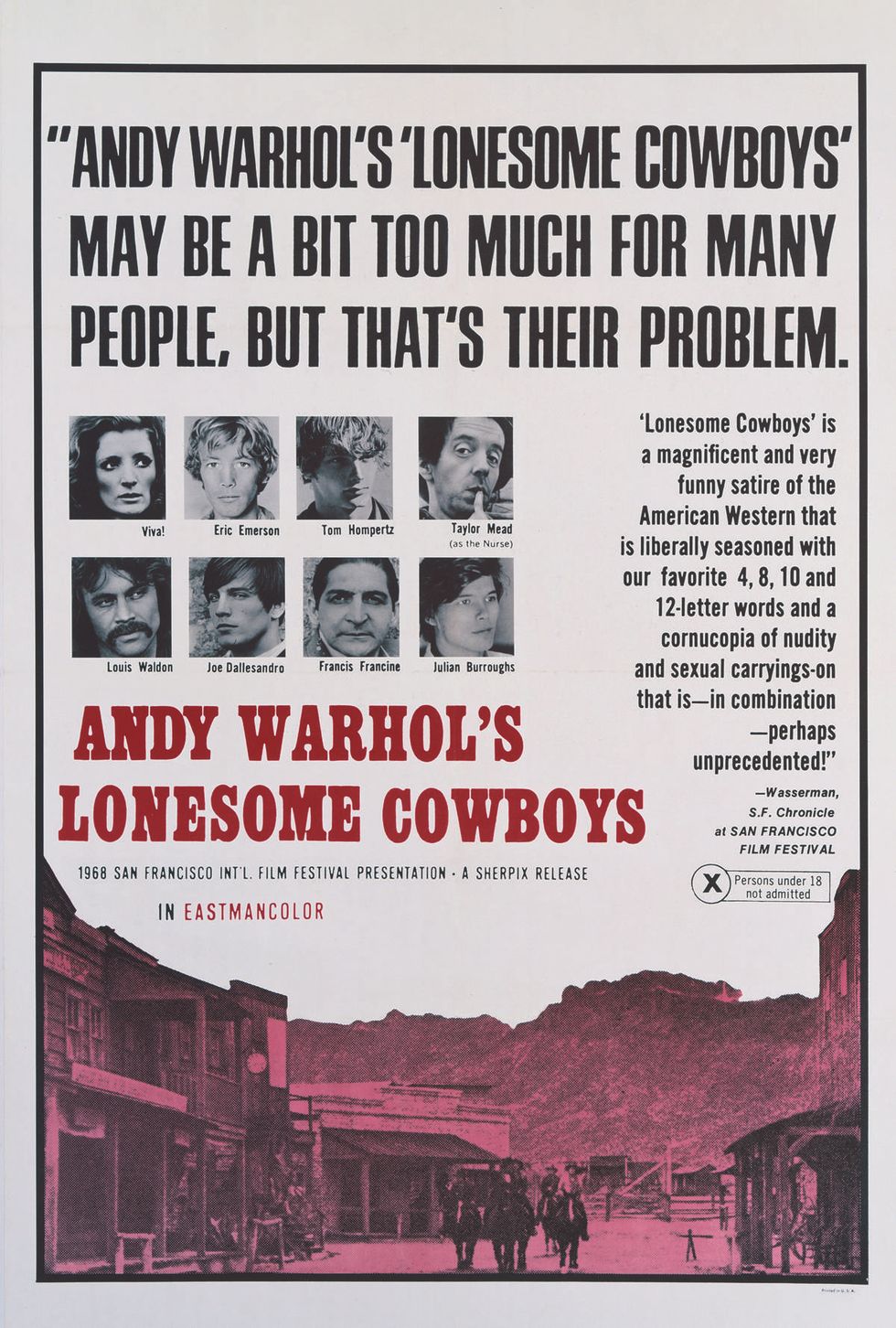
To put it gently, Andy Warhol’s Lonesome Cowboys was never destined to become a classic of gay cinema.
The artist’s take on the Western certainly didn’t captivate lesbian activist Abby Drue in its first 15 minutes, which is all she saw of it before police raided the fateful Atlanta screening she attended on August 5, 1969. She has more regret over never eating the rest of the ham and cheese sandwich she had smuggled into the theater. When the lights came on, her first thought was: Andy is so cheap, the film broke.
But then Drue saw all the men leaping over the seats, trying to get outside, only to run into another set of cops entering through the Ansley Mall Mini-Cinema’s fire exit doors. The authorities began barking instructions: “Stop where you are! Do not move!”
“And I’m holding a submarine sandwich,” Drue tells The Advocate, painting an unforgettable picture. “I have to admit, I was young, and I thought it was very funny.”
The police, Drue recalls, lined up the filmgoers in rows, photographed them, and made arrests on the typical blend of nonsense charges used to target LGBTQ+ people for congregating in private establishments at the time, like lewdness or public indecency. Drue says the only “grass” she had on her at the time was the lettuce in her sub. She left the theater that night with a court date she never ended up having to attend. Her records were later expunged. Others weren’t so lucky.
“When we walked out of the theater, it was outrageous seeing the guys being pushed and frisked,” she recalls. “It was horrible. They were just throwing all of them into the van.”
Drue recalls that the bulk of the moviegoers — largely gay men, some of them not yet publicly out — ended up getting off with fines. “It was more of an intimidation,” she says. “People weren’t left in jail from it.” But if the police wanted to cow Atlanta’s queer community into submission, the raid backfired spectacularly. “It was the proverbial straw that broke our backs,” Drue says.
In the aftermath of the 1969 raid, Drue joined a group of LGBTQ+ activists, including the influential Bill Smith, to form Georgia’s Gay Liberation Front. That group organized Atlanta’s first Pride events: a march along downtown sidewalks in 1971 after the city denied them permits, followed by an official procession in 1972. Last year, the Atlanta Pride Festival drew more than 350,000 visitors — among them Drue, who is now the last known living person who was present at the Lonesome Cowboys raid.
If this trajectory sounds familiar — a police action that sparks a resistance movement — it’s because Atlanta followed a similar path as New York after the June 1969 raid on the Stonewall Inn or as San Francisco after the August 1966 Compton Cafeteria riot. In fact, Smithsonian Magazine labeled the Lonesome Cowboys raid “the Stonewall of the South that history forgot,” and that can be felt on the very ground where it took place.
When you visit the site of the Stonewall riots in New York City, it’s clear you are in a place of historic importance. There are signs and plaques, even a National Monument that was targeted by the Trump administration for continuing to fly the Pride flag on land managed by the National Park Service. Most importantly, the gay bar is still standing — though it is no longer owned by the mafia. By contrast, the Ansley Mall Mini-Cinema is now an optometry practice with nary a marker to be found.
The relative obscurity of the Lonesome Cowboys raid is even more poignant when considering Atlanta’s underappreciated role in the national LGBTQ+ movement writ large. “[Atlanta] was one of the very few places in the South where people felt a degree of safety, and it caused this internal migration,” says Martin Padgett, whose book A Night at the Sweet Gum Head traces the history of 1970s gay activism in the Southern capital. “A lot of queer people ended up coming from Opp, Alabama, and Florence, South Carolina, and Gainesville, Florida, and moving to Atlanta. It precipitated a queer community developing that was quite large and is hundreds of thousands of people today.”
Through Sweet Gum Head and his more recent work on Michael Hardwick, an Atlanta resident whose sodomy arrest went to the Supreme Court, Padgett is one of several regional scholars who want to paint a more fully formed picture of LGBTQ+ history in the United States — one less focused on a couple of coastal hubs.
When Stonewall occurred, it received media coverage in the form of a “couple of New York Times newspaper clippings about this long,” Padgett says, pinching his fingers together — but it has since become the subject of countless monographs, documentaries, and art projects. “The legend creates a reality after it,” he notes.
That mythmaking process can become overly focused on a single event, to the point that writers end up spilling endless ink trying to figure out who threw the first brick at Stonewall — if it even was a brick — instead of highlighting other pivotal turning points. “I think there’s so much history now that is invested in New York and San Francisco, and so much of it, still mining those layers of what do we actually know, that it’s hard to get oxygen for some other places,” says Padgett. (That includes drawing attention to the raid of what he calls, unprompted, a “terrible movie.”)
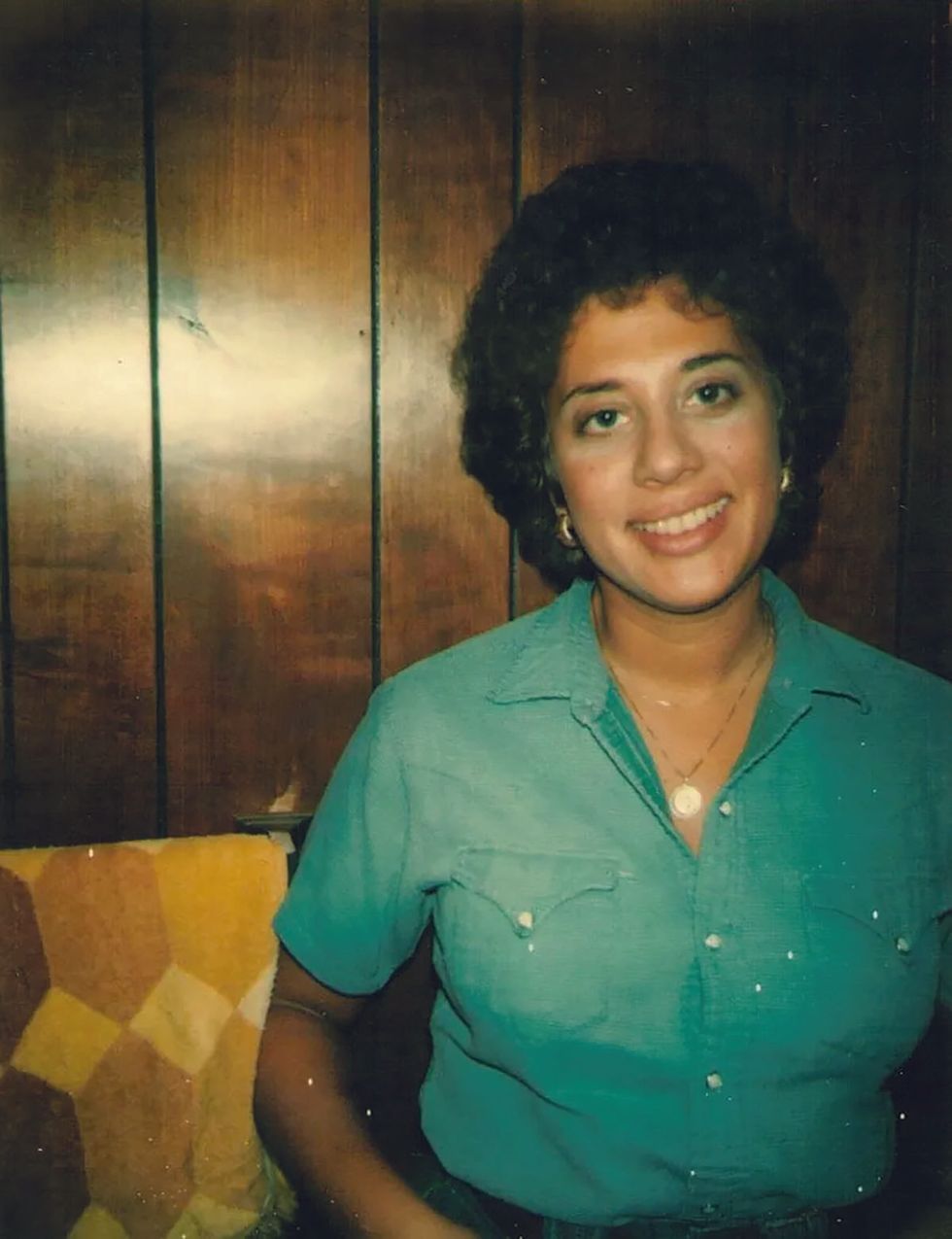 Abby Druecourtesy
That hyperfocus can also create a false impression that LGBTQ+ advocacy in the United States began with Stonewall and spread to the American South from there. In actuality, Drue says the raid on Stonewall had almost no impact on the work she and her fellow activists did after the Lonesome Cowboys raid. She remembers hearing about Stonewall that summer via a long-distance telephone call with a cousin who lived in Greenwich Village, but it had not yet crystallized into a touchstone moment. “It took months, almost a year, for even Stonewall to be digested,” she says.
“It wasn’t like today, when if the Stonewall riots happened this afternoon, everyone in the world would know it in, like, 15 minutes,” adds Joshua Burford, co-executive director of Invisible Histories, a community-based archive focused on the South.
Instead, LGBTQ+ advocacy in the American South marched to the beat of its own drum, both in Atlanta and in more sparsely populated areas, even if the narrative structure does not seem as concise as a thrown brick sparking a revolution. “We developed our own organizing in the South in ways that made sense to us in places that were super rural, with smaller populations, just as successfully, if not more successfully, in other, like, larger urban spots,” says Burford. “And so Stonewall gets in the way of a lot of conversations in some cases. It is an important moment — let’s not say it wasn’t — it just wasn’t the only one.”
But as the Lonesome Cowboys raid fights for its place in the canon of LGBTQ+ history, let there be no debate about the quality of the movie itself. “There weren’t a lot of options for queer cinema in the 1960s, but my God, to get arrested watching that movie does feel like a slap in the face,” says Burford.
And Abby Drue’s official review of the Warhol flick after finally finishing it a half-century later? “I sure didn’t miss much.”
This article is part of The Advocate's July-Aug 2026 print issue, on newsstands July 7. Support queer media and subscribe — or download the issue now through Apple News+, Zinio, Nook, or PressReader.