'%3E%3Cpath d='M16.3574 35.6519H12.9537L15.0491 18.8873L16.3574 35.6519ZM30.4229 54.0093L22.309 0.994385H7.91795L0 54.0093H10.6634L11.5802 46.3855H17.4014L17.9914 54.0093H30.4229Z' fill='%23971B20'/%3E%3Cpath d='M48.2073 41.8813C48.2073 43.4049 47.4892 44.0011 46.1144 44.0011H43.7595V11.0687H46.1144C47.4892 11.0687 48.2073 11.6636 48.2073 13.1885V41.8813ZM59.5273 43.6695V11.3326C59.5273 3.71323 53.5729 0.994385 47.8157 0.994385H31.7213V54.0093H47.8157C53.5729 54.0093 59.5273 51.29 59.5273 43.6695Z' fill='%23971B20'/%3E%3Cpath d='M90.183 0.994385H78.6039L75.0711 30.6157L71.9955 0.994385H59.4346L69.2474 54.0093H80.373L90.183 0.994385Z' fill='%23971B20'/%3E%3Cpath d='M107.063 42.3448C107.063 43.7359 105.951 44.5974 104.643 44.5974C103.269 44.5974 102.157 43.7359 102.157 42.3448V12.658C102.157 11.2676 103.269 10.4058 104.643 10.4058C105.951 10.4058 107.063 11.2676 107.063 12.658V42.3448ZM119.233 43.2723V11.7312C119.233 6.36384 112.952 -3.8147e-06 104.643 -3.8147e-06C96.2667 -3.8147e-06 89.9867 6.36384 89.9867 11.7312V43.2723C89.9867 48.6393 96.2667 55 104.643 55C112.952 55 119.233 48.6393 119.233 43.2723Z' fill='%23971B20'/%3E%3Cpath d='M150.976 43.9349V33.7309H139.069V42.3448C139.069 43.7359 137.957 44.5974 136.582 44.5974C135.076 44.5974 133.964 43.7359 133.964 42.3448V12.658C133.964 11.2676 135.076 10.4058 136.582 10.4058C137.957 10.4058 139.069 11.2676 139.069 12.658V21.2723H150.976V11.0687C150.976 5.70107 145.283 -3.8147e-06 136.582 -3.8147e-06C127.75 -3.8147e-06 121.796 5.70107 121.796 11.0687V43.9349C121.796 49.3022 127.75 55 136.582 55C145.283 55 150.976 49.3022 150.976 43.9349Z' fill='%23971B20'/%3E%3Cpath d='M167.478 35.6519H164.076L166.17 18.8873L167.478 35.6519ZM181.544 54.0093L173.432 0.994385H159.037L151.123 54.0093H161.785L162.704 46.3855H168.523L169.114 54.0093H181.544Z' fill='%23971B20'/%3E%3Cpath d='M205.412 10.4058V0.994385H177.081V10.4058H185.392V54.0093H197.428V10.4058H205.412Z' fill='%23971B20'/%3E%3Cpath d='M230.002 54.0093V43.9349H218.914V31.8746H226.635V21.8028H218.914V10.4058H230.002V0.994385H206.875V54.0093H230.002Z' fill='%23971B20'/%3E%3C/g%3E%3Cdefs%3E%3CclipPath id='clip0_260_7080'%3E%3Crect width='230' height='55' fill='white'/%3E%3C/clipPath%3E%3C/defs%3E%3C/svg%3E)

This story was originally reported by Brooke Migdon and Orion Rummler of The 19th. Meet Brooke and Orion and read more of their reporting on gender, politics and policy.
Florida Gov. Ron DeSantis, a Republican who has passed some of the most extreme anti-LGBTQ+ laws in the country, and Democratic Rep. Sarah McBride of Delaware, the first transgender member of Congress, don’t have much in common.
But they do have a similar assessment of what drove Republicans’ historic losses in last week’s midterms.
“Anti-trans politics was a flop this election,” McBride said on a Monday press call with the Human Rights Campaign, the country’s largest LGBTQ+ advocacy group. “The American people are tired of a politics of cruelty that does nothing to lower costs or address corruption,” she said.
Only days before, while speaking at the Florida state Capitol, DeSantis also pinned the GOP defeat to the party’s fixation on trans people.
“I knew Republicans were in trouble when I was reading an overview about, ‘What were they running ads on?’ And they’re spending hundreds of millions of dollars across the country on transgender ads,” he said. “But that was not the issue motivating voters, and it was kind of like an attempt to just scare Republicans to vote.”
It was a remarkable analysis for a candidate who in his ultimately failed 2024 presidential campaign highlighted a video attacking President Donald Trump for his past support of LGBTQ+ people — while touting his own reputation as a governor who enacted laws that made Florida one of the most hostile places for trans people to live in the country.
Their assessments align with what political analysts on both sides and LGBTQ+ advocates have been saying since election night: Voters were simply not moved by Republicans’ singular focus on attacking trans people, even as they approved a number of ballot measures restricting trans athletes and gender-affirming care.
Republicans went all in on the messaging, pouring $400 million into anti-trans ads this election cycle, according to the Human Rights Campaign.
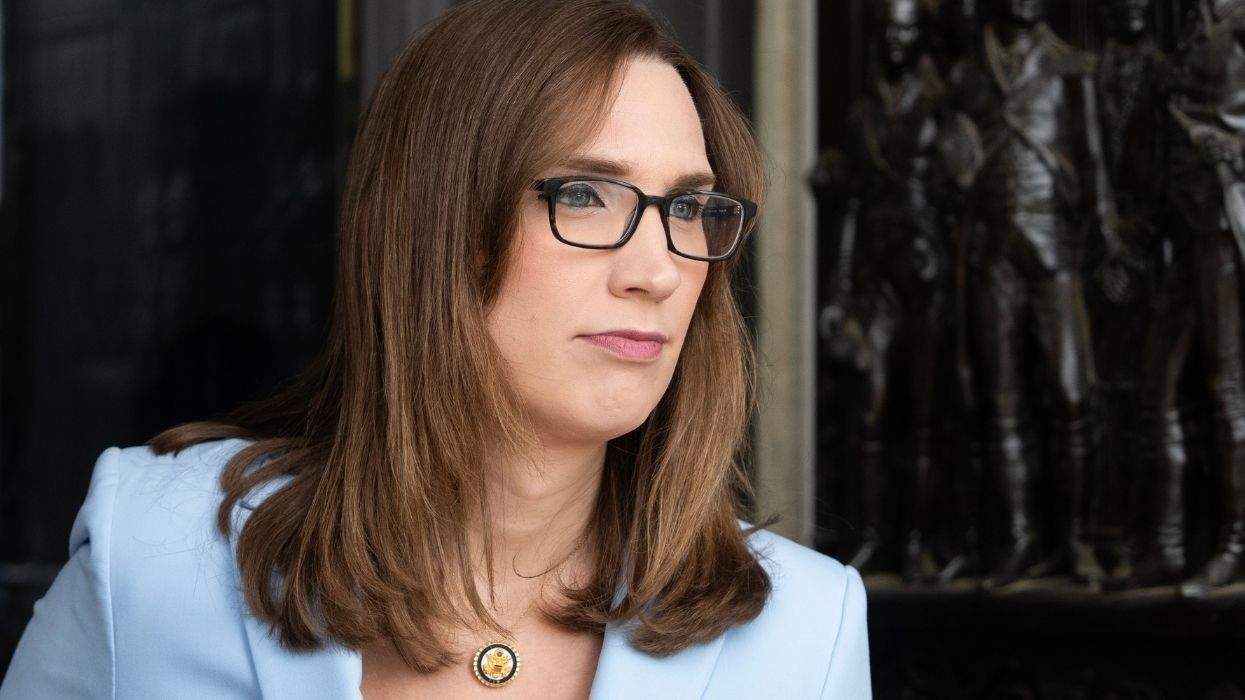
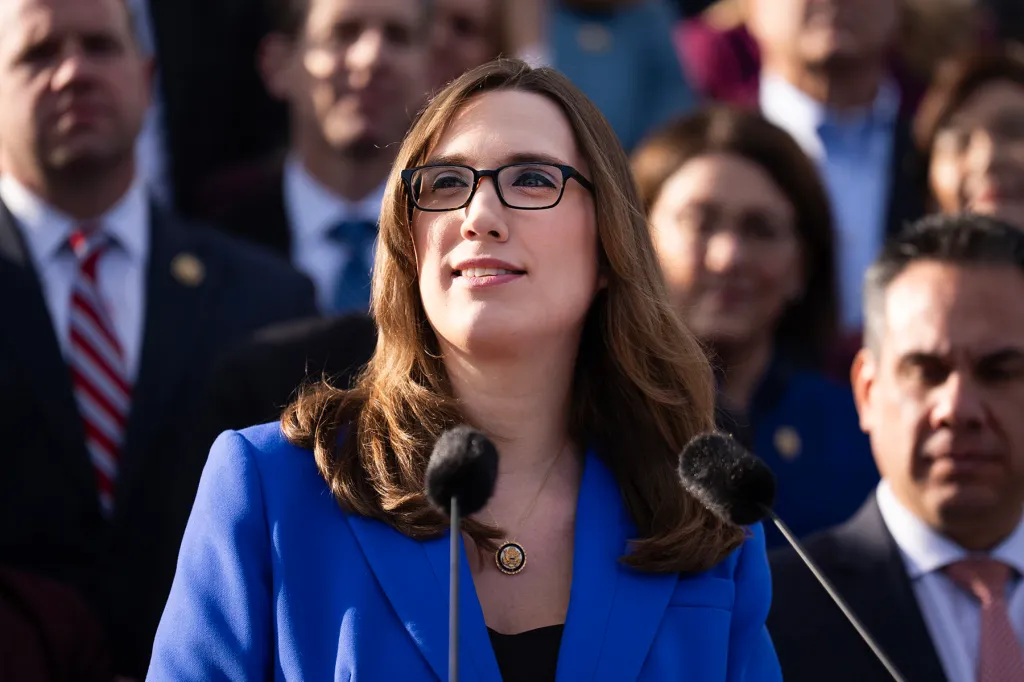 Rep. Sarah McBride speaks during a rally with House Democrats on the steps of the Capitol on November 12, 2025, in Washington, D.C. (Tom Williams/CQ-Roll Call/Getty Images)
Contributions to Republican-aligned groups and GOP candidates by Elon Musk, the world’s richest person, totaled nearly half a billion dollars, The New York Times reported, millions of which were spent on digital and television ads hammering Democrats over their past support for trans rights. Musk’s America PAC itself churned out dozens of ads painting Democratic candidates as supporters of a “radical trans agenda” in the election’s final stretch. James Talarico, the Texas Democrat who just won his Senate seat, was a frequent target of those ads.
“That in itself is pretty telling — not that these anti-trans ads didn’t seem to work, but having all the money to spend on these anti-trans ads didn’t seem to help,” said Don Haider-Markel, a political science professor at the University of Kansas.
Republican candidates, he said, did not campaign on a clear platform or offer voters adequate solutions to their most pressing concerns. In polls released ahead of Election Day, Americans consistently ranked trans issues low on their list of priorities.
“All these efforts to paint Democrats as ‘pro-trans’ don’t seem to have had their intended effect, but it’s also an election cycle where affordability issues, the war with Iran and corruption, it turns out, were so front of mind with voters," Haider-Markel said. “It’s not really clear to me that any other message could get through to voters other than those issues.”
Voters delivered tremendous wins for Democrats last week: Over 40 congressional districts flipped from red to blue, handing the party control of both the House and Senate for the remainder of Trump’s final term. Beyond Washington, D.C., Democrats won the majority of state governorships for the first time in more than 15 years and gained control of state legislatures in Arizona, Pennsylvania, Wisconsin, Michigan, Nevada and Minnesota.
Republicans leaned heavily into anti-trans rhetoric on the campaign trail, hoping to cash in on broadening support for restrictions on trans rights while steering clear of voter frustration over the rising cost of living. In a recent 19th/YouGov poll, nearly half of adults said they were more likely to vote for a candidate who supports banning trans athletes from girls’ and women’s sports over one who does not.
But survey data also suggests that most Americans believe trans people should have equal rights, protections and general respect.
More than a third of adults in the 19th/YouGov poll said politicians shouldn’t focus on trans issues and that both Democrats and Republicans talk “too much” about trans people. In a 2024 survey by Data for Progress, a progressive think tank, more than half of voters said political campaign ads targeting trans people “have gotten mean-spirited and out of hand.”
In 2024, after Trump’s decisive victory over former Vice President Kamala Harris, some political strategists attributed the party’s success to its focus on Democrats’ support for trans rights. They frequently pointed to an ad from Trump’s reelection campaign that claimed Harris “is for they/them,” while “President Trump is for you.”
But in a September memo to GOP candidates, the conservative advocacy group American Principles Project warned that, this time around, “pressing the advantage on these issues alone, while important, may not be sufficient.”
Republicans “overlearned” the lessons from 2024, said Lanae Erickson, senior vice president at Third Way, a centrist Democratic political advocacy group. “They decided that the trans attack on its own could do all of the work that they needed to persuade cross-pressured voters, and that's just not correct,” she said. “And Democrats figured out how to get their feet under this issue — at least some did — in a pretty productive way.”
Those candidates include Abdul El-Sayed, who won his Senate bid in Michigan after months of attack ads targeting his religion. Days before the election, he was asked on “60 Minutes” whether his Muslim faith is in tension with his liberal beliefs, including his support of what the reporter called “transgenderism.”
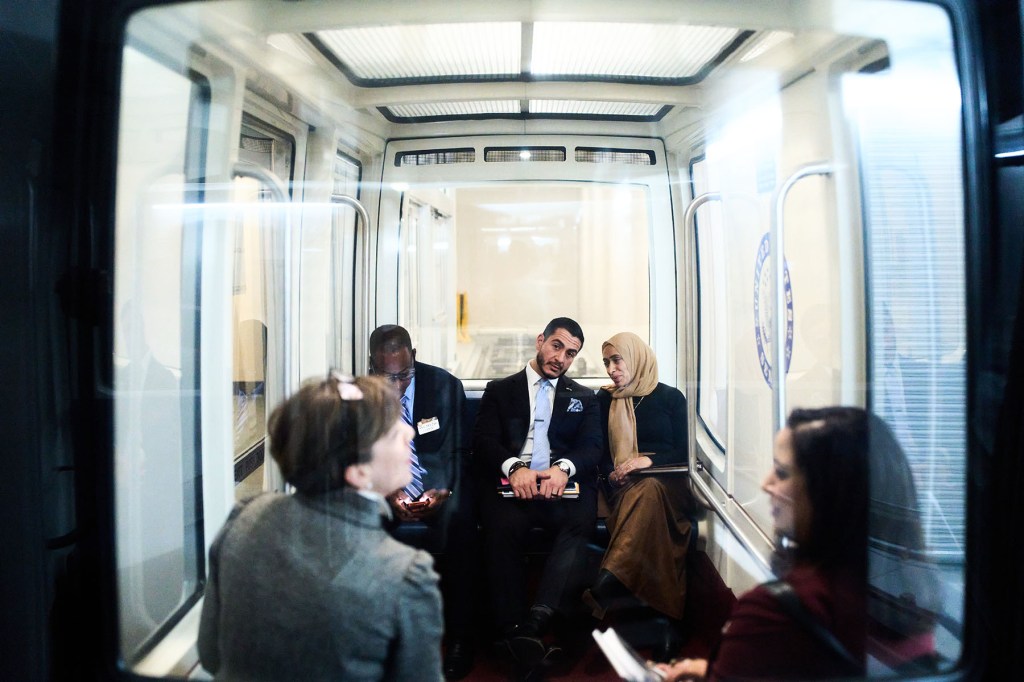 Sen.-elect Abdul El-Sayed and his wife Sarah Jukaku ride the Senate Subway from the Capitol to the Hart Senate Office Building, on November 9, 2026, in Washington, D.C. (Julia Demaree Nikhinson/AP)
“I’m a constitutionalist,” El-Sayed responded. “The minute you assent to government taking anybody’s rights, whether you use them or you don’t, you are assenting to government taking everybody’s rights. And I believe in rights.”
Other Democrats took a more personal approach, like Christina Bohannan, who just won her race to represent Iowa’s 1st Congressional District. After facing attacks from her Republican opponent, Rep. Mariannette Miller-Meeks, over her past opposition to a trans sports ban, Bohannan released an ad that addressed the issue, then pivoted to the bigger picture.
“As the only one in this race who ran track in high school, it matters to me that girls’ sports are fair,” she said in the ad. “What Miller-Meeks is doing in Washington — siding with the drug companies, taking their money and sticking it to Iowans — that’s what’s really unfair.”
These responses align with what LGBTQ+ advocacy groups have spent months advising Democratic candidates to do about anti-trans campaign attacks: respond authentically, focus on key issues and don’t take the bait.
“You have to respond, but not feed into them, and then you have to move on to issues that people want to talk about,” said Ramiro Sarmiento, national press secretary of the Human Rights Campaign. “You have to stand in your values as to who you are as a person. Are you a mom? Are you a former athlete?”
 Rep.-elect Christina Bohannan waves to press as freshman members of congress go through an orientation program to help them prepare for their incoming roles, on November 8, 2026 in Washington, D.C. (Aaron Schwartz/Getty Images)
When candidates ground their response in who they are, it gives them a personal way to talk about the underlying issues of fairness and personal freedom, Sarmiento said. Just capitulating to Republican attacks on trans issues — or saying nothing at all — is not a working strategy, he said.
Christopher Street Project, a transgender advocacy group that often meets with lawmakers on Capitol Hill, worked with over two dozen Democrats running in the midterms. Their message to candidates was the same.
“We need to be able to talk about these issues and talk about how we care about kids’ safety without throwing anyone under the bus,” said Tyler Hack, the group’s founder and executive director.
LGBTQ+ advocates found another success story in Sam Forstag, who will be Montana’s first Democrat elected to the House in over three decades. When his record on trans rights came under fire from his opponent, Forstag linked his views to his family and argued to keep politics out of sports.
“I was raised … largely by my mom, Mo, who was an ICU nurse and, on top of everything else, managed to coach my basketball team in middle school,” he said during a debate, when trans athletes and gender-affirming care came up. “She taught me about keeping things fair. … She also taught me that government has no business sticking its nose into our personal lives, whether that’s a gun safe, whether that’s a doctor’s office.”
The approach resonated well with voters. But it didn’t stop anti-trans ballot measures from passing in states that Democrats swept, leaving advocates and pollsters to navigate why some messaging worked, and some didn’t.
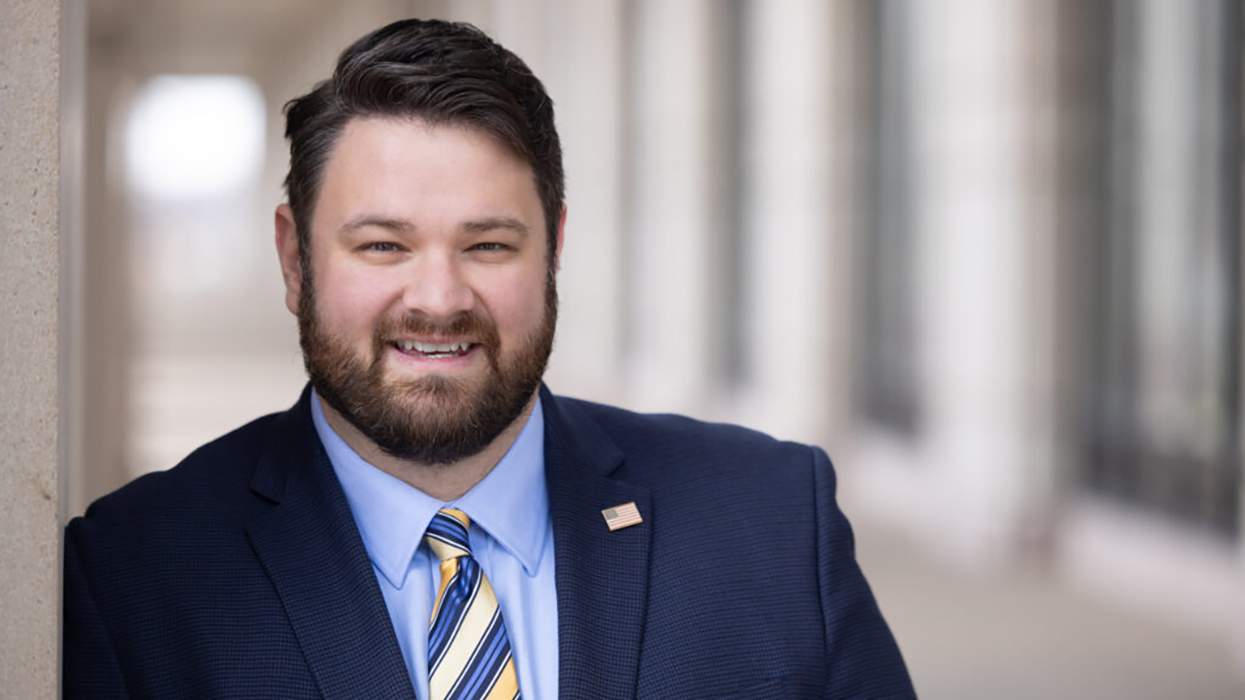
 Rep.-Elect Sam Forstag arrives to the AC Hotel during new member orientation on November 8, 2026 in Washington, D.C. (Aaron Schwartz/Getty Images)
Ballot measures restricting trans student-athletes’ participation in sports passed or seemed likely to pass in Arizona, Colorado, Nebraska and Washington, even as Democrats won statewide. In Arizona, Democrats retook control of the legislature for the first time in 60 years. In Nebraska, they flipped a House seat held by Republicans for roughly a decade.
The party also captured supermajorities in Colorado’s state House and Senate, even as voters there seemed likely to approve a second ballot initiative banning gender-affirming surgeries for minors, which are already rare.
“The issue itself has not changed,” said Chris Wilson, a Republican pollster. “The context in which voters evaluated it is what changed in 2026.”
“In 2024, cultural issues were a larger argument about the direction of the country,” he added. “I mean, coming off four years of Biden — and also Harris’s track record as an elected official — that was a central part of the decision-making process. But in 2026, you’re the governing party. You’re going to face scrutiny over the economy, over affordability, over your own performance.”
But instead of focusing on the economy, Republicans couldn’t resist anti-trans rhetoric. The president threw around transphobic slurs at campaign rallies, and the vice president suggested that a Democratic Senate candidate was gay. The attacks got louder, more personal and more acerbic. Meanwhile, Democrats used anti-trans attacks as opportunities to talk about their values and core policies. Voters noticed.
In a post-election Morning Consult poll commissioned by GLAAD, a national LGBTQ+ media advocacy group, more than a third of voters said they were less likely to support a candidate who ran ads about trans issues — more than twice the number who said they were more likely to vote for candidates who did.
Fran Hutchins, executive director of Equality Federation, a coalition of statewide LGBTQ+ organizations, saw the outcome of the midterms as mixed. State legislatures flipped blue, which is good for LGBTQ+ rights after years of Republican-led attacks. But the ballot measures still passed. Hutchins was in Nebraska on election night, watching the results come in with a group of other trans people. They celebrated the wins nationwide, but also felt the losses.
“These ballot measures, I hope that this is the last gasps for them. Because if I was the opposition … this is not a good way to spend your money,” they said. In Nebraska, Hutchins pointed out, the ballot measure didn’t change policy: State law already banned trans student-athletes from joining sports that match their gender identity.
Ultimately, LGBTQ+ advocates who spoke to The 19th feel that the midterms left them in a stronger position for 2028. At the Christopher Street Project, Hack has been thinking about that for a while.
“We know that this is a test run for 2028. If we prove that anti-trans politics are a losing game, we enter 2028 in a way that allows us to engage with a presidential campaign in a meaningful way that talks about what we can protect, not just what we can fend off,” she said.