'%3E%3Cpath d='M16.3574 35.6519H12.9537L15.0491 18.8873L16.3574 35.6519ZM30.4229 54.0093L22.309 0.994385H7.91795L0 54.0093H10.6634L11.5802 46.3855H17.4014L17.9914 54.0093H30.4229Z' fill='%23971B20'/%3E%3Cpath d='M48.2073 41.8813C48.2073 43.4049 47.4892 44.0011 46.1144 44.0011H43.7595V11.0687H46.1144C47.4892 11.0687 48.2073 11.6636 48.2073 13.1885V41.8813ZM59.5273 43.6695V11.3326C59.5273 3.71323 53.5729 0.994385 47.8157 0.994385H31.7213V54.0093H47.8157C53.5729 54.0093 59.5273 51.29 59.5273 43.6695Z' fill='%23971B20'/%3E%3Cpath d='M90.183 0.994385H78.6039L75.0711 30.6157L71.9955 0.994385H59.4346L69.2474 54.0093H80.373L90.183 0.994385Z' fill='%23971B20'/%3E%3Cpath d='M107.063 42.3448C107.063 43.7359 105.951 44.5974 104.643 44.5974C103.269 44.5974 102.157 43.7359 102.157 42.3448V12.658C102.157 11.2676 103.269 10.4058 104.643 10.4058C105.951 10.4058 107.063 11.2676 107.063 12.658V42.3448ZM119.233 43.2723V11.7312C119.233 6.36384 112.952 -3.8147e-06 104.643 -3.8147e-06C96.2667 -3.8147e-06 89.9867 6.36384 89.9867 11.7312V43.2723C89.9867 48.6393 96.2667 55 104.643 55C112.952 55 119.233 48.6393 119.233 43.2723Z' fill='%23971B20'/%3E%3Cpath d='M150.976 43.9349V33.7309H139.069V42.3448C139.069 43.7359 137.957 44.5974 136.582 44.5974C135.076 44.5974 133.964 43.7359 133.964 42.3448V12.658C133.964 11.2676 135.076 10.4058 136.582 10.4058C137.957 10.4058 139.069 11.2676 139.069 12.658V21.2723H150.976V11.0687C150.976 5.70107 145.283 -3.8147e-06 136.582 -3.8147e-06C127.75 -3.8147e-06 121.796 5.70107 121.796 11.0687V43.9349C121.796 49.3022 127.75 55 136.582 55C145.283 55 150.976 49.3022 150.976 43.9349Z' fill='%23971B20'/%3E%3Cpath d='M167.478 35.6519H164.076L166.17 18.8873L167.478 35.6519ZM181.544 54.0093L173.432 0.994385H159.037L151.123 54.0093H161.785L162.704 46.3855H168.523L169.114 54.0093H181.544Z' fill='%23971B20'/%3E%3Cpath d='M205.412 10.4058V0.994385H177.081V10.4058H185.392V54.0093H197.428V10.4058H205.412Z' fill='%23971B20'/%3E%3Cpath d='M230.002 54.0093V43.9349H218.914V31.8746H226.635V21.8028H218.914V10.4058H230.002V0.994385H206.875V54.0093H230.002Z' fill='%23971B20'/%3E%3C/g%3E%3Cdefs%3E%3CclipPath id='clip0_260_7080'%3E%3Crect width='230' height='55' fill='white'/%3E%3C/clipPath%3E%3C/defs%3E%3C/svg%3E)

Idaho is often flattened in national conversation into something simple: conservative, rural, and uniform. That flattening goes so far that when I say I am from Idaho, which borders Washington and Oregon in the Pacific Northwest, people often respond with assumptions about the Midwest instead. The confusion might seem small, but it reflects a broader tendency to erase the history of Idaho, distilled into a nightly news soundbite and a place rooted in divisive politics, rather than a place filled with actual people living complicated lives.
Idaho is often imagined as culturally uniform, but the reality has always been more layered than outsiders assume. Even in the 1990s, when the state was more than 94% white, Idaho was shaped by generations of Indigenous communities, Basque families, Mexican and Chicano farmworkers, refugees, Mormon settlers, migrant laborers, and working-class people who moved through the Pacific Northwest in search of survival and opportunity. In southern Idaho, especially, Latino communities were deeply woven into the state’s agricultural economy long before national conversations ever acknowledged them.
Over the last three decades, Idaho’s population has changed rapidly, with significant growth in Hispanic, multiracial, Black, and immigrant communities, particularly in places like Twin Falls, Boise, Nampa, and the Magic Valley. Yet the public image of Idaho rarely evolved alongside the people themselves.
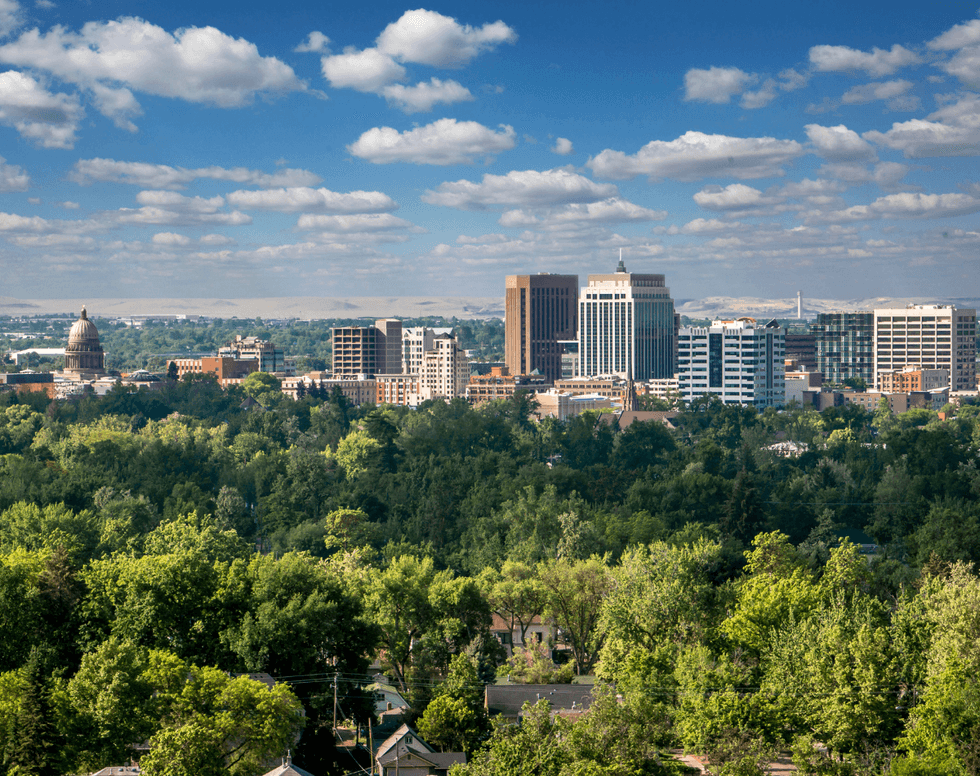 A view of downtown Boise, Idaho.Shutterstock
The state continues to be flattened into a political stereotype, erasing the fact that many Idahoans were living at the intersections of race, class, migration, religion, and rural life long before the rest of the country began paying attention. Idaho has never been culturally or politically uniform, and trans people are not newcomers there.
Long before contemporary political debates about gender identity, there were already people in Idaho living outside rigid expectations of how gender was supposed to be understood. Joe Monahan, who arrived in southwestern Idaho in the 1860s, lived as a man while working in the Owyhee Mountains as part of frontier labor life. Mother George, a respected midwife near Grays Lake, delivered more than a thousand children before her birth assignment was revealed only after her death in 1919. In the 1970s, Hotcha Hinton performed as a transgender comedian and burlesque performer in Idaho Falls, not far from where I grew up.
These histories are rarely included in discussions of Idaho nationally. But they are part of the state’s fabric all the same.
In my upbringing, Idaho was a never-ending contradiction. And maybe those tensions and complexities widened my own capacity for compassion towards those different from me. I grew up in rural Idaho in a fundamentalist Christian family. For me, Idaho was not defined by political headlines; it was school, church, neighbors, friendship, care, tension, and contradiction all at once.
Idaho's seemingly rigid culture and binaries informed me from an early age that I was different from the other boys. At four years old, I once told my mom’s camera my name was Queen Rose and that I was a girl. It was play, but it is a memory that stayed with me in ways I did not understand at the time. The trans and queer history of Idaho wasn’t taught in our classrooms. My parents didn’t know any out LGBT people.
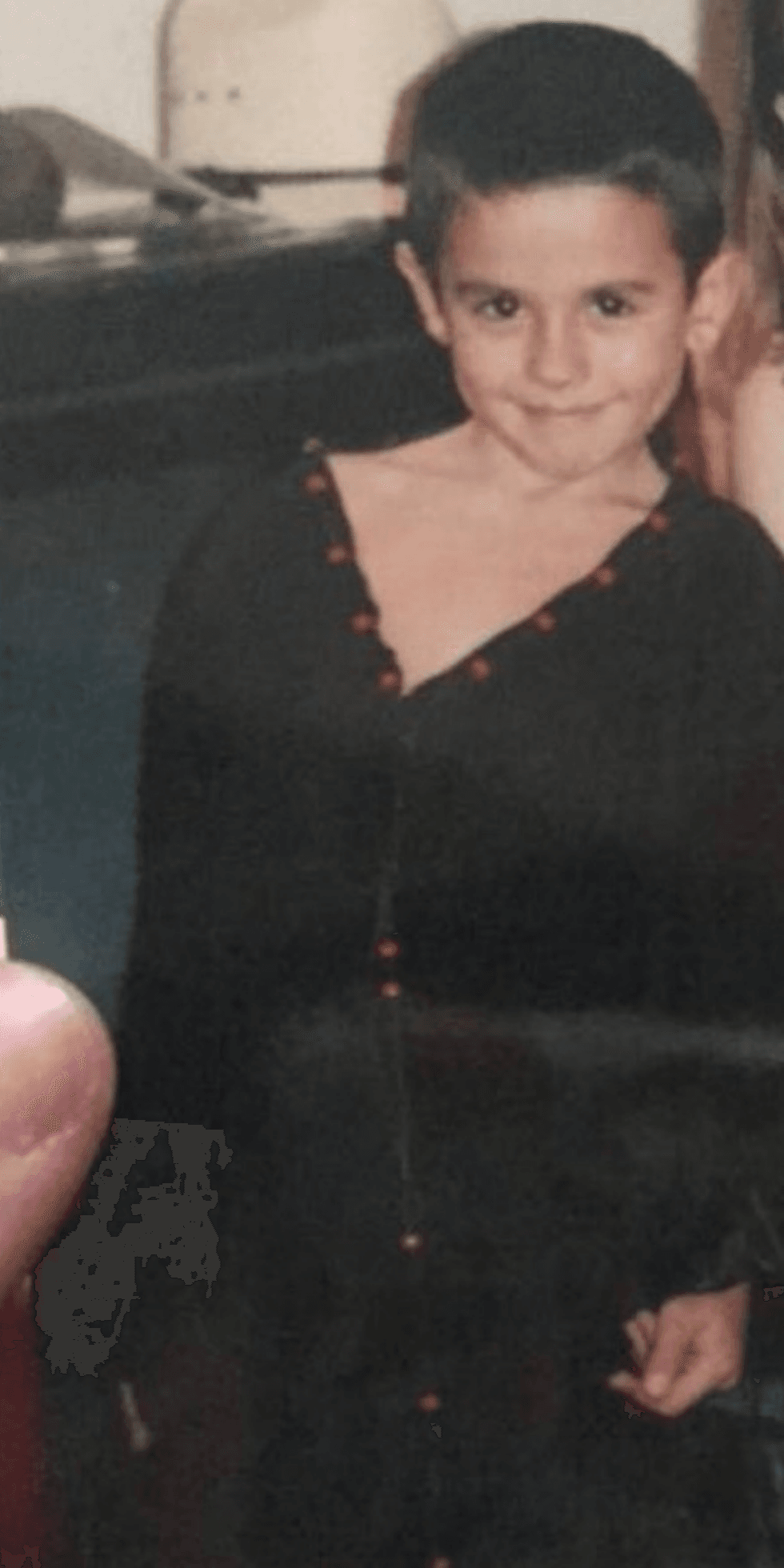 Rose Montoya poses in a dress as a child.Courtesy of Rose Montoya
Elementary school was not easy. I skipped kindergarten, so I was younger than most of my classmates. I was chased and teased at recess, and when I reported bullying, some teachers would tell me to “man up.” At the time, “man up” communicated that I needed to suppress my emotions and adapt myself in response to harm, rather than expect intervention or protection. It shifted responsibility away from those causing the bullying and placed it on me to become less visible and less vulnerable. In hindsight, it reflects how rigid gender expectations and institutional norms often shape responses to harm in ways that prioritize resilience over care and conformity over accountability.
One of my earliest sources of safety was Mrs. Greer, a teacher who believed in me and let me eat lunch in her classroom. That small space became a refuge. She also helped me build friendships with girls who later stood up for me on the playground when I was pushed, shoved, or called names. Those friendships meant more than I could understand at the time.
Looking back, I understand those moments as part of something larger: quiet forms of resistance that existed throughout my everyday life. People organizing in small ways, communities forming around each other, queer and trans people finding language even when it was limited, and finding each other even when it was unspoken. That reality has never been separate from Idaho. It has always been part of it.
I understand that resistance now is something steady and necessary, not defined by recognition or public affirmation, but by survival, connection, and mutual protection in spaces that often do not name or acknowledge us.
As a kid, I didn’t have access to that reality. I experienced Idaho as isolating and singular, as if I were an exception rather than part of something already existing.
I was outed as gay in 2010, and for a time, I was the first openly queer student at my high school. That came with a specific kind of visibility without context, with no roadmap for what it meant to be seen but not understood. My understanding of community came slowly, through experience rather than instruction. I began noticing other queer kids at school and at church. We were different in every way that mattered on paper: age, background, interests, beliefs. But we recognized each other anyway.
Looking back, I led a sort of young rebellion against the dominant cultural norms. My fellow LGBT peers at church would leave our youth group together to instead sit in parking lots or fast food restaurants, eating ice cream and talking about identity, religion, love, and what it meant to belong anywhere at all. It was informal and imperfect. We sometimes got in trouble for it. But we kept doing it.
A close friend in high school became a lifeline. His parents took me in when my own family struggled to understand me. They fed me, listened to me, and gave me space when I needed it. That friend later came out to me. We are still close today, and I consider him and his family part of my own.
It took time, but these small communities, this forming of language, and my study of gender theory and women's studies in college, led me to realize that I was transgender. I came out in 2014. I did not even know the word “transgender” until 2013, when Orange Is the New Black gave me language for something I already felt but could not name.
That absence of language shaped how I moved through the world. I could often pass unnoticed or avoid immediate scrutiny in ways that feel almost impossible now. At the same time, there were fewer protections, fewer resources, and almost no public understanding if things went wrong.
But Idaho also taught me how people survive anyway. I learned about resilience through small acts of care: queer people quietly finding one another, communities sharing knowledge in private, friendships forming in spaces where full openness did not feel possible. I had a school counselor who gave me room to exist without having to defend myself. I had friendships with girls who included me even when I was not fully welcome in girls’ spaces. None of it was perfect or institutional, but it mattered.
That is the lens I bring to the current political moment in Idaho.
On March 31, 2026, which also happened to be Trans Day of Visibility, Governor Brad Little signed one of the most restrictive bathroom bills in the country into law. The legislation criminalizes transgender people from using certain public facilities aligned with their gender identity.
There is no credible evidence that trans people using spaces aligned with their gender identity increases harm to others. What these policies consistently produce instead is heightened scrutiny, harassment, and vulnerability for trans people themselves. Systems built around gender policing rarely stay confined to the people they claim to target. They rely on public judgment about who appears masculine enough, feminine enough, or out of place. As previously shared, I understand the consequences of that scrutiny all too well.
But Idaho is also where resistance continues to take shape.
Six transgender Idaho residents recently filed a federal lawsuit challenging House Bill 752, arguing that the law violates constitutional protections of equal protection, due process, and privacy. And on Tuesday, June 16th, U.S. District Judge Amanda K. Brailsford granted a preliminary injunction against House Bill 752, which still forces trans Idahoans to use single-user bathrooms when available.
Across the state, mutual aid groups and local organizations continue building support networks for LGBTQ people in places often ignored by national media. Even as state lawmakers attempt to restrict protections, local communities continue organizing for dignity, healthcare access, and public visibility.
What is happening in Idaho is not just the construction of policy. It is a collision between systems designed to restrict public life and communities already practiced in adapting, surviving, and caring for one another.
That is why reducing Idaho to a symbol misses the point. Places associated with exclusion are also places where resistance takes shape. Before formal protections existed, queer and trans people still found ways to survive. They built underground networks, shared information quietly, and created forms of chosen family without institutional permission. That history is not gone. It has simply evolved.
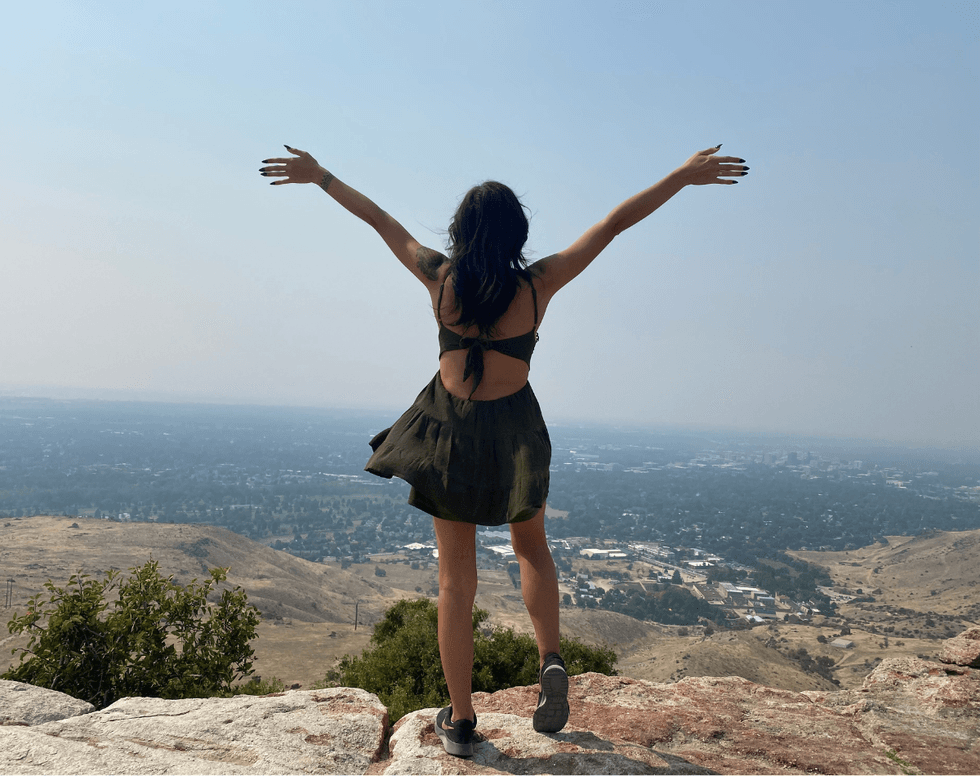 Rose Montoya overlooks Boise during a visit to Idaho in 2021.Courtesy of Rose Montoya
Idaho can be read as a warning about where American politics is heading. But it is also a reminder that communities do not disappear simply because the law attempts to erase them. The future of the state will not be determined solely by legislators or headlines. It will also be shaped by the people who continue choosing one another anyway.
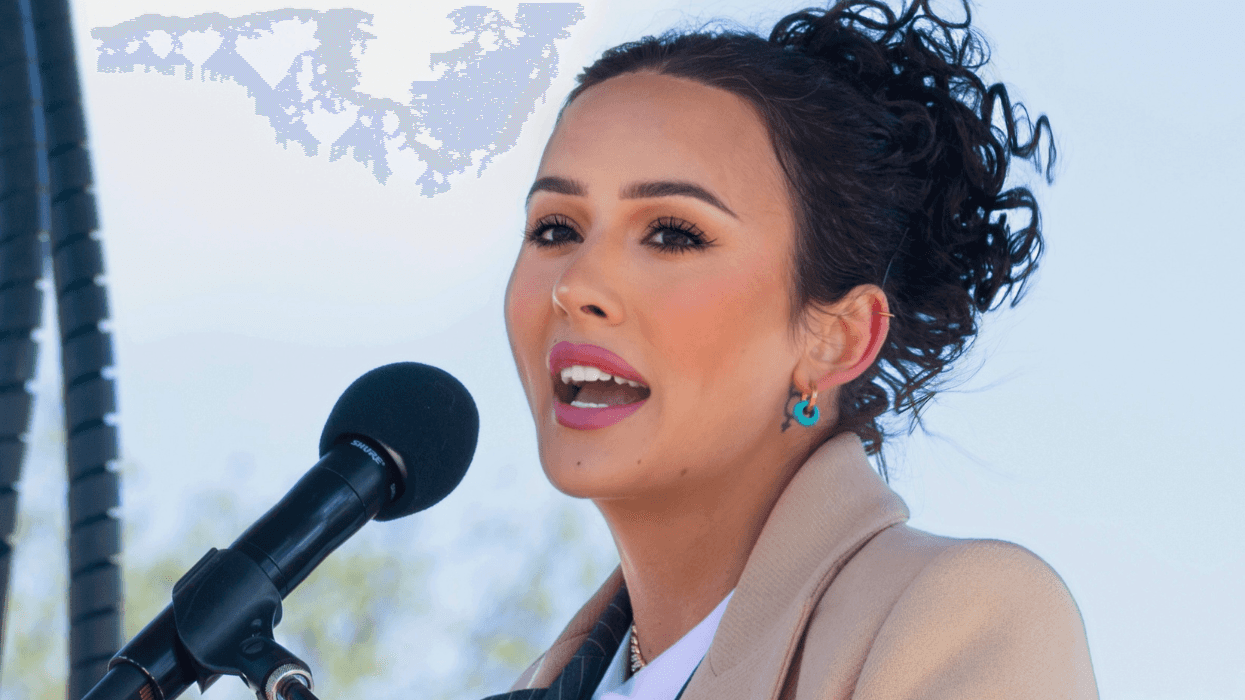
Rose Montoya (she/they) is a trans Latina advocate, educator, and creator with over a decade of experience advancing trans-inclusive policy, shifting public perception, and building community power. She works as a cross-issue consultant and strategist within the progressive movement.
Opinion is dedicated to featuring a wide range of inspiring personal stories and impactful opinions from the LGBTQ+ community and its allies. Visit Advocate.com/submit to learn more about submission guidelines. We welcome your thoughts and feedback on any of our stories. Email us at voices@equalpride.com. Views expressed in Voices stories are those of the guest writers, columnists, and editors, and do not directly represent the views of The Advocate or our parent company, equalpride.