'%3E%3Cpath d='M16.3574 35.6519H12.9537L15.0491 18.8873L16.3574 35.6519ZM30.4229 54.0093L22.309 0.994385H7.91795L0 54.0093H10.6634L11.5802 46.3855H17.4014L17.9914 54.0093H30.4229Z' fill='%23971B20'/%3E%3Cpath d='M48.2073 41.8813C48.2073 43.4049 47.4892 44.0011 46.1144 44.0011H43.7595V11.0687H46.1144C47.4892 11.0687 48.2073 11.6636 48.2073 13.1885V41.8813ZM59.5273 43.6695V11.3326C59.5273 3.71323 53.5729 0.994385 47.8157 0.994385H31.7213V54.0093H47.8157C53.5729 54.0093 59.5273 51.29 59.5273 43.6695Z' fill='%23971B20'/%3E%3Cpath d='M90.183 0.994385H78.6039L75.0711 30.6157L71.9955 0.994385H59.4346L69.2474 54.0093H80.373L90.183 0.994385Z' fill='%23971B20'/%3E%3Cpath d='M107.063 42.3448C107.063 43.7359 105.951 44.5974 104.643 44.5974C103.269 44.5974 102.157 43.7359 102.157 42.3448V12.658C102.157 11.2676 103.269 10.4058 104.643 10.4058C105.951 10.4058 107.063 11.2676 107.063 12.658V42.3448ZM119.233 43.2723V11.7312C119.233 6.36384 112.952 -3.8147e-06 104.643 -3.8147e-06C96.2667 -3.8147e-06 89.9867 6.36384 89.9867 11.7312V43.2723C89.9867 48.6393 96.2667 55 104.643 55C112.952 55 119.233 48.6393 119.233 43.2723Z' fill='%23971B20'/%3E%3Cpath d='M150.976 43.9349V33.7309H139.069V42.3448C139.069 43.7359 137.957 44.5974 136.582 44.5974C135.076 44.5974 133.964 43.7359 133.964 42.3448V12.658C133.964 11.2676 135.076 10.4058 136.582 10.4058C137.957 10.4058 139.069 11.2676 139.069 12.658V21.2723H150.976V11.0687C150.976 5.70107 145.283 -3.8147e-06 136.582 -3.8147e-06C127.75 -3.8147e-06 121.796 5.70107 121.796 11.0687V43.9349C121.796 49.3022 127.75 55 136.582 55C145.283 55 150.976 49.3022 150.976 43.9349Z' fill='%23971B20'/%3E%3Cpath d='M167.478 35.6519H164.076L166.17 18.8873L167.478 35.6519ZM181.544 54.0093L173.432 0.994385H159.037L151.123 54.0093H161.785L162.704 46.3855H168.523L169.114 54.0093H181.544Z' fill='%23971B20'/%3E%3Cpath d='M205.412 10.4058V0.994385H177.081V10.4058H185.392V54.0093H197.428V10.4058H205.412Z' fill='%23971B20'/%3E%3Cpath d='M230.002 54.0093V43.9349H218.914V31.8746H226.635V21.8028H218.914V10.4058H230.002V0.994385H206.875V54.0093H230.002Z' fill='%23971B20'/%3E%3C/g%3E%3Cdefs%3E%3CclipPath id='clip0_260_7080'%3E%3Crect width='230' height='55' fill='white'/%3E%3C/clipPath%3E%3C/defs%3E%3C/svg%3E)
Updated: Lindsey Graham, Trump ally who opposed LGBTQ+ rights and consistently denied being gay, dies at 71
Lindsey Graham died Saturday at 71, and I have to be honest with you: in the eight years of writing for this outlet, I don't think I've written about anyone more than I've written about him — except, of course, Donald Trump.
And I'll be upfront about something else.
Those columns were never kind, and they were never dull, because Graham was reliably good for a click. Lots of them. Every time his name went in a headline, readers showed up in droves, and the comment sections read like a dime novel.
I've thought a lot over the years about why that was, and I think there were three reasons.
Related: Lindsey Graham Clicks Up His Heels at Mar-a-Lago
The first is the oldest rumor in Washington: that Lindsey Graham was gay. I want to be careful here, because I have no idea whether that was true. He was, in the old-fashioned phrase, a "confirmed bachelor,” who never married, never seriously linked to a woman in public life, and that vacuum was enough for people to fill in the blank themselves.
I'm not going to pretend I know what was true in Graham’s private life. But I will offer my personal opinion. My grandfather used to say, “Where there’s fire, there’s smoke,” reversing an old axiom when he knew, beyond a shadow of a doubt, that a rumor about someone was true.
That’s what I’ll say about Graham. He always denied it, but I always snickered when he did.
Related: 'Never Seen a Vagina': Lindsey Graham’s Sexuality Is a Joke
In June 2020, “Lady G" trended on social media after adult film performer Sean Harding alleged that Graham hired male sex workers. And in September of 2024, far-right provocateur and lunatic Laura Loomer publicly urged Graham to come out of the closet, after he publicly criticized Donald Trump's campaign style.
Related: Trump ally Laura Loomer goes after Lindsey Graham: ‘We all know you’re gay’
The second reason is simpler and requires no speculation at all. Graham earned a lot of anger from LGBTQ+ people through his own virulent votes and his virulent words. He was a reliable "no" on protections and bills for our community for the better part of three decades.
And for a lot of people, the depth of the rage aimed at Graham stemmed from the theory that a man voting against us so consistently must be working something out about himself in public, at our expense. I can't tell you if that hypothetical was right. I can tell you it's the reason his name showed up in this publication as often as it did.
The third reason is the one that actually defines his legacy, and it has nothing to do with any of that. It's Donald Trump.
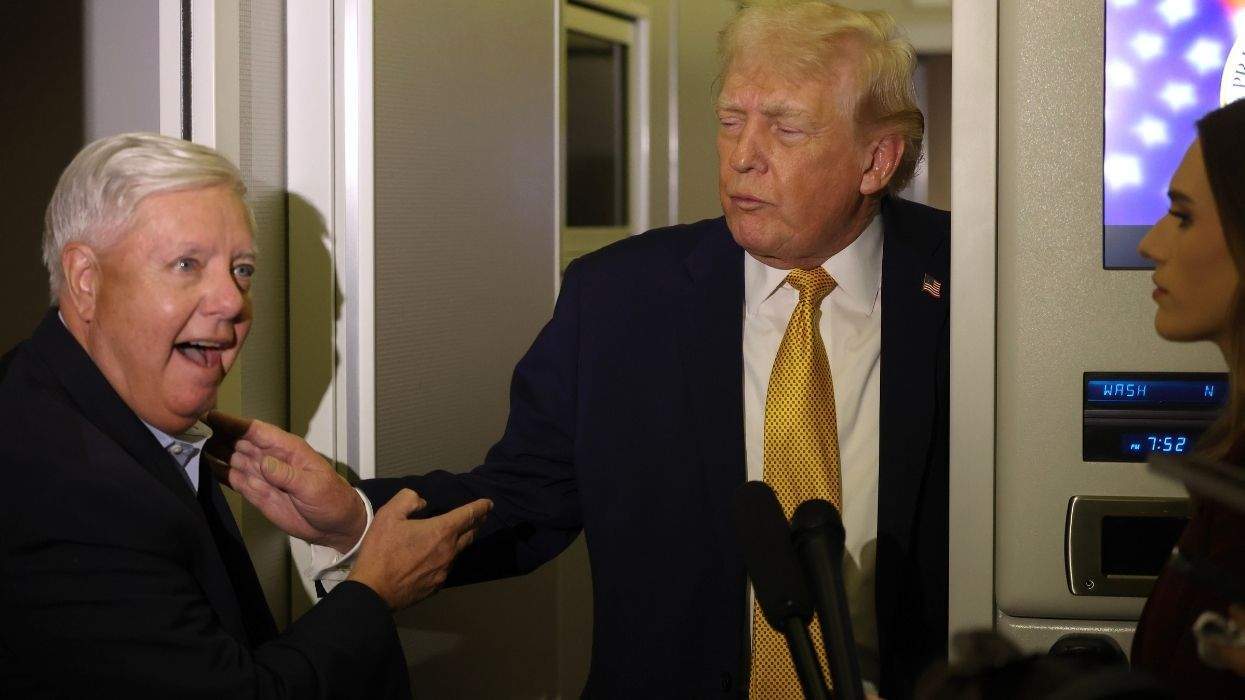
Graham spent 2016 warning anyone who'd listen that Trump was a con man who'd wreck the Republican Party. Then, somewhere along the way, he became Trump's golfing buddy, his most reliable defender on cable news, and the "Trump whisperer" of the Senate.
That was supposed to be a compliment, I think?
Then came January 6, 2021. And for one night, Graham found something that looked like he grew a pair. "All I can say is count me out," he said from the Senate floor as the Capitol was still being cleaned up. "Enough is enough."
A lot of us watched that and thought maybe, finally, this was the moment he’d stop bending to Trump. Two days later, a mob of Trump supporters cornered him at Reagan National Airport, screaming "traitor" in his face as security walked him out.
Related: Lindsey Graham, GOP Drive Off the Cliff in Cartoonish Clown Car
That afternoon scared the bejesus out of Lindsey. He melted like butter, and realized breaking with Trump, even briefly, even for the right reasons, cost him more than staying loyal ever would.
So, true to form, Lindsey got back on his knees. As soon as Trump started clawing his way back into power, Graham was one of the first Republicans back in line, right alongside the then-spineless House Speaker Kevin McCarthy.
And in these last two years, he went further than ever, becoming Trump’s loudest cheerleader, particularly on the Iran war, at one point telling South Carolinians to prepare to send their "sons and daughters" into a Middle East conflict he never once wavered on, even as members of his own party recoiled and even as the war grew costlier and messier by the month.
He didn't hedge. He didn't quietly back away the way politicians usually do when a war turns unpopular. He dug in, the same way he dug back in with Trump, and with his sexuality. That kind of warped and delusional thinking makes a person a very lonely figure.
And it was so bad, the boot-licking, that he said Trump should be pope.
I think that's the real story of Lindsey Graham, and that is a man who seemed to need, above almost anything else, to keep his seat and keep his proximity to power, and who was willing to abandon whatever principle stood in the way of either one.
And perhaps abandoned whatever personal reasons stood in the way as well.
I've written hard-hitting columns after the deaths of people who did real harm to the LGBTQ community after they died: Rush Limbaugh, Pat Robertson, Anita Bryant, James Dobson, and I didn't go easy on them just because they'd died.
Related: For Anita Bryant, there will be no orange juice in hell
Graham deserves the same treatment, since his record toward us was just as damaging.
But instead of confronting his sexuality — if there was a question to confront — he took it out on the rest of us, and for that there is zero sympathy, and why, just because he died, we don't need to say good things about him.
He was, by every account, personally alone, while his politics ended up being just as isolated. He Velcroed himself to Donald Trump, peeling away when it was politically necessary, only to stick right back to him, even at the cost of making himself look small and sycophantic.
Lindsey Graham died a lonely man. Whatever else gets written about him this week, I don't think that part is up for debate.
Opinion is dedicated to featuring a wide range of inspiring personal stories and impactful opinions from the LGBTQ+ community and its allies. Visit Advocate.com/submit to learn more about submission guidelines. We welcome your thoughts and feedback on any of our stories. Email us at voices@equalpride.com. Views expressed in Voices stories are those of the guest writers, columnists, and editors, and do not directly represent the views of The Advocate or our parent company, equalpride.