'%3E%3Cpath d='M16.3574 35.6519H12.9537L15.0491 18.8873L16.3574 35.6519ZM30.4229 54.0093L22.309 0.994385H7.91795L0 54.0093H10.6634L11.5802 46.3855H17.4014L17.9914 54.0093H30.4229Z' fill='%23971B20'/%3E%3Cpath d='M48.2073 41.8813C48.2073 43.4049 47.4892 44.0011 46.1144 44.0011H43.7595V11.0687H46.1144C47.4892 11.0687 48.2073 11.6636 48.2073 13.1885V41.8813ZM59.5273 43.6695V11.3326C59.5273 3.71323 53.5729 0.994385 47.8157 0.994385H31.7213V54.0093H47.8157C53.5729 54.0093 59.5273 51.29 59.5273 43.6695Z' fill='%23971B20'/%3E%3Cpath d='M90.183 0.994385H78.6039L75.0711 30.6157L71.9955 0.994385H59.4346L69.2474 54.0093H80.373L90.183 0.994385Z' fill='%23971B20'/%3E%3Cpath d='M107.063 42.3448C107.063 43.7359 105.951 44.5974 104.643 44.5974C103.269 44.5974 102.157 43.7359 102.157 42.3448V12.658C102.157 11.2676 103.269 10.4058 104.643 10.4058C105.951 10.4058 107.063 11.2676 107.063 12.658V42.3448ZM119.233 43.2723V11.7312C119.233 6.36384 112.952 -3.8147e-06 104.643 -3.8147e-06C96.2667 -3.8147e-06 89.9867 6.36384 89.9867 11.7312V43.2723C89.9867 48.6393 96.2667 55 104.643 55C112.952 55 119.233 48.6393 119.233 43.2723Z' fill='%23971B20'/%3E%3Cpath d='M150.976 43.9349V33.7309H139.069V42.3448C139.069 43.7359 137.957 44.5974 136.582 44.5974C135.076 44.5974 133.964 43.7359 133.964 42.3448V12.658C133.964 11.2676 135.076 10.4058 136.582 10.4058C137.957 10.4058 139.069 11.2676 139.069 12.658V21.2723H150.976V11.0687C150.976 5.70107 145.283 -3.8147e-06 136.582 -3.8147e-06C127.75 -3.8147e-06 121.796 5.70107 121.796 11.0687V43.9349C121.796 49.3022 127.75 55 136.582 55C145.283 55 150.976 49.3022 150.976 43.9349Z' fill='%23971B20'/%3E%3Cpath d='M167.478 35.6519H164.076L166.17 18.8873L167.478 35.6519ZM181.544 54.0093L173.432 0.994385H159.037L151.123 54.0093H161.785L162.704 46.3855H168.523L169.114 54.0093H181.544Z' fill='%23971B20'/%3E%3Cpath d='M205.412 10.4058V0.994385H177.081V10.4058H185.392V54.0093H197.428V10.4058H205.412Z' fill='%23971B20'/%3E%3Cpath d='M230.002 54.0093V43.9349H218.914V31.8746H226.635V21.8028H218.914V10.4058H230.002V0.994385H206.875V54.0093H230.002Z' fill='%23971B20'/%3E%3C/g%3E%3Cdefs%3E%3CclipPath id='clip0_260_7080'%3E%3Crect width='230' height='55' fill='white'/%3E%3C/clipPath%3E%3C/defs%3E%3C/svg%3E)

For months, the turmoil surrounding CBS News has simmered behind the scenes, with nervous executives, frustrated producers, sagging ratings, newsroom leaks, and growing whispers that one of America’s most iconic television news divisions is losing its institutional footing.
A series of damaging reports across the media industry has intensified scrutiny of CBS News chief Bari Weiss, the queer, anti-trans former New York Times opinion editor and founder of The Free Press, who was elevated last year to the upper ranks of broadcast leadership despite little traditional television management experience.
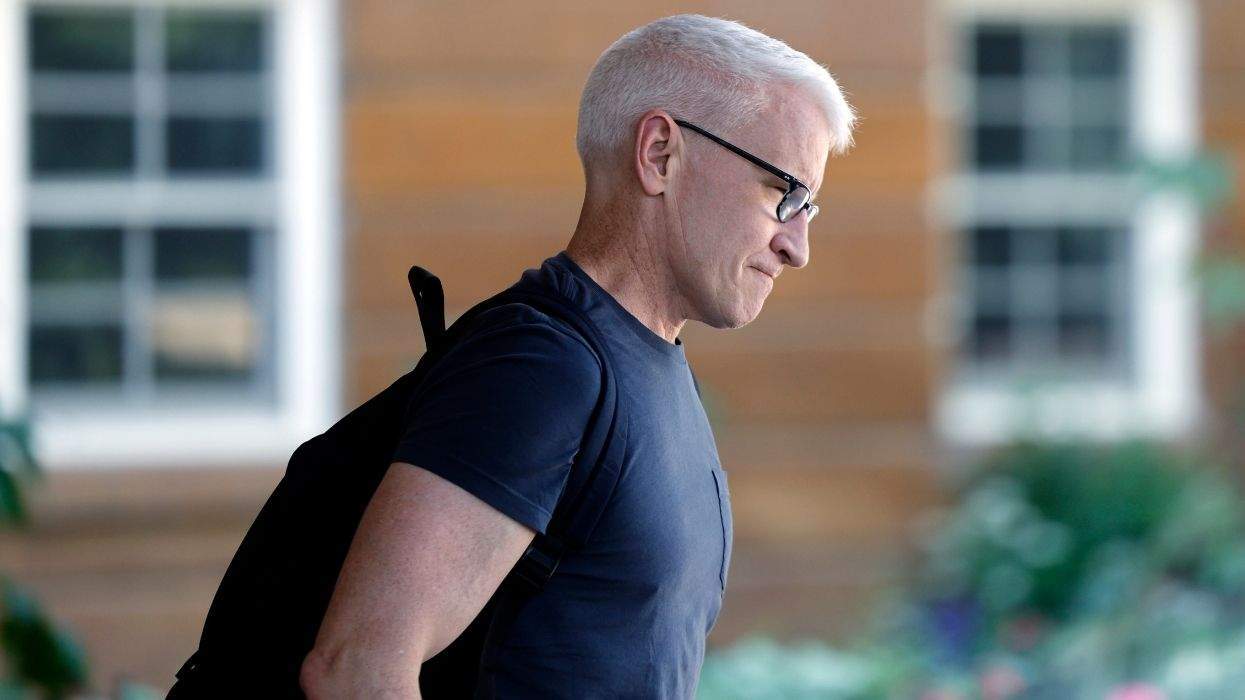
The clearest sign yet of the unrest arrived from one of the network’s most recognizable journalists, longtime gay correspondent Anderson Cooper. Cooper announced his departure in February.
During his farewell appearance on 60 Minutes last week, Cooper offered what many inside the industry interpreted as a carefully calibrated warning about the future of the legendary program.
“I hope 60 Minutes remains 60 Minutes,” Cooper said, while emphasizing that the show’s “independence” had been “critical.”
Related: Anderson Cooper steps down as '60 Minutes' correspondent after two decades
According to reports from Oliver Darcy’s Status newsletter and coverage from multiple outlets, Weiss was furious and blindsided by the remarks, which reportedly aired without her advance knowledge. The moment fueled an already growing perception that CBS News is in the midst of an ideological and institutional identity crisis.
In recent weeks, mounting concern among executives tied to Paramount Global and Skydance leadership about the state of the network under Weiss’ stewardship has emerged, The New Republic reports.
Publicly, Paramount has continued to defend her, insisting that she retains the confidence of the leadership and the incoming owner, David Ellison. Privately, however, media reports suggest discussions have emerged around whether Weiss’ role overseeing core broadcast operations could eventually be reduced.
Related: Who is Bari Weiss, the right-wing anti-trans queer woman being given the keys to CBS News?
The pressure intensified after an embarrassing international reporting fiasco during President Donald Trump’s recent summit with Chinese President Xi Jinping.
While rival networks secured access for their top anchors in Beijing, CBS failed to obtain a Chinese visa in time for anchor Tony Dokoupil, forcing him to broadcast from Taiwan instead, more than 1,000 miles away from the summit.
The optics were brutal.
Critics inside the network reportedly described the episode as “very sloppy” and “possibly the dumbest decision in the history of broadcast news,” according to the New York Post. The assignment quickly became fodder for rival media reporters and late-night comedians.
The problems compounded almost immediately. Dokoupil later revealed that the Taipei hotel hosting CBS crews restricted political broadcasts after segments discussing Taiwanese fears of China aired. A veteran cameraman also reportedly suffered a medical emergency during the trip.
Related: Bari Weiss’s CBS newsroom reportedly clashed over how to cover transgender people
Since departing The New York Times in 2020 after publicly criticizing what she described as ideological conformity inside elite journalism, Weiss has become both a hero to critics of progressive media culture and a lightning rod to opponents who see her as advancing an anti-“woke” political agenda under the banner of free expression.
Her arrival at CBS transformed those broader culture war tensions into an internal battle over the future of one of television journalism’s most prestigious institutions.
Supporters argue Weiss is attempting to modernize an aging newsroom at a moment when public trust in traditional media has cratered, and audiences increasingly reject institutional authority. Critics counter that the network is drifting toward a more personality-driven, ideologically reactive model that risks compromising editorial independence.
Those concerns escalated last December amid reports that a planned 60 Minutes segment examining Venezuelan deportees sent to El Salvador’s controversial CECOT prison was shelved or delayed after intervention from Weiss and senior leadership, prompting accusations of editorial interference.