'%3E%3Cpath d='M16.3574 35.6519H12.9537L15.0491 18.8873L16.3574 35.6519ZM30.4229 54.0093L22.309 0.994385H7.91795L0 54.0093H10.6634L11.5802 46.3855H17.4014L17.9914 54.0093H30.4229Z' fill='%23971B20'/%3E%3Cpath d='M48.2073 41.8813C48.2073 43.4049 47.4892 44.0011 46.1144 44.0011H43.7595V11.0687H46.1144C47.4892 11.0687 48.2073 11.6636 48.2073 13.1885V41.8813ZM59.5273 43.6695V11.3326C59.5273 3.71323 53.5729 0.994385 47.8157 0.994385H31.7213V54.0093H47.8157C53.5729 54.0093 59.5273 51.29 59.5273 43.6695Z' fill='%23971B20'/%3E%3Cpath d='M90.183 0.994385H78.6039L75.0711 30.6157L71.9955 0.994385H59.4346L69.2474 54.0093H80.373L90.183 0.994385Z' fill='%23971B20'/%3E%3Cpath d='M107.063 42.3448C107.063 43.7359 105.951 44.5974 104.643 44.5974C103.269 44.5974 102.157 43.7359 102.157 42.3448V12.658C102.157 11.2676 103.269 10.4058 104.643 10.4058C105.951 10.4058 107.063 11.2676 107.063 12.658V42.3448ZM119.233 43.2723V11.7312C119.233 6.36384 112.952 -3.8147e-06 104.643 -3.8147e-06C96.2667 -3.8147e-06 89.9867 6.36384 89.9867 11.7312V43.2723C89.9867 48.6393 96.2667 55 104.643 55C112.952 55 119.233 48.6393 119.233 43.2723Z' fill='%23971B20'/%3E%3Cpath d='M150.976 43.9349V33.7309H139.069V42.3448C139.069 43.7359 137.957 44.5974 136.582 44.5974C135.076 44.5974 133.964 43.7359 133.964 42.3448V12.658C133.964 11.2676 135.076 10.4058 136.582 10.4058C137.957 10.4058 139.069 11.2676 139.069 12.658V21.2723H150.976V11.0687C150.976 5.70107 145.283 -3.8147e-06 136.582 -3.8147e-06C127.75 -3.8147e-06 121.796 5.70107 121.796 11.0687V43.9349C121.796 49.3022 127.75 55 136.582 55C145.283 55 150.976 49.3022 150.976 43.9349Z' fill='%23971B20'/%3E%3Cpath d='M167.478 35.6519H164.076L166.17 18.8873L167.478 35.6519ZM181.544 54.0093L173.432 0.994385H159.037L151.123 54.0093H161.785L162.704 46.3855H168.523L169.114 54.0093H181.544Z' fill='%23971B20'/%3E%3Cpath d='M205.412 10.4058V0.994385H177.081V10.4058H185.392V54.0093H197.428V10.4058H205.412Z' fill='%23971B20'/%3E%3Cpath d='M230.002 54.0093V43.9349H218.914V31.8746H226.635V21.8028H218.914V10.4058H230.002V0.994385H206.875V54.0093H230.002Z' fill='%23971B20'/%3E%3C/g%3E%3Cdefs%3E%3CclipPath id='clip0_260_7080'%3E%3Crect width='230' height='55' fill='white'/%3E%3C/clipPath%3E%3C/defs%3E%3C/svg%3E)

A sacred spot in Florida is edging toward recovery. Nearly a decade after a gunman opened fire inside Orlando’s Pulse nightclub, killing 49 people in what was then the deadliest mass shooting in modern U.S. history, the towering sign that once marked the entrance to the LGBTQ+ venue has been removed. It was the next step toward dismantling the building and replacing it with a permanent memorial.
Keep up with the latest in LGBTQ+ news and politics. Sign up for The Advocate's email newsletter.
“For a long time, the Pulse sign was a signal of safety for me, a physical monument to community that taught me to be proud of who I am,” Pulse survivor and LGBTQ+ advocate Brandon Wolf told The Advocate. “Then, ten years ago, that sign became synonymous with the horrific night that turned our lives upside down and stole the ones we love.”
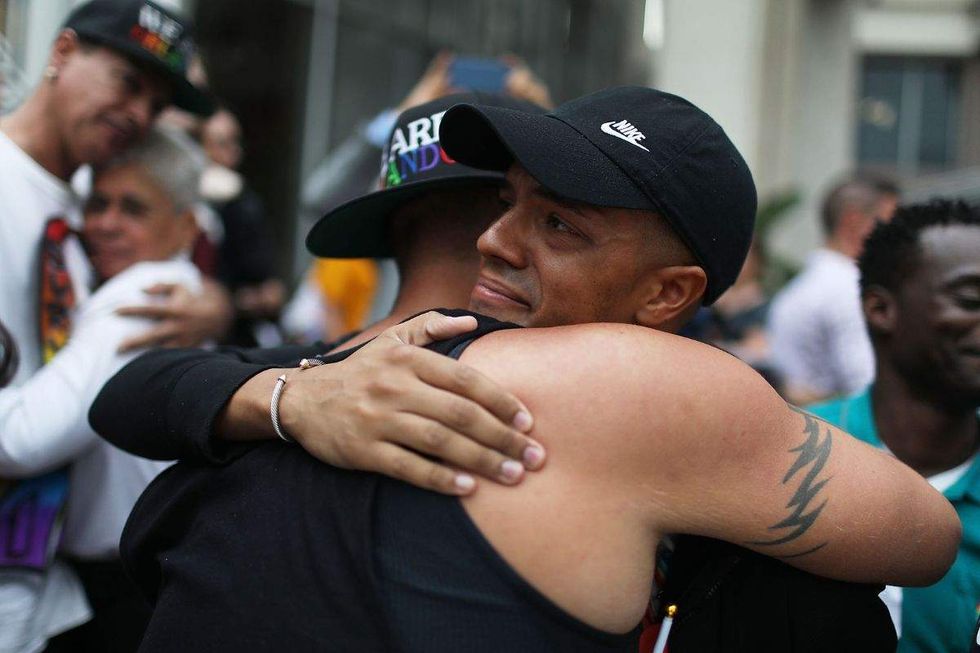 Pulse nightclub shooting survivor and No NRA Money spokesperson Brandon Wolf is hugged during a rally for nightclub and Marjory Stoneman Douglas High School survivors in front of Orlando City Hall on June 11, 2018, in Orlando, Florida.Joe Raedle/Getty Images
Related: Pulse nightclub demolition set for March to make way for memorial
Early Wednesday, crews lowered the iconic Pulse sign by crane as the City of Orlando prepares to demolish the long-closed nightclub and move forward with a memorial project expected to be completed in 2027. For years after the June 12, 2016, massacre, the building remained largely intact, its exterior covered in flowers, photos, and handwritten messages that transformed the site into a shrine.
Wolf was inside the club the night of the attack and survived by hiding in a bathroom as the shooting unfolded. Two of his close friends, Christopher “Drew” Leinonen and Juan Guerrero, were among those killed.
The tragedy reshaped Wolf’s life. In the years since, he has become one of the most visible public voices among Pulse survivors, carrying the memory of that night into vigils, rallies, congressional hearings, and national media appearances as he advocates for LGBTQ+ equality and action on gun violence.
Now based in Washington, D.C., he serves as the Human Rights Campaign's national press secretary and regularly speaks at public events about the shooting and its aftermath. Before joining HRC, Wolf worked as a spokesperson for Equality Florida, the state’s largest LGBTQ+ advocacy organization. Wolf is also the author of the memoir A Place For Us, which reflects on grief, chosen family, and the path from tragedy to activism.
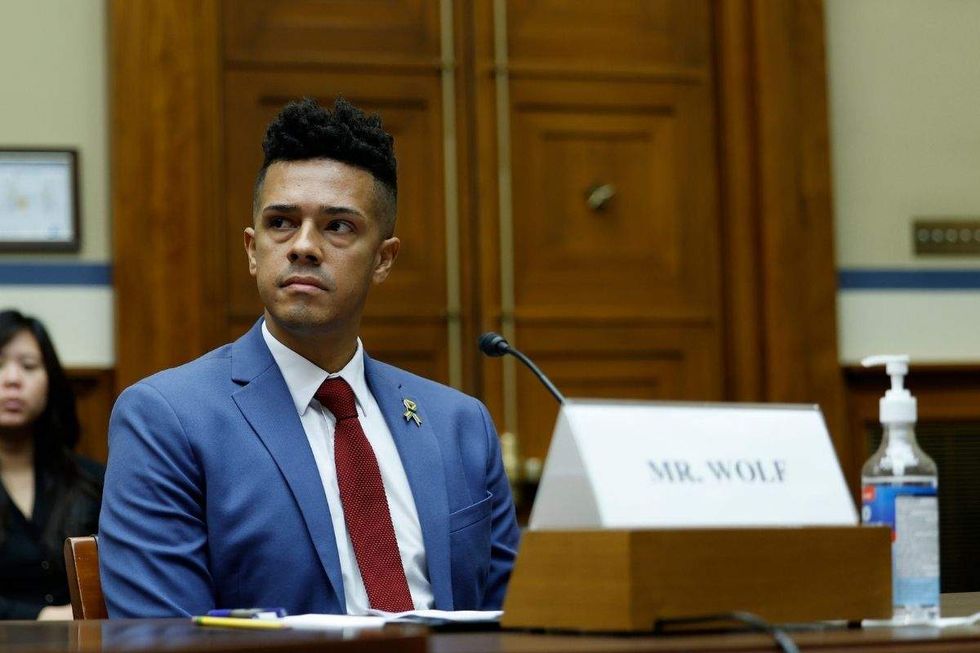 Brandon Wolf, a survivor of the Pulse Nightclub Shooting, listens during a House Oversight Committee hearing titled "The Rise of Anti-LGBTQI+ Extremism and Violence in the United States" at the Rayburn House Office Building on December 14, 2022 in Washington, DC. Anna Moneymaker/Getty Images
Related: Outrage after Florida quietly paints over Orlando Pulse shooting memorial
Related: Brandon Wolf, Pulse Survivor and Advocate, Joins Human Rights Campaign From Equality Florida
The removal of the sign signals the beginning of a long-delayed transformation of the Pulse site.
For nearly a decade, the building stood largely unchanged amid controversy surrounding earlier memorial plans overseen by the now-defunct onePULSE Foundation. Survivors and victims’ families raised concerns about transparency and the direction of the project, and the nonprofit eventually dissolved. In 2023, the City of Orlando purchased the property for $2 million and assumed responsibility for creating a permanent memorial.
Related: Pulse Survivor Brandon Wolf: Stop Accepting Gun Violence
Related: Orlando to honor victims, commune with survivors on 9th anniversary of Pulse shooting
City officials say the memorial will include 49 illuminated columns honoring each victim, a reflection pool, and gathering spaces designed for survivors, families, and visitors seeking a place for remembrance.
Artifacts from inside the nightclub, including chandeliers, posters, and the bar top, have already been removed and placed in climate-controlled storage, where they may later be incorporated into the memorial design. The sign itself will also be preserved as part of the site’s history.
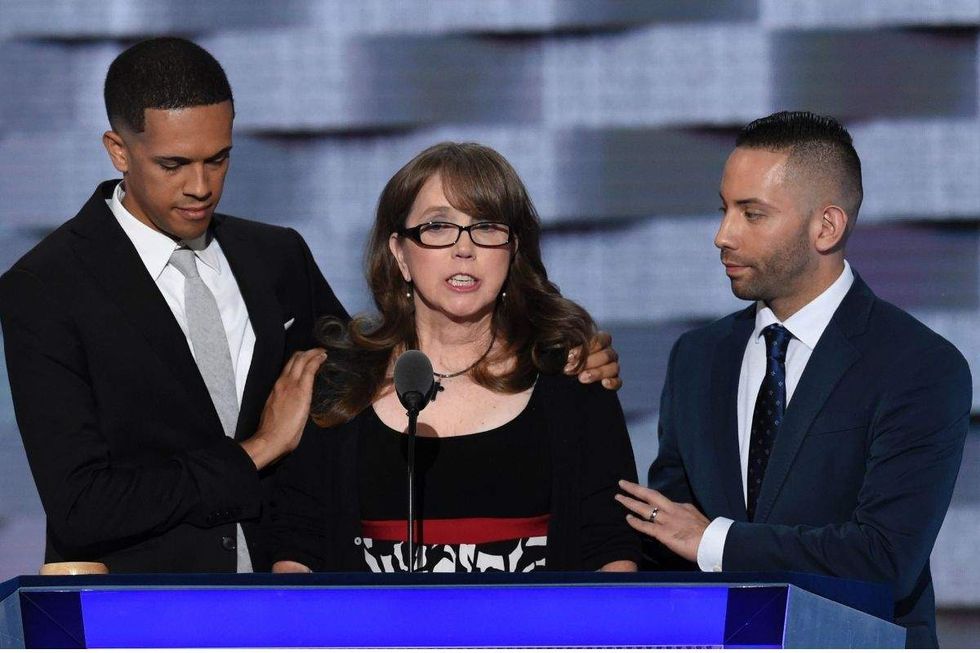 Christine Leinonen (C), mother of Christopher "Drew" Leinonen, killed in the Pulse nightclub attack in Orlando, Florida, is joined by survivors Brandon Wolf (L) and Jose Arriagada during the Democratic National Convention at the Wells Fargo Center in Philadelphia, Pennsylvania, July 27, 2016. SAUL LOEB/AFP via Getty Images
Last June, ahead of the ninth anniversary of the massacre, Wolf told The Advocate he would not return inside the condemned building, saying the site of the tragedy is where he feels closest to the people “who were stolen” from him and that, for survivors, stepping back into the club means returning to “the worst night possible.”
Related: Pulse Foundation Dissolved as Florida County Scrutinizes Its Financials
Other survivors say the moment is both emotional and overdue. Orlando Torres, who also survived the shooting by hiding in a restroom for hours during the attack, told Orlando NBC affiliate WESH that seeing the sign come down stirred complicated feelings after years of waiting for a permanent memorial.
Torres said survivors and victims’ families have endured nearly a decade of “agony, disappointments, and delays” as plans for the site repeatedly stalled.
But as the tenth anniversary of the massacre approaches, the community is preparing for the next chapter.
“Seeing it finally come down brings up a range of emotions, but most of all, I’m relieved that we are finally making progress toward the reverent, respectful memorial space that people deserve,” Wolf said.