'%3E%3Cpath d='M16.3574 35.6519H12.9537L15.0491 18.8873L16.3574 35.6519ZM30.4229 54.0093L22.309 0.994385H7.91795L0 54.0093H10.6634L11.5802 46.3855H17.4014L17.9914 54.0093H30.4229Z' fill='%23971B20'/%3E%3Cpath d='M48.2073 41.8813C48.2073 43.4049 47.4892 44.0011 46.1144 44.0011H43.7595V11.0687H46.1144C47.4892 11.0687 48.2073 11.6636 48.2073 13.1885V41.8813ZM59.5273 43.6695V11.3326C59.5273 3.71323 53.5729 0.994385 47.8157 0.994385H31.7213V54.0093H47.8157C53.5729 54.0093 59.5273 51.29 59.5273 43.6695Z' fill='%23971B20'/%3E%3Cpath d='M90.183 0.994385H78.6039L75.0711 30.6157L71.9955 0.994385H59.4346L69.2474 54.0093H80.373L90.183 0.994385Z' fill='%23971B20'/%3E%3Cpath d='M107.063 42.3448C107.063 43.7359 105.951 44.5974 104.643 44.5974C103.269 44.5974 102.157 43.7359 102.157 42.3448V12.658C102.157 11.2676 103.269 10.4058 104.643 10.4058C105.951 10.4058 107.063 11.2676 107.063 12.658V42.3448ZM119.233 43.2723V11.7312C119.233 6.36384 112.952 -3.8147e-06 104.643 -3.8147e-06C96.2667 -3.8147e-06 89.9867 6.36384 89.9867 11.7312V43.2723C89.9867 48.6393 96.2667 55 104.643 55C112.952 55 119.233 48.6393 119.233 43.2723Z' fill='%23971B20'/%3E%3Cpath d='M150.976 43.9349V33.7309H139.069V42.3448C139.069 43.7359 137.957 44.5974 136.582 44.5974C135.076 44.5974 133.964 43.7359 133.964 42.3448V12.658C133.964 11.2676 135.076 10.4058 136.582 10.4058C137.957 10.4058 139.069 11.2676 139.069 12.658V21.2723H150.976V11.0687C150.976 5.70107 145.283 -3.8147e-06 136.582 -3.8147e-06C127.75 -3.8147e-06 121.796 5.70107 121.796 11.0687V43.9349C121.796 49.3022 127.75 55 136.582 55C145.283 55 150.976 49.3022 150.976 43.9349Z' fill='%23971B20'/%3E%3Cpath d='M167.478 35.6519H164.076L166.17 18.8873L167.478 35.6519ZM181.544 54.0093L173.432 0.994385H159.037L151.123 54.0093H161.785L162.704 46.3855H168.523L169.114 54.0093H181.544Z' fill='%23971B20'/%3E%3Cpath d='M205.412 10.4058V0.994385H177.081V10.4058H185.392V54.0093H197.428V10.4058H205.412Z' fill='%23971B20'/%3E%3Cpath d='M230.002 54.0093V43.9349H218.914V31.8746H226.635V21.8028H218.914V10.4058H230.002V0.994385H206.875V54.0093H230.002Z' fill='%23971B20'/%3E%3C/g%3E%3Cdefs%3E%3CclipPath id='clip0_260_7080'%3E%3Crect width='230' height='55' fill='white'/%3E%3C/clipPath%3E%3C/defs%3E%3C/svg%3E)

In most of New England, the question of whether transgender people may use bathrooms consistent with their gender identity has largely been settled. In New Hampshire, lawmakers are reopening it.
Keep up with the latest in LGBTQ+ news and politics. Sign up for The Advocate's email newsletter.
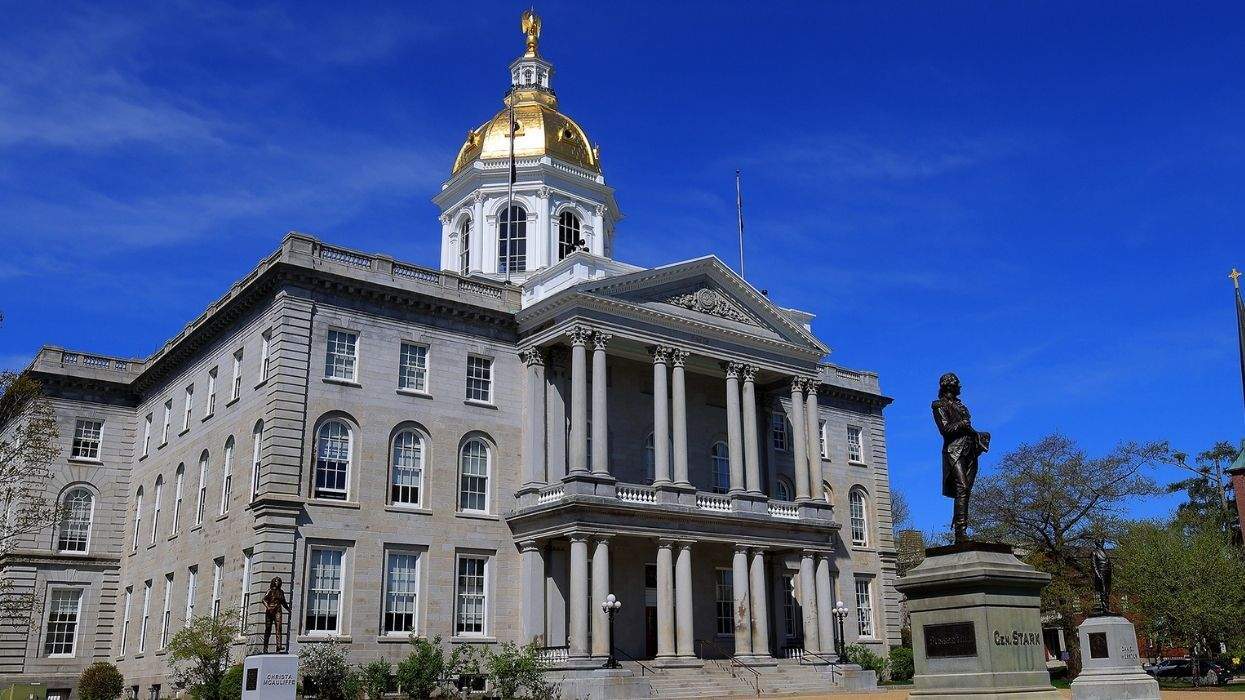
The Republican-controlled New Hampshire House voted 181–164 on Wednesday evening to pass House Bill 1442, legislation that would allow schools, government buildings, and some businesses to restrict bathrooms and locker rooms based on sex assigned at birth rather than gender identity. The bill now heads to the state Senate.
If enacted, the measure would place New Hampshire further out of step with the rest of the Northeast, where protections for trans residents in public accommodations remain broadly intact.
House Bill 1442 would require bathrooms and locker rooms in public schools and municipally owned buildings to be designated for male or female use based on sex. The bill also allows businesses and other places of public accommodation to require that multi-user restrooms be used according to what the legislation defines as a person’s “biological sex.”
Related: New Hampshire Republican governor signs gender-affirming care ban into law
Related: Some New Hampshire Republicans Seek to Ban Gender-Affirming Surgeries for Trans Youth
The proposal goes further than many similar measures elsewhere by creating a new legal mechanism tied to restroom use. Under the bill, entering an area designated for females while classified as male under the statute could be considered “willful trespass.”
The legislation also establishes a statutory definition of sex that centers on biological characteristics such as chromosomes and reproductive anatomy, stating that a person’s gender identity does not determine access to spaces designated for males or females.
Supporters argue the legislation protects privacy in intimate spaces. Opponents say it singles out transgender people for exclusion and undermines civil rights protections that the state adopted less than a decade ago.
The vote follows several years of legislative attempts to pass similar restrictions, which repeatedly ran into gubernatorial vetoes.
Weeks ago, Gov. Kelly Ayotte, a Republican, vetoed a comparable proposal that would have allowed transgender people to be excluded from bathrooms, locker rooms, jails, and other gender-segregated spaces. It was the third time in as many years that a New Hampshire governor rejected similar legislation.
Ayotte said the earlier proposal was overly broad and risked creating an exclusionary environment.
Her predecessor, Chris Sununu, who is also a Republican, vetoed a similar measure in 2024, writing that lawmakers were attempting to address problems “that have not presented themselves.”
Yet the issue has returned to the legislature year after year.
Advocates say the persistence reflects a broader campaign targeting transgender rights in the state. According to the advocacy group 603 Equality, several bills introduced during the current legislative session attempt to regulate public facilities based on what lawmakers describe as “biological sex,” part of a wider slate of proposals affecting bathrooms, sports participation, and identification documents.
The group says House Bill 1442 is among the most “sweeping and cruel” of those proposals.
In 2018, New Hampshire added gender identity to its nondiscrimination law, becoming the final state in New England to extend those protections. At the time, the move appeared to complete a regional consensus on LGBTQ+ equality.
In recent years, however, that consensus has begun to fracture.
Related: 21 states now limit transgender people’s bathroom use, with criminal penalties in two
Related: New Hampshire Supreme Court upholds school policy against forced outing
In 2025, Ayotte signed legislation banning gender-affirming medical care such as puberty blockers and hormone therapy for transgender minors, making New Hampshire the first state in New England to enact such a restriction.
Neighboring states, including Massachusetts, Vermont, Rhode Island, and Connecticut, maintain broad protections for transgender residents across public accommodations and health care.
Even Maine, which, like New Hampshire, has long been politically competitive and regularly elects Republicans to statewide office, has not enacted comparable restrictions on transgender rights. Instead, Maine has become the focus of a separate political fight: a proposed ballot measure backed by national conservative donors that would bar transgender girls from school sports and require schools to separate bathrooms and locker rooms based on sex assigned at birth.
Advocates say such policies place transgender people in untenable situations, forcing them to choose between using facilities inconsistent with their gender identity or risking confrontation.