'%3E%3Cpath d='M16.3574 35.6519H12.9537L15.0491 18.8873L16.3574 35.6519ZM30.4229 54.0093L22.309 0.994385H7.91795L0 54.0093H10.6634L11.5802 46.3855H17.4014L17.9914 54.0093H30.4229Z' fill='%23971B20'/%3E%3Cpath d='M48.2073 41.8813C48.2073 43.4049 47.4892 44.0011 46.1144 44.0011H43.7595V11.0687H46.1144C47.4892 11.0687 48.2073 11.6636 48.2073 13.1885V41.8813ZM59.5273 43.6695V11.3326C59.5273 3.71323 53.5729 0.994385 47.8157 0.994385H31.7213V54.0093H47.8157C53.5729 54.0093 59.5273 51.29 59.5273 43.6695Z' fill='%23971B20'/%3E%3Cpath d='M90.183 0.994385H78.6039L75.0711 30.6157L71.9955 0.994385H59.4346L69.2474 54.0093H80.373L90.183 0.994385Z' fill='%23971B20'/%3E%3Cpath d='M107.063 42.3448C107.063 43.7359 105.951 44.5974 104.643 44.5974C103.269 44.5974 102.157 43.7359 102.157 42.3448V12.658C102.157 11.2676 103.269 10.4058 104.643 10.4058C105.951 10.4058 107.063 11.2676 107.063 12.658V42.3448ZM119.233 43.2723V11.7312C119.233 6.36384 112.952 -3.8147e-06 104.643 -3.8147e-06C96.2667 -3.8147e-06 89.9867 6.36384 89.9867 11.7312V43.2723C89.9867 48.6393 96.2667 55 104.643 55C112.952 55 119.233 48.6393 119.233 43.2723Z' fill='%23971B20'/%3E%3Cpath d='M150.976 43.9349V33.7309H139.069V42.3448C139.069 43.7359 137.957 44.5974 136.582 44.5974C135.076 44.5974 133.964 43.7359 133.964 42.3448V12.658C133.964 11.2676 135.076 10.4058 136.582 10.4058C137.957 10.4058 139.069 11.2676 139.069 12.658V21.2723H150.976V11.0687C150.976 5.70107 145.283 -3.8147e-06 136.582 -3.8147e-06C127.75 -3.8147e-06 121.796 5.70107 121.796 11.0687V43.9349C121.796 49.3022 127.75 55 136.582 55C145.283 55 150.976 49.3022 150.976 43.9349Z' fill='%23971B20'/%3E%3Cpath d='M167.478 35.6519H164.076L166.17 18.8873L167.478 35.6519ZM181.544 54.0093L173.432 0.994385H159.037L151.123 54.0093H161.785L162.704 46.3855H168.523L169.114 54.0093H181.544Z' fill='%23971B20'/%3E%3Cpath d='M205.412 10.4058V0.994385H177.081V10.4058H185.392V54.0093H197.428V10.4058H205.412Z' fill='%23971B20'/%3E%3Cpath d='M230.002 54.0093V43.9349H218.914V31.8746H226.635V21.8028H218.914V10.4058H230.002V0.994385H206.875V54.0093H230.002Z' fill='%23971B20'/%3E%3C/g%3E%3Cdefs%3E%3CclipPath id='clip0_260_7080'%3E%3Crect width='230' height='55' fill='white'/%3E%3C/clipPath%3E%3C/defs%3E%3C/svg%3E)
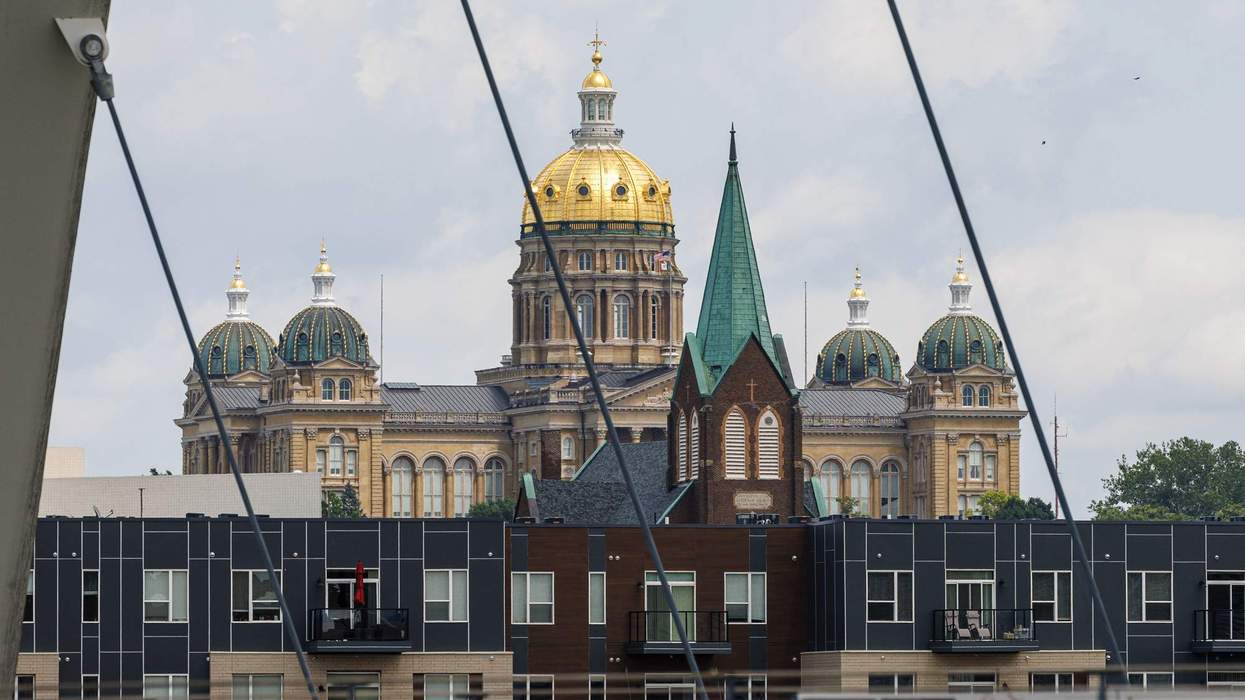

The Iowa House of Delegates passed a bill Thursday that would disallow local governments from including gender identity in their non-discrimination policies.
Keep up with the latest in LGBTQ+ news and politics. Sign up for The Advocate's email newsletter.
Protections for trans residents had already been struck from the Iowa Civil Rights Act in 2025. The new bill would prohibit counties or municipalities from adopting non-discrimination policies that are “broader” or “different” from those protected under state law.
Rep. Amie Wichtendahl, a Democrat representing the Cedar Rapids area, was sworn in as Iowa’s first out trans state legislator last year. Wichtendahl said the bill makes LGBTQ+ residents feel less safe in Iowa, pushing them toward “friendlier homes in neighboring states,” the Des Moines Register reports.
Related: Iowa passes bill stripping civil rights protections for transgender people, send to governor
Related: Iowa Considers 'License to Discriminate' Bill, Plus Restroom Restrictions
“It diminishes our ability to attract new workers,” Wichrendahl said. “This bill before us today makes a mockery of our state’s most sacred values.”
Similar efforts have surfaced in other Republican-led states. In Idaho, for example, GOP lawmakers have advanced legislation that would block cities and counties from enforcing LGBTQ-inclusive nondiscrimination ordinances that go beyond state law, effectively wiping out protections in more than a dozen municipalities that currently prohibit discrimination based on sexual orientation or gender identity. Advocates there warn the move would erase local civil rights safeguards covering roughly a third of the state’s population.
The Iowa bill originally focused on referring local civil rights complaints to the state’s Office of Civil Rights. But removing local protections around gender identity had been proposed by Gov. Kim Reynolds, a Republican, and folded into the bill by Republican state lawmakers. The amended bill passed 60-26, with 14 members absent or not voting.
“We’re not going to have everybody, and their mom decides they're going to have this civil rights code,” said Rep. Skyler Wheeler, a Republican representing the Hull area, according to the Des Moines Register. “It's unworkable for businesses, and it's just a crazy idea.”
Related: Iowa now allows anti-transgender discrimination
Related: Iowa Republicans Seek to End Marriage Equality in State
For years, blue pockets in Republican-majority states have adopted local ordinances to protect LGBTQ+ residents from discrimination that would be harder to achieve on a state level.
As of this month, 14 cities and one unincorporated community of Iowa had passed non-discrimination policies including protections for gender identity, according to the Iowa Capitol Dispatch. The state legislature’s efforts to restrict trans rights have been a point of concern for many LGBTQ+ Iowans and their allies, who staged large-scale protests last year at the statehouse.
Before becoming law, the bill must first pass the Iowa Senate and then be sent to the governor’s desk for final approval. State lawmakers like Wichtendahl warn that its passage would only further ostracize trans Iowans.
“Stand up for justice, stand up for freedom, and stand up for the rights of your citizens,” Wichtendahl said. “This state is long overdue for a check on its constitutional abuses and the reckless disregard for the rights and freedoms of its citizens.”
This article was written as part of the Future of Queer Media fellowship program at The Advocate, which is underwritten by a generous gift from Morrison Media Group. The program helps support the next generation of LGBTQ+ journalists.