
'%3E%3Cpath d='M16.3574 35.6519H12.9537L15.0491 18.8873L16.3574 35.6519ZM30.4229 54.0093L22.309 0.994385H7.91795L0 54.0093H10.6634L11.5802 46.3855H17.4014L17.9914 54.0093H30.4229Z' fill='%23971B20'/%3E%3Cpath d='M48.2073 41.8813C48.2073 43.4049 47.4892 44.0011 46.1144 44.0011H43.7595V11.0687H46.1144C47.4892 11.0687 48.2073 11.6636 48.2073 13.1885V41.8813ZM59.5273 43.6695V11.3326C59.5273 3.71323 53.5729 0.994385 47.8157 0.994385H31.7213V54.0093H47.8157C53.5729 54.0093 59.5273 51.29 59.5273 43.6695Z' fill='%23971B20'/%3E%3Cpath d='M90.183 0.994385H78.6039L75.0711 30.6157L71.9955 0.994385H59.4346L69.2474 54.0093H80.373L90.183 0.994385Z' fill='%23971B20'/%3E%3Cpath d='M107.063 42.3448C107.063 43.7359 105.951 44.5974 104.643 44.5974C103.269 44.5974 102.157 43.7359 102.157 42.3448V12.658C102.157 11.2676 103.269 10.4058 104.643 10.4058C105.951 10.4058 107.063 11.2676 107.063 12.658V42.3448ZM119.233 43.2723V11.7312C119.233 6.36384 112.952 -3.8147e-06 104.643 -3.8147e-06C96.2667 -3.8147e-06 89.9867 6.36384 89.9867 11.7312V43.2723C89.9867 48.6393 96.2667 55 104.643 55C112.952 55 119.233 48.6393 119.233 43.2723Z' fill='%23971B20'/%3E%3Cpath d='M150.976 43.9349V33.7309H139.069V42.3448C139.069 43.7359 137.957 44.5974 136.582 44.5974C135.076 44.5974 133.964 43.7359 133.964 42.3448V12.658C133.964 11.2676 135.076 10.4058 136.582 10.4058C137.957 10.4058 139.069 11.2676 139.069 12.658V21.2723H150.976V11.0687C150.976 5.70107 145.283 -3.8147e-06 136.582 -3.8147e-06C127.75 -3.8147e-06 121.796 5.70107 121.796 11.0687V43.9349C121.796 49.3022 127.75 55 136.582 55C145.283 55 150.976 49.3022 150.976 43.9349Z' fill='%23971B20'/%3E%3Cpath d='M167.478 35.6519H164.076L166.17 18.8873L167.478 35.6519ZM181.544 54.0093L173.432 0.994385H159.037L151.123 54.0093H161.785L162.704 46.3855H168.523L169.114 54.0093H181.544Z' fill='%23971B20'/%3E%3Cpath d='M205.412 10.4058V0.994385H177.081V10.4058H185.392V54.0093H197.428V10.4058H205.412Z' fill='%23971B20'/%3E%3Cpath d='M230.002 54.0093V43.9349H218.914V31.8746H226.635V21.8028H218.914V10.4058H230.002V0.994385H206.875V54.0093H230.002Z' fill='%23971B20'/%3E%3C/g%3E%3Cdefs%3E%3CclipPath id='clip0_260_7080'%3E%3Crect width='230' height='55' fill='white'/%3E%3C/clipPath%3E%3C/defs%3E%3C/svg%3E)
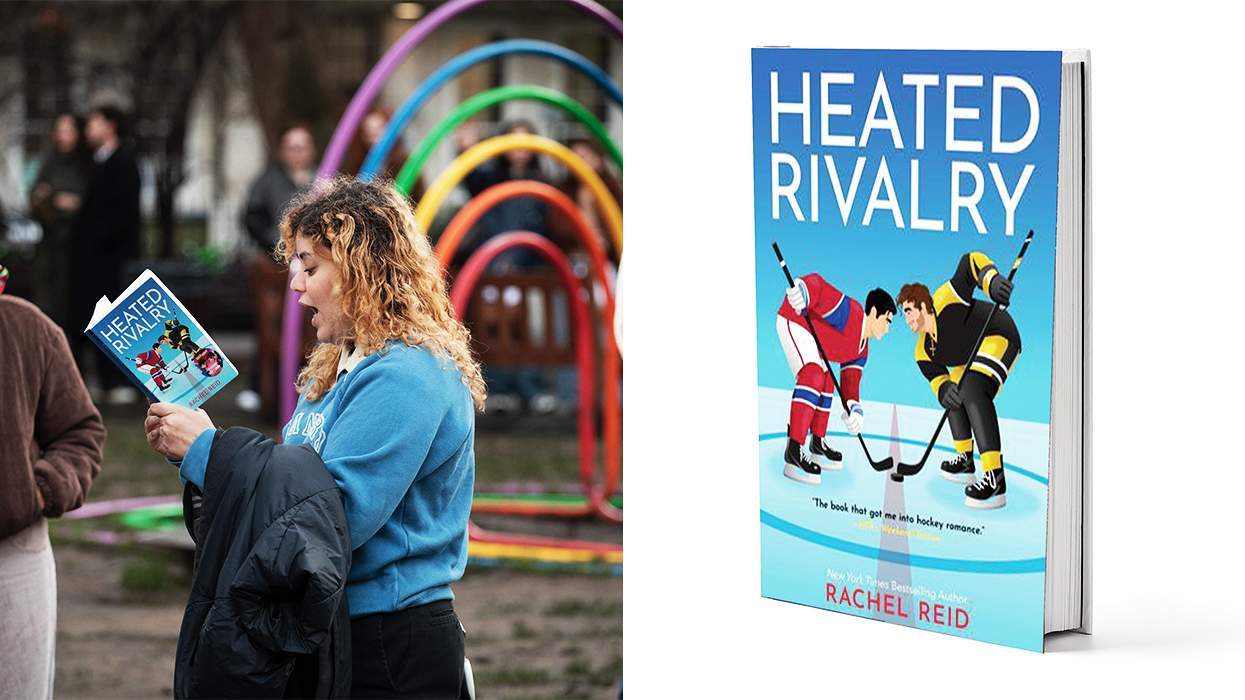

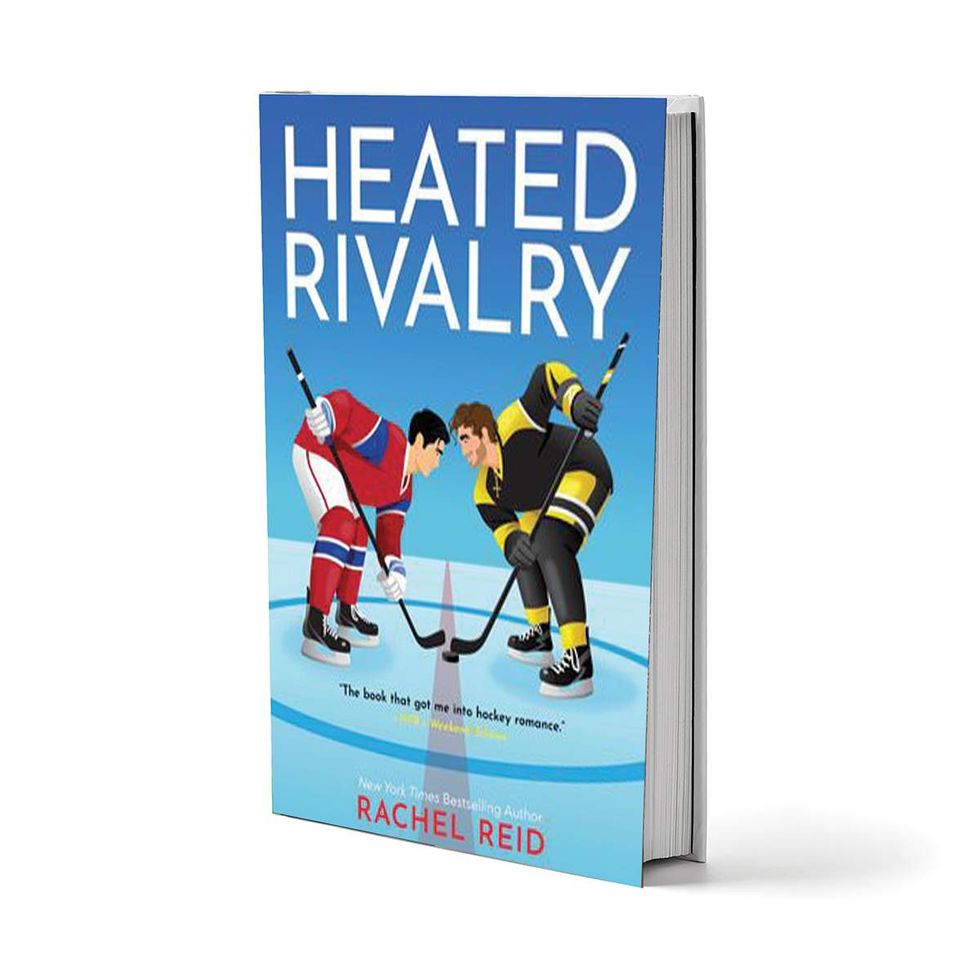
The wild success of the steamy gay hockey show Heated Rivalry hasn’t just turned unknown actors Hudson Williams and Connor Storrie into budding A-listers; it also catapulted the book it’s adapted from onto the New York Times bestseller list seven years after it was first published. That’s despite the LGBTQ+ publishing industry struggling under the weight of attacks from conservatives.
Even though Heated Rivalry is focused on a queer love story and refuses to shy away from gay sex scenes, it quickly became a cultural phenomenon, which translated into increased sales of the book of the same name by Rachel Reid. The spicy novel, which follows years of secret trysts between a closeted hockey star and his bisexual Russian rival, is the second book in a series that has sold over 2.7 million copies to date, thanks in large part to the 10.6 million viewers each episode of the show has racked up in the U.S.
“I’ve heard some people say, ‘Oh, I’ve watched the show,’ or ‘I’ve read the series, and that was the first queer romance I ever read,’” says Stacy Boyd, executive editor at Harlequin Books, who works directly with Reid. “So it’s opening doors that haven’t been opened.”
 Fans gather for a Heated Rivalry lookalike contest in London earlier this yearJohn Phillips/Getty Images
Right-wing politicians’ focus on banning LGBTQ+ books in schools and attacks on public libraries across the country have had a chilling effect on the LGBTQ+ publishing industry, especially for children’s and young adult books, but the entire industry has been impacted. Combine that with queer authors and queer stories historically having trouble getting published, and it’s a recipe for a lack of diversity in publishing.
But Reid’s books are thriving in spite of this gloomy picture, and other books are also benefiting from the show’s popularity. Boyd says Harlequin has seen an “increased appetite” for their other gay romance and hockey romance titles, leading it to acquire “a large backlist of people writing queer romance” to publish under its LGBTQ+ romance imprint, Carina Press.
This presents a rosy outlook for the publishing industry — but Boyd and other industry professionals warn that whenever progress is made, there is often pushback from conservatives, which could be particularly lethal for the small LGBTQ+ publishing industry.
“Our administration likes to grab on to things and decide to be mad about them, so my hope is that we won’t see a backlash ever, but our government right now is unpredictable,” she says, referring to President Donald Trump’s current term.
Children’s literature is taking the brunt of the attacks from Republicans that have stifled sales, but industry professionals and authors of adult queer books, who say they already face a lack of parity in the publishing industry and a lack of shelf space in bookstores, admit that things have gotten worse during the Trump administration.
There are some editors out there who are still committed to acquiring LGBTQ+ novels. Still, Rebecca Podos, an author and senior literary agent at Neighborhood Literary, says Trump’s presidency has led to a “crackdown on queer stories,” and she and her colleagues have started to get more rejections for “political reasons.”
“It’s really hard not to attribute it to the political climate, the transphobia of the administration, and the fear of litigation,” Podos says. However, she doesn’t want authors of queer novels to stop writing because, she says, Heated Rivalry’s success is proof that you can still get published and find an audience. “Of course, the hope is that it would demonstrate the potential of these stories to publishers that even in this climate, a queer story can be so beloved, so huge, so important,” she adds.
Industry professionals are also starting to compare new LGBTQ+ fiction to Heated Rivalry as a way to sell a book to an agent or publisher, but Kosoko Jackson, a Black queer Lambda Literary Award-winning young-adult book author whose novel The Macabre came out late last year, cautions that the pressures since Trump took office mean that authors are starting to feel the pinch.
The increasing number of Republican-led book bans every year that target LGBTQ+ stories is making publishers “wary” and reinforces “the idea these bans are successful at silencing voices,” Jackson says.
“We are seeing across the board that publishers are taking less risks,” he says. “They are choosing to fund straight books rather than LGBT books because it’s safer and they don’t want the ire of the administration or they don’t want any targets on their backs, which means there’s less space for queer books out there.”
Gay romance may be having a cultural moment in the wake of Heated Rivalry, but most of the bestsellers in the genre are written by women and marketed to women, while writers who are gay men, transgender, or BIPOC are still facing marginalization within the industry, and queer editors and authors say publishers lack confidence that other genres outside of gay romance will sell.
“I think anybody can write great stories as long as they write with care, but there’s always a little bit of extra storytelling and authenticity and richness that comes from stories of lived experiences,” Jackson says.
Podos doesn’t want LGBTQ+ authors to get discouraged. Instead, she wants industry professionals to do a better job of supporting diverse voices, even when they’re trying to capitalize on Heated Rivalry’s profitability.
“When we talk about publishers stepping back from queer stories or having a harder time placing queer stories, I don’t think that should become a cautionary tale to queer authors not to tell their stories,” she says. “I do think queer authors should give themselves some grace right now, particularly queer authors with intersectional marginalizations that are being targeted right now, and that gatekeepers — like agents, editors, publishers, even booksellers — have to be aware of these circumstances and their impact when they’re making these choices.”
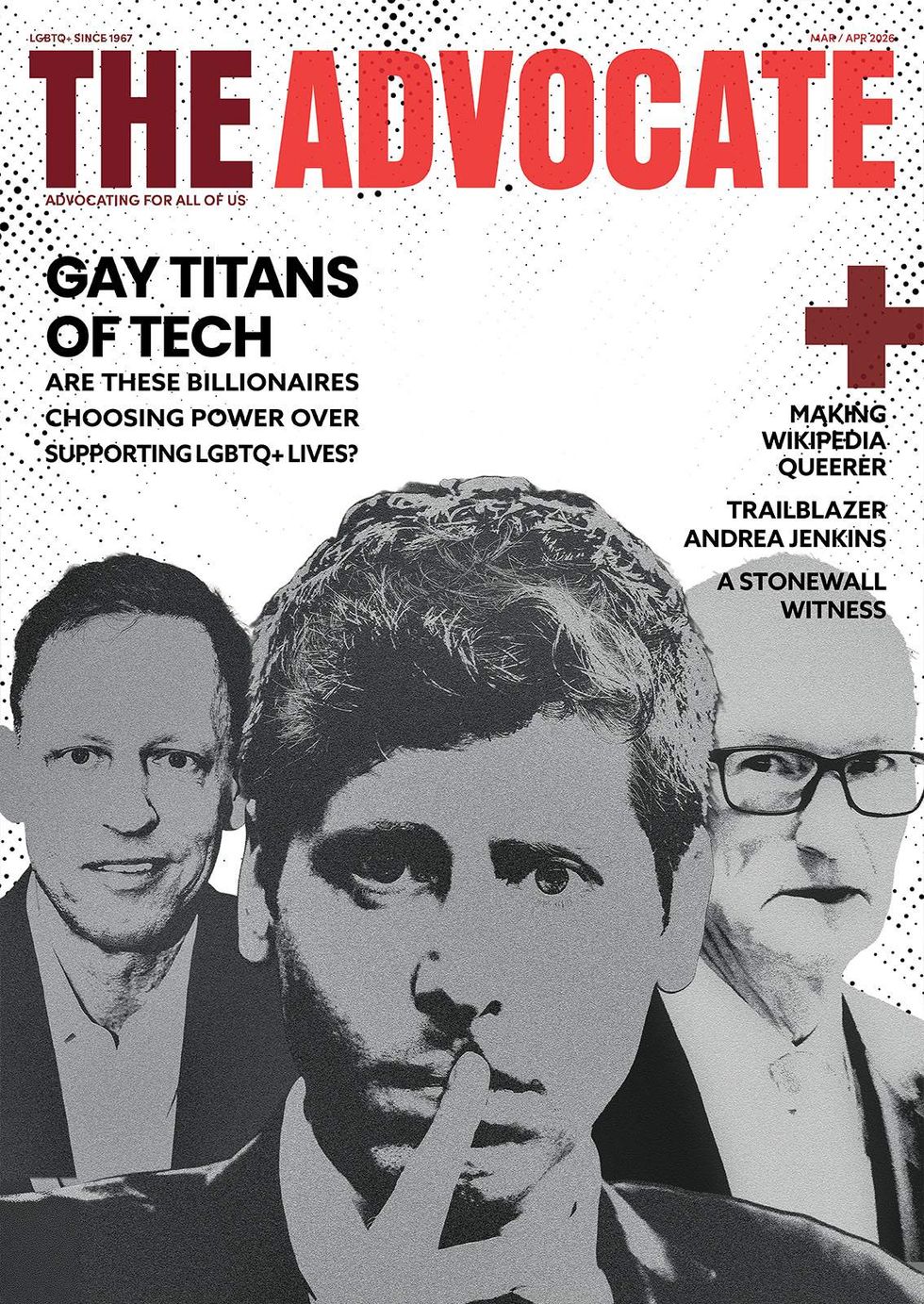
This article is part of The Advocate’s Mar-Apr 2026 print issue, which hits newsstands March 24. Support queer media and subscribe — or download the issue through Apple News+, Zinio, Nook, or PressReader.






11 times J.K. Rowling did something wildly transphobic, ranked
J.K. Rowling attends day four of Royal Ascot at Ascot Racecourse on June 20, 2025 in Ascot, England.