'%3E%3Cpath d='M16.3574 35.6519H12.9537L15.0491 18.8873L16.3574 35.6519ZM30.4229 54.0093L22.309 0.994385H7.91795L0 54.0093H10.6634L11.5802 46.3855H17.4014L17.9914 54.0093H30.4229Z' fill='%23971B20'/%3E%3Cpath d='M48.2073 41.8813C48.2073 43.4049 47.4892 44.0011 46.1144 44.0011H43.7595V11.0687H46.1144C47.4892 11.0687 48.2073 11.6636 48.2073 13.1885V41.8813ZM59.5273 43.6695V11.3326C59.5273 3.71323 53.5729 0.994385 47.8157 0.994385H31.7213V54.0093H47.8157C53.5729 54.0093 59.5273 51.29 59.5273 43.6695Z' fill='%23971B20'/%3E%3Cpath d='M90.183 0.994385H78.6039L75.0711 30.6157L71.9955 0.994385H59.4346L69.2474 54.0093H80.373L90.183 0.994385Z' fill='%23971B20'/%3E%3Cpath d='M107.063 42.3448C107.063 43.7359 105.951 44.5974 104.643 44.5974C103.269 44.5974 102.157 43.7359 102.157 42.3448V12.658C102.157 11.2676 103.269 10.4058 104.643 10.4058C105.951 10.4058 107.063 11.2676 107.063 12.658V42.3448ZM119.233 43.2723V11.7312C119.233 6.36384 112.952 -3.8147e-06 104.643 -3.8147e-06C96.2667 -3.8147e-06 89.9867 6.36384 89.9867 11.7312V43.2723C89.9867 48.6393 96.2667 55 104.643 55C112.952 55 119.233 48.6393 119.233 43.2723Z' fill='%23971B20'/%3E%3Cpath d='M150.976 43.9349V33.7309H139.069V42.3448C139.069 43.7359 137.957 44.5974 136.582 44.5974C135.076 44.5974 133.964 43.7359 133.964 42.3448V12.658C133.964 11.2676 135.076 10.4058 136.582 10.4058C137.957 10.4058 139.069 11.2676 139.069 12.658V21.2723H150.976V11.0687C150.976 5.70107 145.283 -3.8147e-06 136.582 -3.8147e-06C127.75 -3.8147e-06 121.796 5.70107 121.796 11.0687V43.9349C121.796 49.3022 127.75 55 136.582 55C145.283 55 150.976 49.3022 150.976 43.9349Z' fill='%23971B20'/%3E%3Cpath d='M167.478 35.6519H164.076L166.17 18.8873L167.478 35.6519ZM181.544 54.0093L173.432 0.994385H159.037L151.123 54.0093H161.785L162.704 46.3855H168.523L169.114 54.0093H181.544Z' fill='%23971B20'/%3E%3Cpath d='M205.412 10.4058V0.994385H177.081V10.4058H185.392V54.0093H197.428V10.4058H205.412Z' fill='%23971B20'/%3E%3Cpath d='M230.002 54.0093V43.9349H218.914V31.8746H226.635V21.8028H218.914V10.4058H230.002V0.994385H206.875V54.0093H230.002Z' fill='%23971B20'/%3E%3C/g%3E%3Cdefs%3E%3CclipPath id='clip0_260_7080'%3E%3Crect width='230' height='55' fill='white'/%3E%3C/clipPath%3E%3C/defs%3E%3C/svg%3E)
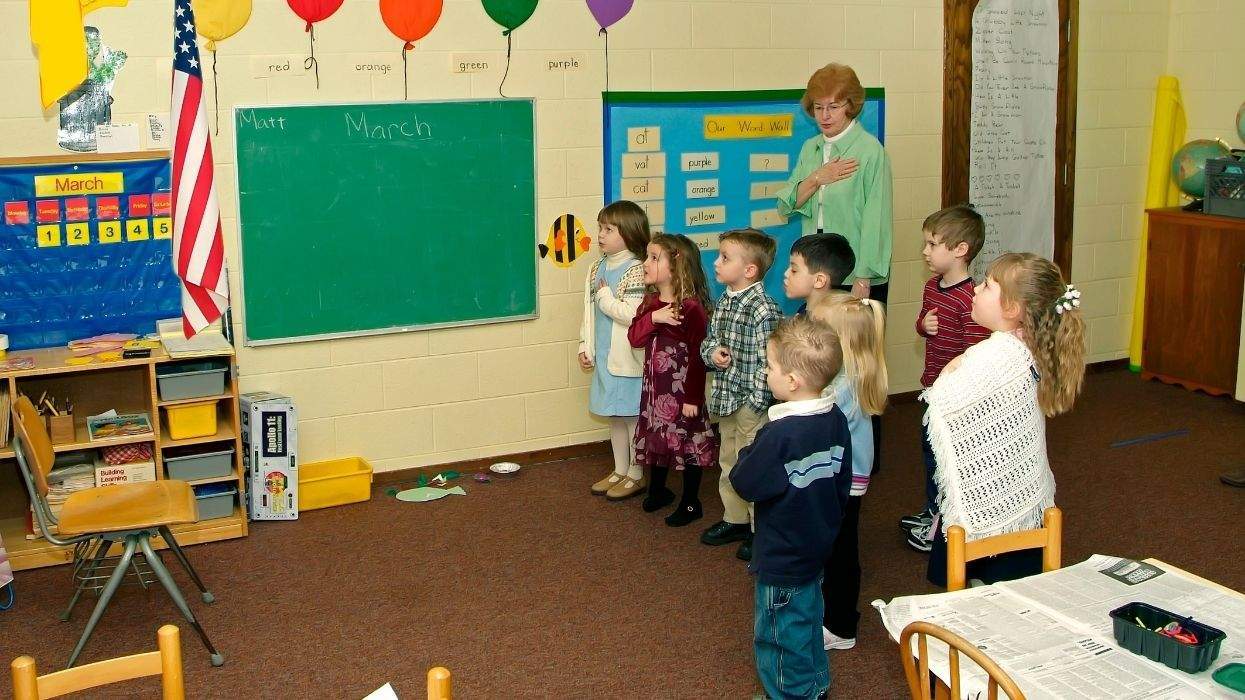
The U.S. Supreme Court will hear a case that could determine whether children of LGBTQ+ parents can be turned away from publicly funded preschool programs run by religious schools.
On Monday, the justices granted review in St. Mary Catholic Parish in Littleton v. Roy, a challenge to Colorado’s universal preschool program and its requirement that participating providers not discriminate against children based on characteristics including sexual orientation and gender identity.
Two courts have already ruled against the church. A federal district court rejected its claims, and the U.S. Court of Appeals for the Tenth Circuit affirmed, holding that Colorado’s nondiscrimination rule is a neutral law that applies to religious and secular providers alike.
LGBTQ+ groups in Colorado expressed alarm over the high court’s decision to take the case.
"In Colorado, we believe every child deserves to belong in their community and in their classroom," Mardi Moore, CEO of Rocky Mountain Equality, told The Advocate in a statement. "Colorado’s universal preschool program was built on that promise: that public dollars serve all children without exception. When a preschool uses taxpayer funding to turn away a four-year-old because of who their parents love, it isn't exercising religious freedom. It's using public money to teach discrimination."
Human Rights Campaign President Kelley Robinson also criticized the court’s willingness to entertain oral argument in the matter.
“All students deserve to be accepted at school and treated equally regardless of their or their family members’ sexual orientation or gender identity,” Robinson said in a statement to The Advocate. “To give public dollars to preschools that openly treat students with LGBTQ+ parents differently is state-backed discrimination and has no place in Colorado or everywhere else. Colorado’s policy is sound and responsible, but this case is part of a dangerous, escalating path that takes aim at LGBTQ+ children, parents, and entire family units. This must stop.”
Colorado’s program, created after voters approved a 2020 ballot measure and implemented in 2022, guarantees most 4-year-olds access to free preschool, typically at least 15 hours a week in the year before kindergarten. Families can choose among public, private, and faith-based providers, with the state reimbursing participating schools.
Related: Colorado Catholic preschools say they have a right to discriminate against LGBTQ+ people
Related: Supreme Court will rule on allowing parents to ban students from LGBTQ+ lessons
But participation comes with conditions. Providers that accept public funds must agree to meet program standards, including a nondiscrimination requirement that ensures equal access for all eligible children.
For the Catholic parishes, preschools, and families behind the lawsuit, that condition is the constitutional fault line. They argue it forces them to choose between participating in a public benefit and adhering to religious teachings about marriage and family — a choice they say the First Amendment does not permit.
Their argument draws on a line of recent Supreme Court decisions that have expanded protections for religious institutions in public funding programs. It also cites the court’s language in Obergefell v. Hodges, which recognized marriage equality nationwide while emphasizing that people of faith retain the right to hold and express contrary views.
Lower courts were unpersuaded, relying on Employment Division v. Smith, which holds that generally applicable laws may stand even when they incidentally burden religious exercise. The challengers are now asking the justices not only to rule in their favor, but to reconsider that framework.
Related: Mahmoud v. Taylor: Everything to know about the Supreme Court case to ban LGBTQ+ books
The dispute also turns on whether Colorado’s policy is truly neutral. The challengers argue it is not, pointing to exceptions in the preschool program that allow providers to prioritize certain groups, such as low-income families or children with disabilities. Lower courts rejected that argument, finding the nondiscrimination requirement applies across the board.
The Trump administration has backed the challengers, warning that allowing Colorado’s policy to stand could stymie religious exercise in major portions of the country. In its amicus brief, the U.S. government told the court it has “a substantial interest in the preservation of the free exercise of religion” and argued that Colorado’s policy risks excluding religious families and schools from a public program because of their beliefs. The brief also emphasized that the legal questions presented are significant and recurring, warranting the court’s review.
For LGBTQ+ families, the stakes are immediate. The outcome could determine whether publicly funded preschool programs remain open to their children on equal terms, or whether religious providers participating in those programs can turn them away.
The case is expected to be argued in the court’s next term, which begins in October, with a decision likely by June 2027.
"Early childhood is where children first learn whether the world is a place that welcomes them," Moore said. "That lesson should never be that they don’t belong. We stand firmly with the families fighting to ensure that Colorado’s commitment to every child is more than just words."
Editor's note: This story has been updated with additional reporting.