'%3E%3Cpath d='M16.3574 35.6519H12.9537L15.0491 18.8873L16.3574 35.6519ZM30.4229 54.0093L22.309 0.994385H7.91795L0 54.0093H10.6634L11.5802 46.3855H17.4014L17.9914 54.0093H30.4229Z' fill='%23971B20'/%3E%3Cpath d='M48.2073 41.8813C48.2073 43.4049 47.4892 44.0011 46.1144 44.0011H43.7595V11.0687H46.1144C47.4892 11.0687 48.2073 11.6636 48.2073 13.1885V41.8813ZM59.5273 43.6695V11.3326C59.5273 3.71323 53.5729 0.994385 47.8157 0.994385H31.7213V54.0093H47.8157C53.5729 54.0093 59.5273 51.29 59.5273 43.6695Z' fill='%23971B20'/%3E%3Cpath d='M90.183 0.994385H78.6039L75.0711 30.6157L71.9955 0.994385H59.4346L69.2474 54.0093H80.373L90.183 0.994385Z' fill='%23971B20'/%3E%3Cpath d='M107.063 42.3448C107.063 43.7359 105.951 44.5974 104.643 44.5974C103.269 44.5974 102.157 43.7359 102.157 42.3448V12.658C102.157 11.2676 103.269 10.4058 104.643 10.4058C105.951 10.4058 107.063 11.2676 107.063 12.658V42.3448ZM119.233 43.2723V11.7312C119.233 6.36384 112.952 -3.8147e-06 104.643 -3.8147e-06C96.2667 -3.8147e-06 89.9867 6.36384 89.9867 11.7312V43.2723C89.9867 48.6393 96.2667 55 104.643 55C112.952 55 119.233 48.6393 119.233 43.2723Z' fill='%23971B20'/%3E%3Cpath d='M150.976 43.9349V33.7309H139.069V42.3448C139.069 43.7359 137.957 44.5974 136.582 44.5974C135.076 44.5974 133.964 43.7359 133.964 42.3448V12.658C133.964 11.2676 135.076 10.4058 136.582 10.4058C137.957 10.4058 139.069 11.2676 139.069 12.658V21.2723H150.976V11.0687C150.976 5.70107 145.283 -3.8147e-06 136.582 -3.8147e-06C127.75 -3.8147e-06 121.796 5.70107 121.796 11.0687V43.9349C121.796 49.3022 127.75 55 136.582 55C145.283 55 150.976 49.3022 150.976 43.9349Z' fill='%23971B20'/%3E%3Cpath d='M167.478 35.6519H164.076L166.17 18.8873L167.478 35.6519ZM181.544 54.0093L173.432 0.994385H159.037L151.123 54.0093H161.785L162.704 46.3855H168.523L169.114 54.0093H181.544Z' fill='%23971B20'/%3E%3Cpath d='M205.412 10.4058V0.994385H177.081V10.4058H185.392V54.0093H197.428V10.4058H205.412Z' fill='%23971B20'/%3E%3Cpath d='M230.002 54.0093V43.9349H218.914V31.8746H226.635V21.8028H218.914V10.4058H230.002V0.994385H206.875V54.0093H230.002Z' fill='%23971B20'/%3E%3C/g%3E%3Cdefs%3E%3CclipPath id='clip0_260_7080'%3E%3Crect width='230' height='55' fill='white'/%3E%3C/clipPath%3E%3C/defs%3E%3C/svg%3E)

The social media landscape has become a toxic wasteland full of conspiracy theories, alt-right pipelines, ragebait, and meaningless consumerism.
The real world is already a dark and overwhelming place, and now we also spend way too much time doomscrolling on our phones, where we're fed all of this toxicity. This is where the “hopecore” trend comes in.
A shining beacon of optimism in a sea of toxic sludge, hopecore is using social media platforms like TikTok and Instagram to inspire a positive outlook on life.
Since we could all use a little of that in our lives, we talked to Will Dempsey, a queer therapist and the founder of Heads Held High Counseling, to find out more about hopecore and how LGBTQ+ can tap into the positivity.
What is ‘hopecore?’

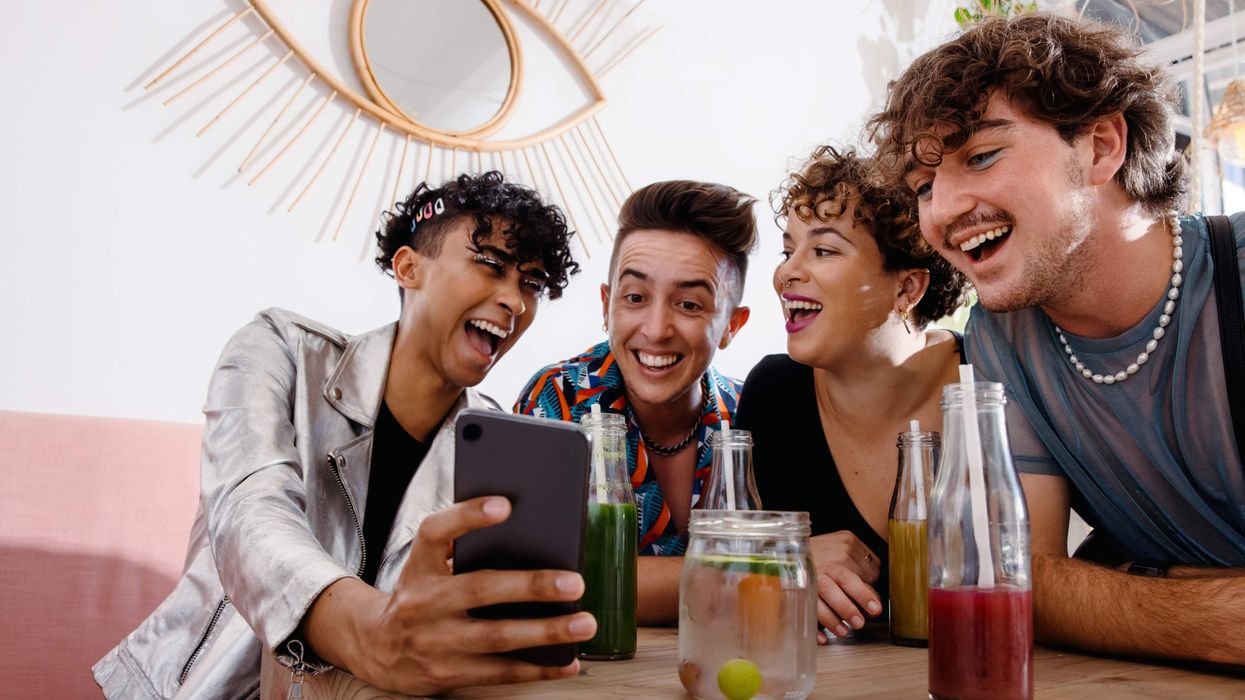
Ground Picture/Shutterstock
Hopecore started gaining traction on TikTok and Instagram last year and is all about videos featuring “radical optimism, emotional reassurance, and the celebration of small, tender moments,” Dempsey tells PRIDE.
At a time when we are more politically divided than ever before, and loneliness is on the rise, it makes sense that people would turn to online communities to help them deal with the stressors of life and find a way to turn away from some of the negativity that festers on social media. “It exists largely as a counterbalance to the burnout, and doomscrolling culture that dominate many online spaces,” he says. “Hopecore content typically includes gentle affirmations, inspirational quotes, comforting music, and messages that encourage resilience, self-kindness, and belief in a better future.”
This has become a trend on social media — why now?
Dempsey says that hopecore has found an audience because social media “has become saturated with bad news cycles, political tension, economic instability, and widespread burnout,” and people are looking for an alternative that can offer some optimism, a grounding influence, and a gentle reminder that there is good in this world.
Whether you are doomscrolling on social media, staying tuned into the 24-hour news cycle, or falling victim to an algorithm that is feeding you negativity, hopecore offers an alternative at a time when rising political and economic instability can make life feel bleak.
“Its timing isn’t coincidental—it's an emotional response to collective fatigue and the desire for something softer and more hopeful amid ongoing uncertainty,” Dempsey says. “At its core, hopecore fills a psychological need: it gives people permission to feel optimistic, even in small ways, at a moment when hope can feel scarce.”
What does hopecore look like for LGBTQ+ audiences? How is it different from their straight counterparts?
Mainstream hopecore tends to focus on optimism and emotional reassurance, but for queer people, there is usually an added layer of identity affirmation and a validation of shared lived experiences that are often “shaped by marginalization, chosen family, and the journey toward self-acceptance,” Dempsey explains.
“It’s not just about hope in the abstract—it’s about hope in the context of living authentically, safely, and joyfully,” he says.
The LGBTQ+ version of hopecore usually includes affirming messages about identity, moments of queer joy and gender euphoria, validation of common struggles like discrimination and family rejection, highlights chosen family, and features reminders that queer joy and hope are radical acts.
“Straight hopecore often leans heavily on universal themes—self-love, small pleasures, gentle affirmations—without needing to address systemic or identity-specific challenges,” Dempsey says. “LGBTQ+ hopecore, by contrast, frequently incorporates the realities of queer life: the fight for acceptance, the importance of representation, and the emotional significance of seeing people like you thriving.”
Is there anything to be wary of in this trend?

bbernard/Shutterstock
Hope can be a powerful tool and an instrument of change, but there are also reasons to be cautious when consuming hopecore content.
It can oversimplify mental health and lead people to believe that watching hopecore content is a substitute for real treatment. Just like any other social media content you consume, hopecore content can lead you into a repetitive echo chamber that feeds you shallow encouragement devoid of meaning or real hope. You also have to be wary of hopecore content that is really just a ploy to get you to buy something. And it can also even unintentionally “exclude people whose cultural expressions of joy, resilience, or optimism look different,” Dempsey says.
“Hopecore can be comforting and even meaningful, but like any digital wellness trend, it works best when paired with authenticity, nuance, and awareness of its limitations,” he explains.
How can LGBTQ+ folks find hopecore online?
If you are tired of doomscrolling and want to dive headfirst into more hopeful content, start by searching for hopecore hashtags and their queer variations on sites like TikTok and Instagram. Once you’ve found some uplifting, identity-affirming content, start watching it, and your algorithm will feed you more.
“Following creators who focus on personal stories, affirmations, or community-centered content can also help people find authentic, meaningful hopecore that resonates with their experiences,” Dempsey recommends. “By engaging with these communities, LGBTQ+ folks can access a mix of inspiration, connection, and gentle reassurance in their feeds.”