'%3E%3Cpath d='M16.3574 35.6519H12.9537L15.0491 18.8873L16.3574 35.6519ZM30.4229 54.0093L22.309 0.994385H7.91795L0 54.0093H10.6634L11.5802 46.3855H17.4014L17.9914 54.0093H30.4229Z' fill='%23971B20'/%3E%3Cpath d='M48.2073 41.8813C48.2073 43.4049 47.4892 44.0011 46.1144 44.0011H43.7595V11.0687H46.1144C47.4892 11.0687 48.2073 11.6636 48.2073 13.1885V41.8813ZM59.5273 43.6695V11.3326C59.5273 3.71323 53.5729 0.994385 47.8157 0.994385H31.7213V54.0093H47.8157C53.5729 54.0093 59.5273 51.29 59.5273 43.6695Z' fill='%23971B20'/%3E%3Cpath d='M90.183 0.994385H78.6039L75.0711 30.6157L71.9955 0.994385H59.4346L69.2474 54.0093H80.373L90.183 0.994385Z' fill='%23971B20'/%3E%3Cpath d='M107.063 42.3448C107.063 43.7359 105.951 44.5974 104.643 44.5974C103.269 44.5974 102.157 43.7359 102.157 42.3448V12.658C102.157 11.2676 103.269 10.4058 104.643 10.4058C105.951 10.4058 107.063 11.2676 107.063 12.658V42.3448ZM119.233 43.2723V11.7312C119.233 6.36384 112.952 -3.8147e-06 104.643 -3.8147e-06C96.2667 -3.8147e-06 89.9867 6.36384 89.9867 11.7312V43.2723C89.9867 48.6393 96.2667 55 104.643 55C112.952 55 119.233 48.6393 119.233 43.2723Z' fill='%23971B20'/%3E%3Cpath d='M150.976 43.9349V33.7309H139.069V42.3448C139.069 43.7359 137.957 44.5974 136.582 44.5974C135.076 44.5974 133.964 43.7359 133.964 42.3448V12.658C133.964 11.2676 135.076 10.4058 136.582 10.4058C137.957 10.4058 139.069 11.2676 139.069 12.658V21.2723H150.976V11.0687C150.976 5.70107 145.283 -3.8147e-06 136.582 -3.8147e-06C127.75 -3.8147e-06 121.796 5.70107 121.796 11.0687V43.9349C121.796 49.3022 127.75 55 136.582 55C145.283 55 150.976 49.3022 150.976 43.9349Z' fill='%23971B20'/%3E%3Cpath d='M167.478 35.6519H164.076L166.17 18.8873L167.478 35.6519ZM181.544 54.0093L173.432 0.994385H159.037L151.123 54.0093H161.785L162.704 46.3855H168.523L169.114 54.0093H181.544Z' fill='%23971B20'/%3E%3Cpath d='M205.412 10.4058V0.994385H177.081V10.4058H185.392V54.0093H197.428V10.4058H205.412Z' fill='%23971B20'/%3E%3Cpath d='M230.002 54.0093V43.9349H218.914V31.8746H226.635V21.8028H218.914V10.4058H230.002V0.994385H206.875V54.0093H230.002Z' fill='%23971B20'/%3E%3C/g%3E%3Cdefs%3E%3CclipPath id='clip0_260_7080'%3E%3Crect width='230' height='55' fill='white'/%3E%3C/clipPath%3E%3C/defs%3E%3C/svg%3E)
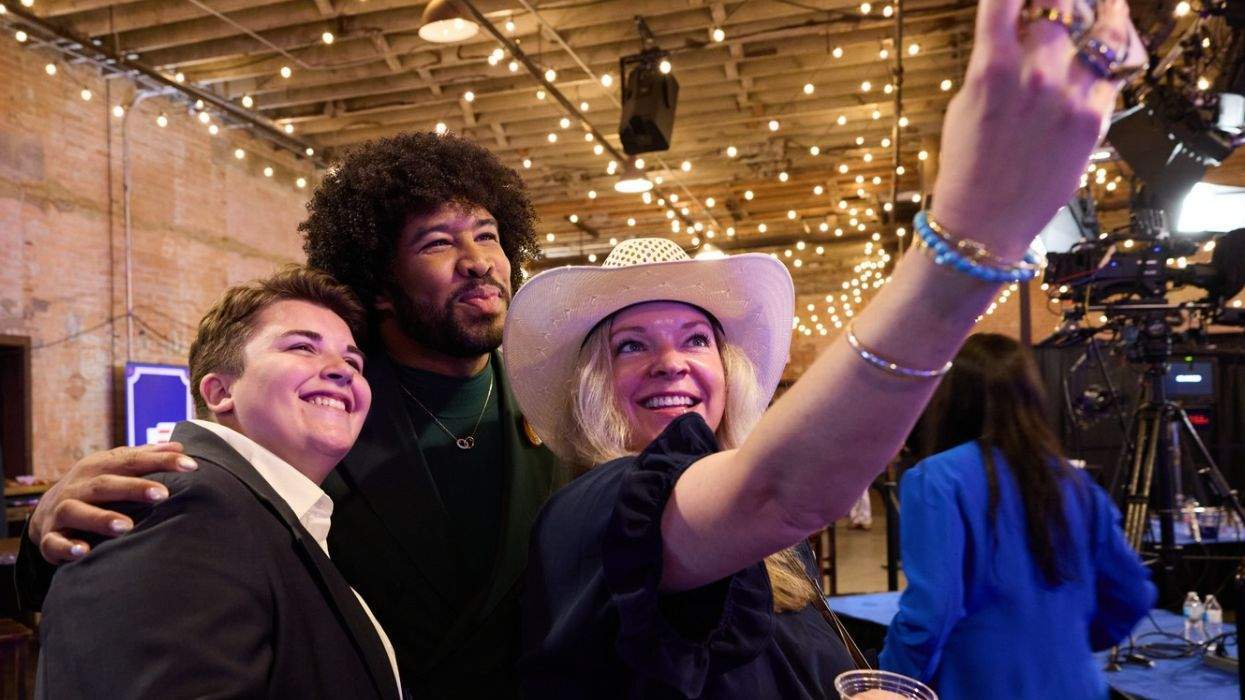
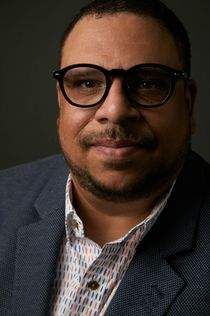
Eugene Daniels knows the people who run Washington, D.C. Lately, the question that stays with him comes from people who wonder whether Washington has any idea what it is doing to them.
“Are we going to be okay?”
He heard versions of it during MS NOW’s September 26 gathering at the University of Texas at Arlington, Daniels told The Advocate in an interview Wednesday. The event brought the network’s journalists face-to-face with viewers for conversations about democracy and the approaching midterms.
“It reminds me that, oh shit, people are looking to us to provide them with information about their lives,” he said.
Daniels has an answer, although it comes with an assignment. “If we’re going to be okay, it’s going to be because of you.”
That belief in the people watching helps explain his enthusiasm for MS NOW’s new membership program, which gives paying subscribers opportunities to question the journalists who usually ask the questions. It also comes at a moment when his employer and his former newsroom, Politico, are fighting alongside CNN over whether the president can punish unfavorable coverage by shutting reporters out.
Related: MS NOW hosts leak their group chat conversation about politics & culture in new ‘Clock It’ podcast
A familiar face, a different conversation
Daniels was feeling unusually optimistic Wednesday. He had recently finished recording a conversation with Rachel Maddow and was thinking about the ordinary people behind the movements that expanded American freedom.
Everyone, he said, has some capacity to contribute.
“You got 20 more minutes of this sweetness,” he said.
MS NOW’s membership service launched on September 9, offering live television, additional programming, and interactive conversations. Its Saturday “Weekend Brunch” sessions, held at noon Eastern, rotate among Daniels and his The Weekend co-hosts, Jonathan Capehart and Jackie Alemany.
Semafor reported when the program was announced that MS NOW is trying to expand its digital business amid cable television’s decline, drawing on the attachment viewers already feel to its personalities. Daniels knows how enthusiastically he makes the case.
“I’m going to sound like such a company man,” he told The Advocate.
But listen past the product pitch, and his interest becomes more specific. People watching the news have questions that the people producing it have not necessarily thought to ask. Sometimes, Daniels said, a viewer’s detailed inquiry suggests a story he should pursue.
Sometimes, they want to know where he got his brooch.
The conversations can move between those registers without much warning, much as Daniels does. He can discuss the responsibilities of a national newsroom and then affectionately needle Capehart about viewers who remind him just how long he has been on television.
“He’s seasoned, very seasoned,” Daniels said.
That ease has been part of the show’s appeal since The Advocate interviewed the trio ahead of their 2025 debut. For Daniels, a former Division I college football player, the opportunity also meant working beside a gay Black journalist whose example had helped him imagine his own future.
Now, Daniels is that example for someone else.
Related: MSNBC revamps weekend morning show with two prominent Black gay men as cohosts
Entirely himself
Daniels is a husband, a veteran Washington reporter, and an unapologetically out gay Black man whose professional colorful wardrobe accommodates nail polish and ornate brooches. He has little interest in sanding away the parts of himself that make him recognizable.
Still, when he first got the job, he asked whether he should.
He recalled calling colleagues to ask whether his clothes or nail polish needed adjusting. Their answer, he said, was that they had hired him knowing who he was.
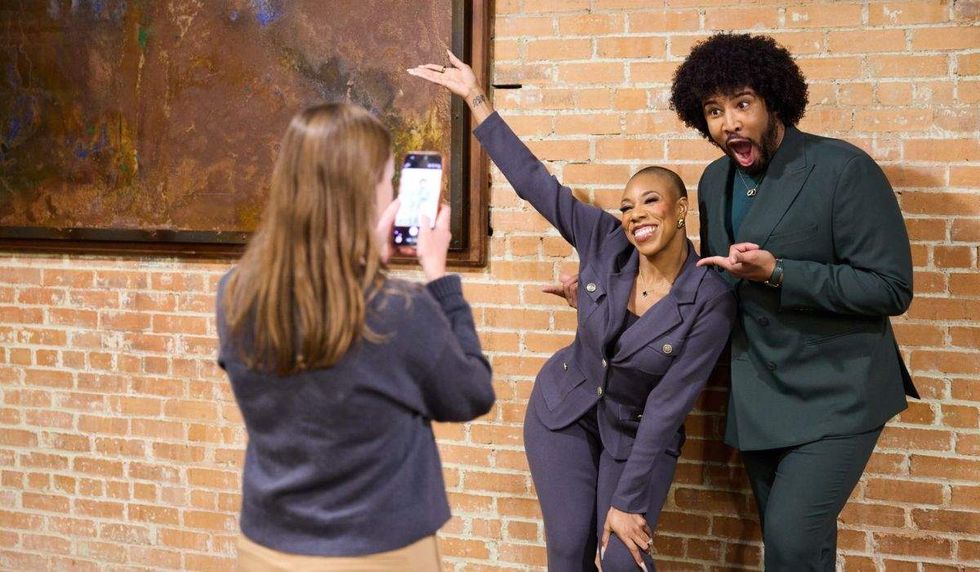 Symone Sanders Townsend and Eugene Daniels host their podcast "Clock It!" and regularly chat longer than the 45-minutes allotted for it.MS NOW
Daniels pointed to Maddow, whose signature look is as familiar as her political analysis. “The queen of our network is a lesbian woman who wears a black V-neck and a black jacket every Monday,” he said.
He hopes that visibility speaks to viewers who have rarely seen themselves occupying that kind of authority.
“There is nothing more fulfilling than hearing from a young queer person or young Black person, young Black queer person or person of color that us just sitting in our chairs and doing our jobs gives them a different way of thinking about their own futures,” Daniels said.
He finds the idea humbling and slightly bewildering. He still thinks of himself as “goofy Eugene.”
Being recognizable to those audiences also creates expectations about the journalism. Black and queer people care about the economy and everything else happening in the country, Daniels said, while facing particular threats that require sustained attention.
He spoke about transgender and nonbinary people trying to go to school, participate in sports, and live without government interference. His own gender-nonconforming sibling makes those questions personal.
“They’re just asking to live their lives,” he said.
The same conversational approach extends to Clock It with Symone & Eugene, his podcast with Symone Sanders Townsend. In their February interview with The Advocate, the pair described opening up conversations they were already having by text, on FaceTime, and after their television shows.
The challenge sometimes is getting them to stop. Daniels said they have talked for two hours while recording what is supposed to be a 45-minute podcast.
Related: From NBC’s peacock carpet to MS NOW: ‘The Weekend’ hosts step into a new era in cable television
When the White House closes the door
Daniels’s familiarity with Washington extends well beyond television guests. He covered the White House and helped produce Politico’s widely read “Playbook” before joining MS NOW full time, and his presidency of the White House Correspondents’ Association placed him at the center of confrontations over press access.
The latest confrontation involves both his current and former employers.
President Donald Trump announced on September 18 that he was banning CNN, MS NOW, and Politico from the White House, attacking their coverage and threatening other outlets with similar treatment. The organizations sued, challenging the government’s ability to retaliate against their reporting.
U.S. District Judge Timothy J. Kelly temporarily restored access through a 14-day order, finding that the outlets were likely to succeed on their due process claims. The administration has defended the restrictions in part by citing national security concerns.
The outlets have since requested a preliminary injunction to preserve access while the case proceeds.
The pool system creates consequences beyond the three plaintiffs. ABC, CBS, CNN, Fox News, and NBC share responsibility for providing television coverage in restricted settings, and the networks initially suspended pool coverage after CNN was prevented from performing its assigned duties.
Daniels welcomes the solidarity. He wishes more of it had arrived earlier, in 2025, when Trump banned the Associated Press from the White House when the wire service refused to refer to the Gulf of Mexico as the Gulf of America. A judge intervened.
“Do I wish there had been louder solidarity last February? Yeah, I do,” he said.
While organizing support for the AP during his WHCA presidency, Daniels said he repeatedly encountered newsroom leaders worried that speaking up would invite retaliation.
“Over and over, people would say, ‘We just don’t want a target on our back,’” he recalled. “And my thing was, ‘The target’s here. This is the opening salvo.’”
Related: MSNBC fires back at disinformation — and makes history — with fearless new show
Another test for press solidarity
Asked whether print outlets should also refuse to cover Trump in solidarity with Politico, Daniels declined to prescribe their response.
“I think that’s a question for them,” he said.
But he described the television pool’s suspension as purposeful and said Politico’s next scheduled turn as the print pool representative would present another test.
“There will be other opportunities to see how much more solidarity is needed and where it is needed,” Daniels said.
He recognized the discomfort among newsroom leaders, particularly those accustomed to covering protests rather than contemplating collective action themselves.
“All these words are colored as words that we cover, not words that we do as actions,” he said.
However, Daniels said the obligation to defend independent reporting remains. “Our whole job is about standing up,” he said.
Trump is hardly the first president to resent scrutiny, Daniels added. But he sees a deterioration in the respect for journalism’s role that once helped sustain the relationship between the presidency and the reporters covering it.
“People who have information that they want to keep from the American people until they’re ready to share it, don’t like people who are digging into that information,” he said.
He hopes news organizations carry the lessons of each confrontation into the next. “I think there are times to stand up, and the time is always as soon as you see an injustice the first time,” he said.
The people Washington misses
Washington can become so consumed with its own conflicts that people living with the consequences disappear into political abstractions.
Affordability is one example. On reporting trips, Daniels said he hears from people choosing between food and gas, or unable to afford the trip to a funeral.
“People are really hurting, really, really hurting,” he said.
His reporting on Black voters has made another disconnect difficult to ignore.
In an Ohio neighborhood, Daniels accompanied people knocking on doors and encountered young Black men who said nobody had previously talked with them about voting. One man, recently out of jail, said he'd had little interest in politics until Daniels asked what he cared about.
Then came a detailed account of what needed fixing in the jail system.
“I said, ‘That’s criminal justice reform,’” Daniels recalled.
He plans to follow the story of “the disillusionment and abandonment of Black people and largely young Black men in this country by our political system,” he said. “Whether you’re a Republican or a Democrat or Independent, that is absolutely unacceptable.”
An inheritance, and an obligation
Daniels measures his access to power against a family history that makes it hard to take it for granted.
His family’s roots in Bucksport, South Carolina, extend to ancestors brought there through slavery, he said. Their descendant now questions powerful people and explains their answers to audiences who cannot walk into the White House or roam Capitol Hill themselves.
“It is a joy to do, and I know that sounds cheesy, but I’m kind of cheesy,” he said.