'%3E%3Cpath d='M16.3574 35.6519H12.9537L15.0491 18.8873L16.3574 35.6519ZM30.4229 54.0093L22.309 0.994385H7.91795L0 54.0093H10.6634L11.5802 46.3855H17.4014L17.9914 54.0093H30.4229Z' fill='%23971B20'/%3E%3Cpath d='M48.2073 41.8813C48.2073 43.4049 47.4892 44.0011 46.1144 44.0011H43.7595V11.0687H46.1144C47.4892 11.0687 48.2073 11.6636 48.2073 13.1885V41.8813ZM59.5273 43.6695V11.3326C59.5273 3.71323 53.5729 0.994385 47.8157 0.994385H31.7213V54.0093H47.8157C53.5729 54.0093 59.5273 51.29 59.5273 43.6695Z' fill='%23971B20'/%3E%3Cpath d='M90.183 0.994385H78.6039L75.0711 30.6157L71.9955 0.994385H59.4346L69.2474 54.0093H80.373L90.183 0.994385Z' fill='%23971B20'/%3E%3Cpath d='M107.063 42.3448C107.063 43.7359 105.951 44.5974 104.643 44.5974C103.269 44.5974 102.157 43.7359 102.157 42.3448V12.658C102.157 11.2676 103.269 10.4058 104.643 10.4058C105.951 10.4058 107.063 11.2676 107.063 12.658V42.3448ZM119.233 43.2723V11.7312C119.233 6.36384 112.952 -3.8147e-06 104.643 -3.8147e-06C96.2667 -3.8147e-06 89.9867 6.36384 89.9867 11.7312V43.2723C89.9867 48.6393 96.2667 55 104.643 55C112.952 55 119.233 48.6393 119.233 43.2723Z' fill='%23971B20'/%3E%3Cpath d='M150.976 43.9349V33.7309H139.069V42.3448C139.069 43.7359 137.957 44.5974 136.582 44.5974C135.076 44.5974 133.964 43.7359 133.964 42.3448V12.658C133.964 11.2676 135.076 10.4058 136.582 10.4058C137.957 10.4058 139.069 11.2676 139.069 12.658V21.2723H150.976V11.0687C150.976 5.70107 145.283 -3.8147e-06 136.582 -3.8147e-06C127.75 -3.8147e-06 121.796 5.70107 121.796 11.0687V43.9349C121.796 49.3022 127.75 55 136.582 55C145.283 55 150.976 49.3022 150.976 43.9349Z' fill='%23971B20'/%3E%3Cpath d='M167.478 35.6519H164.076L166.17 18.8873L167.478 35.6519ZM181.544 54.0093L173.432 0.994385H159.037L151.123 54.0093H161.785L162.704 46.3855H168.523L169.114 54.0093H181.544Z' fill='%23971B20'/%3E%3Cpath d='M205.412 10.4058V0.994385H177.081V10.4058H185.392V54.0093H197.428V10.4058H205.412Z' fill='%23971B20'/%3E%3Cpath d='M230.002 54.0093V43.9349H218.914V31.8746H226.635V21.8028H218.914V10.4058H230.002V0.994385H206.875V54.0093H230.002Z' fill='%23971B20'/%3E%3C/g%3E%3Cdefs%3E%3CclipPath id='clip0_260_7080'%3E%3Crect width='230' height='55' fill='white'/%3E%3C/clipPath%3E%3C/defs%3E%3C/svg%3E)
“What the song didn’t tell you, the movie will.”
Moviegoers seemed to believe that was true when, out of the blue, in the 1976 film Ode to Billy Joe, Billy Joe McAllister (Robby Benson) is found dead in the Tallahatchie River after admitting to his girlfriend Bobbie Lee (Glynnis O’Connor) that he had “been with a man, which is a sin against nature, a sin against God.”
Based on Bobbie Gentry’s 1967 hit song of the same name, which is hauntingly empowered by lyrics that leave several mysteries untold for its 4 minutes and 15 seconds, the film needed answers. Summer of ’42 novelist and screenwriter Herman Raucher provided some of his own invention and threw audiences and critics for a loop.
In careful re-evaluation, the film – which marks its 50th anniversary of release on June 3, 2026 – provides fewer answers than those who saw it probably thought.
Ode to Billy Joe was made ostensibly by straight folks. Raucher admitted that the homosexual bent was employed because of its novelty, not as a progressive social statement or post-Stonewall take on pre-Stonewall intolerance.
While the film is set in 1953 Mississippi, it was seen in contemporary terms on its release. One of the astonishing feats of this low-budget picture financed and released by a major studio, Warner Bros., is that its thematic left turn is unforeseen until the moment it happens in the story. It made for uncomfortable and silent car rides home from the movie house for closeted gay sons and daughters who attended with their parents, something documented by John Howard in Men Like That: A Southern Queer History (University of Chicago, 2001).
The original screenplay, unsurprisingly, does more with the theme than was left in the final film. Billy Joe does not utter “I have been with a man” to Bobbie Lee. He says, “I have been made love to – by a man.” And while the agony of his confession is filled with self-hate, the dialogue went further still. He says of the man, “I like him. Okay? I like him. It’s a time for being truthful with myself – as well as you. Sayin’ it out loud – does somehow make it easier.” Those lines are not in the film.
Also cut from the final exchange between Bobbie Lee and the man who Billy Joe was with that night is her saying that Billy Joe hadn’t named names, “Just allowed as to how he liked you. For him to have liked you – I figured you would one day step forward. But I just do not see the sense in that. Not if you liked him. If you liked him, you’d let it be.” When the man tells her, as he does in the film, that “I tried to tell him that it might never happen again,” the screenplay has her respond in lines that were also cut: “He did not believe that. I guess it would be better if I did not believe that either.”
Upon its release, the Gay Community News gave space for a “non-review," asserting, “At the risk of sounding unethical, I don’t need to see Ode to Billy Joe to assure you it’s a piece of shit.” The publication called it an “anti-homo message” from hetero filmmakers, including director Max Baer, Jr. The Body Politic – A Gay Liberation Journal’s Paul Trollope wrote: “The producers have cynically made a film designed to reach the under-16 group and inculcate them – but good – with the homophobia that serves society’s purposes in keeping us oppressed.”
One of the few contemporary gay critics who perceptively wrote about the movie was Scott Beaven in The Albertan, July 26, 1976: “Robby Benson’s portrayal of Billy Joe joins the handful of other homosexuals we have on the screen (Peter Finch in Sunday, Bloody Sunday, the pair of lovers in A [Very] Natural Thing) who are decent people first and homosexuals second.” The review is a mixed one, faulting its writing and its “crassness,” yet the movie is “an ode to all the Billy Joes who had the bad fortune to live in repressive cultures that turned their closets into tombs.”
Variety’s “Murf,” a lifelong bachelor, gave a tellingly glowing review, calling it a classic. Others in the mainstream press were confused and mostly reactionary. Billy Joe’s understood rationale for jumping was often seen as a deus ex machina.
Hollywood cinema’s first discernible gay teenager is arguably Sal Mineo’s Plato in Rebel Without A Cause (1955). Its first openly gay one is likely Kevin Coughlin’s boy-genius Billy Cage in the low-budget American International Pictures anti-establishment fantasy Wild in the Streets (1968). But largely, at the time, Hollywood ignored the subject. It’s as if they didn’t want to lay that trip on a young adult. Much of that was tied to the way in which homosexuality had been understood throughout the 20th century. It was not something generally seen as normal, right, proper, acceptable, or even legal.
Stars Glynnis O’Connor and Robby Benson were interviewed by Steve Warren in The Advocate as part of the publicity campaign. Twenty-year-old Benson said that some might look at the film in purely Romeo and Juliet terms, “but the way I see it, it’s kind of a slap in the face of society. There’re all these roles and this kid, ever since he was small, you know he was pounded into this way of thinking. And he had this relationship with this man, and he was so ashamed that he had to kill himself.
“You wonder why he was so ashamed. I mean, it’s not something that you would think of yourself. Somebody tells you you’re abnormal. I think anywhere guys grow up, it’s always this macho kind of thing. You know, everybody’s a faggot who doesn’t play ball right.” He concludes, “I think it says something that a perfectly good person kills himself because he’s been branded a freak.”
Vito Russo, in his landmark 1981 book The Celluloid Closet: Homosexuality in the Movies, adds Billy Joe to the list of preordained cinematic suicides. Slightly misquoting Bobbie Lee’s assertion that Billy Joe is now a legend, Russo writes: “And legends cannot be queer.”
Russo was onto an interesting point though. Bobbie’s bold decision at the film’s end to protect Billy Joe’s reputation by letting people believe that his death was because she became pregnant by him is a best-outcome sacrifice from her perspective. It betrays a twisted logic while it assures preservation of a false memory of who he was. This right doesn’t make much of the extraordinary wrong.
The legacy of Ode to Billy Joe is both curious and complicated. Revisiting it has given me a new perspective on its remarkable place in the history of American queer cinema. It’s blessed by its sudden recognition of gay youth, refusing to cop out by simply making his same-sex experience the villain. Instead, it shows a young man who knows that this is who he is. He quietly and bravely tells Bobbie Lee that she is wrong when she insists he’s not like that. And we see how prevailing attitudes and beliefs can feed self-hate and pervert the value of a life, make it seem corrupt, unnatural, worthless.
But the film is also cursed by its sudden revelation of homosexuality as to why yet another young person might be compelled to end it all. Better he lives on via a sexist, glorifying hetero-myth. He effectively becomes a boy erased and redrawn.
Like the mysterious song it came from, the one without answers, the movie continues to be an enigma. It struck emotional chords with LGBTQ+ individuals in 1976, but those chords were played with a bending of the notes, a depressing conclusion that suicide was the only way Billy Joe could see to handle his self-realization. Some gay men recognized that anguish and may have even understood what motivated him, simultaneously struggling with a perception that some straight audience members might have thought it was the right thing to do.
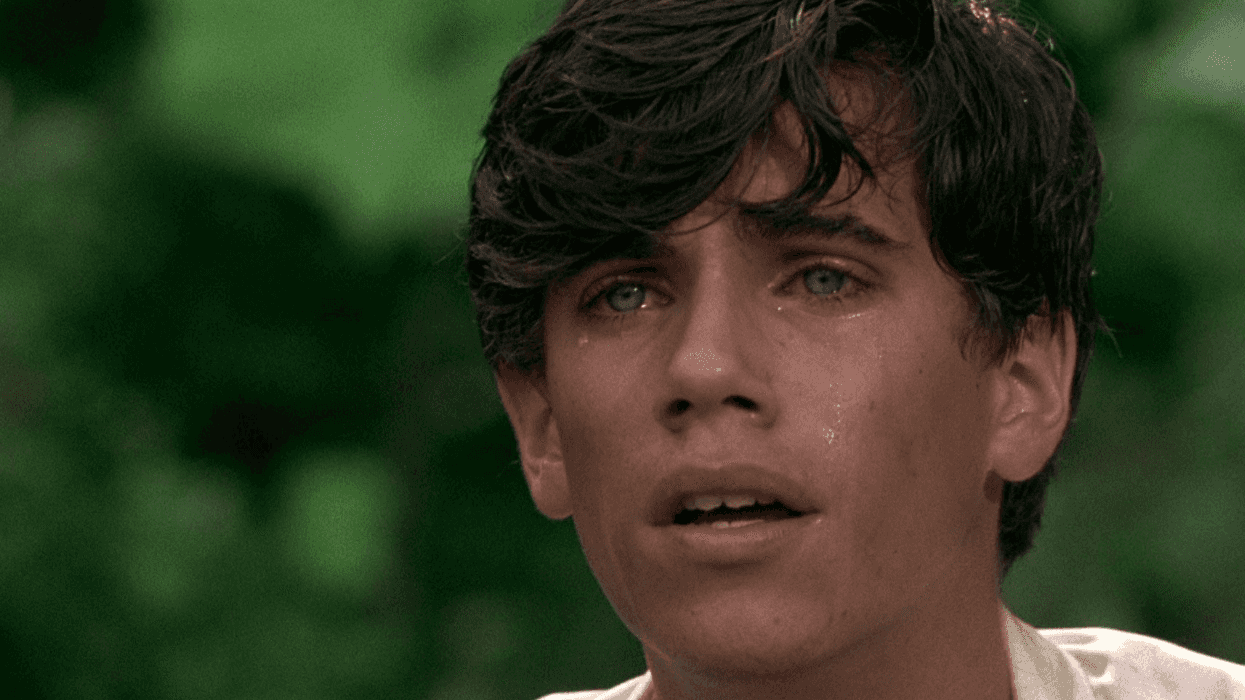
Mostly overlooked or carelessly dismissed, Ode to Billy Joe finds enduring relevance in an anguished, tear-streaked face. The awkward, goofy boy we first met is gone. It’s heartbreaking to think of what he will go through in the hours ahead as he wonders whether he can or should go home, whether he’s a person who deserves to live.
I was a teenager when the movie played my hometown. I was spared from going by the poster artwork. It looked like a mushy love story. (To its credit, the film is Bobbie Lee’s story, not Billy Joe’s.) I would have gone anyway if I had known Robby Benson was so cute, but that wouldn’t happen until I saw him the following year in One on One (1977).
I wonder now how at 14 I would have taken Billy Joe’s death. I know I would have been sad for him, and maybe for me. I know I would have wanted to be his friend.
I know I would have kept his secret, and he would have kept mine.
Michael Ferguson is the author of Joe Dallesandro: Warhol Superstar, Underground Film Icon, Actor, as well as Little Joe Superstar and Idol Worship: A Shameless Celebration of Male Beauty in the Movies.