'%3E%3Cpath d='M16.3574 35.6519H12.9537L15.0491 18.8873L16.3574 35.6519ZM30.4229 54.0093L22.309 0.994385H7.91795L0 54.0093H10.6634L11.5802 46.3855H17.4014L17.9914 54.0093H30.4229Z' fill='%23971B20'/%3E%3Cpath d='M48.2073 41.8813C48.2073 43.4049 47.4892 44.0011 46.1144 44.0011H43.7595V11.0687H46.1144C47.4892 11.0687 48.2073 11.6636 48.2073 13.1885V41.8813ZM59.5273 43.6695V11.3326C59.5273 3.71323 53.5729 0.994385 47.8157 0.994385H31.7213V54.0093H47.8157C53.5729 54.0093 59.5273 51.29 59.5273 43.6695Z' fill='%23971B20'/%3E%3Cpath d='M90.183 0.994385H78.6039L75.0711 30.6157L71.9955 0.994385H59.4346L69.2474 54.0093H80.373L90.183 0.994385Z' fill='%23971B20'/%3E%3Cpath d='M107.063 42.3448C107.063 43.7359 105.951 44.5974 104.643 44.5974C103.269 44.5974 102.157 43.7359 102.157 42.3448V12.658C102.157 11.2676 103.269 10.4058 104.643 10.4058C105.951 10.4058 107.063 11.2676 107.063 12.658V42.3448ZM119.233 43.2723V11.7312C119.233 6.36384 112.952 -3.8147e-06 104.643 -3.8147e-06C96.2667 -3.8147e-06 89.9867 6.36384 89.9867 11.7312V43.2723C89.9867 48.6393 96.2667 55 104.643 55C112.952 55 119.233 48.6393 119.233 43.2723Z' fill='%23971B20'/%3E%3Cpath d='M150.976 43.9349V33.7309H139.069V42.3448C139.069 43.7359 137.957 44.5974 136.582 44.5974C135.076 44.5974 133.964 43.7359 133.964 42.3448V12.658C133.964 11.2676 135.076 10.4058 136.582 10.4058C137.957 10.4058 139.069 11.2676 139.069 12.658V21.2723H150.976V11.0687C150.976 5.70107 145.283 -3.8147e-06 136.582 -3.8147e-06C127.75 -3.8147e-06 121.796 5.70107 121.796 11.0687V43.9349C121.796 49.3022 127.75 55 136.582 55C145.283 55 150.976 49.3022 150.976 43.9349Z' fill='%23971B20'/%3E%3Cpath d='M167.478 35.6519H164.076L166.17 18.8873L167.478 35.6519ZM181.544 54.0093L173.432 0.994385H159.037L151.123 54.0093H161.785L162.704 46.3855H168.523L169.114 54.0093H181.544Z' fill='%23971B20'/%3E%3Cpath d='M205.412 10.4058V0.994385H177.081V10.4058H185.392V54.0093H197.428V10.4058H205.412Z' fill='%23971B20'/%3E%3Cpath d='M230.002 54.0093V43.9349H218.914V31.8746H226.635V21.8028H218.914V10.4058H230.002V0.994385H206.875V54.0093H230.002Z' fill='%23971B20'/%3E%3C/g%3E%3Cdefs%3E%3CclipPath id='clip0_260_7080'%3E%3Crect width='230' height='55' fill='white'/%3E%3C/clipPath%3E%3C/defs%3E%3C/svg%3E)
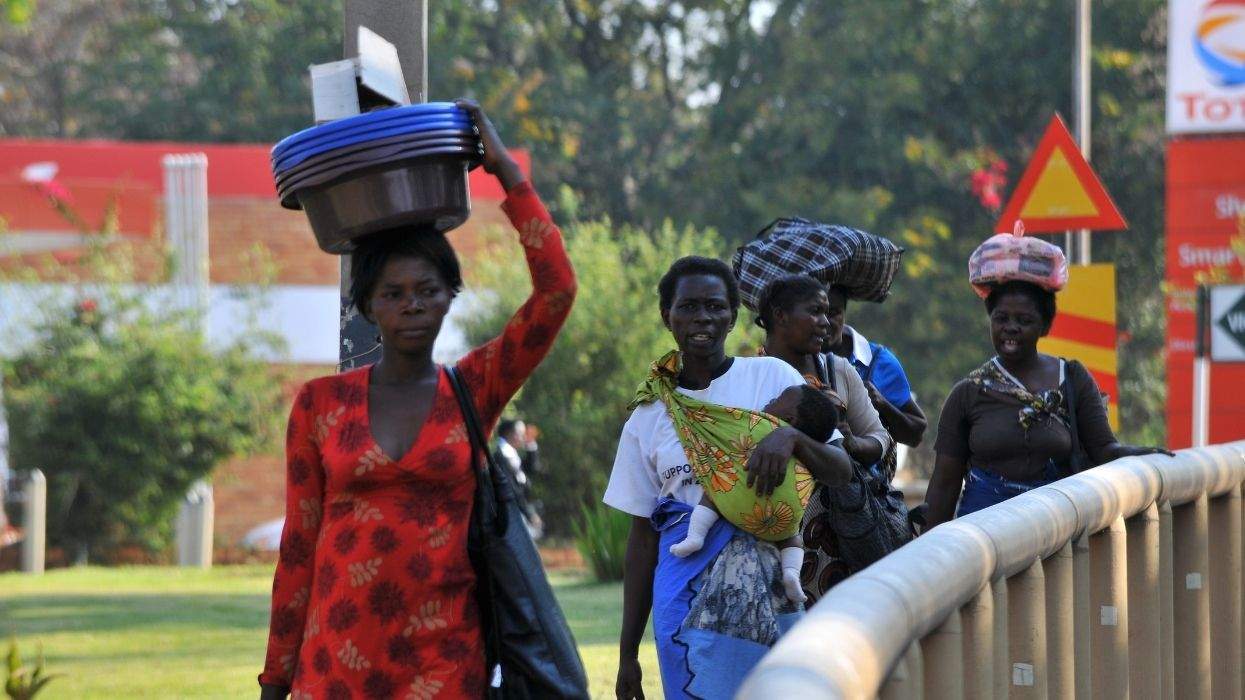

It’s hard to find good news in the United States right now, and even harder to notice it when it happens somewhere else. But some of the American evangelical right’s most hatefully aggressive anti-LGBTQ+ campaigns abroad are beginning to come undone. As their influence seems to increase here at home, they are losing ground elsewhere. Botswana has officially removed its anti-sodomy law from its Penal Code. A law that made same sex intimacy illegal.
Meanwhile, this morning in the United States, we woke up to more bad news—another set of decisions hollowing out the Voting Rights Act, extending a process that has been underway for years and narrowing protections that were once treated as foundational and now feel completely conditional, based on the color of your skin, your socioeconomic status, or your desire not to live in a white town, attend a white church, and send your white kids to a white school to study a fake version of history that insists white people never did anything wrong.
For far too long, the same ideological forces now reshaping American law and public life struggled to fully secure that kind of power here, so they built it elsewhere, investing in campaigns across parts of Africa and Eastern Europe, aligning with political actors, funding, organizing, and helping translate a particular worldview into legislation that criminalized LGBTQ+ lives in ways that were harder to achieve domestically at the time. Those efforts produced some of the most hateful and dangerous environments for the LGBTQ+ community abroad and were funded by people like Chick-fil-A, Hobby Lobby, and Blackwater.
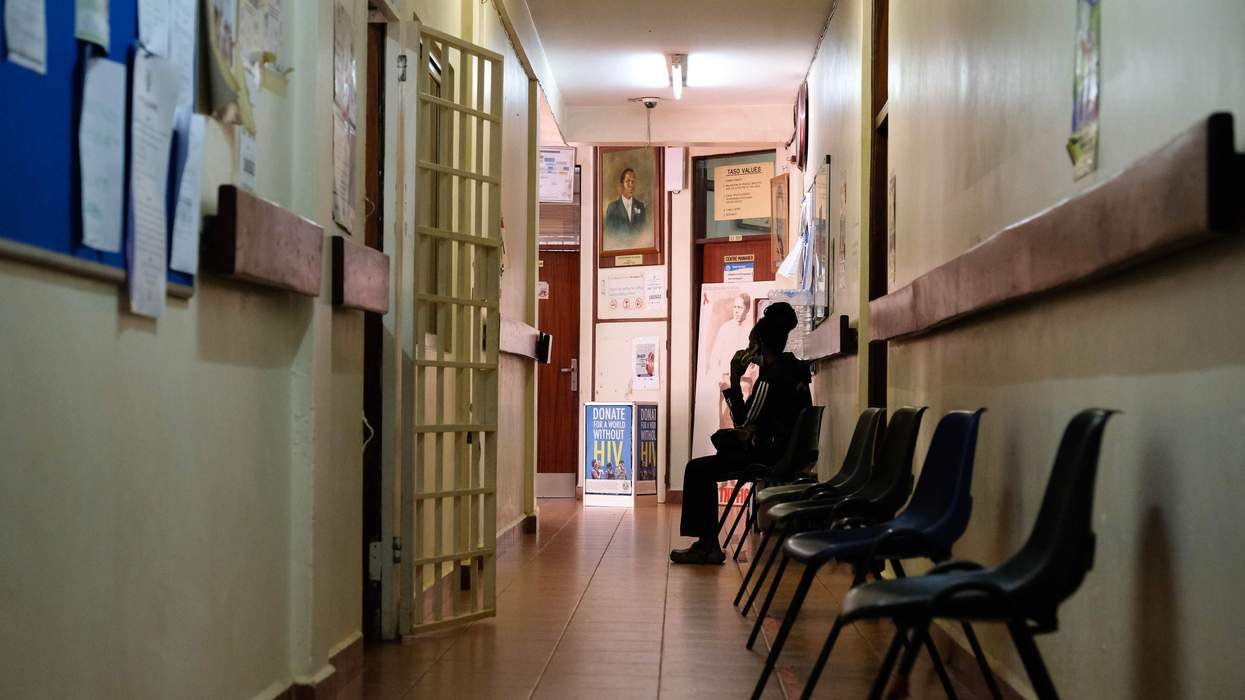
Specifically, and until very recently, in Botswana, Section 164 of the Penal Code made same-sex intimacy punishable by up to seven years in prison, which meant that for decades people were not just living with the abstract idea of a law but with the constant awareness that something as ordinary as a relationship, a conversation, a message on a phone, or being seen in the wrong place with the wrong person could shift instantly into danger.
It shaped how people lived quietly within, or disappeared out of their own communities, how carefully they spoke in public, how often they chose silence over honesty with doctors, employers, even family, because the line between private life and criminality was never fully secure, and the risk assessment calculation was always running in the background, in small decisions that accumulated over time into something worse than fear and closer to a kind of non-existence.
And even as the courts began to pull that law apart, even as the legal framework started to change, the conditions it created did not magically disappear, which is why you still see what has been happening more recently, violence that feels completely predictable if you understand what that environment produces, including the killing of people like Kenosi Mokobamotho in 2025, beaten, burned, and left to die in a homophobic attack.
And this becomes a way of life for our community—assaults, harassment, the kind of constant pressure that forces you to think through every ordinary decision before you make it, whether it’s safe to walk in public, whether a doctor will treat you or report you, whether a neighbor decides to turn you in, whether the wrong person overhears the wrong conversation and suddenly you’re either in jail or dead. It means always editing yourself in real time, scanning rooms, measuring risk, carrying the awareness that the line between being left alone and being targeted can shift without warning, and wondering whether your peers, neighbors, or even your own family have been incentivized by their government to harm you.
And if any of that feels distant, it shouldn’t.
Because now that the American evangelical right has seen what works abroad, they are using it here, building it into law, scaling it across states, refining it in real time, and the impact is already visible if you look at what has been introduced, what has passed, and what is being enforced. More than 760 anti-trans bills introduced in a single year, dozens already signed into law, hundreds more moving through statehouses across the country, with at least 43 states considering measures that reach directly into healthcare, education, legal identity, and public life, banning gender-affirming care not just for minors but increasingly targeting adults, leaving roughly half of trans youth in the United States living in states where that care is no longer available, forcing doctors to choose between their patients and the law, forcing families to cross state lines or go without, forcing young people back into systems that already failed them.
At the same time, schools are being turned into enforcement points, with more than 190 bills aimed at requiring teachers and administrators to report students who identify as trans, stripping away any expectation of privacy, banning the use of names and pronouns that don’t align with sex assigned at birth, removing any discussion of gender identity from classrooms entirely, turning something as basic as being identified as yourself into becoming a human target.
Public space is being redefined through bathroom restrictions and facility bans, introduced or considered in state after state, making the act of existing in a shared environment something that can be policed and refused. All while a more durable shift is cementing, laws that redefine sex itself in legal codes to mean only what was assigned at birth, effectively writing trans people out of existing civil rights protections altogether, not by naming them directly, but by removing the category they would need to be recognized at all.
We are fully living in this new surveillance state and are systematically ratting out our friends, neighbors, family members, kids in school, and people who just want to live their lives the way they see fit. Those nations our dear leader once called s**thole countries, we have now fully become. And no, they were never s**thole countries, but the laws spread in them by American evangelicals were definitely, 100% unadulterated s**t.
And of course this s**t is happening at the federal level as well, with more than 100 bills introduced, alongside efforts to reinstate bans on trans people serving in the military, and a growing patchwork of states moving in opposite directions, some building protections, others building restrictions, creating a map where your safety, your access to care, your ability to live freely depends entirely on where you are and whether you can leave.
Back in Botswana, the evangelical stronghold began to break in 2019, when the High Court ruled the law unconstitutional, grounding the decision in dignity. The government appealed. It lost in 2021. For a while, the law remained on the books but without force, a contradiction sitting in plain view. Now, in April 2026, the Attorney General has removed the relevant provisions entirely. The code has been brought into alignment with what the courts had already made clear, that consenting same-sex relationships are not crimes.
Many countries are now moving in the opposite direction from the United States, removing laws that once defined people as criminals, while here, at the same moment, the architecture of exclusion continues to take on a more durable shape.
The law is gone in Botswana. Other far-right figures have recently fallen out of power, which is worth celebrating. The effects of the recent global shift toward this new brand of fascism will take time to unwind, but the baseline is shifting, and with it the possibility for what comes next. Here, the trajectory is harder to ignore, and if you’re paying attention, these are not separate stories. Other nations are starting to show us the way out of this mess. I hope we’re watching.
Opinion is dedicated to featuring a wide range of inspiring personal stories and impactful opinions from the LGBTQ+ community and its allies. Visit Advocate.com/submit to learn more about submission guidelines. We welcome your thoughts and feedback on any of our stories. Email us at voices@equalpride.com. Views expressed in Voices stories are those of the guest writers, columnists, and editors, and do not directly represent the views of The Advocate or our parent company, equalpride.