'%3E%3Cpath d='M16.3574 35.6519H12.9537L15.0491 18.8873L16.3574 35.6519ZM30.4229 54.0093L22.309 0.994385H7.91795L0 54.0093H10.6634L11.5802 46.3855H17.4014L17.9914 54.0093H30.4229Z' fill='%23971B20'/%3E%3Cpath d='M48.2073 41.8813C48.2073 43.4049 47.4892 44.0011 46.1144 44.0011H43.7595V11.0687H46.1144C47.4892 11.0687 48.2073 11.6636 48.2073 13.1885V41.8813ZM59.5273 43.6695V11.3326C59.5273 3.71323 53.5729 0.994385 47.8157 0.994385H31.7213V54.0093H47.8157C53.5729 54.0093 59.5273 51.29 59.5273 43.6695Z' fill='%23971B20'/%3E%3Cpath d='M90.183 0.994385H78.6039L75.0711 30.6157L71.9955 0.994385H59.4346L69.2474 54.0093H80.373L90.183 0.994385Z' fill='%23971B20'/%3E%3Cpath d='M107.063 42.3448C107.063 43.7359 105.951 44.5974 104.643 44.5974C103.269 44.5974 102.157 43.7359 102.157 42.3448V12.658C102.157 11.2676 103.269 10.4058 104.643 10.4058C105.951 10.4058 107.063 11.2676 107.063 12.658V42.3448ZM119.233 43.2723V11.7312C119.233 6.36384 112.952 -3.8147e-06 104.643 -3.8147e-06C96.2667 -3.8147e-06 89.9867 6.36384 89.9867 11.7312V43.2723C89.9867 48.6393 96.2667 55 104.643 55C112.952 55 119.233 48.6393 119.233 43.2723Z' fill='%23971B20'/%3E%3Cpath d='M150.976 43.9349V33.7309H139.069V42.3448C139.069 43.7359 137.957 44.5974 136.582 44.5974C135.076 44.5974 133.964 43.7359 133.964 42.3448V12.658C133.964 11.2676 135.076 10.4058 136.582 10.4058C137.957 10.4058 139.069 11.2676 139.069 12.658V21.2723H150.976V11.0687C150.976 5.70107 145.283 -3.8147e-06 136.582 -3.8147e-06C127.75 -3.8147e-06 121.796 5.70107 121.796 11.0687V43.9349C121.796 49.3022 127.75 55 136.582 55C145.283 55 150.976 49.3022 150.976 43.9349Z' fill='%23971B20'/%3E%3Cpath d='M167.478 35.6519H164.076L166.17 18.8873L167.478 35.6519ZM181.544 54.0093L173.432 0.994385H159.037L151.123 54.0093H161.785L162.704 46.3855H168.523L169.114 54.0093H181.544Z' fill='%23971B20'/%3E%3Cpath d='M205.412 10.4058V0.994385H177.081V10.4058H185.392V54.0093H197.428V10.4058H205.412Z' fill='%23971B20'/%3E%3Cpath d='M230.002 54.0093V43.9349H218.914V31.8746H226.635V21.8028H218.914V10.4058H230.002V0.994385H206.875V54.0093H230.002Z' fill='%23971B20'/%3E%3C/g%3E%3Cdefs%3E%3CclipPath id='clip0_260_7080'%3E%3Crect width='230' height='55' fill='white'/%3E%3C/clipPath%3E%3C/defs%3E%3C/svg%3E)
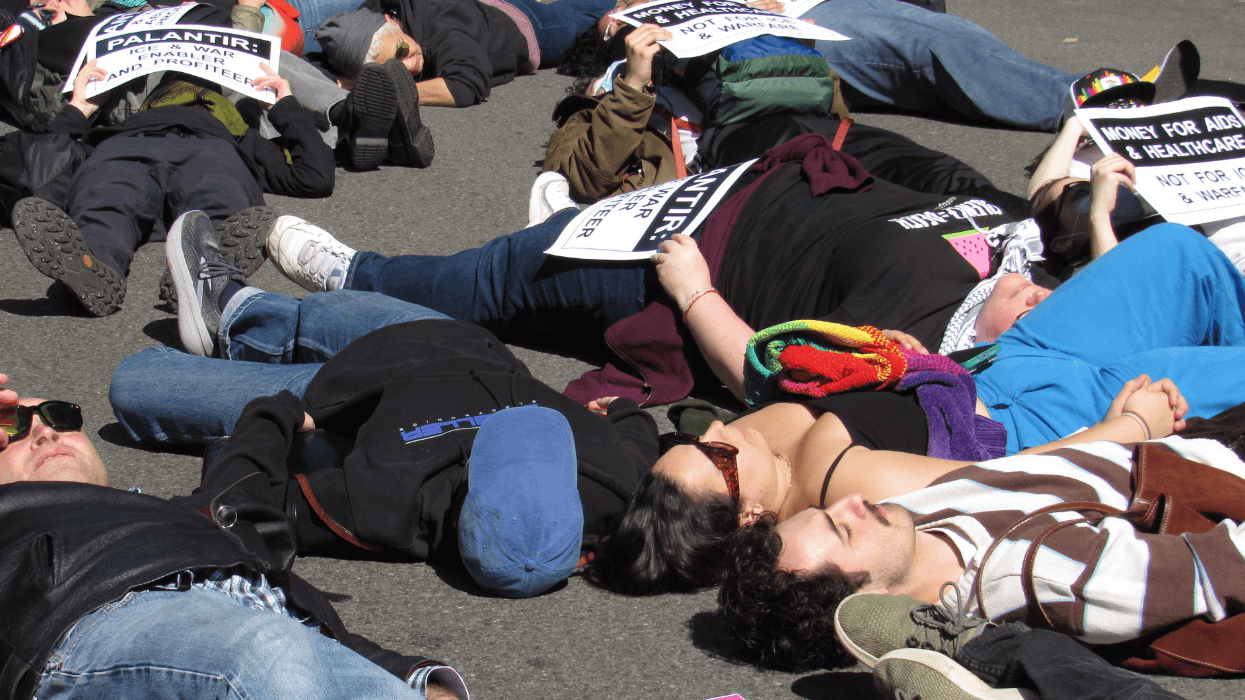
In the middle of a busy New York City street, dozens of people lay still atop the pavement on Saturday afternoon. ACT UP, one of the world’s most prominent HIV advocacy groups, organized the demonstration outside Palantir, a software company that develops surveillance technology and contracts with Immigration and Customs Enforcement.
Keep up with the latest in LGBTQ+ news and politics. Sign up for The Advocate's email newsletter.
The demonstration was a callback to die-ins staged by AIDS advocacy groups from the 1980s onward to celebrate the organization’s 39th anniversary. Hundreds of protesters rallied at the New York City AIDS Memorial, then marched to Palantir’s unmarked office in Manhattan’s Flatiron District, protesting government spending on ICE and the war against Iran amid cuts to funding for HIV care.
The Trump administration is “spending more money on war than they are on health care. They’re spending more money on ice than they are on AIDS care,” Eric Sawyer, a founder of ACT UP New York who helped organize the protest, told The Advocate. “We think those priorities are way out of line with American priorities.”
Related: 7 images of ACT UP NY taking to the streets at a queer Palestine rally saying ‘SILENCE=DEATH’
Related: 50 powerful photos from ACT UP NY's pro-Palestine rally at the GLAAD Media awards
Under Trump, Congress has sought to slash federal funding for HIV care by hundreds of millions of dollars. At the same time, Trump has increased funding to ICE by tens of billions of dollars, and more than $12 billion to fight the U.S. war against Iran.
“Their priorities are war and military spending because that, in turn, generates a lot of profits for the wealthy,” Kate Barnhart, executive director of New Alternatives for LGBTQ+ Homeless Youth, told The Advocate. “Many of our politicians own stock in these weapons profiteers. That’s why today’s march is making the connection between AIDS and health care and Palantir.”
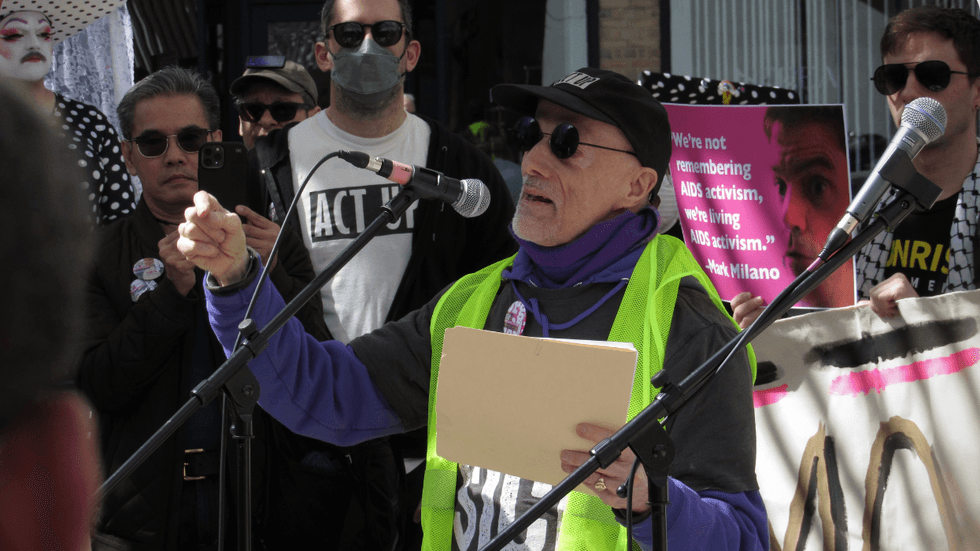 Mark Hannay, an organizer with ACT UP New York, delivers remark at the New York City AIDS Memorial on March 21, 2026. Jack Walker for The Advocate
Related: Pro-Palestine protesters march outside GLAAD Media awards: ‘In honor of our Queer history’
In the 39 years since ACT UP was founded, Sawyer said elements of HIV activism have gotten harder. With the strength of HIV care today, he said, some believe organizing for HIV care has less “urgency.”
“During the initial founding of ACT UP, there were no treatments available. AIDS was a surefire death sentence,” Sawyer said. “People are putting less of their life at risk in doing activism.”
That is why continuing to organize and protest in person, rather than solely online, still matters, he said.
Protesters honored Mark Milano, an HIV activist who died in January after decades of organizing for people living with HIV. Jennifer Flynn Walker, an organizer with the racial and economic justice organization Popular Democracy, told The Advocate that honoring Milano’s legacy felt urgent.
“Mark Milano really dedicated much of his adult life to making sure that people around the world had access to HIV medications,” Flynn said. “It was really important to me and Popular Democracy to be able to be here and honor him and his legacy.”
Longtime organizer Ivy Kwan Arce told The Advocate that ACT UP’s ability to set and fight for achievable goals has set it apart from other activist groups. “It’s not about protesting and saying, ‘I want this,’ but really over-researching [so] that they have to take your recommendation,” she said.
Looking ahead, ACT UP organizer Mark Hannay said there will be more advocacy targets to meet. Saturday’s protest was one part of “an ongoing effort,” he told The Advocate.
“We have midterm elections coming up this fall. So we want voters to be informed about what’s been happening and connecting the dots,” he said. “So that, when they go to the polls, they vote for candidates who support health care, support social programs, and oppose war and ICE.”
This article was written as part of the Future of Queer Media fellowship program at The Advocate, which is underwritten by a generous gift from Morrison Media Group. The program helps support the next generation of LGBTQ+ journalists.