'%3E%3Cpath d='M16.3574 35.6519H12.9537L15.0491 18.8873L16.3574 35.6519ZM30.4229 54.0093L22.309 0.994385H7.91795L0 54.0093H10.6634L11.5802 46.3855H17.4014L17.9914 54.0093H30.4229Z' fill='%23971B20'/%3E%3Cpath d='M48.2073 41.8813C48.2073 43.4049 47.4892 44.0011 46.1144 44.0011H43.7595V11.0687H46.1144C47.4892 11.0687 48.2073 11.6636 48.2073 13.1885V41.8813ZM59.5273 43.6695V11.3326C59.5273 3.71323 53.5729 0.994385 47.8157 0.994385H31.7213V54.0093H47.8157C53.5729 54.0093 59.5273 51.29 59.5273 43.6695Z' fill='%23971B20'/%3E%3Cpath d='M90.183 0.994385H78.6039L75.0711 30.6157L71.9955 0.994385H59.4346L69.2474 54.0093H80.373L90.183 0.994385Z' fill='%23971B20'/%3E%3Cpath d='M107.063 42.3448C107.063 43.7359 105.951 44.5974 104.643 44.5974C103.269 44.5974 102.157 43.7359 102.157 42.3448V12.658C102.157 11.2676 103.269 10.4058 104.643 10.4058C105.951 10.4058 107.063 11.2676 107.063 12.658V42.3448ZM119.233 43.2723V11.7312C119.233 6.36384 112.952 -3.8147e-06 104.643 -3.8147e-06C96.2667 -3.8147e-06 89.9867 6.36384 89.9867 11.7312V43.2723C89.9867 48.6393 96.2667 55 104.643 55C112.952 55 119.233 48.6393 119.233 43.2723Z' fill='%23971B20'/%3E%3Cpath d='M150.976 43.9349V33.7309H139.069V42.3448C139.069 43.7359 137.957 44.5974 136.582 44.5974C135.076 44.5974 133.964 43.7359 133.964 42.3448V12.658C133.964 11.2676 135.076 10.4058 136.582 10.4058C137.957 10.4058 139.069 11.2676 139.069 12.658V21.2723H150.976V11.0687C150.976 5.70107 145.283 -3.8147e-06 136.582 -3.8147e-06C127.75 -3.8147e-06 121.796 5.70107 121.796 11.0687V43.9349C121.796 49.3022 127.75 55 136.582 55C145.283 55 150.976 49.3022 150.976 43.9349Z' fill='%23971B20'/%3E%3Cpath d='M167.478 35.6519H164.076L166.17 18.8873L167.478 35.6519ZM181.544 54.0093L173.432 0.994385H159.037L151.123 54.0093H161.785L162.704 46.3855H168.523L169.114 54.0093H181.544Z' fill='%23971B20'/%3E%3Cpath d='M205.412 10.4058V0.994385H177.081V10.4058H185.392V54.0093H197.428V10.4058H205.412Z' fill='%23971B20'/%3E%3Cpath d='M230.002 54.0093V43.9349H218.914V31.8746H226.635V21.8028H218.914V10.4058H230.002V0.994385H206.875V54.0093H230.002Z' fill='%23971B20'/%3E%3C/g%3E%3Cdefs%3E%3CclipPath id='clip0_260_7080'%3E%3Crect width='230' height='55' fill='white'/%3E%3C/clipPath%3E%3C/defs%3E%3C/svg%3E)
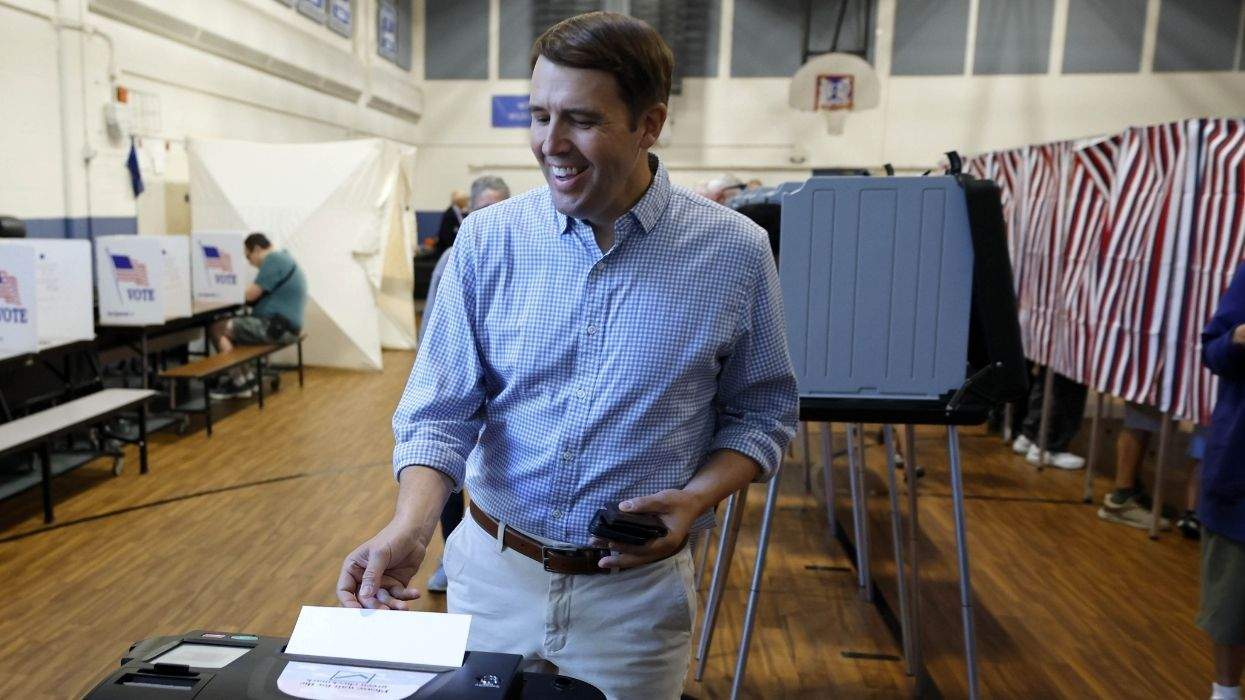

U.S. Rep. Chris Pappas won New Hampshire’s Democratic primary for U.S. Senate on Tuesday, advancing to a fiercely competitive general election that could determine control of the chamber. He is also one step closer to making LGBTQ+ history.
Decision Desk HQ called the race for Pappas at 8:00 p.m. Eastern, with 21 percent of the vote counted. Pappas received 60.08 percent, defeating progressive medical scientist Karishma Manzur, who received 38.36 percent. Three other candidates also ran.
Pappas will compete in November for the seat held by retiring Democratic Sen. Jeanne Shaheen.
On the Republican side, former New Hampshire Sen. John E. Sununu faced former Massachusetts Sen. Scott Brown in a contest between two men previously defeated by Shaheen. Sununu, who represented New Hampshire in the Senate from 2003 to 2009, lost the seat to Shaheen in 2008 and entered Tuesday with President Donald Trump’s endorsement. Brown, who later served as Trump’s ambassador to New Zealand and Samoa, moved to New Hampshire after leaving the Massachusetts seat and unsuccessfully challenged Shaheen in 2014. Decision Desk HQ projected Sununu as the Republican nominee at 8:00 p.m. Eastern. Sununu had 70 percent of the vote with 15 percent of votes counted.
“Tonight’s victory sends a clear message that voters are looking for leaders who will fight for their rights, their freedoms, and to be treated with dignity and respect,” Human Rights Campaign President Kelley Robinson said in a statement. “Chris Pappas has delivered results, stood up for equality, and showed up for the people he serves. HRC was proud to mobilize Equality Voters across New Hampshire to help power this win. We don't have a second to waste between now and November. We look forward to continuing our work with Rep. Pappas as he drives toward victory in November so he can help return a pro-equality majority to the United States Senate.”
Related: Democrat Chris Pappas in dead heat with John Sununu in New Hampshire Senate race
Pappas entered the race as the frontrunner, armed with a sizable fundraising advantage and endorsements from Shaheen, Sen. Maggie Hassan, former Vice President Kamala Harris, and major LGBTQ+ political organizations. But Manzur narrowed his polling lead late in the campaign, challenging him from the left over healthcare, corporate influence, and his support from donors aligned with the pro-Israel lobbying group AIPAC.
A Manchester native, Pappas was first elected to the House in 2018, becoming New Hampshire’s first out LGBTQ+ member of Congress. He is a cochair of the Congressional Equality Caucus and has cosponsored the Equality Act, introduced legislation to prohibit the gay and transgender “panic” defense, and advocated for LGBTQ+ veterans.
Related: Gay New Hampshire congressman's challenger has anti-LGBTQ+ history
His record has also drawn scrutiny. Pappas was the only LGBTQ+ member of Congress to support a 2024 defense bill that prohibited Tricare, the military’s health insurance program, from covering gender-affirming care for transgender minors. He told The Advocate that he opposed the provision but backed the larger legislation because of its military pay and shipyard investments.
If elected in November, Pappas would become the first out gay man elected to the Senate and only the third out LGBTQ+ senator in U.S. history, following Sen. Tammy Baldwin of Wisconsin and former Sen. Laphonza Butler of California.
“I’ve never sought to make history,” Pappas previously told The Advocate. “That’s just happened along the way while I’ve tried to be of use to people in New Hampshire through public service.”