'%3E%3Cpath d='M16.3574 35.6519H12.9537L15.0491 18.8873L16.3574 35.6519ZM30.4229 54.0093L22.309 0.994385H7.91795L0 54.0093H10.6634L11.5802 46.3855H17.4014L17.9914 54.0093H30.4229Z' fill='%23971B20'/%3E%3Cpath d='M48.2073 41.8813C48.2073 43.4049 47.4892 44.0011 46.1144 44.0011H43.7595V11.0687H46.1144C47.4892 11.0687 48.2073 11.6636 48.2073 13.1885V41.8813ZM59.5273 43.6695V11.3326C59.5273 3.71323 53.5729 0.994385 47.8157 0.994385H31.7213V54.0093H47.8157C53.5729 54.0093 59.5273 51.29 59.5273 43.6695Z' fill='%23971B20'/%3E%3Cpath d='M90.183 0.994385H78.6039L75.0711 30.6157L71.9955 0.994385H59.4346L69.2474 54.0093H80.373L90.183 0.994385Z' fill='%23971B20'/%3E%3Cpath d='M107.063 42.3448C107.063 43.7359 105.951 44.5974 104.643 44.5974C103.269 44.5974 102.157 43.7359 102.157 42.3448V12.658C102.157 11.2676 103.269 10.4058 104.643 10.4058C105.951 10.4058 107.063 11.2676 107.063 12.658V42.3448ZM119.233 43.2723V11.7312C119.233 6.36384 112.952 -3.8147e-06 104.643 -3.8147e-06C96.2667 -3.8147e-06 89.9867 6.36384 89.9867 11.7312V43.2723C89.9867 48.6393 96.2667 55 104.643 55C112.952 55 119.233 48.6393 119.233 43.2723Z' fill='%23971B20'/%3E%3Cpath d='M150.976 43.9349V33.7309H139.069V42.3448C139.069 43.7359 137.957 44.5974 136.582 44.5974C135.076 44.5974 133.964 43.7359 133.964 42.3448V12.658C133.964 11.2676 135.076 10.4058 136.582 10.4058C137.957 10.4058 139.069 11.2676 139.069 12.658V21.2723H150.976V11.0687C150.976 5.70107 145.283 -3.8147e-06 136.582 -3.8147e-06C127.75 -3.8147e-06 121.796 5.70107 121.796 11.0687V43.9349C121.796 49.3022 127.75 55 136.582 55C145.283 55 150.976 49.3022 150.976 43.9349Z' fill='%23971B20'/%3E%3Cpath d='M167.478 35.6519H164.076L166.17 18.8873L167.478 35.6519ZM181.544 54.0093L173.432 0.994385H159.037L151.123 54.0093H161.785L162.704 46.3855H168.523L169.114 54.0093H181.544Z' fill='%23971B20'/%3E%3Cpath d='M205.412 10.4058V0.994385H177.081V10.4058H185.392V54.0093H197.428V10.4058H205.412Z' fill='%23971B20'/%3E%3Cpath d='M230.002 54.0093V43.9349H218.914V31.8746H226.635V21.8028H218.914V10.4058H230.002V0.994385H206.875V54.0093H230.002Z' fill='%23971B20'/%3E%3C/g%3E%3Cdefs%3E%3CclipPath id='clip0_260_7080'%3E%3Crect width='230' height='55' fill='white'/%3E%3C/clipPath%3E%3C/defs%3E%3C/svg%3E)
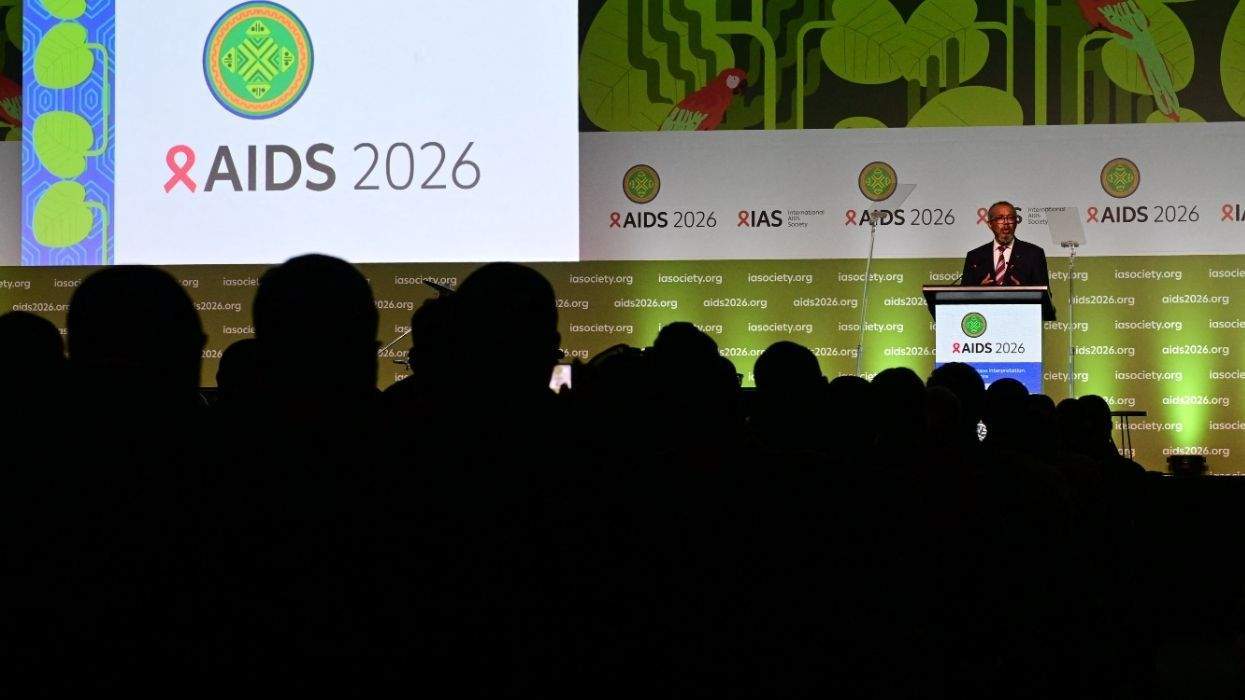
The Trump administration came to the world’s largest AIDS conference to explain its approach to global health. Its presentation showed that the U.S. government could not locate the countries whose health systems it was proposing to reshape.
During a State Department event Sunday ahead of AIDS 2026, officials displayed a map of Africa that mislabeled every country it identified. Nigeria was made landlocked. Mozambique was placed north of Uganda. Côte d’Ivoire was shifted toward southern Africa. Uganda and Malawi appeared in the right regions but with incorrect borders. Cameroon was named but not connected to any country.
Related: Donald Trump’s assault on foreign aid shuttered 1,700 HIV care sites worldwide
The State Department apologized, saying a staff member had hurriedly changed the presentation. The map carried a watermark indicating it had been created using OpenAI technology, according to Reuters.
Emily Bass, an HIV policy expert who attended the session and published images of the slide, said the mistake reflected something more consequential. Bass wrote on Substack that the presentation minimized the Centers for Disease Control and Prevention’s work while presenting established programs as Trump administration innovations.
“The U.S. Department of State Bureau of Global Health Security and Diplomacy is redrawing the map and rewriting history,” she wrote. Bass said officials highlighted Malawi’s public health emergency operations center without acknowledging the CDC’s role in supporting it.
Related: Trump's foreign aid freeze will stop AIDS funding under PEPFAR — a program that's saved millions
The episode landed amid a crisis the administration helped create. An amfAR study released for the conference found that delayed or canceled PEPFAR funding forced 1,700 HIV care sites to close and cost 16,000 health workers their jobs. About three-quarters of organizations serving sex workers, men who have sex with men, transgender people and people who inject drugs stopped services to comply with administration policies.
Bass also challenged claims that the new agreements represented a step toward country-led, multiyear planning. African officials were leading PEPFAR planning sessions in 2024, she noted, and the program had moved to a two-year cycle.
The episode comes as global HIV programs face funding cuts and disruptions tied to the Trump administration’s foreign aid freeze. Bass warned that a global health strategy cannot be built on careless geography or selective memory.
“A map has to be properly labeled for anyone to get where they’re going,” she wrote.