'%3E%3Cpath d='M16.3574 35.6519H12.9537L15.0491 18.8873L16.3574 35.6519ZM30.4229 54.0093L22.309 0.994385H7.91795L0 54.0093H10.6634L11.5802 46.3855H17.4014L17.9914 54.0093H30.4229Z' fill='%23971B20'/%3E%3Cpath d='M48.2073 41.8813C48.2073 43.4049 47.4892 44.0011 46.1144 44.0011H43.7595V11.0687H46.1144C47.4892 11.0687 48.2073 11.6636 48.2073 13.1885V41.8813ZM59.5273 43.6695V11.3326C59.5273 3.71323 53.5729 0.994385 47.8157 0.994385H31.7213V54.0093H47.8157C53.5729 54.0093 59.5273 51.29 59.5273 43.6695Z' fill='%23971B20'/%3E%3Cpath d='M90.183 0.994385H78.6039L75.0711 30.6157L71.9955 0.994385H59.4346L69.2474 54.0093H80.373L90.183 0.994385Z' fill='%23971B20'/%3E%3Cpath d='M107.063 42.3448C107.063 43.7359 105.951 44.5974 104.643 44.5974C103.269 44.5974 102.157 43.7359 102.157 42.3448V12.658C102.157 11.2676 103.269 10.4058 104.643 10.4058C105.951 10.4058 107.063 11.2676 107.063 12.658V42.3448ZM119.233 43.2723V11.7312C119.233 6.36384 112.952 -3.8147e-06 104.643 -3.8147e-06C96.2667 -3.8147e-06 89.9867 6.36384 89.9867 11.7312V43.2723C89.9867 48.6393 96.2667 55 104.643 55C112.952 55 119.233 48.6393 119.233 43.2723Z' fill='%23971B20'/%3E%3Cpath d='M150.976 43.9349V33.7309H139.069V42.3448C139.069 43.7359 137.957 44.5974 136.582 44.5974C135.076 44.5974 133.964 43.7359 133.964 42.3448V12.658C133.964 11.2676 135.076 10.4058 136.582 10.4058C137.957 10.4058 139.069 11.2676 139.069 12.658V21.2723H150.976V11.0687C150.976 5.70107 145.283 -3.8147e-06 136.582 -3.8147e-06C127.75 -3.8147e-06 121.796 5.70107 121.796 11.0687V43.9349C121.796 49.3022 127.75 55 136.582 55C145.283 55 150.976 49.3022 150.976 43.9349Z' fill='%23971B20'/%3E%3Cpath d='M167.478 35.6519H164.076L166.17 18.8873L167.478 35.6519ZM181.544 54.0093L173.432 0.994385H159.037L151.123 54.0093H161.785L162.704 46.3855H168.523L169.114 54.0093H181.544Z' fill='%23971B20'/%3E%3Cpath d='M205.412 10.4058V0.994385H177.081V10.4058H185.392V54.0093H197.428V10.4058H205.412Z' fill='%23971B20'/%3E%3Cpath d='M230.002 54.0093V43.9349H218.914V31.8746H226.635V21.8028H218.914V10.4058H230.002V0.994385H206.875V54.0093H230.002Z' fill='%23971B20'/%3E%3C/g%3E%3Cdefs%3E%3CclipPath id='clip0_260_7080'%3E%3Crect width='230' height='55' fill='white'/%3E%3C/clipPath%3E%3C/defs%3E%3C/svg%3E)
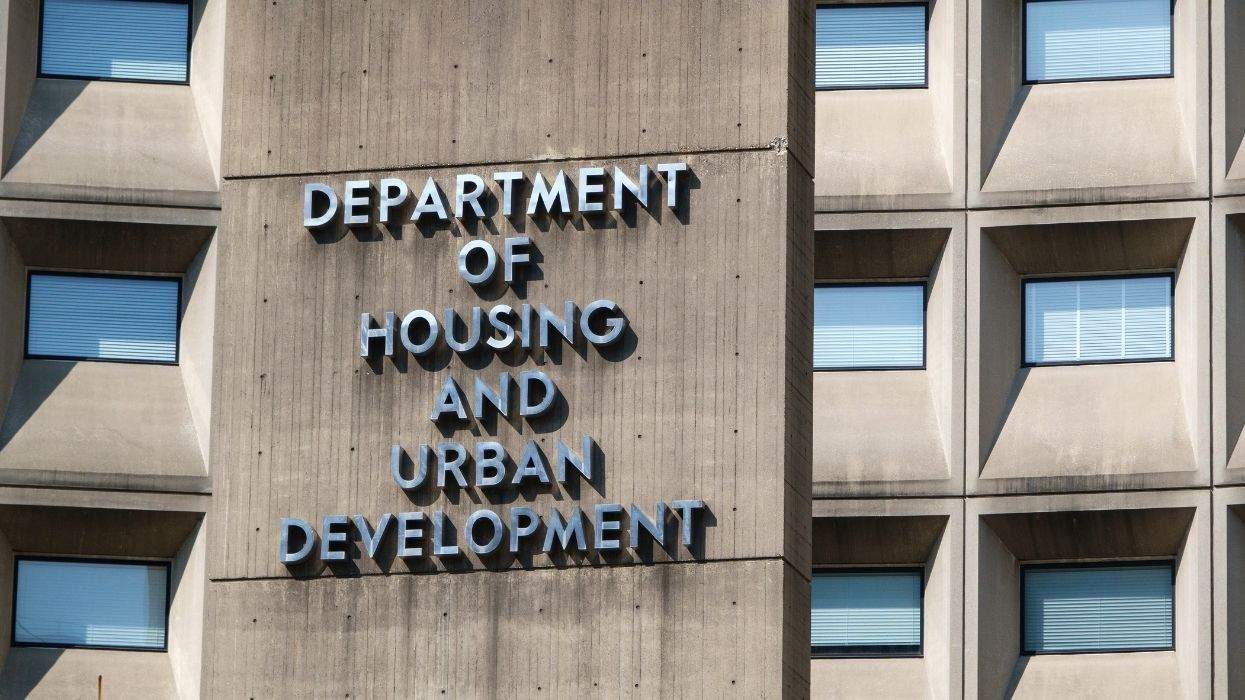
For more than three decades, a little-known federal program has helped people with HIV secure something essential to remaining alive and healthy: a stable place to live. Now, the Housing Opportunities for Persons With AIDS program, known as HOPWA, is being drawn into the Trump administration’s expanding system of immigration checks.
Recent HOPWA grant agreements contain language directing grantees to verify clients’ citizenship or immigration status through the Department of Homeland Security’s Systematic Alien Verification for Entitlements system, or SAVE, according to the National HIV/AIDS Housing Coalition. Yet some Department of Housing and Urban Development officials have told those same grantees not to begin the checks until the agency issues final instructions.
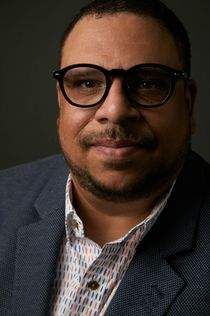
“They’re hearing two different things,” Lauren Banks, the coalition’s executive director, told The Advocate in an interview.
The program assists people who are poor, unstably housed and, in many cases, emerging from homelessness. A delayed application can mean another night in a shelter, another utility shutoff or another eviction notice. A demand for documents someone does not have could derail access altogether.
Banks said immigration eligibility rules are not entirely new to federal housing assistance, but the requirement to run HOPWA clients through SAVE is.
“Folks were surprised when they saw that,” she said. “Yet it was in all of the contracts that they had to sign.”
HUD sends most HOPWA funding to states and qualifying cities, which often contract with local housing agencies and HIV organizations known as project sponsors. Those organizations help clients apply for assistance, avoid eviction, find apartments and keep their utilities connected.
Providers were uncertain whether the SAVE provision applied only to the government grantee signing the agreement or also to nonprofit organizations working directly with clients, Banks said. Some asked HUD desk officers for guidance and were told to wait because the department had not finalized its implementation instructions.
Related: Elizabeth Warren warns new Trump federal housing rule could put LGBTQ+ people on the street
HUD declared HOPWA a federal benefit — then left questions unanswered
In November, the Trump administration declared that HOPWA formula and competitive grants are federal public benefits covered by restrictions in the 1996 welfare law known as the Personal Responsibility and Work Opportunity Reconciliation Act. HUD said HOPWA and other covered programs are subject to the law’s eligibility and verification provisions.
But the same notice stopped short of explaining how verification would work. HUD said it would issue additional guidance for government grantees with access to SAVE and nongovernmental recipients.
The notice also acknowledged an unresolved distinction: Charitable nonprofits administering federal benefits generally are not required to conduct immigration eligibility checks themselves, while state and local governments remain responsible for ensuring compliance.
Banks said the coalition has advised providers to follow HUD officials’ direction to wait rather than impose new documentation requirements before the agency explains how they should work.
“That language in the grant may not be legal,” she said. “So right now, don’t do it. Wait to see if the rule is final or not.”
The Advocate asked HUD whether the provision applies to current participants, new applicants or both; whether nonprofit project sponsors must conduct the checks; and what should happen to housing assistance while verification remains unresolved. The agency did not respond.
Related: Trump's anti-transgender executive orders force CDC to remove HIV resources
A five-day immigration check can be a long time without housing
A U.S. Citizenship and Immigration Services spokesperson directed The Advocate to the agency’s general SAVE guidance and referred questions about HOPWA implementation to HUD.
To create a SAVE case, an agency must submit an applicant’s name, date of birth, the benefit being requested, and at least one unique identifier. That could include an Alien Registration number, I-94 number, citizenship or naturalization certificate number, certain USCIS card or receipt numbers, or, for an initial check only, a Social Security number.
SAVE cannot verify a person’s status using only their name, a driver’s license number or a U.S. passport number, according to USCIS.
Most initial checks return a response within seconds. When they do not, however, the agency must request additional verification, which generally requires a manual review. USCIS said that process was taking approximately five federal workdays as of July. The agency may also require additional information or copies of the applicant’s immigration documents, USCIS notes.
The guidance does not say whether HOPWA assistance should continue, be delayed, or be denied during that review. USCIS also did not address whether nonprofit HOPWA providers can access SAVE directly or whether information submitted through the system may be shared with other DHS components.
For someone with secure housing and a folder of government records, five working days may seem like an inconvenience. For someone sleeping in a car or trying to stop an eviction, an unexplained delay could have far greater consequences.
Banks said HOPWA participants are predominantly U.S. citizens and characterized the new process as another burden for organizations and clients already navigating a difficult system. Many people entering HOPWA after experiencing homelessness do not have birth certificates, immigration records or other documents readily available, she said.
“It is a burden of proof that people have to provide, which is really a problem, too,” Banks said.
The fear could reach beyond people ultimately found ineligible. Banks said U.S. citizens may decline to apply because a spouse or partner has a different immigration status.
“I am worried that people in mixed-status households, so somebody who is a U.S. citizen, but their partner may not be, their spouse may not be, that they might not seek housing even though they are eligible for it,” she said.
Applicants must already disclose their HIV status and intimate details about their finances and housing instability. Adding immigration records, Banks said, could deepen a chilling effect among people who fear racial profiling or contact with the federal government.
“It’s another barrier to housing, and we need to make housing as low-barrier as possible,” she said. “They might be worried about racial profiling, let alone HIV stigma.”
Related: Trump admin moves to end federal HIV prevention programs. ‘Catastrophic’ consequences, experts say
Housing is part of HIV care
HOPWA is the only federal program dedicated to the housing needs of low-income people with HIV and their families. It can pay for ongoing rental assistance, emergency and facility-based housing, security deposits and short-term rent, mortgage and utility assistance. Grantees may also fund case management, mental health care, substance use treatment and employment services.
The program is not limited to major cities. Congress modernized its funding formula in 2016 to account more closely for current HIV cases, poverty and housing costs, shifting resources toward Southern and rural communities where the need had grown.
Banks said HOPWA provides housing assistance to about 55,000 households and supportive services to roughly 60,000 households each year, with some overlap. A 2022 HUD budget document projected a similar reach, estimating that $450 million would provide affordable housing to 56,355 households and supportive services to 60,896.
A September 2025 analysis by Georgetown University’s O’Neill Institute for National and Global Health Law cited National HIV/AIDS Housing Coalition estimates that 370,000 people with HIV had housing needs and 100,000 were experiencing homelessness. HOPWA accounted for only about $1 of every $120 the federal government allocated to affordable housing, the institute noted.
The institute also warned that HOPWA cannot simply be replaced by the Ryan White HIV/AIDS Program. Ryan White can provide housing assessments, case management and some direct support, but rental deposits and assistance are generally restricted to emergency or transitional housing and limited to 24 months over a person’s lifetime. HOPWA can provide long-term assistance, an increasingly important distinction as people with HIV live longer and age.
HUD’s own research has repeatedly shown that stable housing is essential to effective HIV treatment.
Using 2019 data, the department reported that 98 percent of clients receiving tenant-based rental assistance and 96 percent of those placed in permanent housing facilities achieved housing stability. A joint HUD-CDC study associated HOPWA assistance with 41 percent fewer emergency department visits and a 23 percent reduction in detectable viral loads.
The Health Resources and Services Administration did not answer whether similar immigration verification requirements are being considered for the Ryan White program.
“For a lot of people accessing HOPWA, this is their last available resource,” Banks said.
The cumulative pressure is threatening a program the Trump administration has also proposed eliminating. Congress provided HOPWA with $529 million for fiscal 2026, $24 million more than the previous year. The administration’s fiscal 2027 budget seeks to reduce that amount to zero and instead direct people with HIV who are homeless or at risk toward a broader emergency housing program capped at two years.
“We have a duty to help and to serve and to make things as easy as possible,” Banks said. “And instead, this is just one more admin piece that is rooted in fear.”