'%3E%3Cpath d='M16.3574 35.6519H12.9537L15.0491 18.8873L16.3574 35.6519ZM30.4229 54.0093L22.309 0.994385H7.91795L0 54.0093H10.6634L11.5802 46.3855H17.4014L17.9914 54.0093H30.4229Z' fill='%23971B20'/%3E%3Cpath d='M48.2073 41.8813C48.2073 43.4049 47.4892 44.0011 46.1144 44.0011H43.7595V11.0687H46.1144C47.4892 11.0687 48.2073 11.6636 48.2073 13.1885V41.8813ZM59.5273 43.6695V11.3326C59.5273 3.71323 53.5729 0.994385 47.8157 0.994385H31.7213V54.0093H47.8157C53.5729 54.0093 59.5273 51.29 59.5273 43.6695Z' fill='%23971B20'/%3E%3Cpath d='M90.183 0.994385H78.6039L75.0711 30.6157L71.9955 0.994385H59.4346L69.2474 54.0093H80.373L90.183 0.994385Z' fill='%23971B20'/%3E%3Cpath d='M107.063 42.3448C107.063 43.7359 105.951 44.5974 104.643 44.5974C103.269 44.5974 102.157 43.7359 102.157 42.3448V12.658C102.157 11.2676 103.269 10.4058 104.643 10.4058C105.951 10.4058 107.063 11.2676 107.063 12.658V42.3448ZM119.233 43.2723V11.7312C119.233 6.36384 112.952 -3.8147e-06 104.643 -3.8147e-06C96.2667 -3.8147e-06 89.9867 6.36384 89.9867 11.7312V43.2723C89.9867 48.6393 96.2667 55 104.643 55C112.952 55 119.233 48.6393 119.233 43.2723Z' fill='%23971B20'/%3E%3Cpath d='M150.976 43.9349V33.7309H139.069V42.3448C139.069 43.7359 137.957 44.5974 136.582 44.5974C135.076 44.5974 133.964 43.7359 133.964 42.3448V12.658C133.964 11.2676 135.076 10.4058 136.582 10.4058C137.957 10.4058 139.069 11.2676 139.069 12.658V21.2723H150.976V11.0687C150.976 5.70107 145.283 -3.8147e-06 136.582 -3.8147e-06C127.75 -3.8147e-06 121.796 5.70107 121.796 11.0687V43.9349C121.796 49.3022 127.75 55 136.582 55C145.283 55 150.976 49.3022 150.976 43.9349Z' fill='%23971B20'/%3E%3Cpath d='M167.478 35.6519H164.076L166.17 18.8873L167.478 35.6519ZM181.544 54.0093L173.432 0.994385H159.037L151.123 54.0093H161.785L162.704 46.3855H168.523L169.114 54.0093H181.544Z' fill='%23971B20'/%3E%3Cpath d='M205.412 10.4058V0.994385H177.081V10.4058H185.392V54.0093H197.428V10.4058H205.412Z' fill='%23971B20'/%3E%3Cpath d='M230.002 54.0093V43.9349H218.914V31.8746H226.635V21.8028H218.914V10.4058H230.002V0.994385H206.875V54.0093H230.002Z' fill='%23971B20'/%3E%3C/g%3E%3Cdefs%3E%3CclipPath id='clip0_260_7080'%3E%3Crect width='230' height='55' fill='white'/%3E%3C/clipPath%3E%3C/defs%3E%3C/svg%3E)
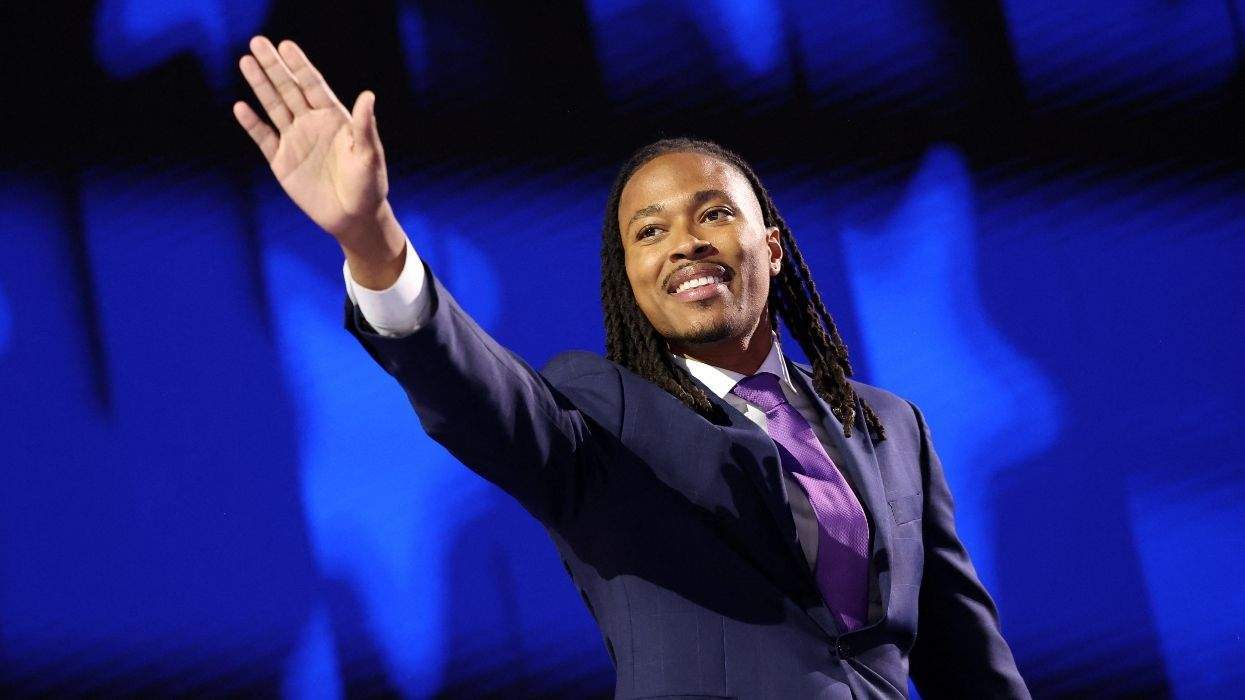
State Rep. Malcolm Kenyatta rose on the Pennsylvania House floor and offered a line that cut through hours of legislative debate and decades of legal inertia. “God did not make me to hate me,” he said. Minutes later, the chamber voted to move Pennsylvania closer to matching its laws to that principle.
Keep up with the latest in LGBTQ+ news and politics. Sign up for The Advocate's email newsletter.
The Pennsylvania House passed legislation Wednesday to codify marriage equality into state law, approving the measure in a 127–72 vote with bipartisan support, according to NBC affiliate WPXI in Pittsburgh. The bill would redefine marriage in state statute as a union between “two individuals,” replacing language dating back to the 1990s that limits marriage to “one man and one woman.” It would also repeal provisions that invalidate same-sex marriages performed in other jurisdictions.
The vote does not change who can marry in Pennsylvania. That question was settled more than a decade ago by the U.S. Supreme Court’s decision in Obergefell v. Hodges. But it does address something quieter and, in this political moment, more urgent: whether states will rely on federal precedent alone, or take steps to insulate those rights within their own laws.
Related: Jim Obergefell celebrates U.S. Supreme Court’s rejection of Kim Davis’s marriage equality challenge
Pennsylvania, like many states, never fully updated its statutes after Obergefell. The result is a legal code that still contains a ban on same-sex marriage enacted in 1996. It’s unenforceable, but not erased. The legislation approved Wednesday would finally bring the state’s written law into alignment with the reality already lived by thousands of couples.
Kenyatta, a gay Democrat from Philadelphia and the bill’s sponsor, described the effort as both a legal correction and a deeply personal imperative. “I know some folks in this building have never had to refresh a computer screen to see if a court has given you access to a fundamental right, but that’s where I was when Obergefell v. Hodges ruling came up, and the court voted correctly,” he said in a statement after the vote.
“Because of this vote, I got to marry my best friend, Dr. Matthew Kenyatta,” he added. “As important as this vote is to me, my family and people across the commonwealth who are in loving same-sex marriages, it’s equally as important that this law is passed to ensure our state law reflects the law of the land held in Obergefell.”
Related: Tennessee bill lets businesses and people refuse to recognize same-sex marriages
Related: Pennsylvania lawmakers advance LGBTQ+ protections despite GOP objections
Public opinion has shifted dramatically since Pennsylvania first enacted its ban nearly 30 years ago. About 67 percent of Americans now support same-sex marriage, up from 54 percent in 2014, according to the Public Religion Research Institute’s 2024 American Values Atlas. A majority now supports marriage equality in every state.
Even so, the legal landscape remains more complicated than the House vote might suggest.
In 2022, Congress passed the Respect for Marriage Act, and President Joe Biden signed it into law. It requires the federal government and all states to recognize valid same-sex and interracial marriages performed elsewhere. The law was designed as a backstop in case Obergefell were overturned, ensuring that couples would not lose federal recognition or see their marriages erased when crossing state lines.
But the Respect for Marriage Act does not require states to issue new marriage licenses to same-sex couples if the Supreme Court were to reverse Obergefell. In that scenario, states with bans still on the books, like Pennsylvania’s 1996 statute, could once again be in a position to deny marriages, even while recognizing those performed elsewhere.
Related: Exclusive: Jim Obergefell endorses Angie Craig for U.S. Senate
That gap has driven a wave of state-level efforts to codify marriage equality in recent years, as lawmakers seek to close the distance between federal recognition and state authority.
In a statement following the vote, Gov. Josh Shapiro, a Democrat, endorsed the House’s action in explicit terms. “Here in Pennsylvania, we believe in your freedom to marry who you love,” Shapiro said, adding that lawmakers had “stepped up to protect that right,” according to a post from the governor’s office.
The bill now heads to the Republican-controlled state Senate, where similar efforts have stalled in previous sessions. Across the country, Democratic-led chambers have increasingly moved to codify LGBTQ+ protections at the state level, even as those efforts run into resistance in more conservative legislatures.