'%3E%3Cpath d='M16.3574 35.6519H12.9537L15.0491 18.8873L16.3574 35.6519ZM30.4229 54.0093L22.309 0.994385H7.91795L0 54.0093H10.6634L11.5802 46.3855H17.4014L17.9914 54.0093H30.4229Z' fill='%23971B20'/%3E%3Cpath d='M48.2073 41.8813C48.2073 43.4049 47.4892 44.0011 46.1144 44.0011H43.7595V11.0687H46.1144C47.4892 11.0687 48.2073 11.6636 48.2073 13.1885V41.8813ZM59.5273 43.6695V11.3326C59.5273 3.71323 53.5729 0.994385 47.8157 0.994385H31.7213V54.0093H47.8157C53.5729 54.0093 59.5273 51.29 59.5273 43.6695Z' fill='%23971B20'/%3E%3Cpath d='M90.183 0.994385H78.6039L75.0711 30.6157L71.9955 0.994385H59.4346L69.2474 54.0093H80.373L90.183 0.994385Z' fill='%23971B20'/%3E%3Cpath d='M107.063 42.3448C107.063 43.7359 105.951 44.5974 104.643 44.5974C103.269 44.5974 102.157 43.7359 102.157 42.3448V12.658C102.157 11.2676 103.269 10.4058 104.643 10.4058C105.951 10.4058 107.063 11.2676 107.063 12.658V42.3448ZM119.233 43.2723V11.7312C119.233 6.36384 112.952 -3.8147e-06 104.643 -3.8147e-06C96.2667 -3.8147e-06 89.9867 6.36384 89.9867 11.7312V43.2723C89.9867 48.6393 96.2667 55 104.643 55C112.952 55 119.233 48.6393 119.233 43.2723Z' fill='%23971B20'/%3E%3Cpath d='M150.976 43.9349V33.7309H139.069V42.3448C139.069 43.7359 137.957 44.5974 136.582 44.5974C135.076 44.5974 133.964 43.7359 133.964 42.3448V12.658C133.964 11.2676 135.076 10.4058 136.582 10.4058C137.957 10.4058 139.069 11.2676 139.069 12.658V21.2723H150.976V11.0687C150.976 5.70107 145.283 -3.8147e-06 136.582 -3.8147e-06C127.75 -3.8147e-06 121.796 5.70107 121.796 11.0687V43.9349C121.796 49.3022 127.75 55 136.582 55C145.283 55 150.976 49.3022 150.976 43.9349Z' fill='%23971B20'/%3E%3Cpath d='M167.478 35.6519H164.076L166.17 18.8873L167.478 35.6519ZM181.544 54.0093L173.432 0.994385H159.037L151.123 54.0093H161.785L162.704 46.3855H168.523L169.114 54.0093H181.544Z' fill='%23971B20'/%3E%3Cpath d='M205.412 10.4058V0.994385H177.081V10.4058H185.392V54.0093H197.428V10.4058H205.412Z' fill='%23971B20'/%3E%3Cpath d='M230.002 54.0093V43.9349H218.914V31.8746H226.635V21.8028H218.914V10.4058H230.002V0.994385H206.875V54.0093H230.002Z' fill='%23971B20'/%3E%3C/g%3E%3Cdefs%3E%3CclipPath id='clip0_260_7080'%3E%3Crect width='230' height='55' fill='white'/%3E%3C/clipPath%3E%3C/defs%3E%3C/svg%3E)

The new school year in King George County, Virginia, was one day old when a 13-year-old student asked a federal judge to order their middle school to allow an LGBTQ+ student organization to meet immediately.
The student, identified in court records as Z.J.W., is beginning eighth grade — their final year at King George Middle School. They spent much of the previous school year trying to form a Gay-Straight Alliance, only to watch administrators halt it after public opposition and the school board rewrite its policy governing student organizations.
Now, internal communications filed in federal court show how the reversal unfolded in school officials’ own words.
Principal Casey Nice acknowledged that he had approved the GSA, said the response on social media surpassed anything he had expected, and later suggested that the board might accept a “Kindness Club” if students avoided discussing sexuality or LGBTQ+ topics.
Attorneys from the American Civil Liberties Union of Virginia and Potomac Law Group filed a motion for a preliminary injunction on Thursday, asking U.S. District Judge Robert E. Payne to allow the GSA to form while the lawsuit proceeds.
The motion came one day after classes began for all King George County students on August 12, according to the district’s 2026-27 calendar.
“Every day this continues, Z.J.W. loses more of their limited time left at KGMS to ever benefit from the club they fought to create,” the student’s attorneys wrote.
They call the district’s actions “textbook viewpoint discrimination” that violates the First Amendment and the federal Equal Access Act, which requires covered public schools that allow at least one noncurricular student organization to provide other groups with equal access, regardless of the content of their speech.
The school defendants have not filed a response to the motion, and the court has not ruled on it. Payne previously referred settlement proceedings to U.S. Magistrate Judge Summer L. Speight, according to the public docket.
Attorney Heather K. Bardot entered an appearance Friday for the King George County School Board, Superintendent Jesse Boyd, and Nice. The Advocate sent Bardot a detailed request for comment asking whether the defendants intended to oppose the motion, how they defended the treatment documented in the emails, and whether they were considering a voluntary resolution rather than spending additional public resources defending the policy. Bardot did not respond.
Related: A Virginia school board bent over backward to block an LGBTQ+ club. One mom explains why she’s suing
The club was approved. Then the public found out.
The Advocate first reported the lawsuit on August 4, detailing allegations that officials repeatedly changed the rules to prevent the GSA from forming while permitting other groups to continue. The latest filing adds declarations, club materials, policies, and internal correspondence documenting that process.
Z.J.W. began organizing the GSA in August 2025. Teacher Becca Boe agreed to serve as its faculty sponsor and approached Nice about the requirements, according to documents filed with the court.
In an August 26, 2025, exchange with the school’s Robotics sponsor, Boe wrote that the proposed organization was “an LGBTQ GSA Club,” requested by a student, and that “Casey [Nice] has already approved it.”
Nice subsequently confirmed the approval himself.
“It was never my intention to create so much anger or division when I approved the student’s request to start the GSA club,” he wrote to school board members on September 17, 2025.
By then, students had prepared a constitution, a calendar, a flyer, and an interest form. The form appeared on the school’s Canvas platform on September 15, and 17 students expressed interest, according to the court filing. Parental permission would have been required before a student could participate.
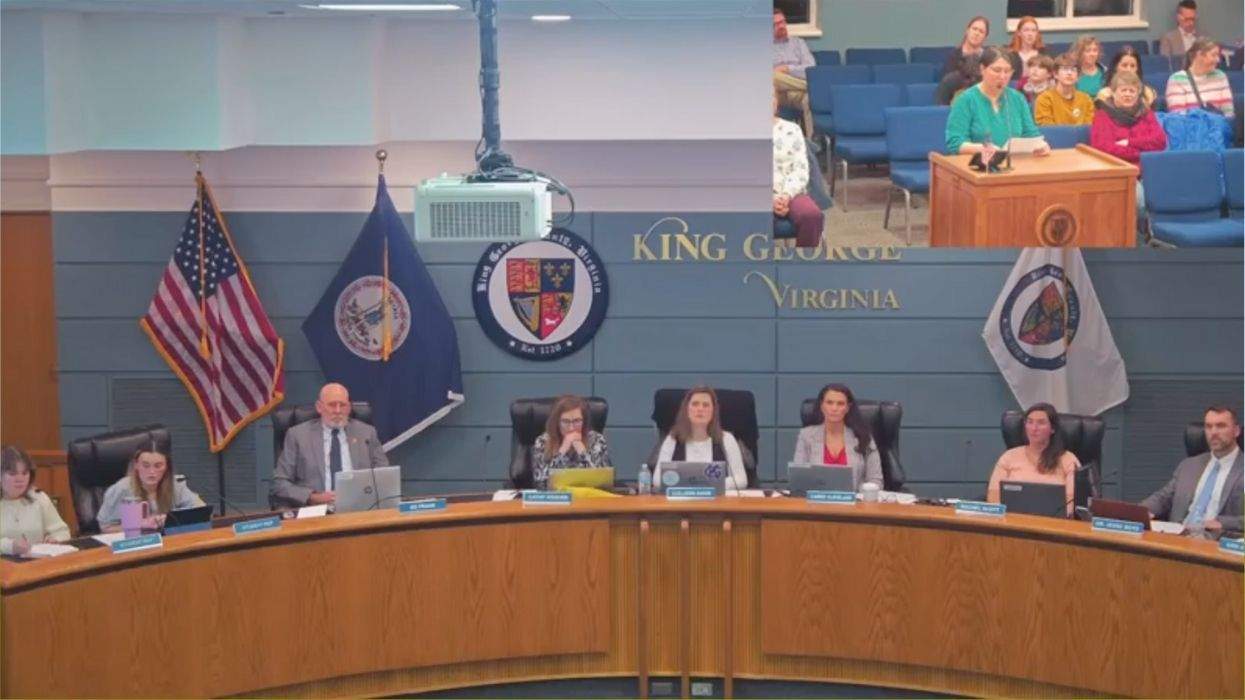
After the announcement drew complaints and opposition on the King George Community Facebook group, Nice told families on September 18 that the district was placing the GSA “on pause” because its proposal “has led to division within our community.”
In a private response to a supportive parent that day, Nice was more explicit about the role of the backlash.
“I understood that there would be some negative response from the community when I approved the formation of this club, but I never dreamed it would reach the levels we saw on social media,” he wrote.
Nice added that he had been looking forward to providing “a safe and welcoming place” for students and was saddened by the decision.
The next day, he told another parent that he had relied on the district’s student organization policy when approving the GSA. Nice quoted language requiring schools that allow for the formation of clubs to provide equal access to other student clubs “without discrimination” based on the content of their speech.
The GSA nevertheless remained suspended.
Officials focused on what the students wanted to discuss
As the dispute continued, administrators increasingly framed it around the GSA’s LGBTQ+ identity.
Responding to a high school student seeking information about the club approval process on October 13, Boyd wrote that “the real question that the community is wrestling with is whether gender and sexuality are appropriate topics for pre-teen students.”
“There is a real divide in our community when attempting to answer this question,” he added.
The following month, the school board amended its policy. Where the previous version allowed “secondary school students” to organize noncurricular groups, the new language limited those organizations to King George High School.
School officials then characterized the middle school’s remaining organizations — including Yearbook, Robotics, Beta Club, Book of the Month Club, Outdoor Club, and the superintendent’s student advisory committee — as curricular groups that could continue operating, according to court filings.
The plaintiffs argue that those classifications are artificial. Under the Equal Access Act, the presence of even one noncurricular group can create a limited open forum requiring equal access for other student organizations.
GSAs are student-led clubs that bring LGBTQ+ students and allies together to build community, support one another, and address discrimination at school. Although they may provide peer support, they are not professional counseling, therapy, or sex education programs. The King George proposal called for monthly, after-school meetings supervised by a staff adviser and open to all students. Its first-year calendar included icebreakers, officer elections, a book or movie night, a holiday social, a clothing or hygiene-item drive, a respectful language workshop, service projects, and discussions on LGBTQ+ history, identity, acceptance, and allyship. All activities would have required approval from the adviser and the school administration; participation in public events would have been voluntary; and students would have needed parental permission to join.
Related: Virginia congressman's meeting with transgender Democrats erupts into profanity. Then he walked out
The plaintiffs contend that King George Middle School is covered by the law because Virginia treats middle school as secondary education and because the school offers high school credit courses, including algebra, geometry, world history, Spanish, and French.
The lawsuit’s First Amendment claim separately alleges that officials treated the GSA differently because of its message. That argument gained additional documentary support from a January 22, 2026, email Nice sent to Susan Park, whose child is the second student plaintiff in the lawsuit.
Nice wrote that the board might be more receptive to changing its policy for “a Kindness Club or a similar organization” that pursued the GSA’s underlying purpose “without engaging in discussions related to sexuality or LGBTQ topics.”
“Framing the focus around supporting students’ sense of belonging at the middle school level, rather than around specific issues or labels, may make the proposal more approachable for some board members,” Nice wrote.
The students rejected proposals that would remove the club’s LGBTQ+ identity. They wanted an organization that expressly recognized them, not a generalized group that welcomed everyone while avoiding the subject that prompted them to organize.
The filed records also show that school employees explored connecting a proposed Fellowship of Christian Athletes group to a leadership course, which could allow it to operate as a curricular activity under the revised policy. The documents do not establish whether FCA was ultimately approved.
Other records show that officials raised concerns about parental notification, whether discussions about sexuality were appropriate for middle school students, the role of a faculty sponsor, and the possibility that students would discuss serious mental health concerns without an adult actively participating.
Park’s child, identified as A.A.P., has already advanced to high school without receiving the middle school community he had hoped the GSA would provide.
“I joined this suit because even though my kid has moved on and is not in middle school anymore, I think this club would be a wonderful thing,” Park previously told The Advocate. “I want them to be able to form this club and create that community.”