'%3E%3Cpath d='M16.3574 35.6519H12.9537L15.0491 18.8873L16.3574 35.6519ZM30.4229 54.0093L22.309 0.994385H7.91795L0 54.0093H10.6634L11.5802 46.3855H17.4014L17.9914 54.0093H30.4229Z' fill='%23971B20'/%3E%3Cpath d='M48.2073 41.8813C48.2073 43.4049 47.4892 44.0011 46.1144 44.0011H43.7595V11.0687H46.1144C47.4892 11.0687 48.2073 11.6636 48.2073 13.1885V41.8813ZM59.5273 43.6695V11.3326C59.5273 3.71323 53.5729 0.994385 47.8157 0.994385H31.7213V54.0093H47.8157C53.5729 54.0093 59.5273 51.29 59.5273 43.6695Z' fill='%23971B20'/%3E%3Cpath d='M90.183 0.994385H78.6039L75.0711 30.6157L71.9955 0.994385H59.4346L69.2474 54.0093H80.373L90.183 0.994385Z' fill='%23971B20'/%3E%3Cpath d='M107.063 42.3448C107.063 43.7359 105.951 44.5974 104.643 44.5974C103.269 44.5974 102.157 43.7359 102.157 42.3448V12.658C102.157 11.2676 103.269 10.4058 104.643 10.4058C105.951 10.4058 107.063 11.2676 107.063 12.658V42.3448ZM119.233 43.2723V11.7312C119.233 6.36384 112.952 -3.8147e-06 104.643 -3.8147e-06C96.2667 -3.8147e-06 89.9867 6.36384 89.9867 11.7312V43.2723C89.9867 48.6393 96.2667 55 104.643 55C112.952 55 119.233 48.6393 119.233 43.2723Z' fill='%23971B20'/%3E%3Cpath d='M150.976 43.9349V33.7309H139.069V42.3448C139.069 43.7359 137.957 44.5974 136.582 44.5974C135.076 44.5974 133.964 43.7359 133.964 42.3448V12.658C133.964 11.2676 135.076 10.4058 136.582 10.4058C137.957 10.4058 139.069 11.2676 139.069 12.658V21.2723H150.976V11.0687C150.976 5.70107 145.283 -3.8147e-06 136.582 -3.8147e-06C127.75 -3.8147e-06 121.796 5.70107 121.796 11.0687V43.9349C121.796 49.3022 127.75 55 136.582 55C145.283 55 150.976 49.3022 150.976 43.9349Z' fill='%23971B20'/%3E%3Cpath d='M167.478 35.6519H164.076L166.17 18.8873L167.478 35.6519ZM181.544 54.0093L173.432 0.994385H159.037L151.123 54.0093H161.785L162.704 46.3855H168.523L169.114 54.0093H181.544Z' fill='%23971B20'/%3E%3Cpath d='M205.412 10.4058V0.994385H177.081V10.4058H185.392V54.0093H197.428V10.4058H205.412Z' fill='%23971B20'/%3E%3Cpath d='M230.002 54.0093V43.9349H218.914V31.8746H226.635V21.8028H218.914V10.4058H230.002V0.994385H206.875V54.0093H230.002Z' fill='%23971B20'/%3E%3C/g%3E%3Cdefs%3E%3CclipPath id='clip0_260_7080'%3E%3Crect width='230' height='55' fill='white'/%3E%3C/clipPath%3E%3C/defs%3E%3C/svg%3E)
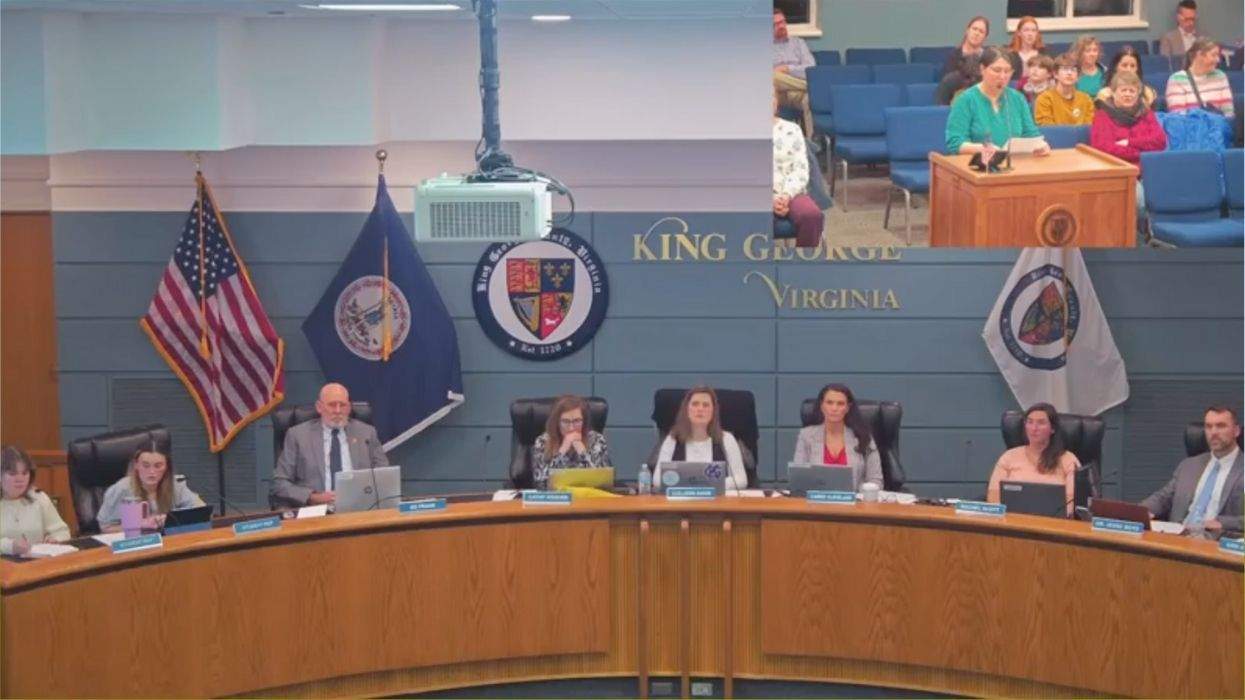
A Virginia school board illegally responded to students’ efforts to create an LGBTQ+ support club by repeatedly changing the rules, renaming the problem and, ultimately, making the club impossible to form, according to a federal lawsuit filed Tuesday.
The students say almost every other club remained welcome.
The American Civil Liberties Union of Virginia and Potomac Law Group filed the complaint on behalf of two students and their parents against the King George County School Board, Superintendent Jesse Boyd, and King George Middle School Principal Casey Nice. King George is located about 50 miles southeast of Washington, D.C., between the nation’s capital and Virginia’s capital, Richmond. The lawsuit accuses school officials of violating the First Amendment and the federal Equal Access Act by barring a gay-straight alliance, or GSA, while allowing other noncurricular student groups to operate.
The case transforms a yearlong local dispute, previously documented by The Advocate, into a federal civil rights fight. Students had already told the board about slurs, bullying, and a school culture that made LGBTQ+ children feel unsafe. Parents had warned that blocking the club sent a message that there was something wrong with their children.
Now, they are asking a judge to intervene.
“King George County Schools cannot move the goalposts to prevent an organization that promotes respect and equality for LGBTQ+ students from existing just because school board members disagree with its message,” ACLU of Virginia staff attorney Julia Kahn said in a statement.
“The First Amendment and Equal Access Act protect all students, and the school board cannot pick and choose who the rules apply to,” Kahn said. “Why this club, and not others?”
Related: Virginia school board adopts anti-transgender policy and blocks LGBTQ+ club
The club was approved. Then came the backlash.
According to the complaint, a seventh grader identified as Z.J.W. began working to establish the GSA in August 2025. A teacher agreed to serve as the group’s sponsor, and Nice initially expressed support for it.
The students did what school officials asked. They created a constitution, a calendar of activities, a flyer, and an interest form. The GSA’s stated mission was to provide “a safe, supportive, and inclusive environment for LGBTQ+ students and allies” and to promote respect regardless of sexual orientation, gender identity, or expression.
Nice approved the materials, the lawsuit alleges. They appeared on the school’s Canvas platform — a school, student, and parent resource program — on September 15, 2025, and 17 students expressed interest in joining. The school has about 1,057 students, according to U.S. News and World Report data.
The approval lasted three days.
Parents and other community members circulated the materials on Facebook, where the proposal generated hundreds of comments, according to the complaint. The faculty sponsor was allegedly doxxed in a group called “King George Uncensored.” Her photographs and email address were posted, and commenters accused her of “grooming” children and demanded that she be fired.
A parent also allegedly emailed Boyd, accusing school employees of engaging in illegal communications with minors about “illicit” subjects and threatening criminal charges against the adult advising the students, the lawsuit states.
On September 18, Nice told families that the school had placed the proposed GSA “on pause” until further notice because it had caused division in the community. Its materials were removed from Canvas.
What followed, the families contend, was not a neutral reassessment of school policy but an extended effort to make one organization disappear.
Related: Meet the Gardening Gays, a couple planting the seeds of LGBTQ+ acceptance
A prohibition that did not prohibit much
The school board first considered adding new requirements for middle school clubs, including a rule requiring at least 10 interested students. Lawyers for the families and a King George educator warned that the proposal could violate federal law.
The board then took a different route.
In November, it adopted a policy limiting noncurricular organizations to King George High School. The previous policy did not exclude middle school students, according to the complaint. On paper, the rule applied to every noncurricular middle school organization. In practice, the lawsuit alleges, school officials found ways to preserve virtually everything except the GSA.
The Yearbook Club, Robotics Team, Book of the Month Club, Beta Club, Outdoor Club, and the superintendent’s student advisory committee continued to operate, according to the complaint. The ACLU says the Outdoor Club includes activities such as making fishing lures and skinning squirrels.
Elementary school students in the district were also allowed to participate in clubs devoted to crochet, board games, STEM, volleyball, chorus, and books.
King George Middle School allegedly attempted to classify its existing organizations as curricular, even when they had no obvious connection to a course. Administrators also explored modifying a leadership class so the Fellowship of Christian Athletes could qualify as curricular and be permitted to form, the complaint says.
No such accommodation was offered to the GSA.
“Student clubs help students build community, find belonging, and thrive, and when schools offer those opportunities, the law requires that they be available on equal terms to all students,” Mary Rohmiller, a partner at Potomac Law Group, said in a statement.
“But King George County Schools appears to be applying a double standard to the GSA at its middle schools,” she said. “The students at the heart of this case are not asking for special treatment — they’re asking for equal treatment.”
Related: Virginia farm owned by the 'Gardening Gays' was vandalized with medical waste and human feces
The club could exist, officials allegedly suggested — if it stopped saying what it was
The complaint also describes a series of attempts by school officials to make the club more acceptable by stripping away its explicit LGBTQ+ identity.
Nice suggested calling it a “PRISM Club,” according to the lawsuit. Such a group could promote tolerance and acceptance without referring to lesbian, gay, bisexual, or transgender students in its name.
Boyd allegedly said even that might be too controversial because of its connection to LGBTQ+ issues. Officials later proposed a “Kindness Club” or a “Safe Space Group.”
The students declined. They did not want a generic club that happened to welcome LGBTQ+ children. They wanted a group that expressly recognized them.
Related: Virginia Democrat who praised LGBTQ+ inclusion is now helping Republicans out trans kids
Students had already warned the board
The allegations in the lawsuit mirror what Susan Park and her child previously told The Advocate about their experiences in King George schools.
Park’s child, identified in the federal complaint as A.A.P., described a school environment where anti-LGBTQ+ language was routine. In The Advocate’s January reporting, the student said they heard “a lot of slurs per day” and described a friend being punched in a school bathroom.
The student also warned board members that policies targeting LGBTQ+ children would make an already hostile environment worse.
The new complaint says A.A.P. faced bullying based on his actual or perceived membership in the LGBTQ+ community and sometimes left school because remaining there became too difficult. He attended multiple school board meetings to advocate for the GSA. After one meeting, the complaint says, he left crying because of anti-LGBTQ+ remarks delivered during public comment.
Park previously told The Advocate that the students were asking for the same thing their classmates already had. “They just want a club like any other club,” she said.
By allowing other organizations while blocking the GSA, Park said, officials were communicating that “there’s something wrong with being in that community.”
The lawsuit now places that argument at the heart of its First Amendment claim.
“I’m not interested in the culture wars fueling the King George County School Board’s decision — I’m interested in what’s best for my child,” Park said in a statement announcing the lawsuit on Tuesday.
“And what’s best for my child is to feel valued and supported at school by participating in a club that follows every rule set out for it,” she said. “I would expect the school board to be just as interested in that as I am.”
Z.J.W. also previously challenged the board in public. The student told officials that blocking the GSA was itself “a form of bullying.”
The complaint says Z.J.W. had experienced persistent bullying and believed a GSA could help students feel less alone. They remain enrolled at King George Middle School and are expected to enter eighth grade this fall.
“There’s nothing more important to us than our child’s wellbeing, safety, health, and education, and GSA clubs have positive impacts on every one of those,” Z.J.W.’s parents, Teresa Catoe and John Wheeler, said in a joint statement.
“If a club gets students excited about school and makes them want to participate and do their best, then we want that club to exist,” they said. “Why wouldn’t the school board want to offer kids the opportunity to join groups where they feel included and supported rather than singled out?”
A wider campaign over LGBTQ+ students
The GSA dispute has unfolded alongside a broader effort by the King George County School Board to regulate the lives of transgender students.
The Advocate reported in January that the board had unanimously adopted a policy directing staff to use only the names and pronouns listed in students’ official records. The policy also restricts restroom access, overnight accommodations, and participation in sex-separated activities based on sex assigned at birth.
At the meeting where the policy was approved, students, parents, and educators warned about bullying, harassment, isolation, and suicide risk. Boyd acknowledged that speakers had raised concerns about harassment and suicidal ideation. But he questioned whether students should gather in a GSA to discuss those issues, pointing instead to school counselors.
When The Advocate sought comment at the time, Boyd did not respond to the substance of questions about the club or the district’s policies, citing the same-day deadline. School board members and members of the King George County Board of Supervisors also did not respond.
What the lawsuit seeks
The families bring two claims.
They argue that the district engaged in unconstitutional viewpoint discrimination by opening its schools to student organizations and then treating the GSA differently because it expressly affirmed LGBTQ+ people.
They also allege a violation of the Equal Access Act, which requires federally funded public secondary schools that allow noncurricular groups to provide equal access regardless of the content of students’ speech.
The complaint argues that the federal law applies to King George Middle School because Virginia defines middle school as part of secondary education and because the school offers high school credit courses, including algebra, geometry, world history, Spanish, and French.
The families are seeking preliminary and permanent injunctions requiring the district to allow the GSA to form and operate under the same conditions as other student organizations. They also want the court to prohibit discriminatory enforcement of the district’s club policies and bar retaliation against the students, their families, and school employees who supported the GSA.
They are seeking attorneys’ fees and $1 in nominal damages.
The Advocate contacted the school board, Boyd, and the King George County Board of Supervisors for comment Tuesday, but they did not respond.