'%3E%3Cpath d='M16.3574 35.6519H12.9537L15.0491 18.8873L16.3574 35.6519ZM30.4229 54.0093L22.309 0.994385H7.91795L0 54.0093H10.6634L11.5802 46.3855H17.4014L17.9914 54.0093H30.4229Z' fill='%23971B20'/%3E%3Cpath d='M48.2073 41.8813C48.2073 43.4049 47.4892 44.0011 46.1144 44.0011H43.7595V11.0687H46.1144C47.4892 11.0687 48.2073 11.6636 48.2073 13.1885V41.8813ZM59.5273 43.6695V11.3326C59.5273 3.71323 53.5729 0.994385 47.8157 0.994385H31.7213V54.0093H47.8157C53.5729 54.0093 59.5273 51.29 59.5273 43.6695Z' fill='%23971B20'/%3E%3Cpath d='M90.183 0.994385H78.6039L75.0711 30.6157L71.9955 0.994385H59.4346L69.2474 54.0093H80.373L90.183 0.994385Z' fill='%23971B20'/%3E%3Cpath d='M107.063 42.3448C107.063 43.7359 105.951 44.5974 104.643 44.5974C103.269 44.5974 102.157 43.7359 102.157 42.3448V12.658C102.157 11.2676 103.269 10.4058 104.643 10.4058C105.951 10.4058 107.063 11.2676 107.063 12.658V42.3448ZM119.233 43.2723V11.7312C119.233 6.36384 112.952 -3.8147e-06 104.643 -3.8147e-06C96.2667 -3.8147e-06 89.9867 6.36384 89.9867 11.7312V43.2723C89.9867 48.6393 96.2667 55 104.643 55C112.952 55 119.233 48.6393 119.233 43.2723Z' fill='%23971B20'/%3E%3Cpath d='M150.976 43.9349V33.7309H139.069V42.3448C139.069 43.7359 137.957 44.5974 136.582 44.5974C135.076 44.5974 133.964 43.7359 133.964 42.3448V12.658C133.964 11.2676 135.076 10.4058 136.582 10.4058C137.957 10.4058 139.069 11.2676 139.069 12.658V21.2723H150.976V11.0687C150.976 5.70107 145.283 -3.8147e-06 136.582 -3.8147e-06C127.75 -3.8147e-06 121.796 5.70107 121.796 11.0687V43.9349C121.796 49.3022 127.75 55 136.582 55C145.283 55 150.976 49.3022 150.976 43.9349Z' fill='%23971B20'/%3E%3Cpath d='M167.478 35.6519H164.076L166.17 18.8873L167.478 35.6519ZM181.544 54.0093L173.432 0.994385H159.037L151.123 54.0093H161.785L162.704 46.3855H168.523L169.114 54.0093H181.544Z' fill='%23971B20'/%3E%3Cpath d='M205.412 10.4058V0.994385H177.081V10.4058H185.392V54.0093H197.428V10.4058H205.412Z' fill='%23971B20'/%3E%3Cpath d='M230.002 54.0093V43.9349H218.914V31.8746H226.635V21.8028H218.914V10.4058H230.002V0.994385H206.875V54.0093H230.002Z' fill='%23971B20'/%3E%3C/g%3E%3Cdefs%3E%3CclipPath id='clip0_260_7080'%3E%3Crect width='230' height='55' fill='white'/%3E%3C/clipPath%3E%3C/defs%3E%3C/svg%3E)
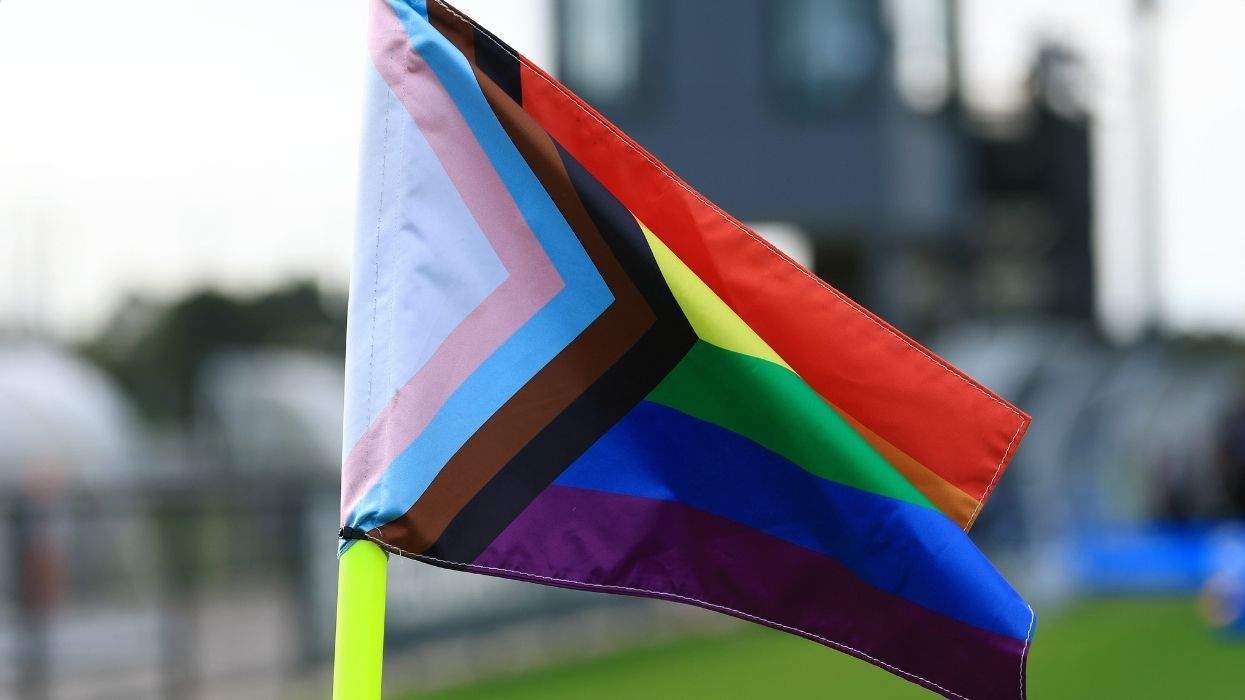
FIFA will allow fans to bring rainbow Pride flags into Seattle Stadium on Friday night for the World Cup match between Iran and Egypt, rejecting pressure from both countries to limit visible support for LGBTQ+ people at a game local organizers have promoted as a Pride Match.
The Group G match kicks off at 8 p.m. Pacific, 11 p.m. Eastern, at Seattle Stadium, known outside the tournament as Lumen Field. The game happens during Seattle’s annual Pride weekend and places one of the world’s most visible sporting events in direct contact with two governments that punish or prosecute homosexuality.
The Telegraph reported on Wednesday that FIFA would not stop fans from bringing rainbow flags into the stadium. A FIFA spokesperson told the paper that the 2026 World Cup is “an inclusive event that welcomes people from all backgrounds” and that fans of all sexual orientations and gender identities are welcome at matches and events.
Related: World Cup LGBTQ+ Pride Match will feature two countries where being gay is illegal
“General statements of human rights, including rainbow flags and other flags representing sexual orientation and gender identity, are permitted under the FIFA World Cup 2026 Stadium Code of Conduct and may be displayed inside stadiums provided they are used in a manner consistent with the code,” the FIFA spokesperson said.
The Associated Press also reported that FIFA treats rainbow flags as a statement of human rights and will allow fans to wave them inside the stadium, citing Hana Tadesse, a spokesperson for Seattle’s World Cup organizing committee.
The match has become one of the tournament’s most politically charged fixtures. Seattle’s Pride Match designation was planned before the World Cup draw determined that Iran and Egypt would be the teams on the field. FIFA headquarters did not create the Pride initiative, and Pride-related events are organized locally rather than as official FIFA match programming.
That distinction has not quieted the objections. Egypt and Iran have both lobbied FIFA to avoid association with Seattle’s PrideFest, which organizers say regularly draws more than 200,000 participants, according to The Telegraph. The Egyptian Football Association said it had written to FIFA “categorically rejecting any activities related to supporting homosexuality during the match.” Mehdi Taj, president of Iran’s football federation, also condemned the situation.
Related: World Cup Officials Won't Allow Players to Wear Pro-LGBTQ+ Armbands
The Advocate previously reported that the matchup would feature two countries where LGBTQ+ people face criminalization. In Iran, same-sex conduct is punishable by flogging and, for men, the death penalty, according to Human Rights Watch. In Egypt, same-sex relations are not explicitly outlawed by name, but authorities have repeatedly used “debauchery” and morality laws to arrest and prosecute people suspected of consensual homosexual conduct.
The game also arrives at a volatile moment in U.S.-Iran relations. President Donald Trump’s war with Iran, which began with joint U.S. and Israeli strikes in late February, has left the administration defending its military aims, costs, and outcome. Only 24 percent of Americans said the war was worth its costs, while just 23 percent said the United States emerged in a stronger position, according to a Reuters/Ipsos poll.
Some foreign policy analysts have described the conflict as a strategic failure or, at a minimum, far from a U.S. victory. The Center for Strategic and International Studies wrote that although the United States and Israel damaged Iran militarily, “wars are decided by more than battlefield metrics,” and that Iran had achieved “meaningful success” by surviving, imposing costs, and destabilizing global energy markets. Cullen S. Hendrix of the Peterson Institute for International Economics argued that the U.S.-Iran ceasefire was better than a wider war but “doesn’t make it a U.S. victory.”
Related: How a Pro-LGBTQ+ Rights Armband Became World Cup Drama in Qatar
That backdrop gives Friday’s match an added edge. The moment also revives memories of the 2022 World Cup in Qatar, when FIFA came under heavy criticism after players were barred from wearing “One Love” armbands and some fans said rainbow-themed items were confiscated. American soccer journalist Grant Wahl was detained by security in Qatar after wearing a rainbow shirt to a match. Wahl later died of an aortic aneurysm while covering the tournament.
Local LGBTQ+ leaders have framed the match as a chance to turn an awkward geopolitical draw into a visible act of welcome. Hedda McLendon, senior vice president of legacy for SeattleFWC26, told Outsports that they expected “a lot of rainbow flags in the stadium and T-shirts with rainbow flags on them.”
“Let’s welcome people to Seattle. It’s the World Cup. And let’s show them how we Pride,” McLendon said. “It’s not a day, it’s not a weekend here. It’s a month.”