'%3E%3Cpath d='M16.3574 35.6519H12.9537L15.0491 18.8873L16.3574 35.6519ZM30.4229 54.0093L22.309 0.994385H7.91795L0 54.0093H10.6634L11.5802 46.3855H17.4014L17.9914 54.0093H30.4229Z' fill='%23971B20'/%3E%3Cpath d='M48.2073 41.8813C48.2073 43.4049 47.4892 44.0011 46.1144 44.0011H43.7595V11.0687H46.1144C47.4892 11.0687 48.2073 11.6636 48.2073 13.1885V41.8813ZM59.5273 43.6695V11.3326C59.5273 3.71323 53.5729 0.994385 47.8157 0.994385H31.7213V54.0093H47.8157C53.5729 54.0093 59.5273 51.29 59.5273 43.6695Z' fill='%23971B20'/%3E%3Cpath d='M90.183 0.994385H78.6039L75.0711 30.6157L71.9955 0.994385H59.4346L69.2474 54.0093H80.373L90.183 0.994385Z' fill='%23971B20'/%3E%3Cpath d='M107.063 42.3448C107.063 43.7359 105.951 44.5974 104.643 44.5974C103.269 44.5974 102.157 43.7359 102.157 42.3448V12.658C102.157 11.2676 103.269 10.4058 104.643 10.4058C105.951 10.4058 107.063 11.2676 107.063 12.658V42.3448ZM119.233 43.2723V11.7312C119.233 6.36384 112.952 -3.8147e-06 104.643 -3.8147e-06C96.2667 -3.8147e-06 89.9867 6.36384 89.9867 11.7312V43.2723C89.9867 48.6393 96.2667 55 104.643 55C112.952 55 119.233 48.6393 119.233 43.2723Z' fill='%23971B20'/%3E%3Cpath d='M150.976 43.9349V33.7309H139.069V42.3448C139.069 43.7359 137.957 44.5974 136.582 44.5974C135.076 44.5974 133.964 43.7359 133.964 42.3448V12.658C133.964 11.2676 135.076 10.4058 136.582 10.4058C137.957 10.4058 139.069 11.2676 139.069 12.658V21.2723H150.976V11.0687C150.976 5.70107 145.283 -3.8147e-06 136.582 -3.8147e-06C127.75 -3.8147e-06 121.796 5.70107 121.796 11.0687V43.9349C121.796 49.3022 127.75 55 136.582 55C145.283 55 150.976 49.3022 150.976 43.9349Z' fill='%23971B20'/%3E%3Cpath d='M167.478 35.6519H164.076L166.17 18.8873L167.478 35.6519ZM181.544 54.0093L173.432 0.994385H159.037L151.123 54.0093H161.785L162.704 46.3855H168.523L169.114 54.0093H181.544Z' fill='%23971B20'/%3E%3Cpath d='M205.412 10.4058V0.994385H177.081V10.4058H185.392V54.0093H197.428V10.4058H205.412Z' fill='%23971B20'/%3E%3Cpath d='M230.002 54.0093V43.9349H218.914V31.8746H226.635V21.8028H218.914V10.4058H230.002V0.994385H206.875V54.0093H230.002Z' fill='%23971B20'/%3E%3C/g%3E%3Cdefs%3E%3CclipPath id='clip0_260_7080'%3E%3Crect width='230' height='55' fill='white'/%3E%3C/clipPath%3E%3C/defs%3E%3C/svg%3E)


What's your favorite comfort show or movie?
I've always been a lover of costume dramas. My foray into this genre began in 1998, when I was enamored by Cate Blanchett's portrayal of Queen Elizabeth I of England in Elizabeth. Nearly two decades later, I'm still rewatching that movie and other dramatized period pieces from Downton Abbey to Bridgerton. I've even turned it into a Labor Day tradition; I would spend the final days of summer rewatching some of my favorite costume dramas.
I decided to rewatch Netflix's The Crown last month, the hit series on the life of Queen Elizabeth II, from her 1947 wedding to the 2005 wedding of her eldest son and his mistress-turned-fiancée. Yes, I'm aware many of these series are highly dramatized for viewership. But it's still entertaining to see how these female figures—many of whom I studied as an undergrad and grad student—are portrayed for mass consumption. I concluded the series this past weekend for the twentieth time, coincidentally not long before the third anniversary of the late Queen's death today.
Elizabeth II was more than just a figure of curiosity. She, like so many other queens, became a model for me. Not only on how to navigate life's trials and tribulations, but even how to survive—and triumph—in this second age of Trump.
Queen Elizabeth II: A Stoic Model of Steadfastness
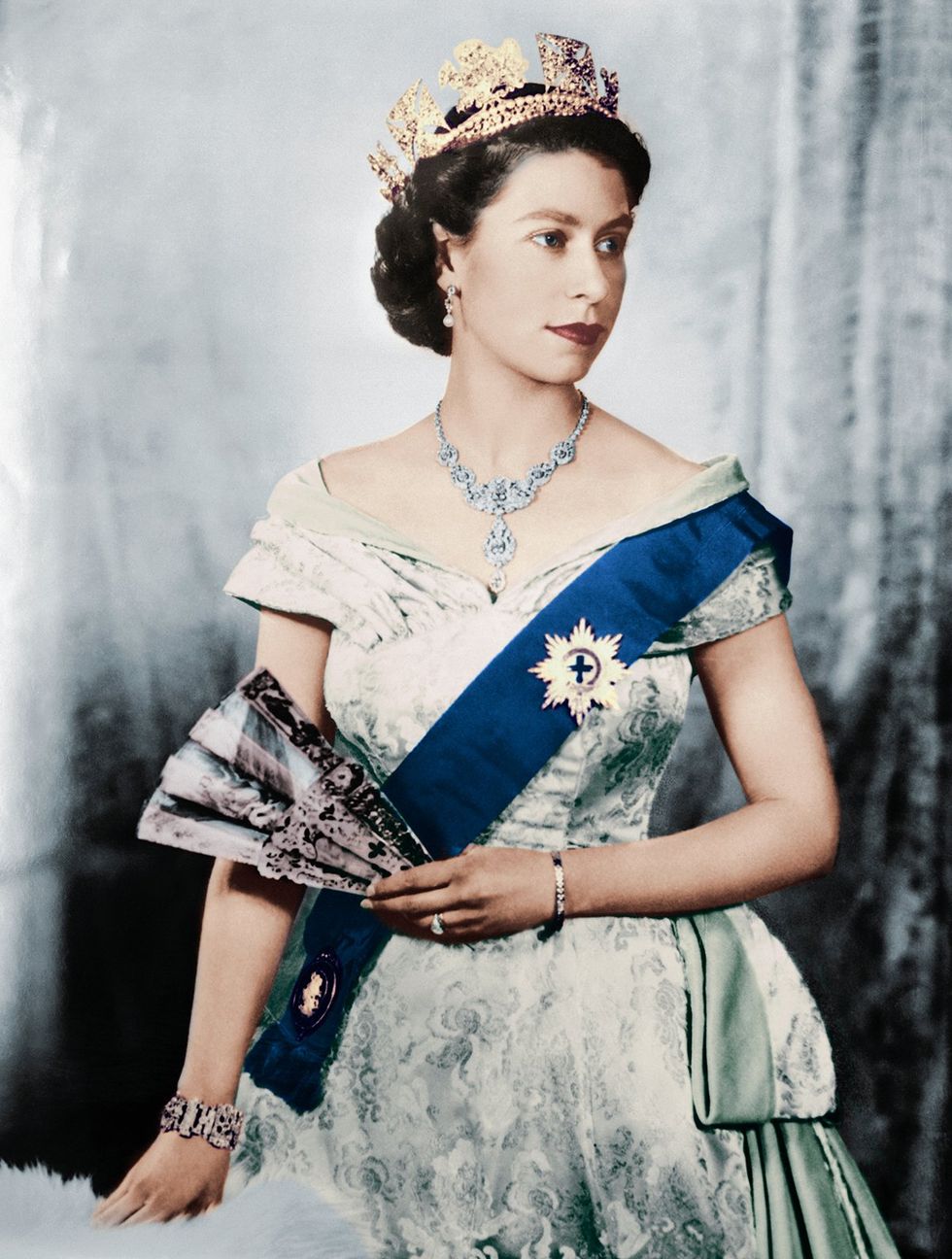
Queen Elizabeth II of England, 1952
Bettmann Contributor/Getty Images
There are countless books, documentaries, and an award-winning six-season series centered on the semi-private and public life of Britain's longest-reigning monarch. Many have paid attention to her dedication to duty, ingrained in her since birth and proclaimed on her 21st birthday to dedicate her whole life to the service of the Crown and Commonwealth, the free association of former British colonies.
Though she reigned as a constitutional monarch rather than an absolute one, Elizabeth II faced personal, familial, and political challenges head-on and rarely let them go unaddressed. This ranged from the revelation of her sister Princess Margaret's relationship with the divorced Peter Townsend (a taboo at the time) in the 1950s, to the supposed growing tension between Elizabeth II and Margaret Thatcher in the 1980s. Added to the breakdown of marriages, the fire at Windsor Castle, and the death of the late Princess Diana in the 1990s, it's remarkable to see how she handled events with poise and grace.
What I learned from Queen Elizabeth is that even under the most tremendous pressures from society, family—even self—one must maintain self-control and be resilient against all odds.
Queen Elizabeth I: A Queen with the Heart of a King
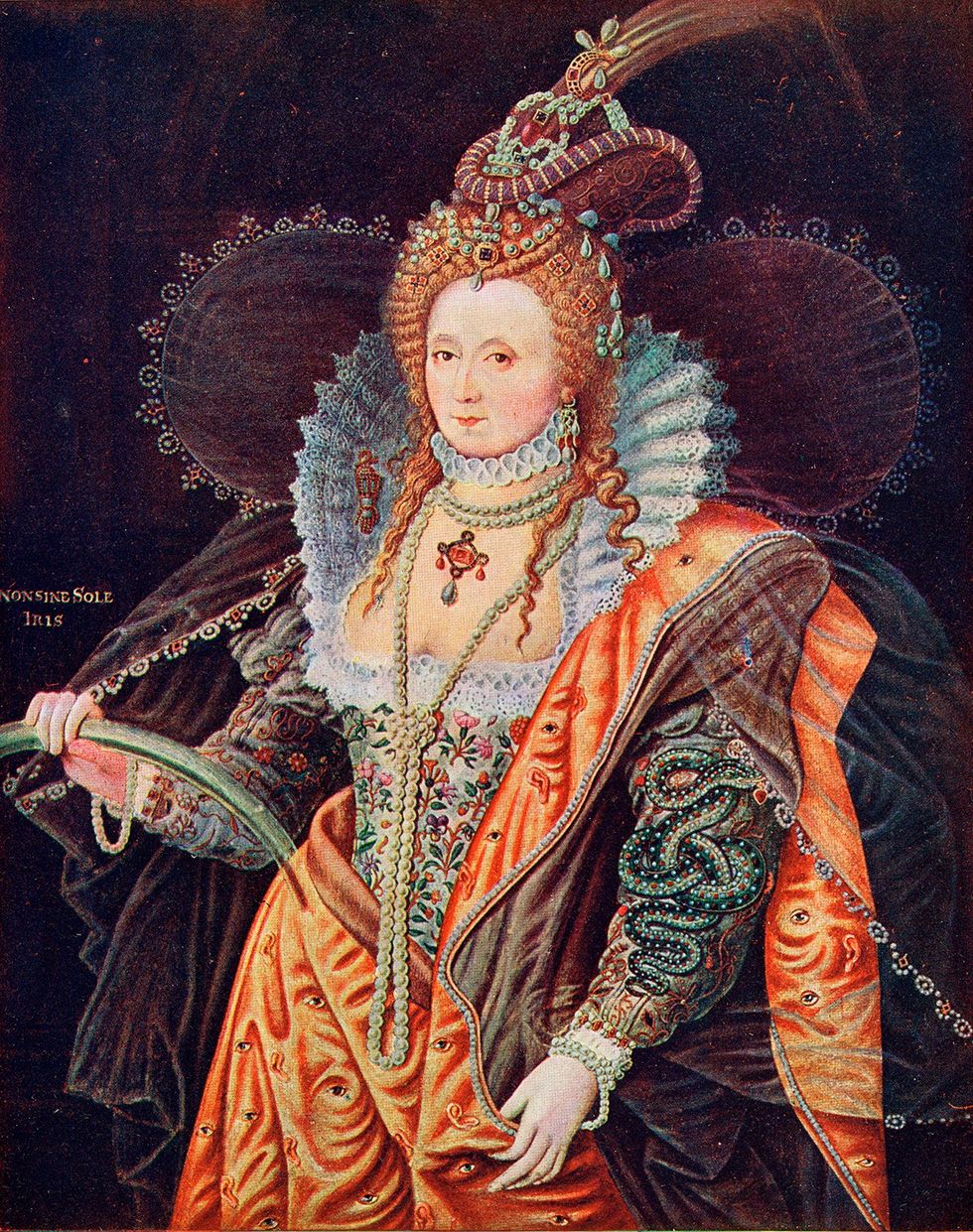
Queen of England Elizabeth I, from the painting by Zucchero at Hatfield House, circa 1800
Universal History Archive/Getty Images
The first Elizabethan reign of the 16th century is also one of great fascination, and perhaps the one I've learned the most about since childhood. Elizabeth I, "The Virgin Queen," was a skilled stateswoman who faced numerous challenges, including societal, religious, and political ones. This was still an era where it was expected that women not only married but deferred to their spouses. She was only the second crowned female monarch of England, so the pressure to marry and continue the Tudor dynasty was equally paramount. The religious schism of the 1500s between Catholics and Protestants was not just fought on the continent but in her kingdom, as Anglicans and Catholics wrestled for spiritual supremacy.
Yet in the male-dominated era of late-Tudor politics, Elizabeth I succeeded in becoming a beloved queen. She coyly navigated between deferring to Parliament while also dismissing their pleas for her to marry, using her presumed "virginity" as an asset in forming her image. Though her earthly relationship with Edward Dudley, Earl of Leicester, was well-known, she had no problem casting him and others aside as she refused to marry throughout her reign. In the midst of a heated argument about presumed lovers (he moved on to one of her ladies-in-waiting; she showed affection to another courtier), Queen Elizabeth reminded him that, "I will have but one mistress here, and no master." Even in religion, she favored the policy of via media, or the middle way, by reforming the Church of England to include Catholic and Protestant elements.
Most famously, during her 1588 Speech at Tilbury, she proclaimed that despite having the "body of a weak and feeble woman," she maintained "the heart of a king, and of a king of England too." It was an iconic declaration that she had no desire to submit to social conventions. For this and many reasons, she served as an inspiration for the possibilities I could become in a world that tries to fit me in a box.
Queen Anne: Underestimated but Undervalued
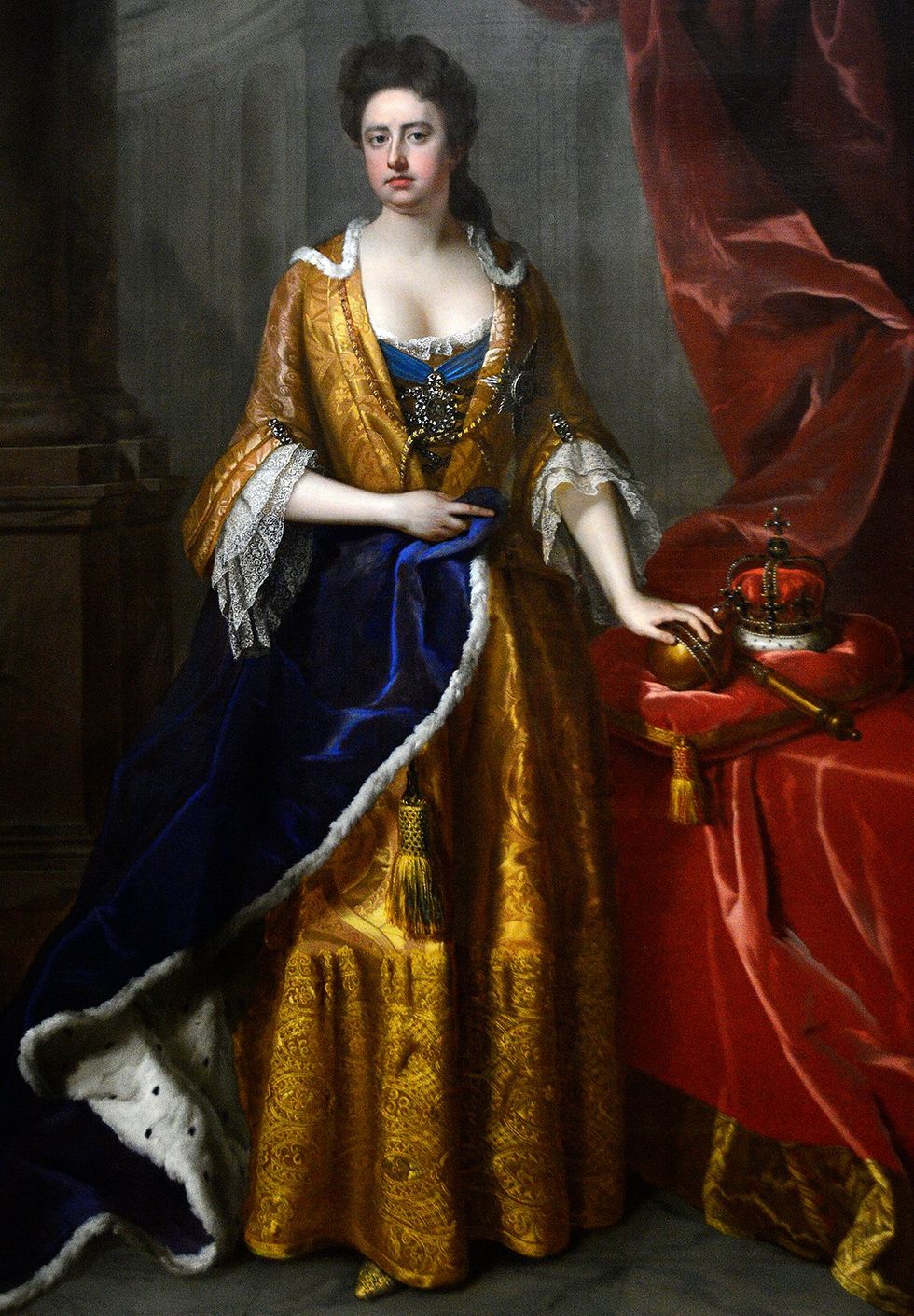
Queen Anne painted in 1705 by Michael Dahl, currently on display at the National Portrait Gallery in London, England
Robert Alexander/Getty Images
Queen Anne, the early 18th-century ruler of Great Britain, became a surprising addition to my collection of inspiring queens. Initially, she was one of those queens I glossed over between her uncle Charles II and her successor, George I. The only facts I knew about her were that she built a non-royal palace for the first Duke of Marlborough and suffered from gout. (But were truly royal if you weren't?)
What I discovered throughout my undergraduate and graduate studies as an aspiring royal historian was that she was more politically astute than history has credited her, mainly due to the influence of her political opponents and the memoirs of Sarah Churchill, Marlborough's wife and Anne's friend-turned-enemy. Queen Anne played a pivotal role in uniting England and Scotland, which were then still separate kingdoms, into a unified kingdom. She also oversaw royal patronages that supported the likes of Sir Isaac Newton and turned a bit of land she owned into one of England's greatest institutions: Ascot Racecourse.
Opponents—and history—have underestimated her contributions, which have been overlooked when compared to Elizabeth I and Queen Victoria. But that underestimation has made her a point of curiosity and fascination, with her gaining popularity in recent years due to Olivia Coleman's portrayal as Queen Anne in 2018's The Favourite.
If anything, I learned there can be power in being underestimated, because your (fr)enemies never know your next move.
Screen Queens from Genovia to New York City
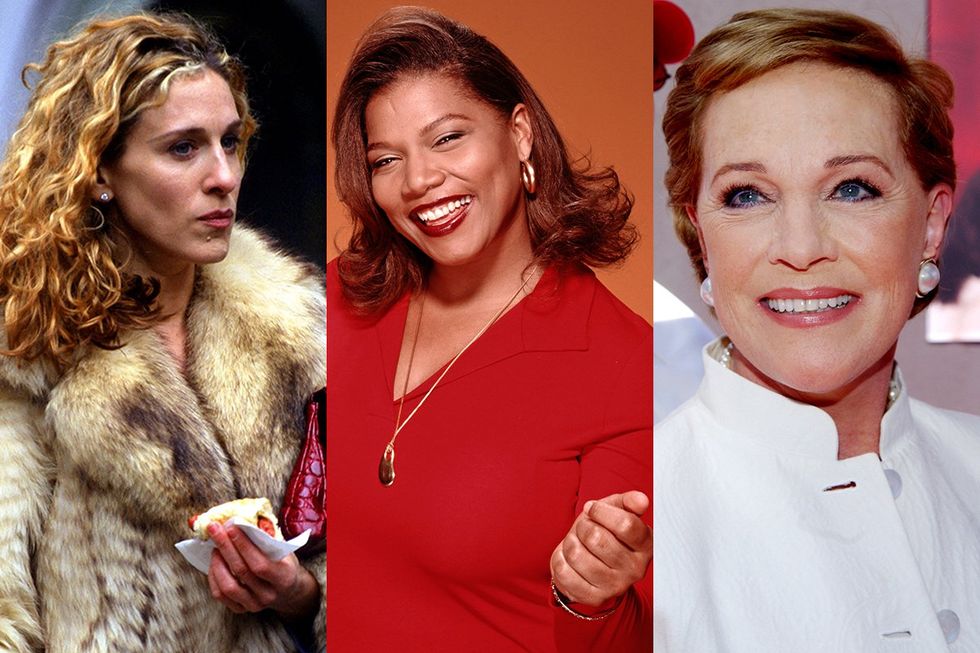
Actress Sarah Jessica Parker ,as Carrie Bradshaw, 1998; Rapper and actress Queen Latifah, 1998; Julie Andrews during 'The Princess Diaries 2: Royal Engagement' world premiere, 2004
Ron Galella, Ltd./Ron Galella Collection via Getty Images; Harry Langdon/Getty Images; Jon Kopaloff/FilmMagic
These are three of many queens, contemporary and historical, who've inspired me along my journey. But it's also fitting that I give my honorable mentions to the fictional queens, as well. I still look to Julie Andrews' Queen Clarisse in The Princess Diaries for the occasional refinement, grand maternal love, and etiquette lessons. And though they never wore crowns, Living Single's Khadijah James (played by the Queen Latifah) taught me never to back down and speak truth to power. And as the owner of Flavor magazine, she planted the seed in me for a love of writing. It was Sarah Jessica Park's Carrie Bradshaw in Sex and the City who not only watered that seed, but taught me to dream big and love bigger, no matter where the winds may blow.
Regardless of whether they're historical or contemporary, fictional or real, many of these women inhabited or were placed in a male-dominated world. Each of them dealt with men who underestimated their worth. Elizabeth I had Philip II of Spain, Queen Anne had parliamentarians, and Carrie had Mr. Big. My adversaries come in the form of transphobes and racists who believe I have no right to live my best life. I've been harassed online, my phone and address doxed, and occasionally hurled slurs from drivers. All tactics to employ fear in the hopes that I would cower and give up silently.
But it has only strengthened my resolve.
Fear can limit our capacity to learn, fear can limit our capacity to love. Fear is the greatest enemy of freedom, and never let fear take hold of your destiny.
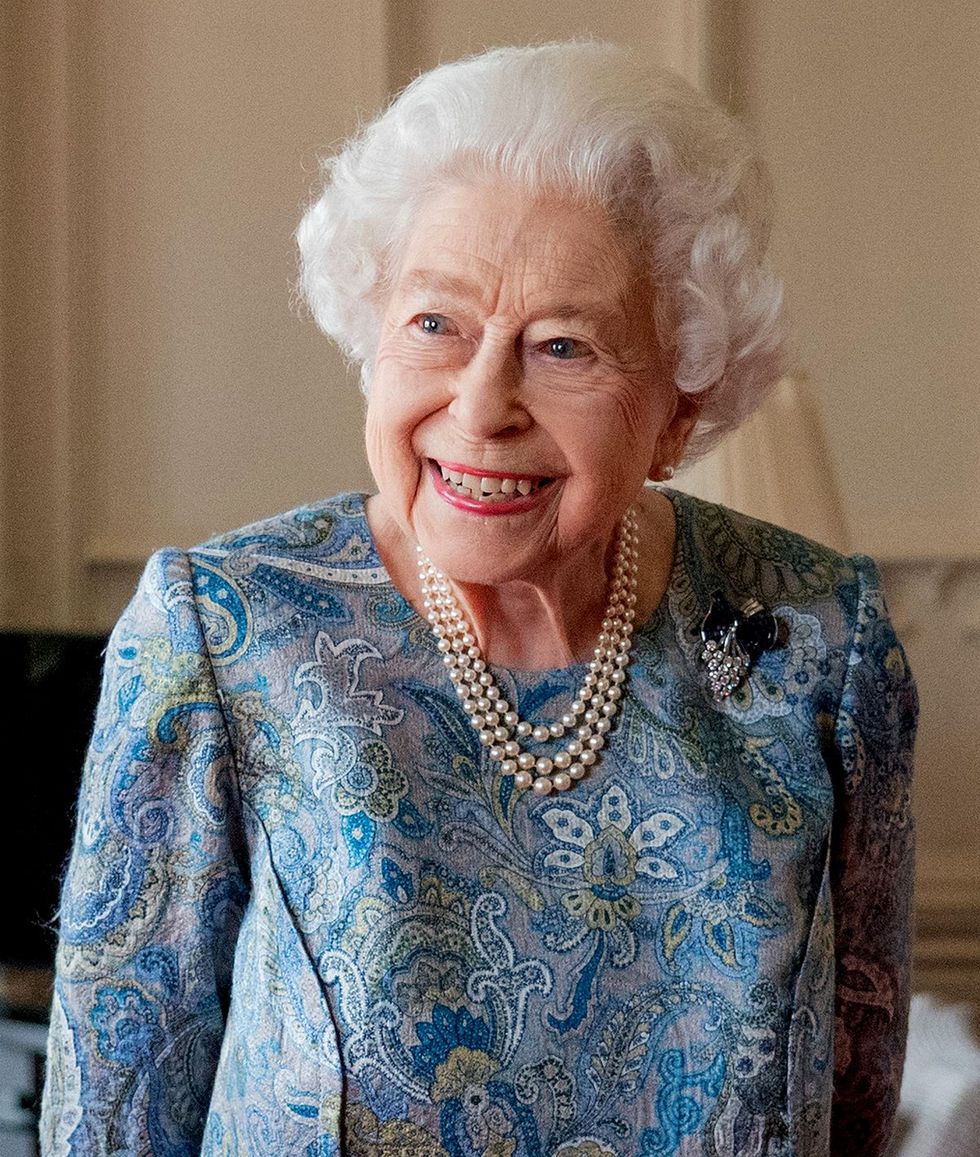
Queen Elizabeth II at Windsor Castle, 2022
Dominic Lipinski/WPA Pool/Getty Images
Since January, I've tried my best to keep calm and carry on. Thanks in part to an understanding therapist, walking, and enjoying more audiobooks on historic queens learned and newly-discovered (a rarity, but it still happens!) But there's also been this stillness within me, constantly remembering one of Queen Elizabeth II's final addresses.
At the height of the COVID pandemic, she gave a rallying speech via televised message as individuals across the country and the world were still grappling with the health crisis. "We should take comfort that while we may have more still to endure, better days will return," she affirmed. "We will be with our friends again; we will be with our families again; we will meet again."
And this moment, like so many fueled by division, is not sustainable.
And when it's all over, this country will take yet another course. Some will come to terms with uncomfortable truths that led them down into the abyss; others will reconcile with the hate, fear, and violence that emerged from it. But through it, we we will heal again. We will rebuild again.
We will have hope again.
Voices is dedicated to featuring a wide range of inspiring personal stories and impactful opinions from the LGBTQ+ community and its allies. Visit Advocate.com/submit to learn more about submission guidelines. Views expressed in Voices stories are those of the guest writers, columnists, and editors, and do not directly represent the views of The Advocate or our parent company, equalpride.