'%3E%3Cpath d='M16.3574 35.6519H12.9537L15.0491 18.8873L16.3574 35.6519ZM30.4229 54.0093L22.309 0.994385H7.91795L0 54.0093H10.6634L11.5802 46.3855H17.4014L17.9914 54.0093H30.4229Z' fill='%23971B20'/%3E%3Cpath d='M48.2073 41.8813C48.2073 43.4049 47.4892 44.0011 46.1144 44.0011H43.7595V11.0687H46.1144C47.4892 11.0687 48.2073 11.6636 48.2073 13.1885V41.8813ZM59.5273 43.6695V11.3326C59.5273 3.71323 53.5729 0.994385 47.8157 0.994385H31.7213V54.0093H47.8157C53.5729 54.0093 59.5273 51.29 59.5273 43.6695Z' fill='%23971B20'/%3E%3Cpath d='M90.183 0.994385H78.6039L75.0711 30.6157L71.9955 0.994385H59.4346L69.2474 54.0093H80.373L90.183 0.994385Z' fill='%23971B20'/%3E%3Cpath d='M107.063 42.3448C107.063 43.7359 105.951 44.5974 104.643 44.5974C103.269 44.5974 102.157 43.7359 102.157 42.3448V12.658C102.157 11.2676 103.269 10.4058 104.643 10.4058C105.951 10.4058 107.063 11.2676 107.063 12.658V42.3448ZM119.233 43.2723V11.7312C119.233 6.36384 112.952 -3.8147e-06 104.643 -3.8147e-06C96.2667 -3.8147e-06 89.9867 6.36384 89.9867 11.7312V43.2723C89.9867 48.6393 96.2667 55 104.643 55C112.952 55 119.233 48.6393 119.233 43.2723Z' fill='%23971B20'/%3E%3Cpath d='M150.976 43.9349V33.7309H139.069V42.3448C139.069 43.7359 137.957 44.5974 136.582 44.5974C135.076 44.5974 133.964 43.7359 133.964 42.3448V12.658C133.964 11.2676 135.076 10.4058 136.582 10.4058C137.957 10.4058 139.069 11.2676 139.069 12.658V21.2723H150.976V11.0687C150.976 5.70107 145.283 -3.8147e-06 136.582 -3.8147e-06C127.75 -3.8147e-06 121.796 5.70107 121.796 11.0687V43.9349C121.796 49.3022 127.75 55 136.582 55C145.283 55 150.976 49.3022 150.976 43.9349Z' fill='%23971B20'/%3E%3Cpath d='M167.478 35.6519H164.076L166.17 18.8873L167.478 35.6519ZM181.544 54.0093L173.432 0.994385H159.037L151.123 54.0093H161.785L162.704 46.3855H168.523L169.114 54.0093H181.544Z' fill='%23971B20'/%3E%3Cpath d='M205.412 10.4058V0.994385H177.081V10.4058H185.392V54.0093H197.428V10.4058H205.412Z' fill='%23971B20'/%3E%3Cpath d='M230.002 54.0093V43.9349H218.914V31.8746H226.635V21.8028H218.914V10.4058H230.002V0.994385H206.875V54.0093H230.002Z' fill='%23971B20'/%3E%3C/g%3E%3Cdefs%3E%3CclipPath id='clip0_260_7080'%3E%3Crect width='230' height='55' fill='white'/%3E%3C/clipPath%3E%3C/defs%3E%3C/svg%3E)


This week, Tina Romero’s debut feature film Queens of the Dead will finally make its way to theaters—just in time for Halloween.
It’s a must-see for all horror fans, but particularly queer ones, because not only is it a heartwarming and hilarious horror comedy, it’s also a celebration of gay nightlife and the heroes who inhabit it.
For the uninitiated, the film focuses on a group of nightlife entertainers in Bushwick, New York, who are struggling to pull off an event. As if last-minute cancellations and a rival party weren’t enough, this crew of drag queens, club kids, and one very beleaguered club promoter also has to contend with a zombie apocalypse.
It’s the perfect feature for Romero to helm, as it blends her work as a DJ—Romero performs under the name DJ TRx—in the NYC scene with the genre made famous by her father, George Romero (Night of the Living Dead). While it’s certainly a loving homage, complete with nods to her father’s work, it’s intrinsically Tina’s as well, as she brings her lived experience to the film, queering the genre in the process.
And to say that the cast of Queens of the Dead is stacked would be a massive understatement. The film features Katy O’Brian, Riki Lindhome, Margaret Cho, Jack Haven, Nina West, Tomás Matos, Cheyenne Jackson, and Dominique Jackson as the ragtag group of survivors.
With the movie heading to theaters this weekend, PRIDE sat down with Romero to talk about what it means to her to have her film seen on the big screen, why she fell in love with its characters, the chances we’ll see them again, and how Queens of the Dead honors her father’s legacy.
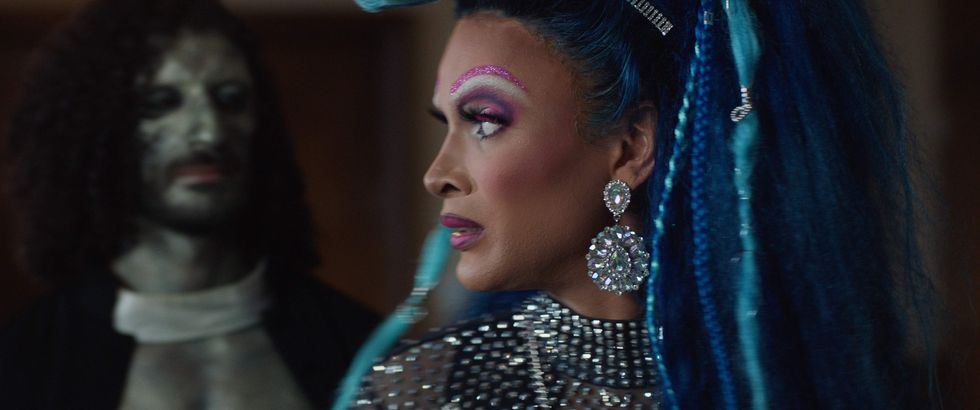
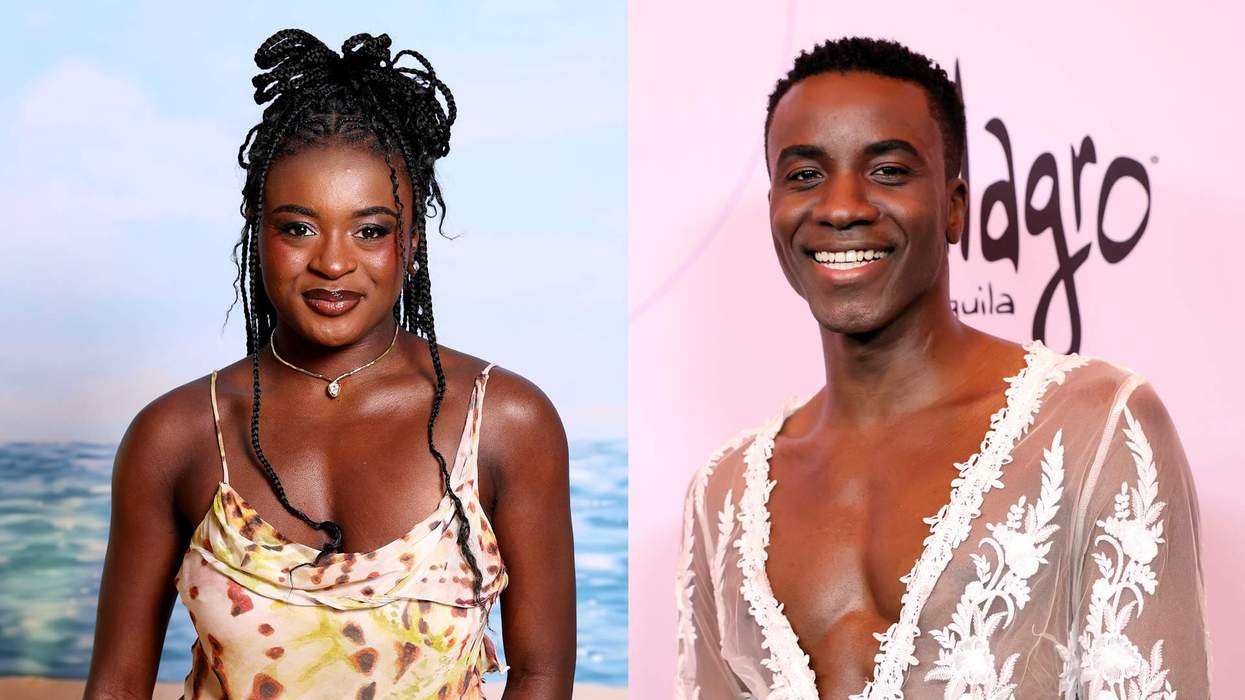
Julie J and Ahmad Maksoud in Tina Romero’s Queens of the Dead
Courtesy of Shannon Madden
PRIDE: Last time we talked, Queens of the Dead had just had its world premiere at Tribeca. You were kind of in the afterglow of that moment, and here we are now at the culmination of this very long journey through all the festivals, everything on the verge of it going theatrical. Where are you in your journey with it, and how are you feeling now?
TINA ROMERO: It has been such a fever dream of a year since Tribeca. I've had the amazing opportunity to go to film festivals around the country and even in the world. I've been to Iceland. I'm in Toronto right now. I went down to Florida, and it's just been remarkable to share this movie with the horror community, with the queer community, and beyond, and just see how people are responding to it—not just the queers, and not just the horror heads—but that, like, multiple types of people are enjoying themselves at this movie. And I couldn't ask for anything more. I was very scared to share the baby, and I feel like people are, like, no, we'll accept the baby. Like, we like it. We'll hold her; we'll be nice. I'm elated. It's surreal.
There’s something very poignant about the film and how it kind of emphasizes the need to sort of galvanize and come together as a community, and how these screenings and watching this film can also create that kind of feeling in the room. I'm curious, are you experiencing that? Is that something that is maybe an unexpected byproduct of making a film like this?
I was certainly hopeful to fuse audiences together with this. You know, [co-writer Erin Judge] and I talked a lot about, like, how can we invite multiple people to this party? For people who maybe don't do the zombie thing, we're gonna put glitter in the blood. Maybe that'll make them a little bit more inclined to come to this party. People who've never been to a drag show, maybe they'll come because it has zombies. That was always our intention—to sort of fuse the two, to do a genre smash in this way. And I think there's just something to this cast. I think that this cast is so incredible, and they brought their authentic selves to the roles in a way that's very charming and hard to be mad at. No matter who you are, they just did such a good job. They're so lovable that I think it's hard not to fall in love with them.
That was the magic I felt on set, but I'm biased because I'm on set with these darlings, and they're so wonderful to work with. Is it going to transfer over to the audience? So far, I feel like people are really, really falling for these characters, and I'm so happy about that.
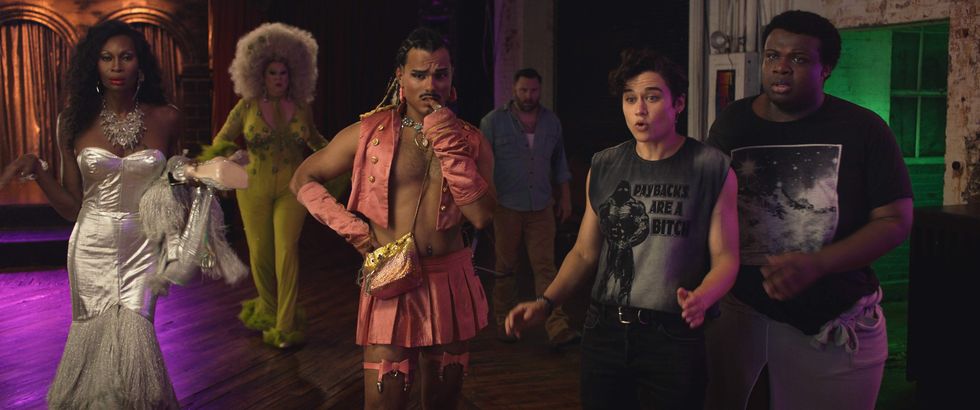
Dominique Jackson, Nina West, Tomás Matos, Quincy Dunn-Baker, Katy O'Brian, and Jaquel Spivey in Tina Romero’s Queens of the Dead
Courtesy of Shannon Madden
I agree! You know, it wouldn't be the first time that a franchise was born out of a Romero zombie film. Is this story and these characters something that you could see revisiting?
I'm totally attached to them all, and I would love to keep going with them, and I want to find a way. I would love to continue on with these characters.
One of the things about this film is that it’s an effervescent, unapologetic queer extravaganza. But like the best of the zombie films, it also has a lot of metaphorical and political things happening beneath the glittery blood surface. I feel like the metaphors of this film become increasingly poignant every single day. I'm curious how you feel about that.
The root of this movie really came from a moment where there was drama in the community and there was a promoter rift. And the question begged was: When will the queer community stop devouring its own? I think that is an important thing to talk about here. We have to stick together. We have to stop the infighting. We have to stop yelling at each other online, and we have to get off of our phones and connect in real life in order to save our humanity.
The tech explosion that's happening—I'm buckling up for what the world is going to look like in three years, five years. Who knows where we're going with AI? It scares the shit out of me, if I'm being honest. But no matter what, we have to hang on to our humanity in whatever way we can. I think that's all we have, honestly, at the end of the day.
And so I hope that, in addition to the romp of it all, people walk away with a little bit of motivation to maybe put down the phone for a second and talk to somebody you've never talked to before. Because I think that's what the character Barry is all about. Barry [who is Dre’s (Katy O’Brian’s) conservative brother-in-law] is kind of a foil more than he is a villain. Yes, he finds himself in a space that he never planned on being in—especially on the night of the zombie apocalypse coming to town—but ultimately is pretty glad that he is. It's not so much that he's homophobic or has hate in his heart; it's just that he lacks understanding and experience. Call me an optimist, but I do feel like if we all sort of talk to each other a little bit more, we could do better than sort of hiding behind our screens and fighting online.
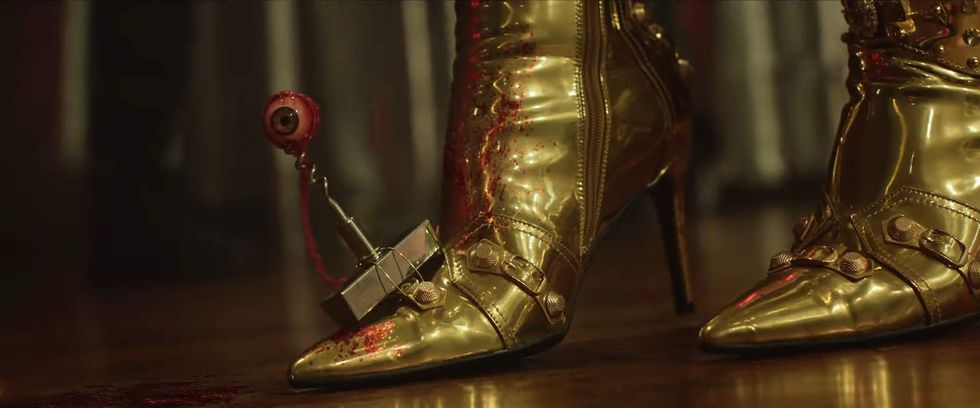
IFC Films
That's so true! So, the last time we spoke, you shared how much you felt your father’s presence on set with you while you were making the film—whether it was the Looney Tunes zaniness, or the way his legacy is incorporated into the dialogue, characters, and cameos. Now, as we head into the theatrical release, how are you feeling his presence in this moment?
I'm actually in Toronto right now, and I haven't been back here since his funeral, and so he's super on my mind. Now that I've gotten to share this movie more, I feel prouder than ever to be taking the Romero torch and to be telling this story and using his monster and putting the Romero name on it and making it queer.
When Night of the Living Dead started out, we had a Black man as the lead. We still have a Black man as the lead, but he's queer, and he plays a drag queen. And I think it's really hitting me how major that is. And I feel so proud to be doing this with his legacy.
This interview is lightly edited for length and clarity.