'%3E%3Cpath d='M16.3574 35.6519H12.9537L15.0491 18.8873L16.3574 35.6519ZM30.4229 54.0093L22.309 0.994385H7.91795L0 54.0093H10.6634L11.5802 46.3855H17.4014L17.9914 54.0093H30.4229Z' fill='%23971B20'/%3E%3Cpath d='M48.2073 41.8813C48.2073 43.4049 47.4892 44.0011 46.1144 44.0011H43.7595V11.0687H46.1144C47.4892 11.0687 48.2073 11.6636 48.2073 13.1885V41.8813ZM59.5273 43.6695V11.3326C59.5273 3.71323 53.5729 0.994385 47.8157 0.994385H31.7213V54.0093H47.8157C53.5729 54.0093 59.5273 51.29 59.5273 43.6695Z' fill='%23971B20'/%3E%3Cpath d='M90.183 0.994385H78.6039L75.0711 30.6157L71.9955 0.994385H59.4346L69.2474 54.0093H80.373L90.183 0.994385Z' fill='%23971B20'/%3E%3Cpath d='M107.063 42.3448C107.063 43.7359 105.951 44.5974 104.643 44.5974C103.269 44.5974 102.157 43.7359 102.157 42.3448V12.658C102.157 11.2676 103.269 10.4058 104.643 10.4058C105.951 10.4058 107.063 11.2676 107.063 12.658V42.3448ZM119.233 43.2723V11.7312C119.233 6.36384 112.952 -3.8147e-06 104.643 -3.8147e-06C96.2667 -3.8147e-06 89.9867 6.36384 89.9867 11.7312V43.2723C89.9867 48.6393 96.2667 55 104.643 55C112.952 55 119.233 48.6393 119.233 43.2723Z' fill='%23971B20'/%3E%3Cpath d='M150.976 43.9349V33.7309H139.069V42.3448C139.069 43.7359 137.957 44.5974 136.582 44.5974C135.076 44.5974 133.964 43.7359 133.964 42.3448V12.658C133.964 11.2676 135.076 10.4058 136.582 10.4058C137.957 10.4058 139.069 11.2676 139.069 12.658V21.2723H150.976V11.0687C150.976 5.70107 145.283 -3.8147e-06 136.582 -3.8147e-06C127.75 -3.8147e-06 121.796 5.70107 121.796 11.0687V43.9349C121.796 49.3022 127.75 55 136.582 55C145.283 55 150.976 49.3022 150.976 43.9349Z' fill='%23971B20'/%3E%3Cpath d='M167.478 35.6519H164.076L166.17 18.8873L167.478 35.6519ZM181.544 54.0093L173.432 0.994385H159.037L151.123 54.0093H161.785L162.704 46.3855H168.523L169.114 54.0093H181.544Z' fill='%23971B20'/%3E%3Cpath d='M205.412 10.4058V0.994385H177.081V10.4058H185.392V54.0093H197.428V10.4058H205.412Z' fill='%23971B20'/%3E%3Cpath d='M230.002 54.0093V43.9349H218.914V31.8746H226.635V21.8028H218.914V10.4058H230.002V0.994385H206.875V54.0093H230.002Z' fill='%23971B20'/%3E%3C/g%3E%3Cdefs%3E%3CclipPath id='clip0_260_7080'%3E%3Crect width='230' height='55' fill='white'/%3E%3C/clipPath%3E%3C/defs%3E%3C/svg%3E)
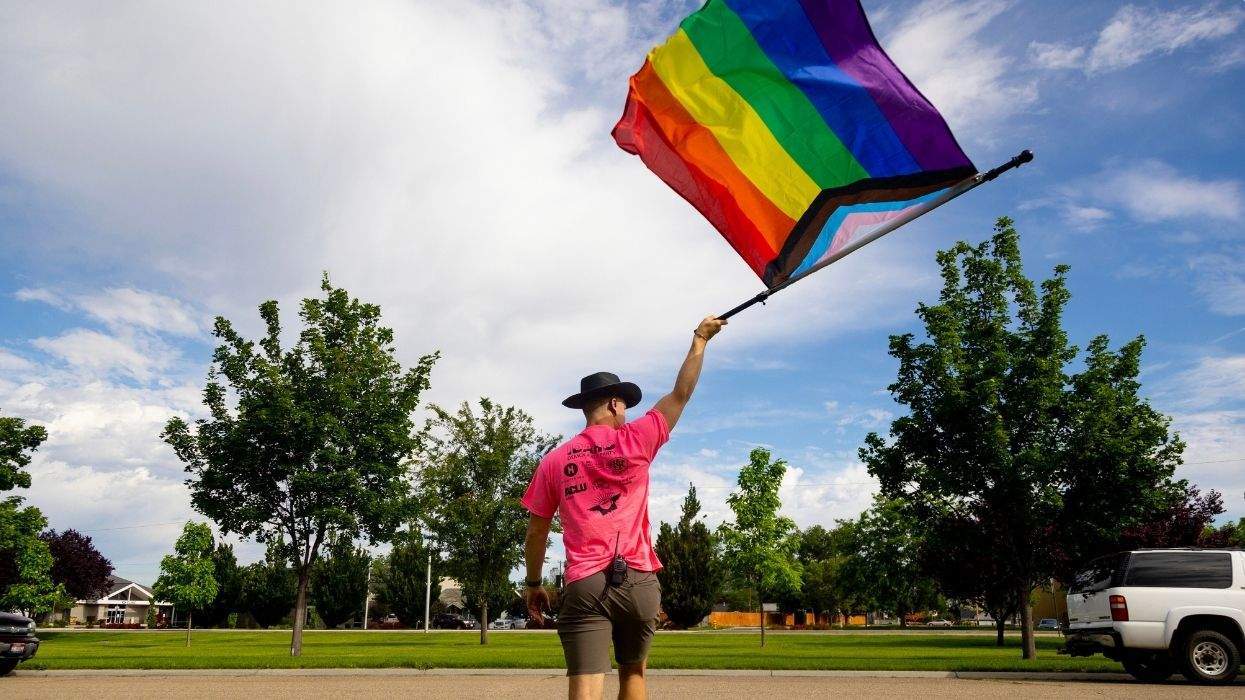
Idaho Republicans are advancing legislation that would void local nondiscrimination protections for LGBTQ+ residents in more than a dozen cities. Advocates warn that it represents not merely a policy disagreement but a decisive turn toward rescinding existing civil rights protections.
Keep up with the latest in LGBTQ+ news and politics. Sign up for The Advocate's email newsletter.
House Bill 557, which has already passed the Idaho House and now sits in the Senate State Affairs Committee, would prohibit cities and counties from adopting or enforcing nondiscrimination ordinances that extend beyond state law. Because Idaho’s Human Rights Act does not include sexual orientation or gender identity as protected classes, the measure would not only block future local protections but also erase existing ones in 12 cities and two counties, jurisdictions that together encompass roughly 36 percent of the state’s population.
Related: Idaho Republicans push bill that could label gay book characters 'sexually explicit'
“This specific bill we’re talking about, HB 557 would eliminate the ability of localities to pass non-discrimination policies protecting characteristics like gender identity or sexual orientation that are not currently protected under state law,” Liam Cutler, policy counsel for Planned Parenthood Federation of America, explained in an interview with The Advocate. The legislation “would also remove existing protections that are in place, essentially stripping those LGBTQ folks of the protections that they currently have under law,” he said.
For advocates who have spent years pushing for statewide protections, the bill feels like a reversal layered atop earlier defeats.
“We, like many states, have been fighting for decades to get sexual orientation and gender identity added to the Idaho Human Rights Act,” Mistie DelliCarpini-Tolman, regional political and Idaho state director for Planned Parenthood Alliance Advocates, told The Advocate. When that effort stalled in the legislature, she said, organizers pivoted to city councils and county commissions. “This was done legally. Communities came together and organized themselves city by city, got these ordinances passed.”
Now, she said, the legislature is “coming in and taking that local power away.”
“Quite an affront”
In the absence of statewide protections, local nondiscrimination ordinances became the fallback strategy. “So it’s quite an affront to us to not only see them being unwilling to add protections at a state level, but to very specifically introduce legislation that preempts cities from having those protections themselves,” Nikson Mathews, a transgender man and chair of the Idaho Democratic Queer Caucus, told The Advocate.
Advocates were granted one hearing, they said, but the proposal was voted down and never reached the floor.
Related: Idaho Republicans' resolution to repeal marriage equality is 'foreshadowing' for the U.S. (
Related: Idaho closes legislative session with a slew of anti-LGBTQ+ laws
The affected cities include Boise, the state’s largest and most economically dynamic municipality. If HB 557 becomes law, “suddenly a lot of people are going to be without protections around housing, employment, and public accommodations, meaning we won’t have any recourse if discrimination occurs,” Mathews said.
Beyond legal consequences, they described a subtler loss. “There’s just comfort knowing that we live in a city that has those protections,” Mathews said. “Suddenly we don’t have them, and we feel less safe.”
At a press conference on the bill, Mathews was even more explicit about intent. “Despite the sponsor’s claims, this bill is not about uniformity. It is about control,” they said.
Institutional opposition
Prominent civil liberties groups also oppose the measure. The American Civil Liberties Union of Idaho urged elected officials to stop HB 557, arguing that non-discrimination ordinances provide “critically important protections” for LGBTQ+ people and that in their absence, Idahoans face far fewer safeguards against discrimination based on sexual orientation or gender identity.
According to the ACLU, more than 720,000 Idahoans live in cities and counties with nondiscrimination ordinances that would be nullified by the bill. The ACLU’s analysis also highlights economic stakes: Idaho cities with nondiscrimination ordinances employ nearly 42 percent of the state’s workforce, and metropolitan areas like Boise, which has a total GDP of more than $55 billion, currently operate under local protections that opponents of the bills say have not hindered growth.
The lived stakes
Cutler said nondiscrimination protections are the infrastructure of ordinary life. “We’re talking about things like, can I apply for an apartment and know that I’m not going to be denied or discriminated against for being gay, for being trans?” he said. “Can I go to a restaurant and know that a server is going to serve me? Or if I have a picture of my spouse at my desk and I later get fired for being gay, do I have any recourse?”
Related: Idaho Republicans file resolution to repeal marriage equality
Related: Thousands of paper hearts flood Idaho capital as lawmakers pass anti-LGBTQ+ bills
In Idaho, DelliCarpini-Tolman said even public gestures can require calculation. “My wife and I check our surroundings before holding hands in a store or at a restaurant,” she told The Advocate, describing a political climate she said has grown more hostile in recent years.
At an earlier legislative hearing on adding LGBTQ+ protections to state law, she recalled “three days’ worth of stories” from Idahoans describing discrimination they’ve suffered. “These attacks aren’t happening because the NDOs weren’t working,” DelliCarpini-Tolman said. “They’re attacking because they were working.”
A bellwether state
Advocates see HB 557 as part of a broader pattern in Idaho, which in 2020 became the first state to enact a ban on transgender girls participating in school sports aligned with their gender identity. Since then, lawmakers have passed restrictions on gender-affirming care for minors, bathroom access, and other measures affecting LGBTQ+ residents.
“Over the last several years, legislators have gone from refusing to protect us to actively targeting us,” Mathews said at the press conference on the bill.
Cutler warned that the implications extend beyond state lines. “I’m worried that Idaho, again, is going to be a bellwether,” he said.
What distinguishes this moment, he argued, is not merely the proliferation of anti-LGBTQ+ bills but their direction. “Never in history has that been sort of a normal thing in our country to remove protections that exist for a group,” Cutler said, adding, “The idea that we are taking away protections from a group should be really alarming for folks.”